It's 6:40 pm and the last dental patient is going home. The invoice shows the cleaning, the anesthesia and the radiographs. It doesn't show the nail trim the tech did while the dog was under, or the take-home rinse the doctor mentioned in the notes. Nobody was careless. The record and the invoice live in two places, and at the end of a long day nobody checks one against the other. That gap, between what was done and what was billed, is where AI for vet clinic invoicing earns its keep.
This guide covers where a veterinary invoice actually loses money, which AI and software tools help at each point, what to check about privacy and your practice management system before you buy, and how to collect the balances that end up on account. It is written for independent practices, not for corporate groups with a billing department.
Where a vet invoice leaks money
A veterinary invoice is built in four stages, and each has its own leak. Most clinics only look at the third one, checkout, because that's where clients complain. The others are quieter and usually cost more.
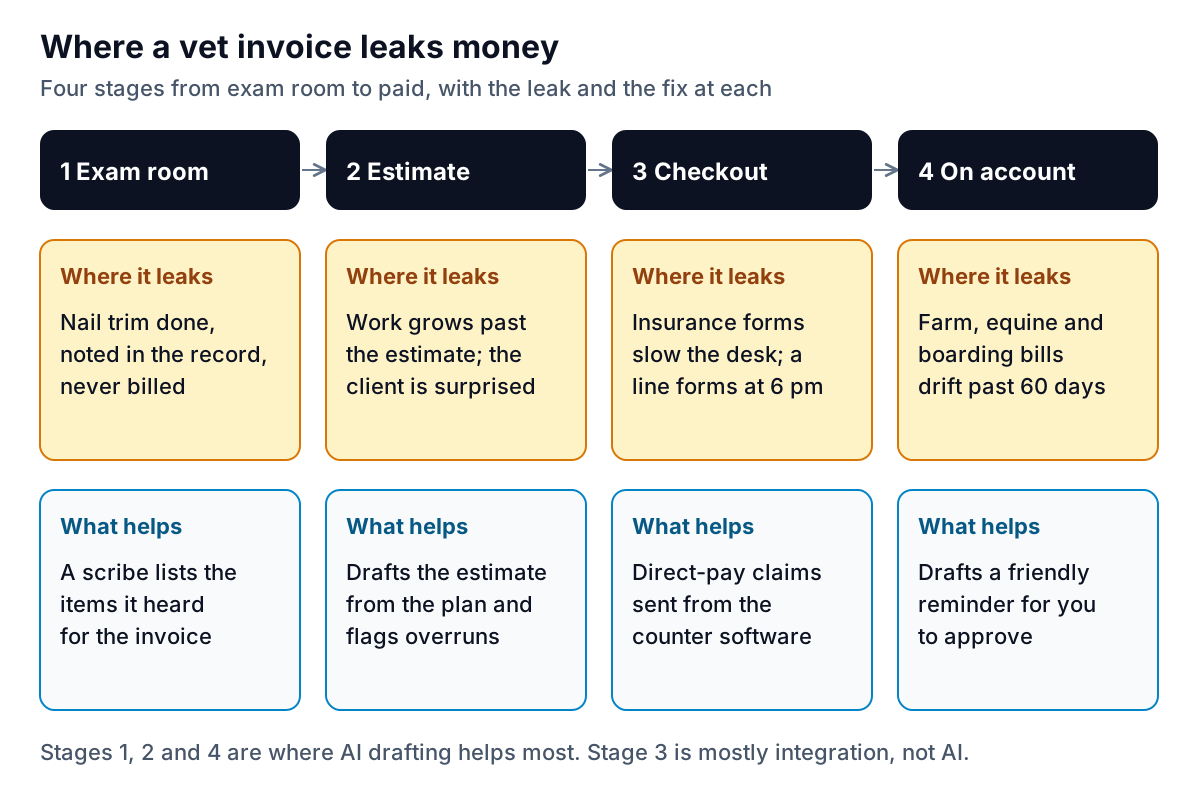
- Missed charges. Small add-ons done during a visit (nail trims, ear cytology, injection fees, a bag of fluids, dispensed meds) that are in the medical record but never reach the invoice.
- Estimate drift. The surgery that grew a second procedure, billed without an updated estimate. You either write off the difference or have an awkward conversation at pickup.
- Checkout friction. Insurance paperwork, payment plans and split payments that turn a two-minute checkout into ten.
- Balances on account. Farm calls, equine work, boarding, rescue groups and long-standing clients who are billed monthly. These invoices sit in a different queue, and nobody owns chasing them.
What AI for vet clinic invoicing can do today
"AI" covers several different tools here. Separate them before you talk to any vendor, because a single product rarely does all four jobs well.
1. Charge capture from the consult
This is the newest category and the most direct fix for missed charges. AI scribes listen to the consult (or read the notes) and write the SOAP record, and some now list billable items for the invoice. VEA, for example, advertises missed charge recovery that flags billable services at the point of care. Shepherd, a practice management system, argues that the fix is structural: in its words, administered items automatically land on the invoice when they're entered in the SOAP plan. Both are vendor claims about their own products. Ask for a trial on your own cases before you rely on them.
The key question is whether the tool writes charges into your practice management system or just shows a list someone has to type in. A list nobody acts on catches nothing.
2. Estimates that follow the treatment plan
Most practice management systems can turn a treatment plan into an estimate with a low and high range. AI adds a draft of the plain-language explanation for the client and, in some systems, a warning when the invoice exceeds the approved estimate. The second part matters more. A rule like "alert the doctor when charges pass the high end of the estimate" saves more goodwill than any wording.
3. Insurance at checkout
According to NAPHIA's 2026 State of the Industry report, about 6.98 million US pets were insured in 2025, still well under 5% of dogs and cats. So insurance is a growing but minority share of your invoices. Some insurers can pay the hospital directly at checkout when the hospital uses their software (Trupanion's VetDirect Pay is the best-known example), and the client pays only their share. That's an integration question more than an AI one. The AI part, where it exists, is pre-filling claim forms from the invoice and record.
4. Collecting what's owed on account
For clinics that bill monthly, AI can sort balances by age, draft the reminder emails, and tell you who owes the most. This is the least glamorous job and often the one with the most cash in it. It gets its own section below.
Worked example: what missed charges cost
Take an example practice, Cedar Hollow Animal Hospital, with three vets and about 1,100 invoices a month. The manager audits one month by comparing records with invoices and finds that roughly one invoice in twenty is missing one small item.
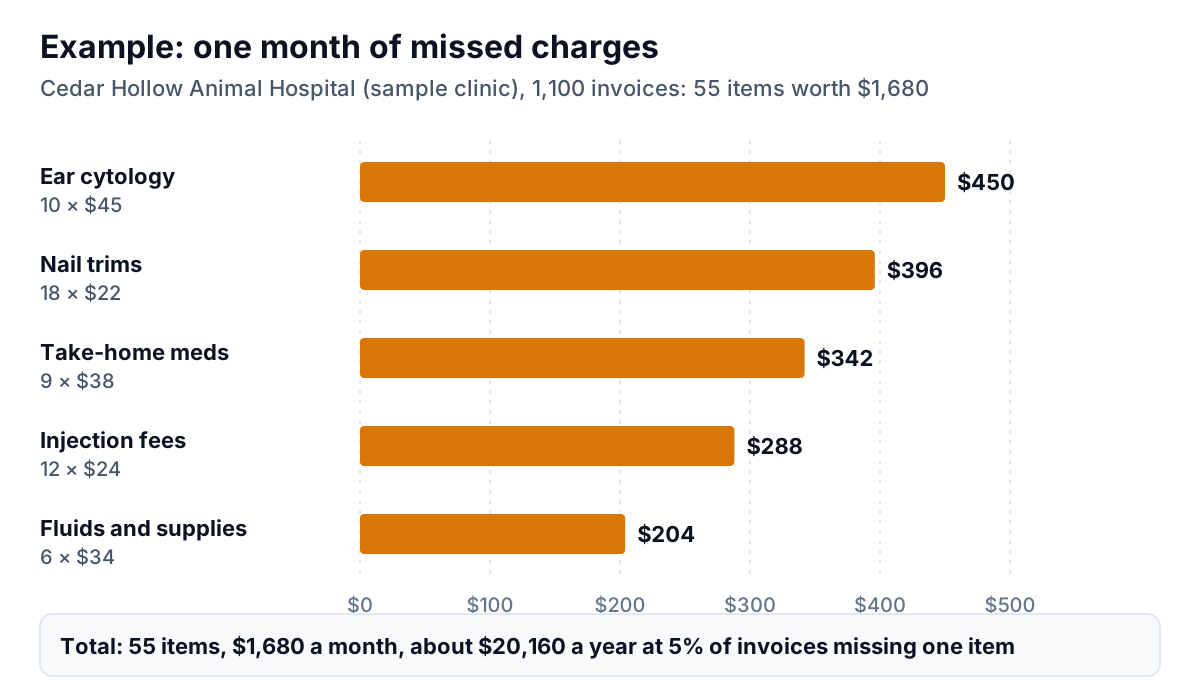
Those numbers are made up for illustration, but the method is real, and you can run it yourself this month:
- Pull 100 invoices from last month at random.
- For each one, open the medical record and list anything administered, performed or dispensed.
- Mark any item in the record that is not on the invoice, with its fee.
- Multiply the missed total by your monthly invoice count divided by 100.
If the answer is a few hundred dollars a month, an AI charge-capture tool probably won't pay for itself, and a checkout checklist will do. If it's in the thousands, it's worth a trial. Vendors quote their own averages (VEA's site, for instance, says a typical practice misses $20,000–$50,000 a year), but your own audit is the only number you should plan around.
Before you buy: integration, privacy and recording
Work through these questions with any vendor:
- Does it write to your practice management system? Ask which systems it integrates with (ezyVet, Cornerstone, AVImark and so on) and whether it creates invoice items or only suggests them.
- Who can see the recordings and notes, and for how long? Ask where audio is stored, whether it's deleted after the note is written, and whether it's used to train the vendor's models.
- What's the confidentiality rule in your state? HIPAA covers human health information, not animal records, but that doesn't mean anything goes. The AVMA's Principles of Veterinary Medical Ethics treat medical record information as confidential, and many states have their own statutes on releasing veterinary records. Check your state board's rules, and ask the vendor how its contract handles client data.
- Do you need consent to record? Recording rules for conversations vary by state. If you use an ambient scribe, tell clients and get advice on your state's consent rules.
- Does it handle card data? If the tool takes payments, make sure the payment part is run by a processor that handles card security, not by the AI vendor.
Balances on account: the invoices nobody chases
Clinics with farm, equine, boarding or rescue clients often carry a surprising amount on account. Here is the example clinic's on-account ledger.
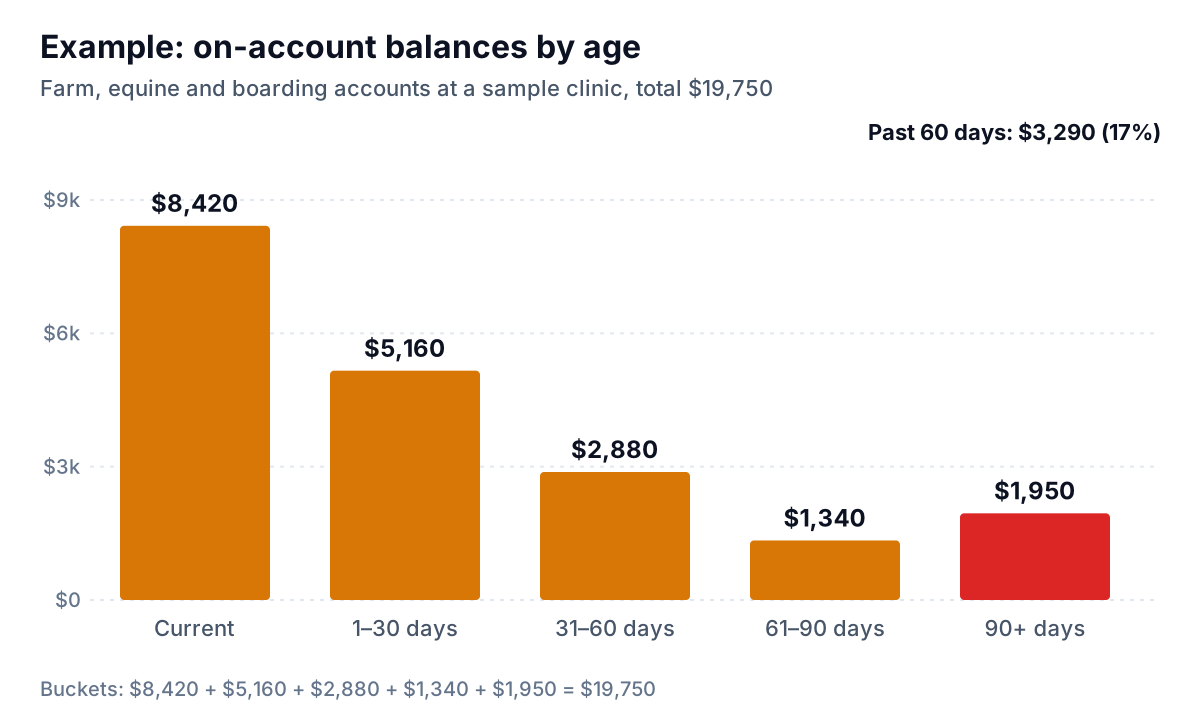
These are good clients, usually. They're also busy, and many pay when reminded. Intuit's 2026 QuickBooks Small Business Late Payments Report found 59% of small businesses had invoices more than 30 days overdue. Three habits help:
- Send statements on a fixed day, such as the first of the month, with a clear due date.
- Send one friendly reminder a few days after the due date, then no more than one a week.
- Keep medical details out of reminders. A payment email needs the account name, invoice number, amount and due date. It doesn't need the diagnosis or procedure, which may be read by a family member, a farm manager or a bookkeeper.
Here is a reminder you can adapt:
For more wording options, see friendly payment reminder messages that don't sound desperate, and if a client promises a date and then misses it, here's what to do next. If you've never looked at your balances by age, the accounts receivable aging report guide explains how to read one.
Where Parity fits
Parity's invoice chaser, launching in late November 2026, is built for exactly this on-account work. It connects to QuickBooks Online, Xero or FreshBooks, or takes a CSV or Excel export, so a clinic can upload the accounts receivable export from its practice management system. It shows balances by age and customer, drafts one friendly reminder per overdue invoice in your voice, checks every amount, date and invoice number against the source, and sends nothing until you approve it. It does not read medical records or capture charges, so it complements the tools above rather than replacing them. When you export, include only what a reminder needs: client name, email, invoice number, amount and due date.
A realistic first step
Don't buy anything this week. Instead:
- Run the 100-invoice audit above. It tells you whether missed charges are a $300 or a $3,000 a month problem.
- Pull your on-account ageing report and total everything past 60 days.
- Whichever number is bigger is your first project. If it's missed charges, trial an AI scribe or charge-capture tool that writes into your system, on one doctor's cases for two weeks. If it's on-account balances, set up monthly statements and a weekly reminder routine first, then decide whether you need software to run it.
AI for vet clinic invoicing works best on the dull, repetitive parts: listing what was done, drafting the explanation, drafting the reminder. Keep the confirming, the pricing decisions and the conversations with clients where they are now, with your team.
Upload your on-account export and Parity drafts a friendly reminder for each overdue invoice, checked against your data. Get early access to Parity's invoice chaser