Four words undo more payment reminders than any others: "Sorry to bother you." They tell the client that the invoice is an imposition, that you're uneasy asking, and that it can probably wait. The client may not have meant to pay late, but your invoice reminder message just made waiting feel fine.
The fix isn't to swing the other way into "FINAL NOTICE". It's a tone most owners find surprisingly hard to hit: friendly, specific and completely unbothered, as if asking to be paid is routine admin. Because it is. This post covers why that tone works, what reply data says about length and wording, seven swaps you can make today, and a simple four-part structure for a reminder that sounds like you on a good day.
Why soft reminders get ignored and hard ones get resented
Every reminder tells the client two things: what you want, and how much it matters. Most bad reminders get the second part wrong in one of two directions.
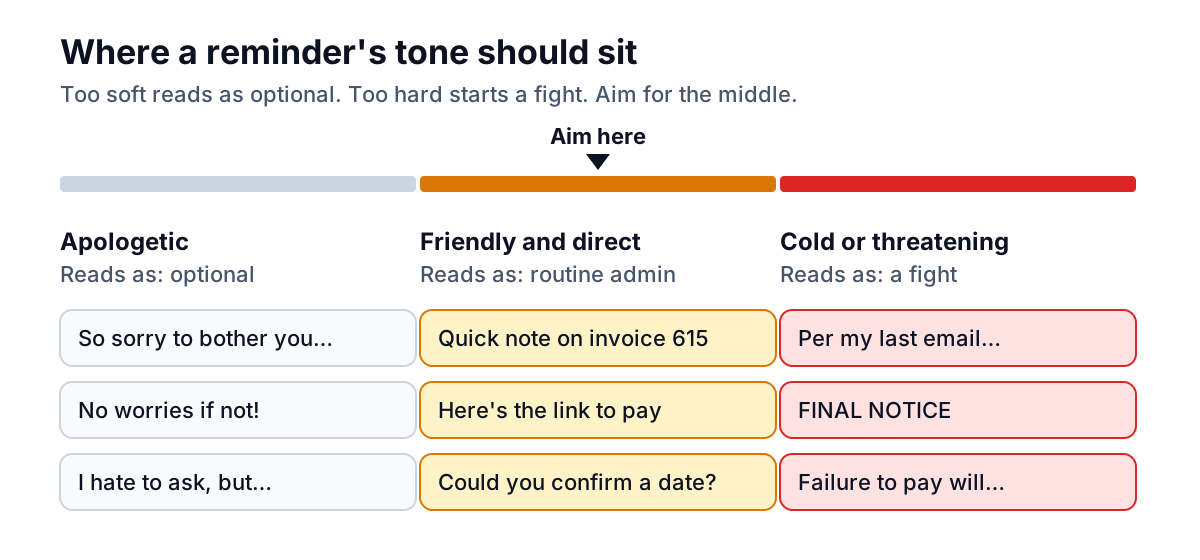
Apologetic reminders sound kind, but they hand the client a reason to wait. "No worries if not!" literally says that not paying is fine. "I hate to ask" frames a payment you've earned as something awkward. Clients are busy, and an email that signals low priority gets low priority.
Cold or threatening reminders fail differently. "Per my last email" and capital letters put the client on the defensive, and a defensive person looks for something to push back on: a line item, the timeline, your tone. You can turn a late payer into a disputing one in a single sentence. And a reminder that leans on your problems ("I have bills too") asks the client to manage your cash flow, which isn't something they signed up for.
Friendly and direct reminders treat the late invoice as what it usually is: a small process failure. The invoice got buried, went to the wrong person or is waiting on a signature. The message assumes good faith, states the facts and makes the next step easy. There's nothing to argue with and nothing to feel bad about, so the path of least resistance is to pay.
Three ideas sit underneath that tone:
- Specific beats emphatic. "Invoice 615 for $2,750, due Oct 12" carries more weight than "your overdue balance", without a single exclamation mark.
- Easy beats urgent. A pay link does more than "ASAP". Every extra step between reading and paying is a chance to postpone.
- Questions beat statements. "Is anything holding it up?" gives the client a reason to reply, and the reply tells you what's actually wrong.
What reply data says about tone and length
There's little public research on invoice reminders specifically, but there is good data on what makes people answer email in general, and it lines up with the advice above. Treat it as a guide rather than a guarantee for your clients.
On sign-offs, Boomerang analyzed over 350,000 email threads and found that emails closing with "Thanks in advance" got replies 65.7% of the time, "Thanks" 63.0% and "Thank you" 57.9%, against an average of 47.5% across all the emails in the study. Closings that expressed gratitude did noticeably better than those that didn't.
On length and structure, a separate Boomerang study of more than 40 million emails found that messages between 50 and 125 words all had reply rates above 50%. Emails that asked one to three questions were 50% more likely to get a response than emails with no questions. And subject lines of three or four words got the most responses.
Put together, that describes a friendly payment reminder almost exactly: short but not curt, one clear question, a short subject such as "Invoice 615 for $2,750", and a thank-you at the end.
Seven wording swaps for a friendlier invoice reminder message
You don't need to rewrite your reminders from scratch. Most of the improvement comes from swapping a handful of phrases. Each swap below replaces a feeling with a fact, a link or a clear request.
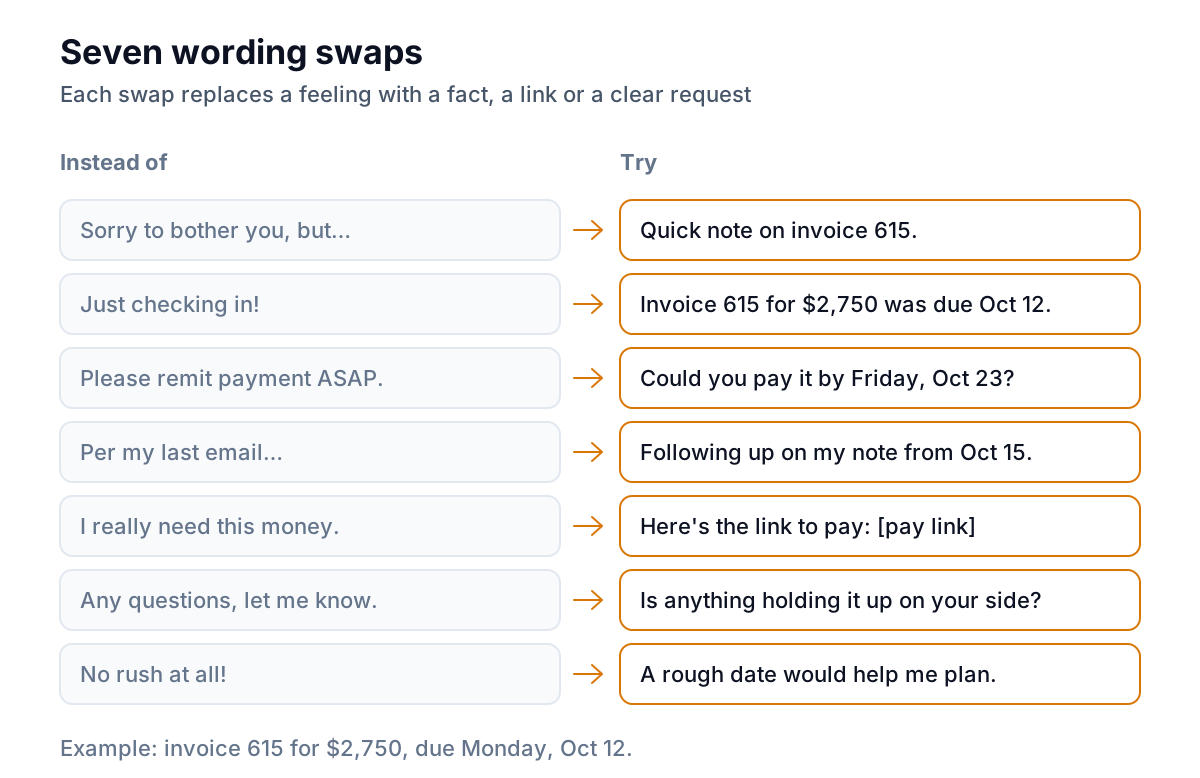
- "Sorry to bother you" → "Quick note on invoice 615." Opens with the subject, not an apology. "Quick note" keeps it light without saying sorry.
- "Just checking in!" → the invoice facts. "Checking in" makes the reader work out what you mean. The number, amount and due date do it for them.
- "Please remit payment ASAP" → "Could you pay it by Friday, Oct 23?" "ASAP" is a mood. A date is a request someone can say yes to. And nobody talks like "remit".
- "Per my last email" → "Following up on my note from Oct 15." Same information, minus the eye-roll everyone hears in the original.
- "I really need this money" → the pay link. Your need is real, but it isn't the client's reason to pay. Make paying easy instead.
- "Any questions, let me know" → "Is anything holding it up on your side?" A generic offer gets no reply. A direct question about blockers usually does.
- "No rush at all!" → "A rough date would help me plan." Keeps the warmth, removes the permission to ignore it, and gives a real reason for asking.
A few more worth making while you're there: drop "kindly" (it reads as stiff in American English), replace "outstanding balance" with the invoice number, swap "as per our agreement" for the plain fact ("our terms were 14 days"), and never write a reminder in all capitals, even the subject.
Build an invoice reminder message in four parts
Once the phrases are right, structure does the rest. A good invoice reminder message has four parts, and you can write each one in a sentence or two. Here's a complete example from Juniper Interiors, a sample design studio, to a client whose invoice is a few days late:
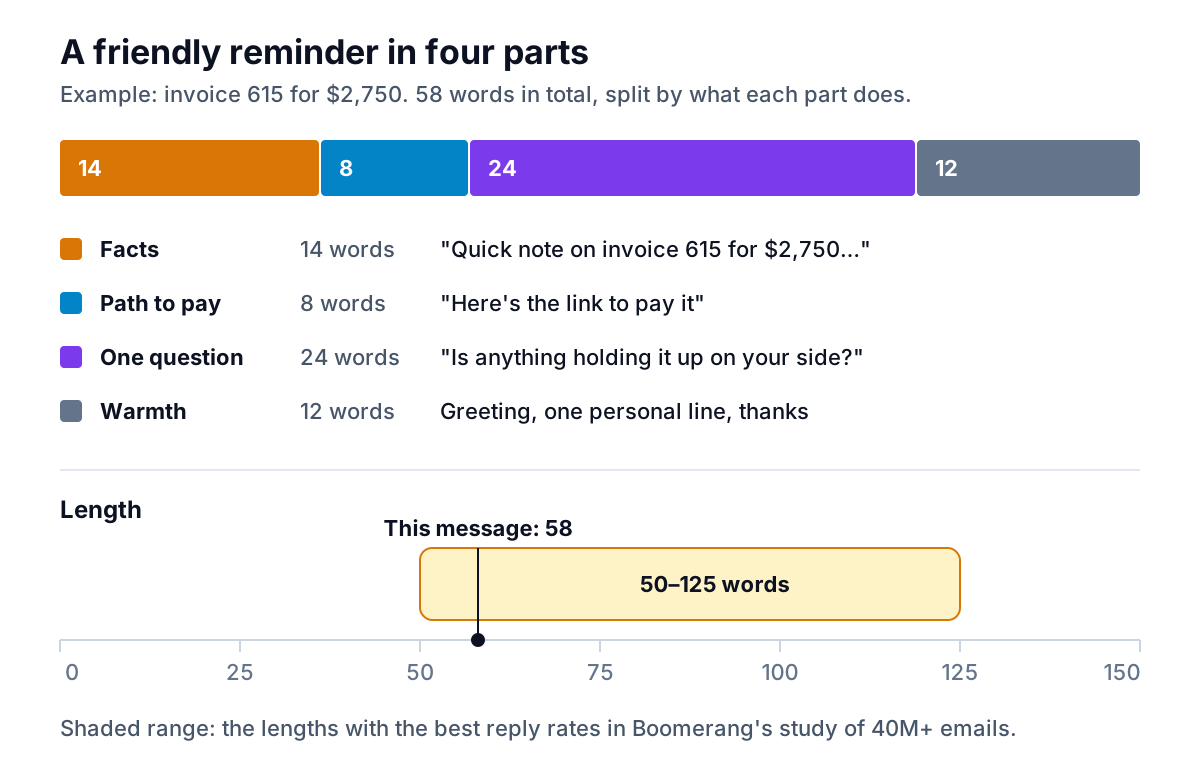
- Facts (one sentence). Invoice number, amount and due date, copied from the invoice, not typed from memory. If the client has paid part of it, give the remaining balance.
- Path to pay (one line). The pay link for that invoice. If the client pays by bank transfer or check, say where the details are.
- One question. Something easy to answer that surfaces the real problem. Later in the sequence, the question becomes "Could you confirm the date it will be paid?"
- Warmth (a greeting, one true line, thanks). One specific personal line beats a generic "Hope you're well", but only if it's genuine. If you have nothing specific, skip it and let "Thanks" do the work.
What's missing is as important. There's no history of earlier reminders, no explanation of why you need the money, no mention of late fees and no deadline. Those belong to a different, firmer stage, if you ever get there. Our guide on how to chase unpaid invoices covers when that point arrives.
Keep it sounding like you
The fastest way to sound desperate is to sound like a template. Clients can tell when a reminder was written by someone pretending to be a finance department. Use the words you'd use on a phone call with this client.
That means adjusting for the relationship. Here's the same reminder for two very different clients:
The facts, the link and the question are identical. Only the register changes. A law firm's accounts team gets the first one. The café owner you text about paint colors gets the second.
Three checks keep your voice intact:
- Read it out loud. If you wouldn't say a sentence to the client's face, rewrite it.
- Sign it the way you sign everything else. If you're "Nina" in every other email, don't become "Accounts, Juniper Interiors" when money is involved.
- Keep the tone flat across the sequence. Reminder three should sound like reminder one. What changes is the request (a question, then a date), not the temperature. For examples of how that plays out with different kinds of clients, see our annotated overdue invoice email examples, and for a full set by due date, our invoice reminder email templates.
Friendly, in your voice, and never sent without you
Writing a calm, specific reminder is easy when you have one late invoice and a quiet afternoon. It's much harder with eight late invoices at the end of a long week, which is exactly when the apologetic or snippy versions get written.
That's the problem Parity's invoice chaser is built around. It connects to QuickBooks Online, Xero or FreshBooks, or takes PDF invoices and exports from other systems, and drafts one friendly reminder for each overdue, unpaid, undisputed invoice. Drafts are written in your voice, learned from three of your past emails or a tone you pick, and follow the four-part shape above: the facts, the invoice's own pay link, and a clear ask. Every amount, due date and invoice number is checked against your books before a draft can be sent.
And nothing is sent until you approve it. You can edit any draft, skip it or snooze it, which matters because tone is a judgment call and it should stay yours. The email goes out under your business name with you as the reply-to, so the client's answer comes straight back to you. We explain why we built it that way in why an AI should never send a payment reminder without your approval. Version 1 sends friendly reminders only, by email. Parity launches in late November 2026.
Parity drafts each friendly reminder in your own voice with the right numbers, and sends nothing until you say so. Get early access to Parity's invoice chaser