Three clients owe you money this week. One is a monthly retainer client who's always been fine. One hired you once, loved the work and has now been silent for three weeks. One paid, but $450 short. A single "friendly reminder" template can't handle all three, because each one is late for a different reason.
So instead of one template, here is a chasing overdue invoices email example for each of five common situations, with notes on why each line is there. The businesses and people are samples, but the problems are the ones service businesses run into every month. In the QuickBooks 2026 Small Business Late Payments Report, 22% of small businesses said at least a fifth of their invoices were unpaid more than 30 days past due. You're in good company.
Five chasing overdue invoices email examples, and how to pick one
Two questions decide which email to send. First, is this an ongoing client or a one-off job? With an ongoing client, you're protecting next month's invoice as well as this one. With a one-off job, this invoice is the whole relationship. Second, is the client replying to you, or have they gone quiet? A client who replies needs a clear next step. A client who doesn't reply needs a different route to the person who pays.
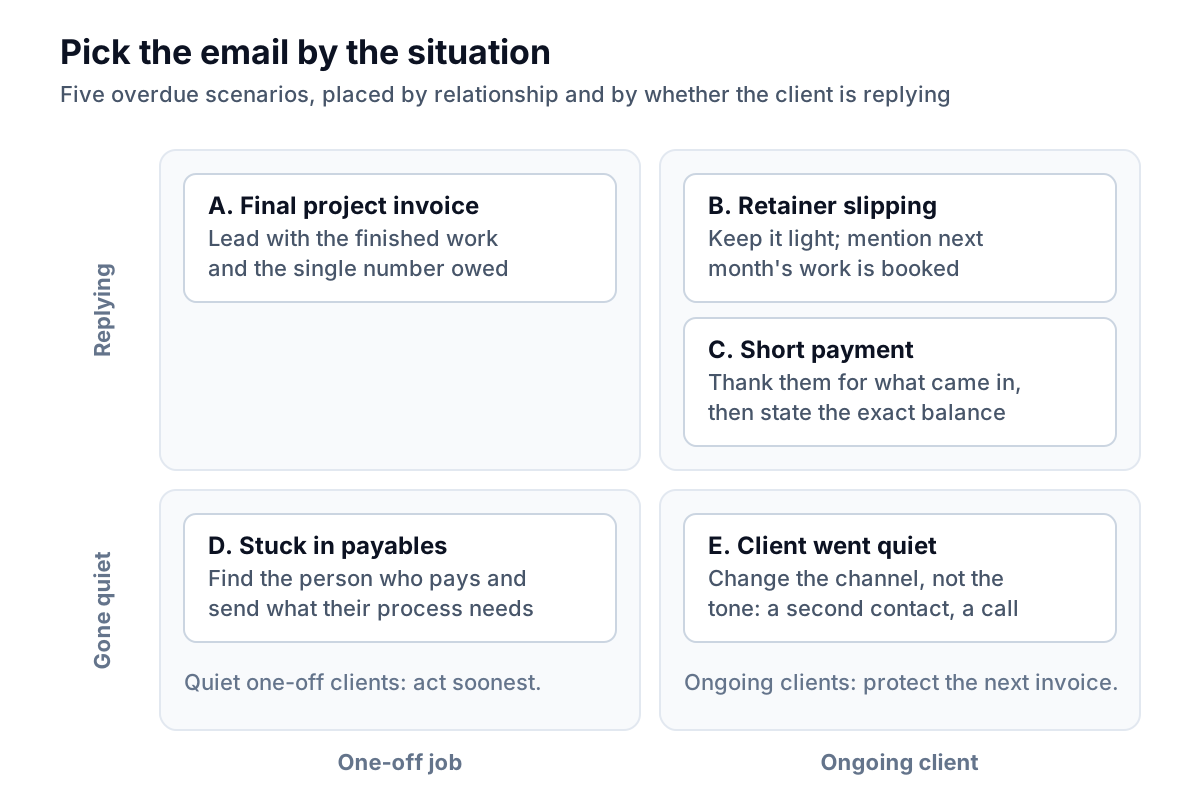
Every example follows the same base rules. The invoice number, amount and due date appear in the first two lines. There's a pay link. There's exactly one thing to reply to. And none of them apologize for asking to be paid for work you've already done. Treat each chasing overdue invoices email example as a starting point: keep the structure, and swap in your own phrasing.
Ongoing clients: protect next month too
Example B: the retainer that slipped
The situation. Leo runs Brightline Marketing, a sample two-person agency. Priya's company has paid its $2,400 monthly retainer on time for eight months. October's invoice, number 3318, was due on Monday, November 2. It's now Thursday, November 12, and nothing has come in.
Why it works:
- It assumes a process problem. After eight on-time payments, the likeliest cause is a change in who handles invoices. The question goes straight at that.
- It mentions the ongoing work, without making it a threat. "November's work is on track" reminds Priya that the relationship is active, which quietly raises the priority of the invoice. It doesn't say "or we'll stop", and it shouldn't at 10 days late.
- The subject names the month. On a retainer, "October retainer" is how the client thinks about it, so it's what they'll search for.
Example C: the short payment
The situation. Kestrel Bookkeeping, a sample firm, billed $1,350 on invoice 774 for quarterly catch-up work. The client paid $900 on the due date with no note. The remaining $450 is now two weeks late.
Why it works:
- It opens with thanks for the money that did arrive. That's true and fair, and it sets a cooperative tone for the part that's missing.
- It shows the arithmetic. $1,350 minus $900 is $450. Stating both numbers saves the client from digging out the invoice.
- It allows for a reason. A short payment is often deliberate: a disputed line, a discount someone thought was agreed, a fee taken off. "If the difference was intentional" invites them to say so, and if they do, you stop chasing and talk about the line, because now it's a dispute, not a late payment.
One-off jobs: one shot at the relationship
Example A: the final project invoice
The situation. Fieldstone Web Co, a sample studio, built a new website for Tidewater Yoga. The client paid a 50% deposit up front. The final invoice, number 5520 for $4,800, was due on Friday, October 9, a week after launch. It's now 12 days late. The client replies to emails but hasn't mentioned the invoice.
Why it works:
- It starts with the delivered work. On a one-off project, the value fades fast once it's live. One sentence about the result reminds the client what they're paying for.
- "That's the last payment" frames the size. It tells the client this closes the project, not that more bills are coming.
- The question is about blockers. Small organizations often need a second person to approve a larger payment. Asking what's needed brings that out.
Example D: stuck in accounts payable
The situation. Ridgeback Electrical, a sample contractor, finished a lighting job for Summit Property Group, a sample property manager. Invoice 2290 for $5,600 was due on October 5. The site manager who hired them says "it's with accounts". Accounts hasn't replied to anything.
Why it works:
- It is written for a stranger. The AP clerk doesn't know you. The email names the job, the site, the approver and the amount, so it can be matched without a single follow-up question.
- The subject asks what they need. AP teams process what's complete and park what isn't. Offering the missing paperwork up front removes the most common reason for parking.
- It names the internal approver. "Approved by Jamie Ortiz" tells AP the work is real and gives them someone internal to check with.
The client who went quiet
Example E: three emails, no reply
The situation. Copperline Builders, a sample client of a small architecture practice, owes $6,750 on invoice 1187, due Friday, October 2. Two friendly reminders to Dana, the owner, have gone unanswered. Dana has always been responsive before.
Silence after two emails rarely means "I'm refusing to pay". More often, the emails aren't being read: the person is away, swamped or filtering anything that looks like a bill. Sending a sharper email to the same inbox doesn't fix that. Changing who gets it, and how, usually does.
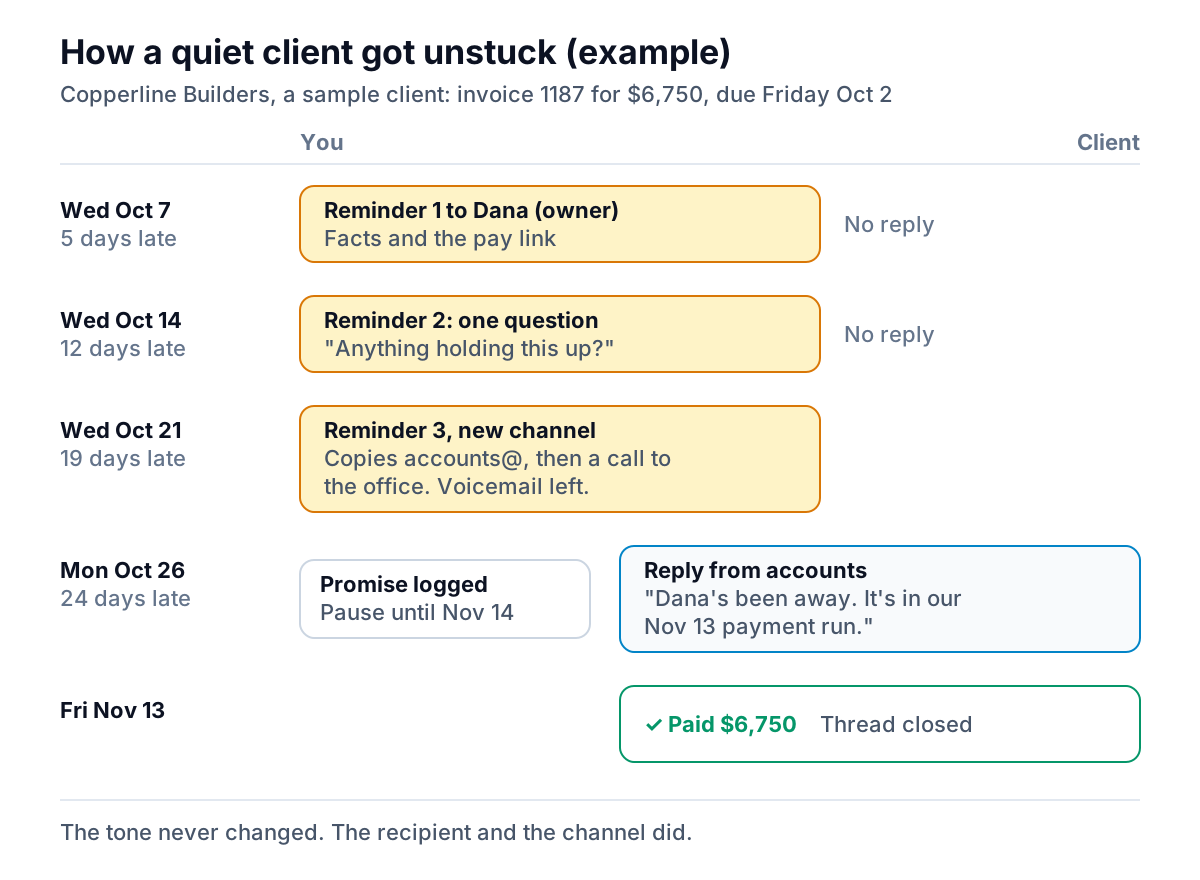
Here's the third reminder, which copies the client's general accounts address:
The call goes to the office, not Dana's mobile. Keep it to one question: "Can you tell me where invoice 1187 is in your process?" In this example, the accounts team replied five days later: Dana had been away, and the invoice was in the November 13 payment run. Jess sent a short confirmation and then stopped chasing until the day after that date:
Why it works: the third email admits there have been earlier ones without blaming anyone ("I want to make sure it hasn't been lost"). Copying a second address is explained in the first line, so it doesn't look like going over Dana's head. And the closing line leaves a door open in case the silence hides a problem with the work. If the promised date passes with nothing, our guide on what to do when a client promises to pay and doesn't picks up from there.
The rewrite test before you hit send
Most bad reminder emails are written at the end of a long day, by someone who's annoyed and has every right to be. That's exactly when to slow down. Here's the same retainer invoice from Example B, written two ways:
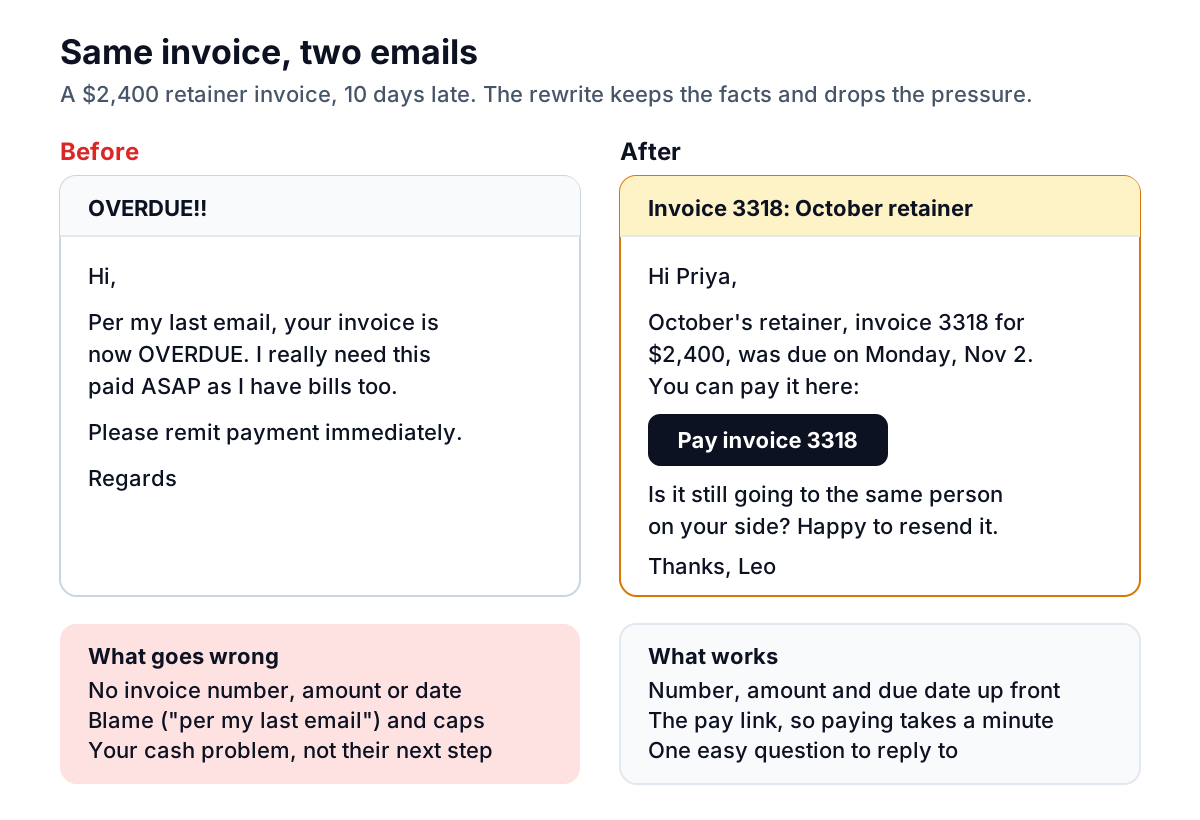
Before you send any chasing email, run it past five questions:
- Could the client pay from this email alone, without opening another one?
- Are the invoice number, amount and due date correct, and is the amount the current balance?
- Is there one, and only one, question or next step?
- Would you be comfortable if the client forwarded it to their boss?
- Does it sound like you on a good day?
If any answer is no, fix that line before you send. It takes two minutes, and it's the difference between an email that gets you paid and one that gets screenshotted.
When none of these examples fit
Sometimes no chasing overdue invoices email example will fit, because the late invoice isn't really a chasing problem. If the client says the work is wrong or the bill is too high, stop sending reminders and deal with the issue first; our guide to handling a disputed invoice walks through it. If an invoice is past 90 days and four reminders have gone nowhere, it's time for the firmer options in our main guide on how to chase unpaid invoices. And for a straightforward late invoice with no twist, the standard before, on and after the due date templates will do.
Writing each of these from scratch takes time, which is why the right email often never gets sent. That's the gap Parity's invoice chaser is built for. It connects to QuickBooks Online, Xero or FreshBooks, or takes PDF invoices and exports, and when an invoice is overdue, unpaid, undisputed and not exempt, it drafts one friendly reminder in your own voice, learned from a few of your past emails. It reads the client's replies and sorts them: a promised date pauses chasing until the day after, and a dispute stops the suggestions and comes to you.
You approve, edit or skip every draft. Nothing goes out without your OK, and the amount, due date and invoice number in each one are checked against your books first. Version 1 writes friendly emails only, so the judgment calls in this post, like when to name ongoing work or copy accounts, stay with you; you can make them in the draft before you approve it. Parity launches in late November 2026.
Parity drafts friendly reminders in your voice and sends only the ones you approve. Get early access to Parity's invoice chaser