The worst email you can send is a cheerful payment reminder to someone who has just told you the invoice is wrong. It tells them nobody read their message. It turns a disagreement about a line item into a disagreement about whether you listen. And it makes the money slower, not faster.
When a client disputes invoice charges, chasing is over for that invoice, at least for now. What replaces it is a short, specific process: stop the reminders, figure out what kind of objection you're dealing with, reply fast, collect the part nobody is arguing about, and settle the rest with evidence. This post walks through each step with wording you can use and a worked example with real numbers.
Step one: stop every reminder on that invoice
Before you think about who's right, make sure nothing automatic goes out. That means:
- Your accounting software's reminders. QuickBooks Online, Xero and FreshBooks can all send automatic overdue reminders. Check whether one is scheduled for this client and switch it off for this invoice or customer while you sort it out.
- Your own follow-up schedule. Whether it's a calendar entry, a spreadsheet or a sticky note, take this invoice off it.
- Anyone else who chases. If a bookkeeper, partner or assistant sends reminders, tell them today.
This sounds obvious, but it's where most dispute damage happens. The client writes a careful email explaining what they think is wrong. Two days later, an automated "Your invoice is now 10 days overdue" arrives. Now they're annoyed about two things.
Is it a dispute, a question or a stall?
Not every objection is a dispute. Treating a simple question like a dispute slows down a payment that was about to happen. Treating a stall like a dispute rewards it. Sort the reply first.
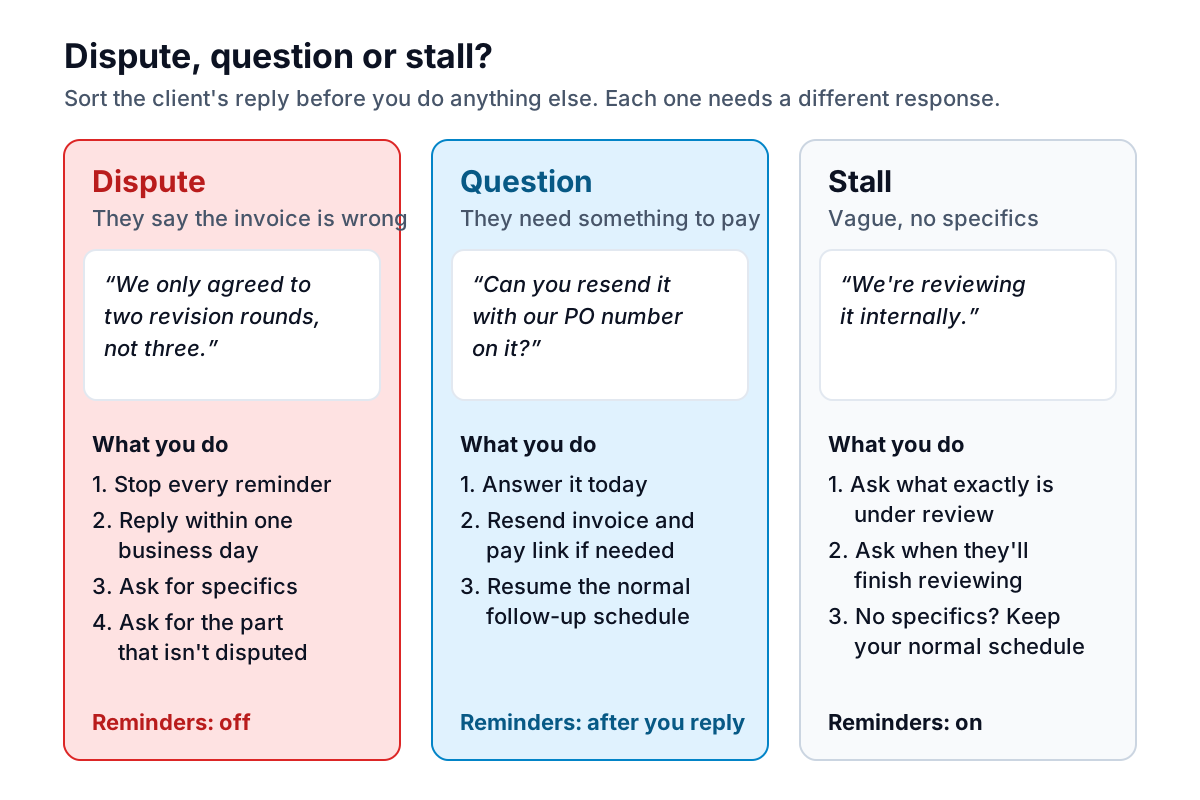
- A dispute says the amount, the work or the terms are wrong: "We never agreed to that rate," "The site still doesn't work on mobile," "We only approved two revision rounds."
- A question is a request for something they need to pay: a PO number, a W-9, a different billing address, a copy of the invoice. Answer it the same day and the payment usually follows.
- A stall sounds like a dispute but has no content: "We're looking into it," "There are some concerns." Ask, politely, what specifically is under review and when they expect to finish. If you get specifics, it's a real dispute. If you don't, it's a late invoice, and your normal follow-up schedule applies.
Your first reply when a client disputes invoice charges
Reply within one business day, even if you don't have an answer yet. Speed signals that you take the concern seriously, and it keeps the client from filling the silence with their own story.
Your first reply has three jobs: acknowledge the concern without agreeing or arguing, ask for the specifics you need, and find out whether part of the invoice is uncontested. Keep it short. A long defence in the first email reads as defensive, and it commits you to a position before you've checked your records.
Notice what that email doesn't do. It doesn't say "per our contract." It doesn't attach six screenshots. It doesn't mention late fees. You may need all of that later. Right now you need facts and goodwill.
What to avoid in the first reply
- Arguing the merits straight away. You haven't checked your records yet. If it turns out they're right, you'll have to walk it back.
- Conceding straight away. Equally, don't issue a credit note to make the discomfort go away. Look first.
- Escalating the tone. Threats in the first reply turn a fixable misunderstanding into a standoff.
- Going quiet. A week without a response tells the client the dispute worked.
Collect the part nobody is arguing about
When a client disputes invoice line items, it's usually part of the invoice, not all of it. Waiting for the whole thing to be settled before any money moves is a common and expensive mistake.
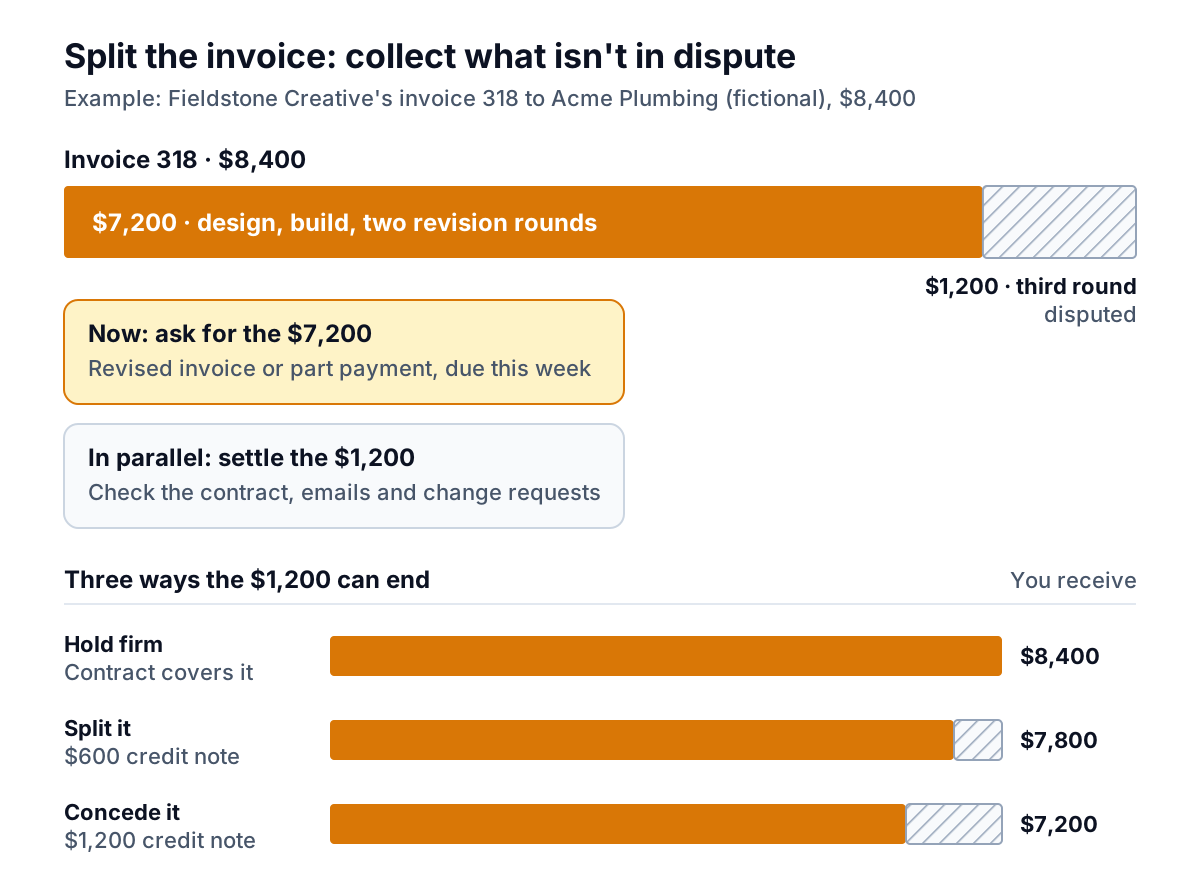
Example: Fieldstone Creative (a fictional studio) invoiced Acme Plumbing $8,400 for a website: $7,200 for design, build and two revision rounds, and $1,200 for a third round. Acme says only two rounds were agreed. Nobody is disputing the $7,200.
Alex asks Acme to pay the $7,200 now. There are two clean ways to do that:
- Accept a part payment against the original invoice. The invoice stays open with $1,200 outstanding, clearly marked as under discussion.
- Issue a revised invoice for $7,200 and a separate one for the $1,200 once it's settled. This helps when the client's accounts team can't approve an invoice that someone has flagged.
Ask the client which works better for their accounts team. Then confirm in writing which approach you've agreed, so the record is clear later.
Settle the disputed part: evidence, options and a deadline
Now look at the disputed amount properly. Start by gathering what you'd need if you had to explain the charge to someone neutral:
- the signed proposal, statement of work or contract, and what it says about scope, revisions and extra work
- any change requests or approvals, especially in writing (email counts)
- timesheets or delivery records for the disputed work
- the client's own messages asking for the work in question
- what the invoice itself says. Does the line item clearly describe what was done?
Then decide, honestly, which of three outcomes you're aiming for:
| Outcome | When it makes sense | In the example |
|---|---|---|
| Hold firm | Your agreement clearly covers the charge, and the client asked for the work in writing | Acme pays the full $8,400 |
| Split it | The agreement is ambiguous, or both sides contributed to the misunderstanding | $600 credit note; Acme pays $7,800 |
| Concede | They're right, or the amount is small next to the value of the relationship | $1,200 credit note; Acme pays $7,200 |
Do the arithmetic on your own time, too. If the disputed $1,200 would take five more hours of back-and-forth, and the client is worth $30,000 a year to you, a split might be the best business decision even if you're technically right. If the client is a one-off and your paperwork is airtight, holding firm is reasonable.
Whatever you decide, put it in writing with a date: "I've issued a credit note for $600. The remaining $600 is due by October 30." A resolved dispute without a new due date tends to drift.
If you can't agree
If the conversation stalls, your options get more formal and more expensive. A call between the decision-makers on both sides solves more than another email thread. Mediation is worth considering for larger amounts. For smaller ones, small claims court may be an option. Limits vary a lot by state (Nolo keeps a state-by-state list), and some states set lower limits for businesses: in California, a business can claim $6,250 or less. Check your state's rules before deciding. Handing a disputed invoice to a collections agency is usually a poor fit, because the dispute still has to be resolved first. See our comparison of invoice chasers, agencies and doing it yourself.
Stop disputes before they start
Every dispute you resolve teaches you something about how the next one could have been avoided. The common fixes are unglamorous:
- Write scope in numbers. "Two rounds of revisions" beats "revisions as needed." "Up to 10 hours of support a month" beats "ongoing support."
- Get extra work approved in writing before you do it. A one-line email, "That's outside the original scope; it'll be $1,200. OK to go ahead?", prevents most of the disputes in this post.
- Itemise invoices. A single line saying "Website project: $8,400" invites questions. Separate lines for each phase let the client approve what they agree with.
- Send invoices to the right person, with what they need. PO numbers, the right legal entity name and the right billing contact turn many would-be "disputes" into non-events.
- Check the numbers before every reminder. A reminder for the wrong amount, or for an invoice that's already been part-paid, can create a dispute where there wasn't one. More in why the wrong amount in a reminder costs more than you think.
How Parity handles a disputed invoice
The hardest part of all this is step one: making sure nothing automated keeps chasing an invoice that's become a conversation. That's a rule we built into Parity's invoice chaser from the start.
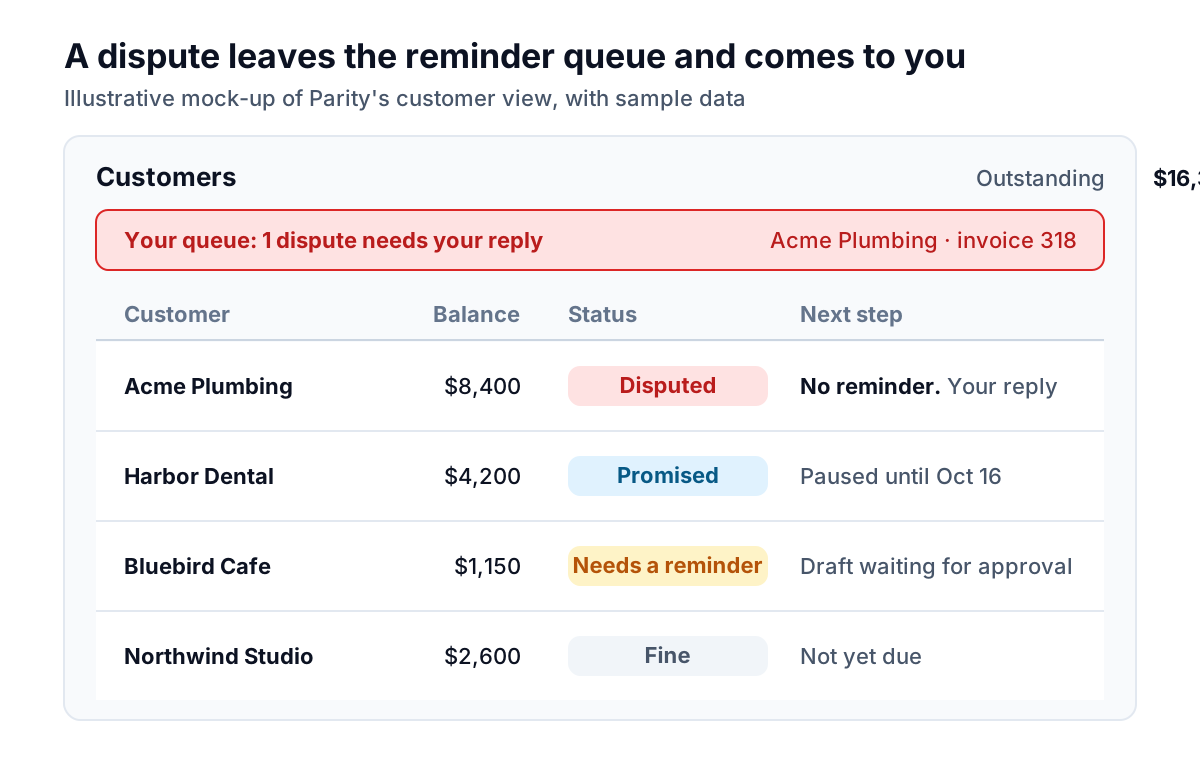
Parity reads replies to the reminders it sends and sorts each one as paid, promise with a date, dispute, question, bounce or out-of-office. When a reply is a dispute or an open question, Parity stops suggesting reminders for that invoice and puts it in your queue for you to handle personally. It won't draft another "friendly nudge" while you're working it out. The customer shows as disputed on your dashboard, next to who has promised a date and who genuinely needs a reminder.
For everything else, Parity drafts friendly reminders in your voice, checks every amount, date and invoice number against your QuickBooks, Xero or FreshBooks data before the draft can be sent, and waits for your approval. Nothing is sent without it. If your accounting software's own automatic reminders are also switched on, Parity flags it, so a client in the middle of a dispute doesn't get chased by a second system.
Parity stops suggesting reminders the moment a client raises a dispute and sends the invoice to your queue. Get early access to Parity's invoice chaser
When a client disputes invoice charges, the money usually still arrives. It arrives faster when you stop chasing, reply quickly, collect the uncontested part and settle the rest on the facts. For the invoices that aren't in dispute, our guide on how to chase unpaid invoices without losing the client picks up from here.