It's Thursday, October 15. Invoice 1042 for $3,200 was due on Monday, and nothing has arrived. The client is someone you like and want to keep. So you do what most of us do: you wait, and promise yourself you'll send something next week.
That instinct is understandable, and it's expensive. This guide shows you how to chase unpaid invoices in a way that is calm, specific and hard to ignore, without souring the relationship. It covers what to check before you send anything, a day-by-day cadence with the exact words, how to decide who to chase first, and what to do when friendly stops working.
Waiting costs more than an awkward email
Late payment is not a sign that you picked bad clients. It is the normal state of small-business invoicing. In the QuickBooks 2026 Small Business Late Payments Report, 59% of US small businesses said they had invoices overdue by 30 days or more, up from 47% a year earlier. Businesses with unpaid invoices were owed $17.7K on average. And 39% of owners said a single late payment had made it hard to cover payroll or bills.
It isn't only small firms that pay slowly. Atradius, a trade credit insurer, found that late payments affect an average of 22% of B2B receivables in the US, and that about seven in ten US companies still face late payments (Atradius, B2B payment practices in the US 2026).
Here is the part that should make chasing easier: most late invoices are late because of process, not intent. The invoice went to someone who left. It is sitting in an approval queue. Accounts payable needs a PO number you never sent. The person who signs off was on holiday. A clear reminder fixes all of those, and the client is usually glad you sent it.
Waiting, on the other hand, makes everything harder. The work fades from memory, the budget it came from gets spent, and the eventual email has to cover more ground. A reminder sent three days after the due date reads as admin. The same reminder sent after two months reads as a complaint.
Five checks before you send anything
The fastest way to lose goodwill is to chase an invoice that was already paid, or that has the wrong amount on it. Spend two minutes on these before every first reminder:
- Is it really unpaid? Check your bank deposits and your payment processor, not just your invoicing tool. Payments get applied to the wrong invoice, or arrive with no reference at all.
- Did it reach the person who pays? Your contact may approve the work but never touch payments. If you don't know who pays, the first reminder is your chance to ask.
- Is the amount right? Look for change orders, agreed discounts, deposits and partial payments. The number in your email must match the number on the invoice to the cent.
- Does their process need something from you? PO numbers, a supplier form, a W-9 or a specific billing address can all block payment with nobody telling you.
- Is anything in dispute? If the client has raised a concern about the work or the bill, a payment reminder reads as ignoring them. Deal with the concern first. Our guide on what to do when a client disputes an invoice covers that conversation.
Once those pass, run the invoice through the same short decision sequence every time. It stops you from sending a reminder on the wrong day, or to the wrong client.
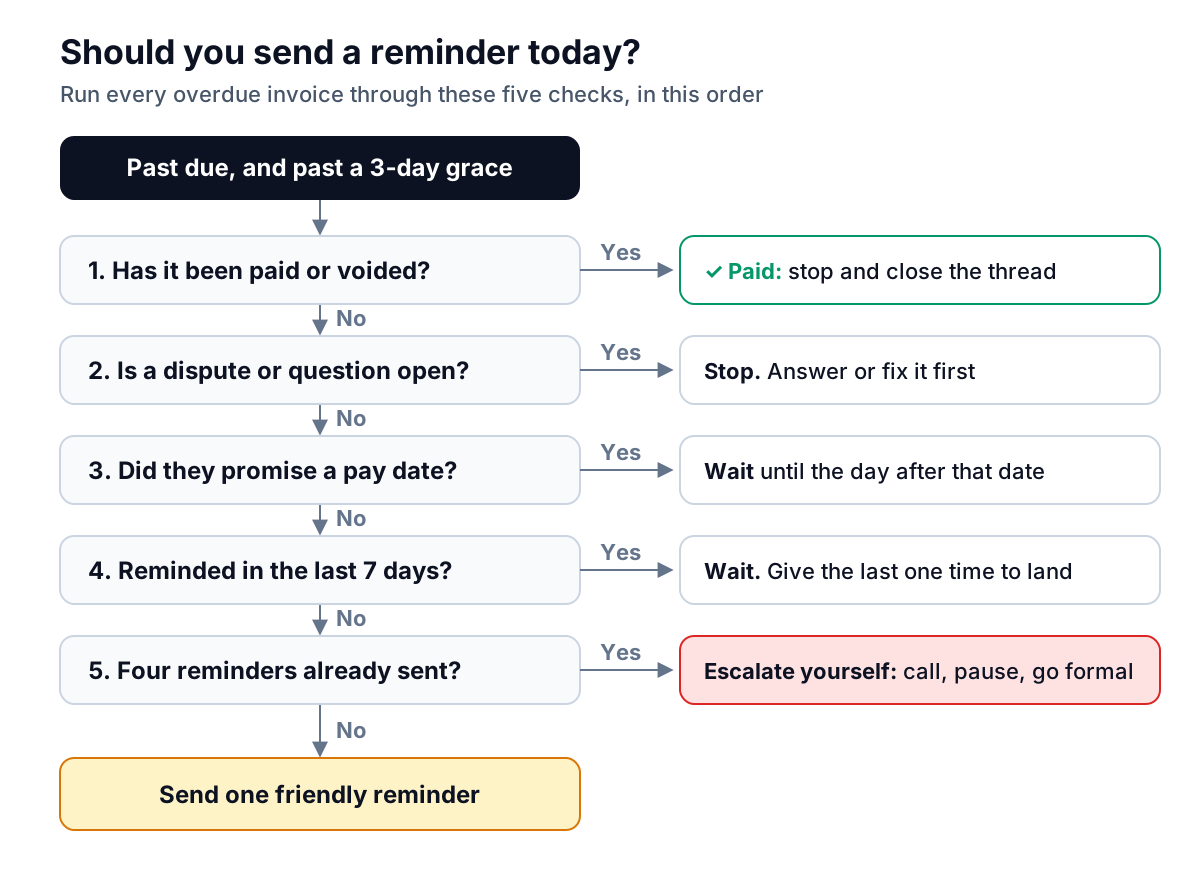
Two of those rules deserve a word. If a client promised to pay on a date, leave them alone until the day after it. Chasing before then tells them you didn't believe them. And if you have already sent four reminders, a fifth identical email won't work. That's the point where you stop emailing and make a decision, which we cover below. If a promised date comes and goes, read what to do when a client promises to pay and doesn't.
How to chase unpaid invoices: the cadence and the words
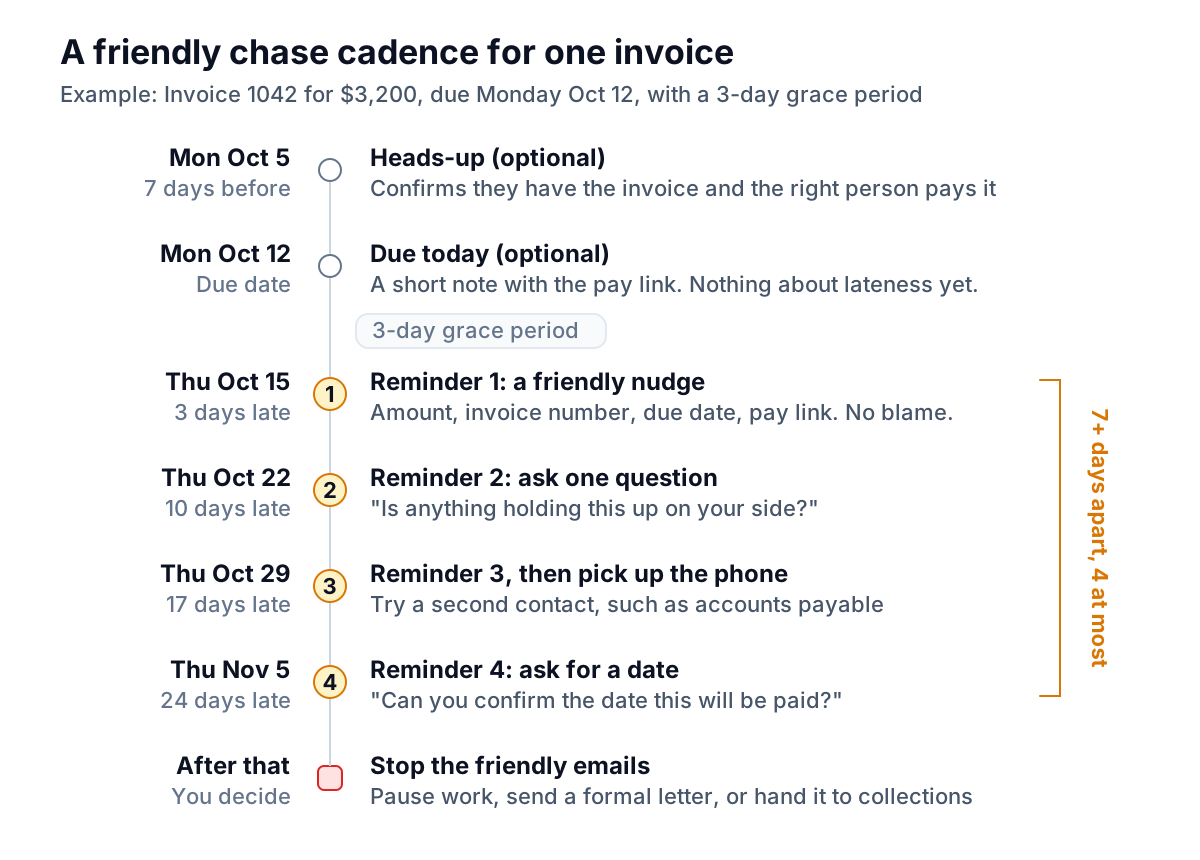
When you chase unpaid invoices, a good cadence is predictable for you and unremarkable for the client. Here is one that works for most service businesses on 14- or 30-day terms, using our example invoice: number 1042, $3,200, due Monday, October 12.
Before and on the due date
A short heads-up a week before the due date is optional, but it catches problems while they are cheap: the wrong contact, a missing PO, an invoice stuck in spam. A one-line note on the due date, with the pay link, works the same way. Neither one mentions lateness, because nothing is late yet. We have full wording for both in our invoice reminder email templates.
Reminder 1: three days late
Give it a short grace period first. Payments take a day or two to clear, and a client who paid on the due date shouldn't get a reminder. Three days is a sensible default. Then send something short and factual:
Notice what isn't there: no "just checking in", no apology, no "as per our agreement". The email gives the invoice number, the amount, the due date and a way to pay. That's all the client needs to act.
Reminder 2: ten days late
Seven days later, if nothing has happened, change one thing: ask a question. A question gives the client something easy to reply to, and the reply usually tells you what's wrong.
Reminder 3 and a phone call: seventeen days late
Two unanswered emails usually mean your email isn't reaching the right person, or isn't being read. Send the third reminder, copy a second contact if you have one (accounts payable, an office manager), and then call. Keep the call short:
"Hi, it's Dev from Oakline Studio. I'm calling about invoice 1042 for $3,200, which was due on October 12. Could you tell me where it is in your process?"
Get a name and a date. Then send a two-line email that confirms what you heard: "Thanks for your time today. As discussed, invoice 1042 for $3,200 will be paid by October 30." A written recap turns a vague phone promise into something both of you can point to.
Reminder 4: twenty-four days late
The last friendly email asks for one thing: a date.
Who to chase first when several clients are late
One late invoice is easy. Twelve is where most owners stall, because every email feels equally awkward. The fix is to sort the list before you write a word, so you chase unpaid invoices in order of risk rather than in order of guilt. Use your ageing report, which groups what you're owed by how late it is. If you haven't used one, our plain-English guide to the accounts receivable aging report explains how to read it.
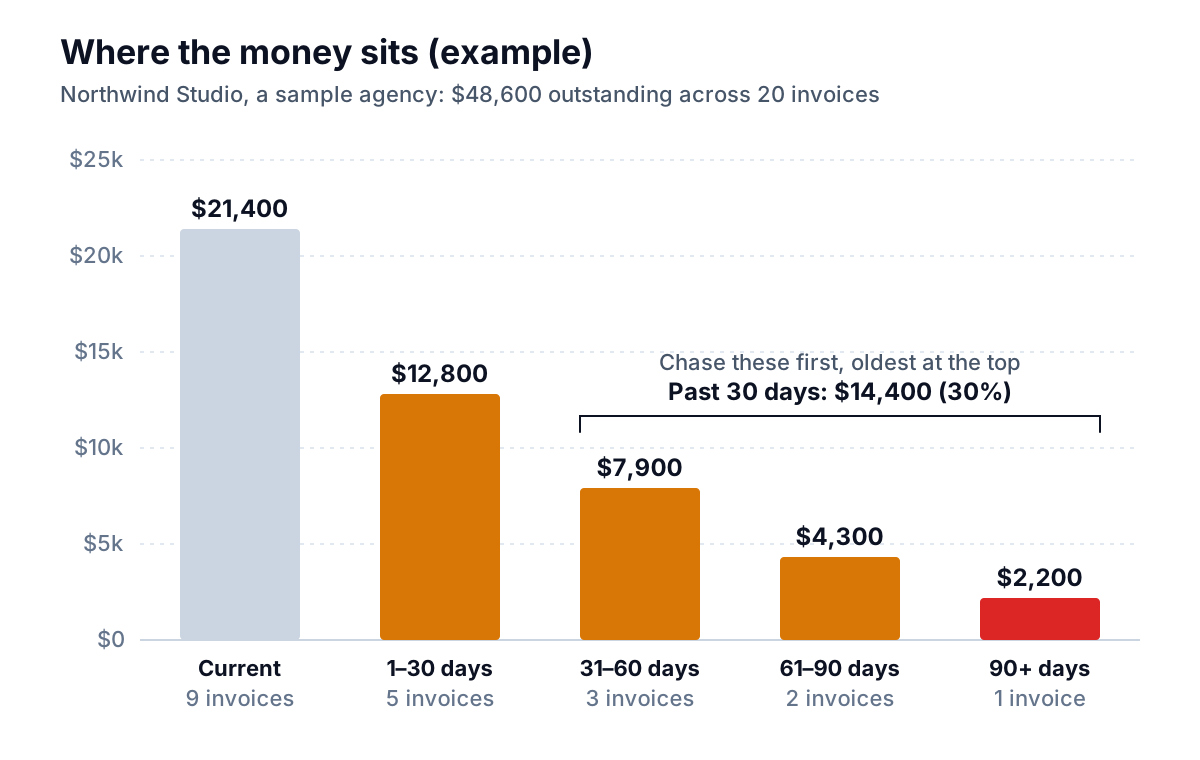
In this example, Northwind Studio is owed $48,600. The $21,400 that isn't due yet needs nothing. The $12,800 that is 1–30 days late needs the standard cadence and little else. The $14,400 past 30 days is where an hour of your attention pays off, and it breaks down by customer like this:
| Customer (sample) | Open past 30 days | Oldest invoice | Next step |
|---|---|---|---|
| Fernwood Cafe | $7,900 (3 invoices) | 52 days | Reminder 3 and a call to their bookkeeper |
| Bluebird Dental | $4,300 (2 invoices) | 67 days | Reminder 4: ask for a date |
| Acme Plumbing | $2,200 (1 invoice) | 96 days | Stop emailing; decide on escalation |
Two rules decide the order. First, age beats size. The older an invoice gets, the less likely it is to be paid at all, so the 96-day invoice gets a decision this week even though it's the smallest. Second, chase the customer, not the invoice. Fernwood Cafe has three late invoices. Send one email that lists all three with a total, rather than three separate reminders that land in the same inbox on the same morning.
When friendly stops working
After four reminders and a phone call with no payment and no date, the friendly sequence has done its job: it has proven that this isn't an admin slip. Now you choose what to do, and the options get firmer as you go down the list.
- Pause new work. If your contract allows it, tell the client plainly that you'll resume once the balance is cleared. For ongoing clients this is often the most effective step, and it needs no lawyer.
- Send a formal letter. A clear written demand with the amount, the invoice numbers, the original due dates and a deadline to pay. Keep it factual. It's the last step before outside help, and it should read that way.
- Add late fees or interest, if your terms allow it. In the US, you can generally only charge a late fee that was agreed in writing before the work, and limits vary by state. Check your state's rules before you add one. In the UK, the Late Payment of Commercial Debts Act lets a business charge another business statutory interest at 8% plus the Bank of England base rate, plus a fixed sum of £40, £70 or £100 per invoice depending on its size.
- Small claims court. For modest amounts, this can be cheaper than you'd think, but limits and filing rules differ from state to state. Your state or county court website will list them.
- A collections agency. Agencies usually keep a share of what they recover, and the client relationship is effectively over once you hand it over. Use one for amounts that justify losing the client, not as a reflex.
- Write it off. Sometimes the honest answer is that another five hours of chasing is worth less than the invoice. Talk to your accountant about how to record it.
The best escalation is the one you never need. A few habits make late invoices rarer in the first place:
- Shorter terms. In the same QuickBooks survey, 55% of businesses on net-30 terms had overdue invoices, against 26% of those that asked for payment immediately.
- A pay link on every invoice. Xero says that accepting online payments can get you paid up to twice as fast. Whatever the exact figure for your clients, a link removes a reason to wait.
- Deposits on project work. Asking for a share up front means a late final invoice hurts less.
- Ask "who pays our invoices?" at the start. Put that person on every invoice from day one.
Make chasing a weekly habit, not a mood
Most owners don't chase unpaid invoices badly. They chase them inconsistently: a burst of emails after a scary bank balance, then nothing for a month. The cure is a fixed slot. Twenty minutes every Monday is enough for most service businesses:
- Open your ageing report and list everything past its grace period.
- Run each invoice through the five checks and the decision flow above.
- Send the reminders that are due, oldest first, one email per customer.
- Note any promised dates and any disputes, so next Monday you know who to leave alone.
This is the routine we're building Parity's invoice chaser to take off your plate. It connects to QuickBooks Online, Xero or FreshBooks, or takes PDF invoices and CSV or Excel exports from anything else, and puts every invoice into one dashboard sorted into current, 1–30, 31–60, 61–90 and 90+ days. When an invoice passes a three-day grace period and is unpaid, undisputed and not marked exempt, it drafts one friendly reminder in your own voice, with your client's pay link. It follows the same rules as this guide: at least seven days between reminders, a pause until the day after any promised date, no suggestions on disputed invoices, and a flag for you after four.
Nothing is sent without your approval. You approve, edit, skip or snooze each draft, and every amount, date and invoice number is checked against your books before it can go out. Replies come back sorted into paid, promised, disputed and so on, and a Monday summary tells you where things stand. It sends friendly emails only. It doesn't text clients or send firm notices, so the escalation decisions above stay yours. Parity launches in late November 2026, and you can get early access now.
Connect your invoicing tool and Parity drafts each friendly reminder for you to approve. Get early access to Parity's invoice chaser