Know your numbers, and get paid on time.
Practical guides for small businesses on dashboards, reporting to clients, getting paid and using AI where it actually helps. Written with real examples, sourced figures and diagrams you can use.
Reports & Dashboards
Turning spreadsheets and exports into client-ready reports and dashboards you can trust.
Business Numbers
The numbers behind a small business, what each one tells you, and how to work it out from your own books.
Data Visualization
How to chart the numbers behind a business so the answer is obvious at a glance, with the data and the steps.
Getting Paid
Chasing unpaid invoices, reminder emails that work, and seeing exactly who owes you what.
Spreadsheet Skills
Excel and Google Sheets techniques for turning exports into answers, step by step.
AI for Small Business
Choosing, buying and running AI tools without a data team.
Industry Guides
The numbers that matter in one kind of business, how to work them out, and what to do when they move.
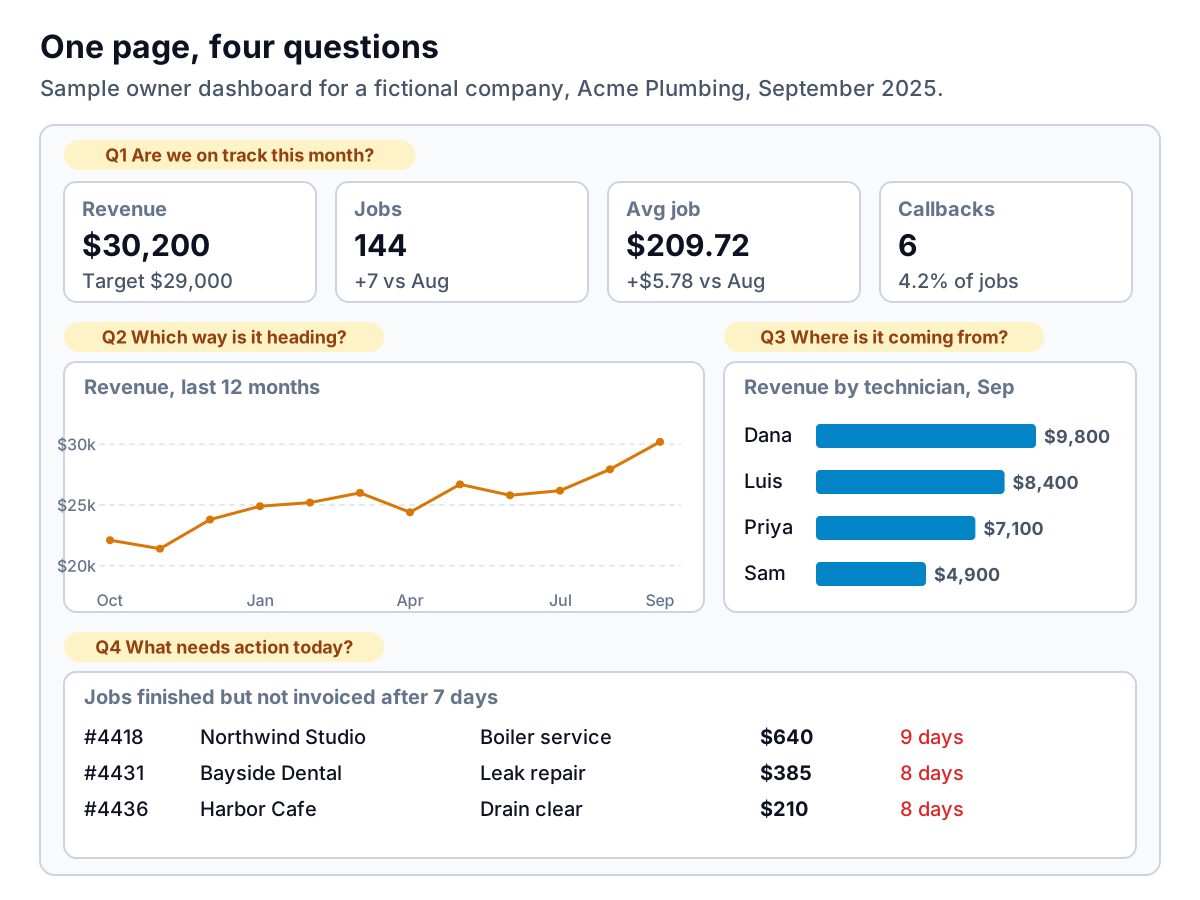
Reports & Dashboards
Turning spreadsheets and exports into client-ready reports and dashboards you can trust.
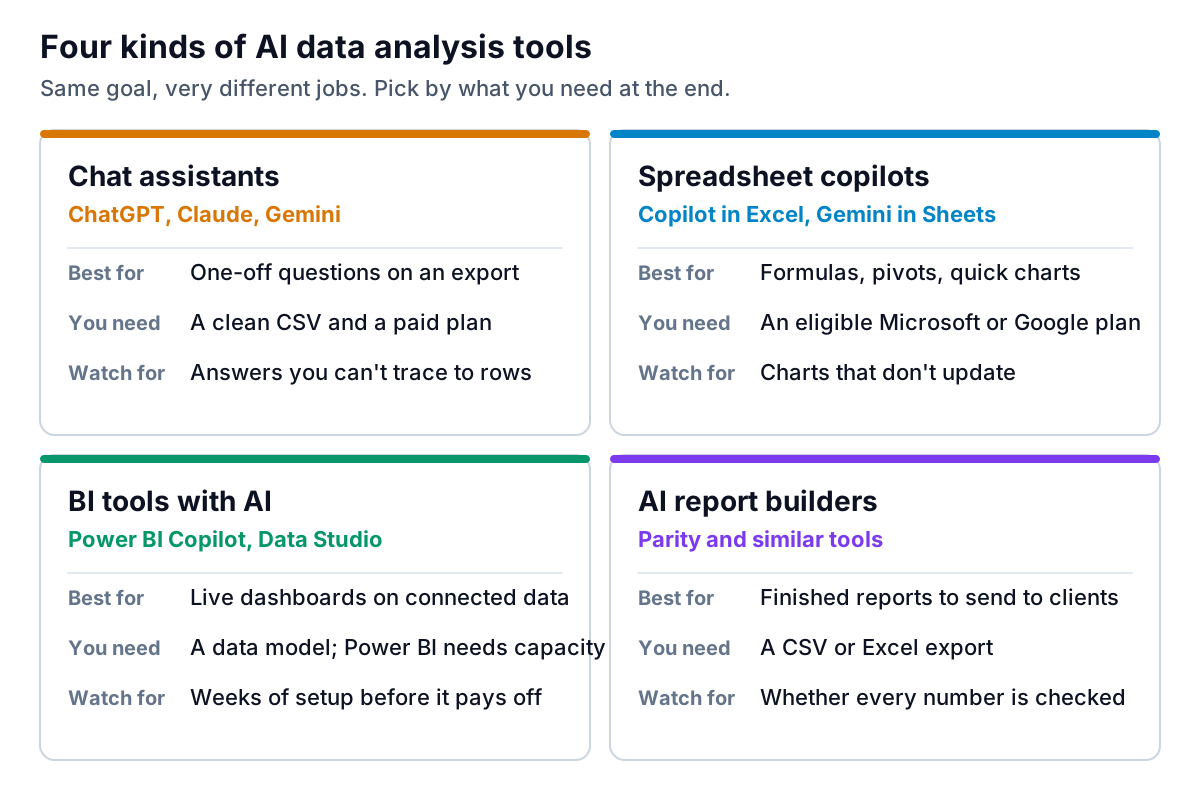
AI Tools for Data Analysis: Four Kinds, and the Test That Tells You Which to Trust
The four kinds of AI tools for data analysis, what each is good for, what it costs, and a five-question test to run before you trust any of their numbers.
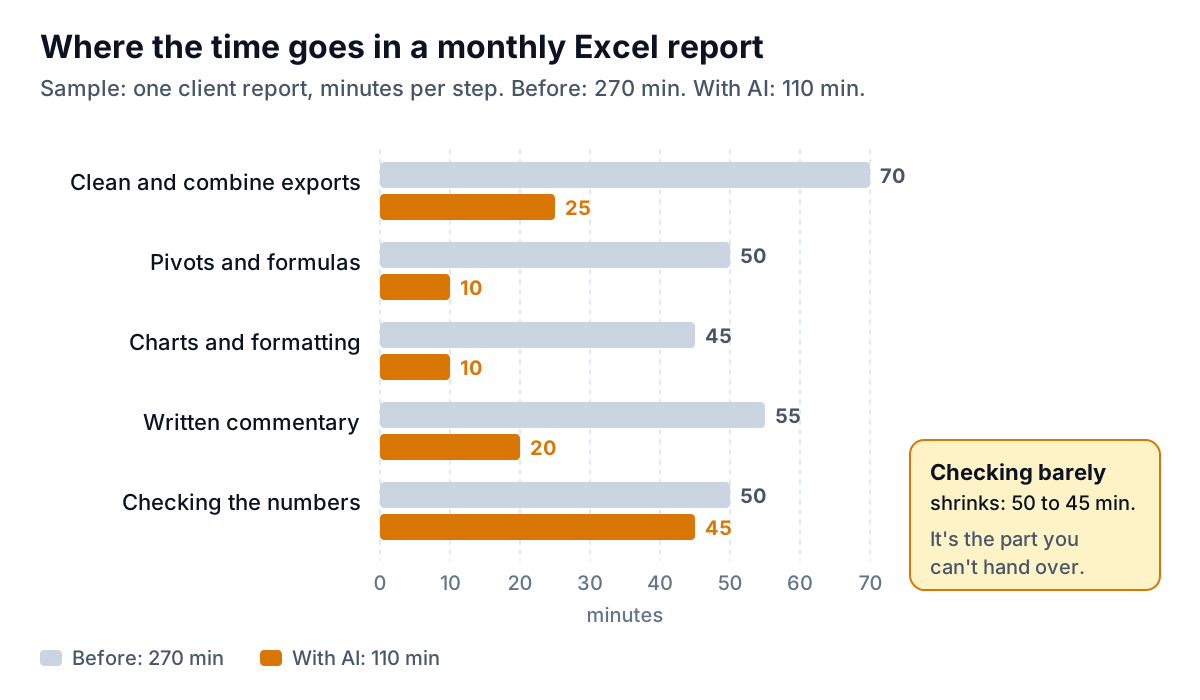
AI Tool for Excel Reports: Cut the Monthly Report From Hours to Minutes Without Losing Accuracy
How to use an AI tool for Excel reports: which steps it speeds up, how to prepare your sheet, prompts that work, and the checks you should never skip.
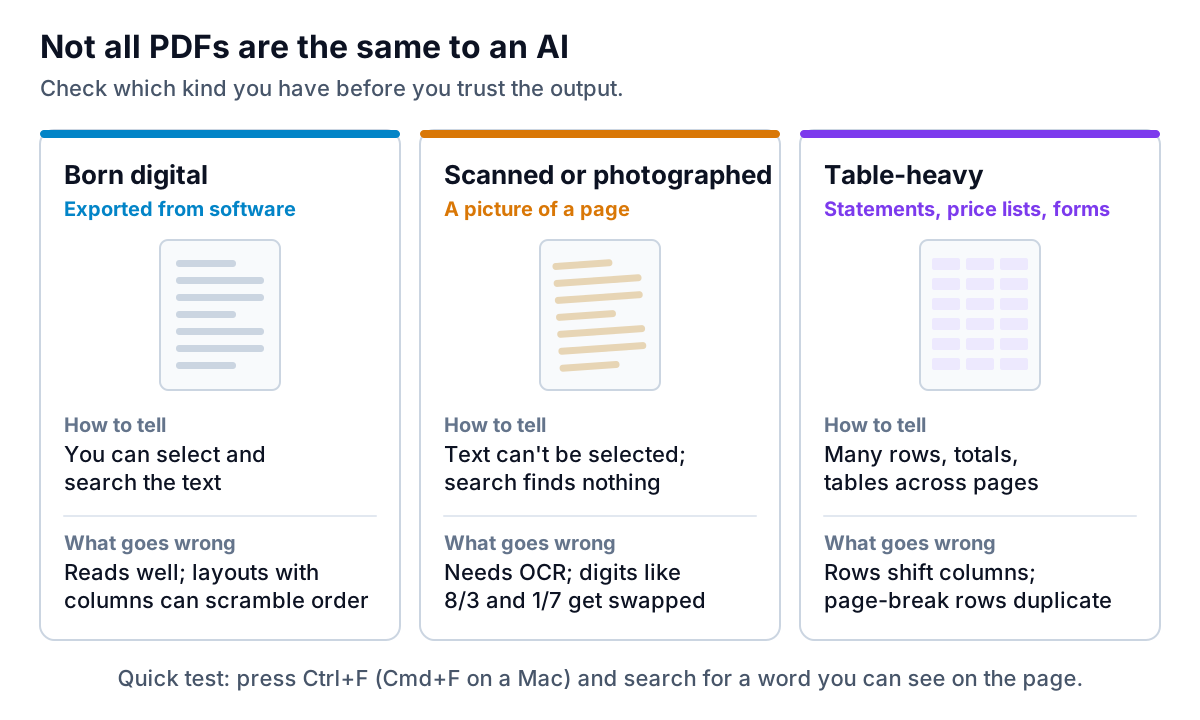
AI Tool to Analyze PDF Files: Summaries, Tables and the Checks That Catch Mistakes
Choosing an AI tool to analyze PDF files: which kind of PDF you have, tools for summaries versus table extraction, and two checks that catch most mistakes.
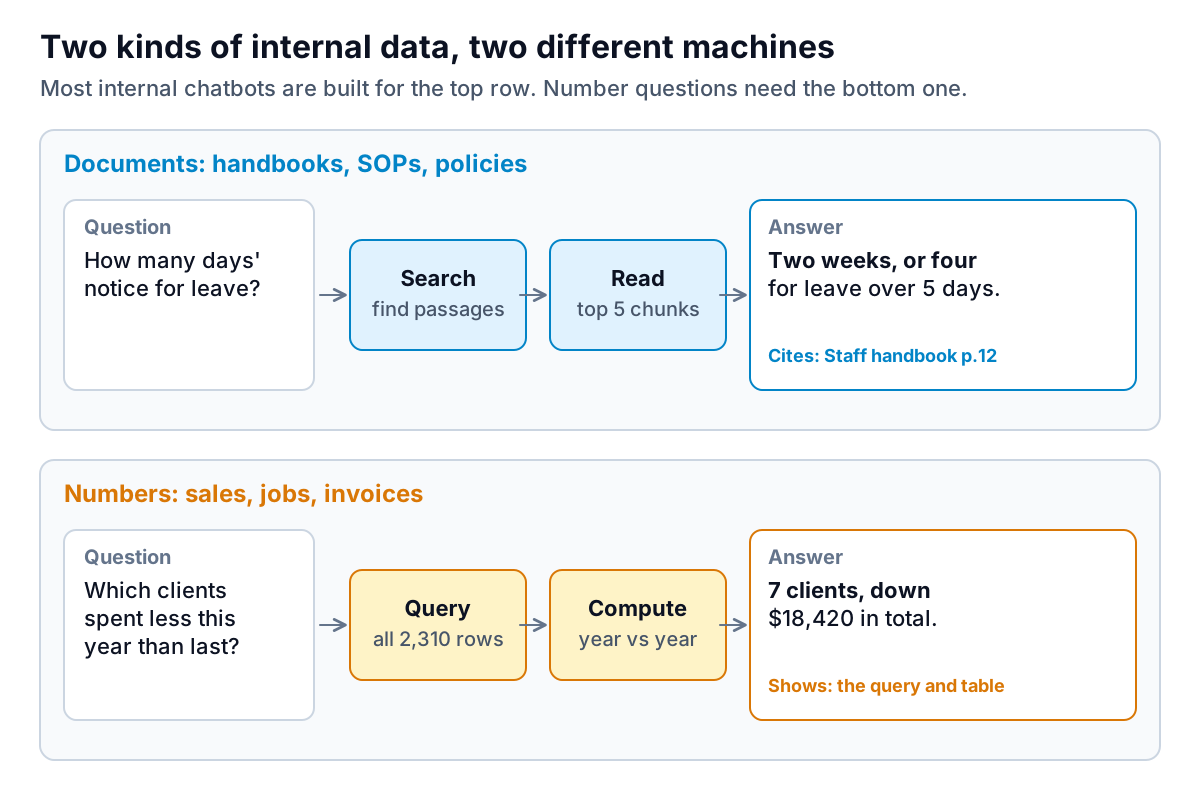
AI Chatbot for Internal Data: Documents, Numbers and the Permissions Problem
Setting up an AI chatbot for internal data: how it reads documents versus numbers, fixing file permissions first, and a 30-question pilot before rollout.
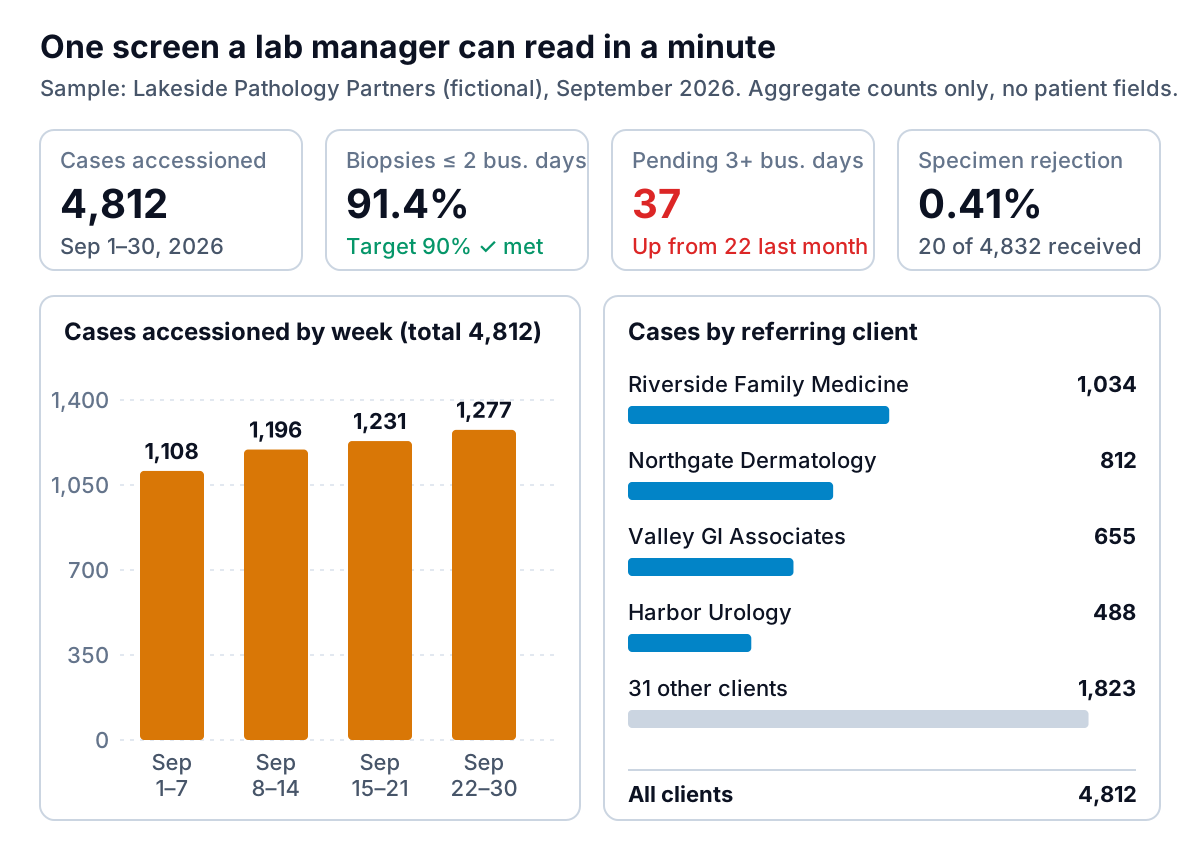
AI Dashboard for a Pathology Lab: The 8 Tiles to Build First
An AI dashboard for pathology lab operations: the 8 tiles worth building first, where each number comes from in your LIS, build options and HIPAA limits.
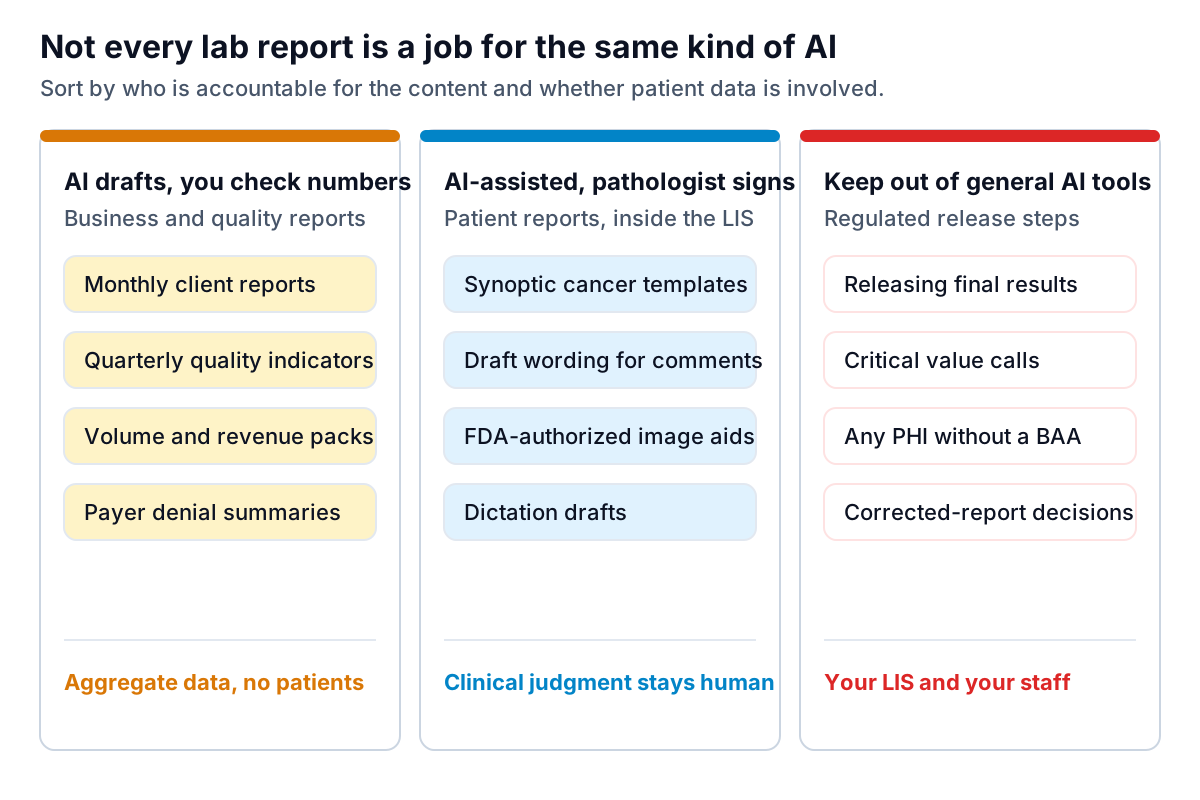
AI Report Generation for Diagnostic Labs: What to Automate and What Not To
AI report generation for diagnostic labs: which reports AI can safely draft, which need a pathologist, a client report template, and a HIPAA-safe workflow.
Business Numbers
The numbers behind a small business, what each one tells you, and how to work it out from your own books.
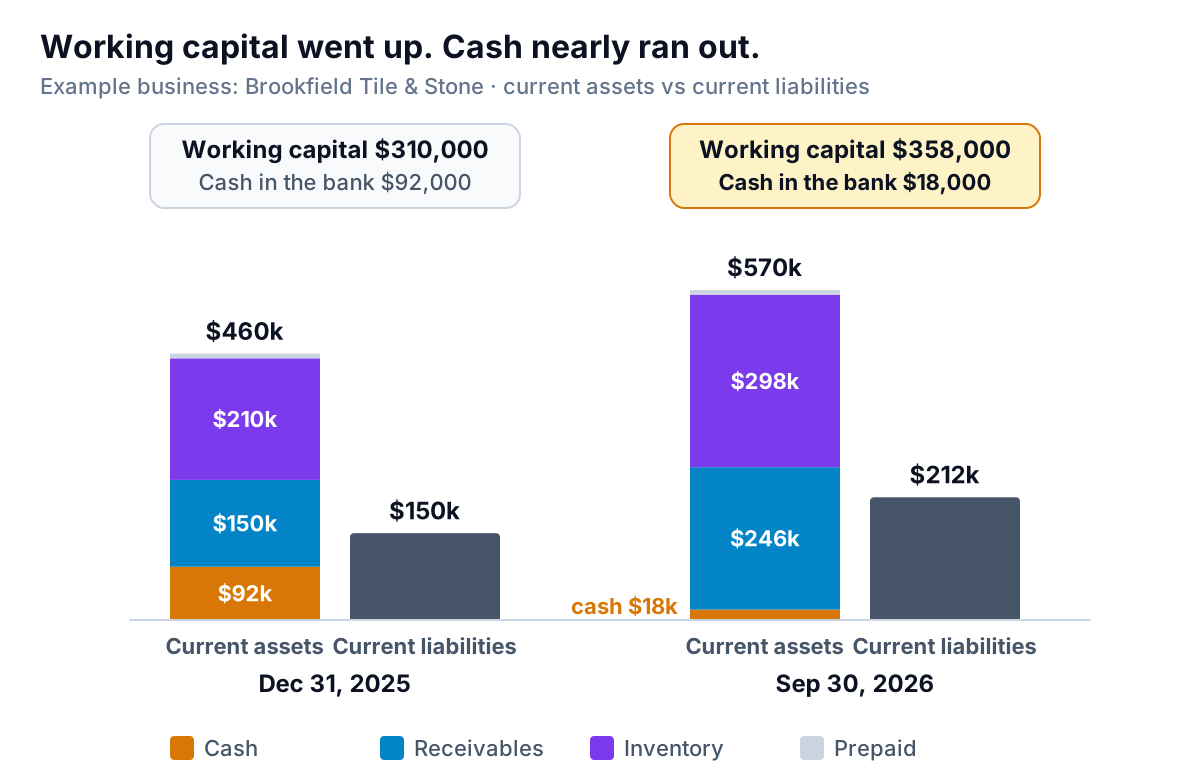
Working Capital: Why a Profitable Business Runs Out of Cash, and How to Free It
What working capital is, the formula, why profitable small businesses run short as they grow, and four ways to free cash, worked through an example.
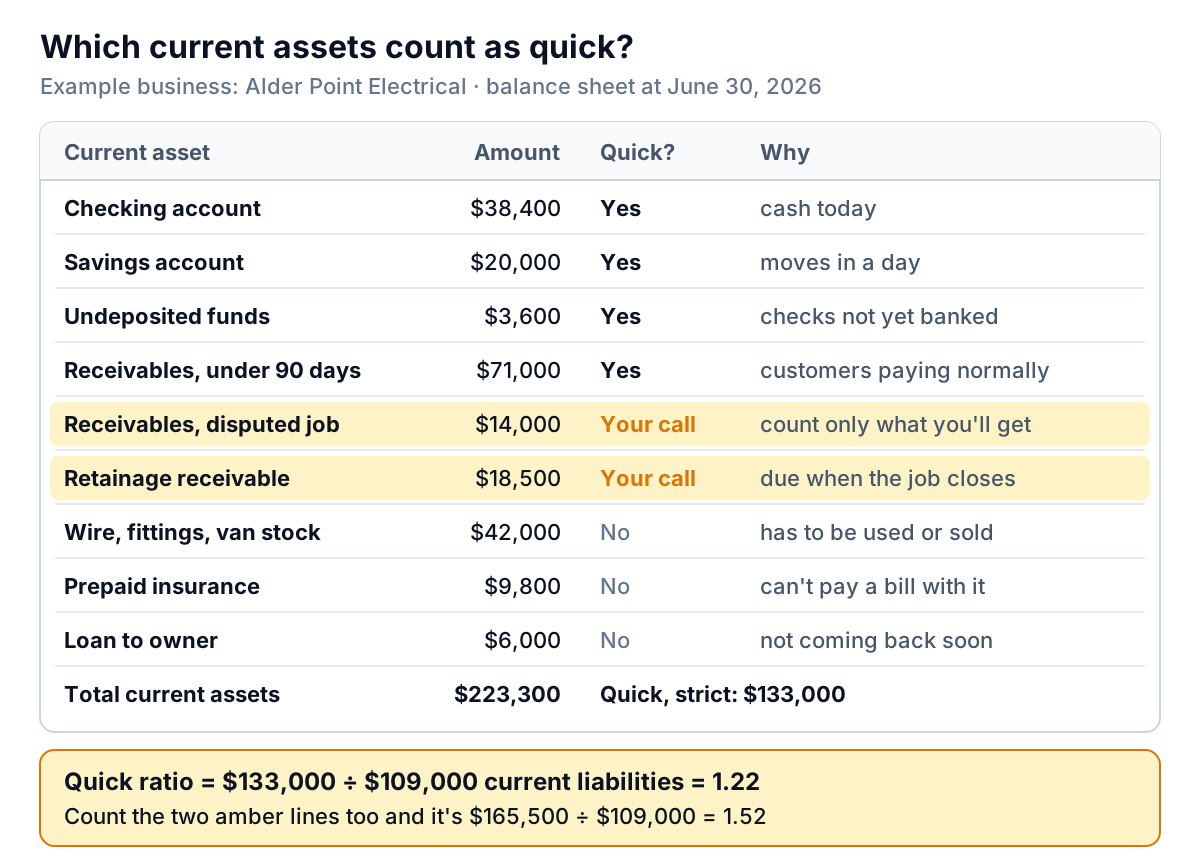
Quick Ratio: What Really Counts as a Quick Asset (With a Worked Example)
The quick ratio formula, which assets count as quick line by line, how it differs from the current ratio, and what to do when it falls, with an example.
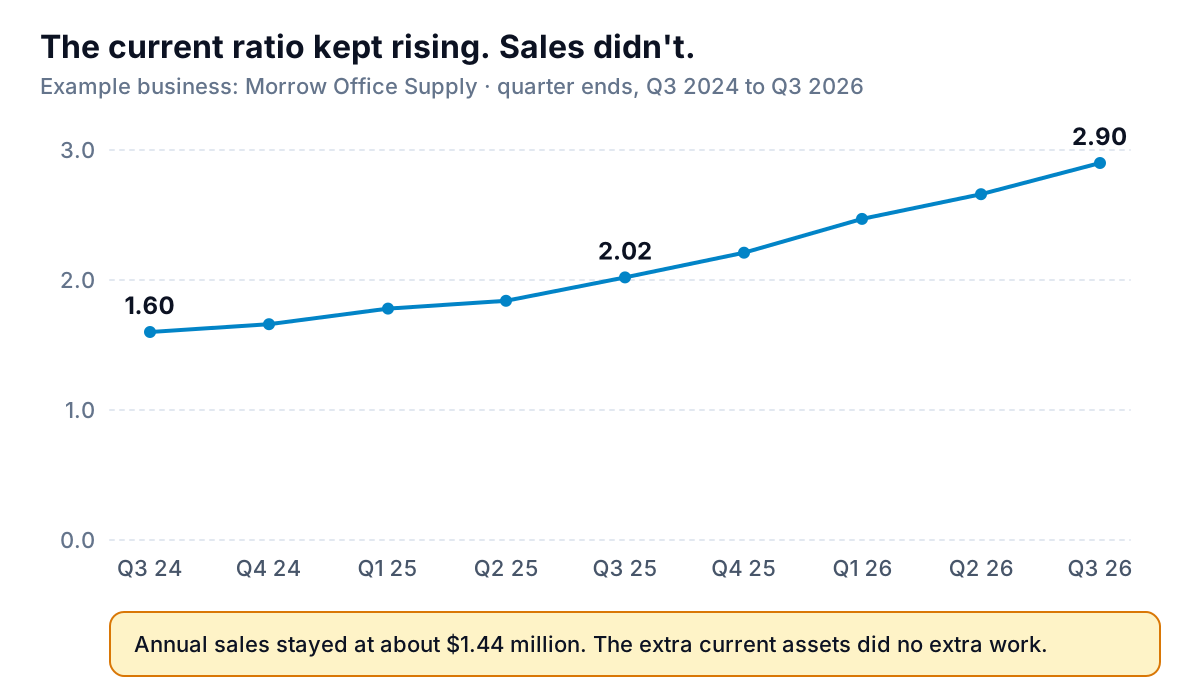
Current Ratio: What's Good for Your Business, and When High Is a Warning
The current ratio formula with a worked example, what a good current ratio looks like for different businesses, and why a rising one can be a warning sign.
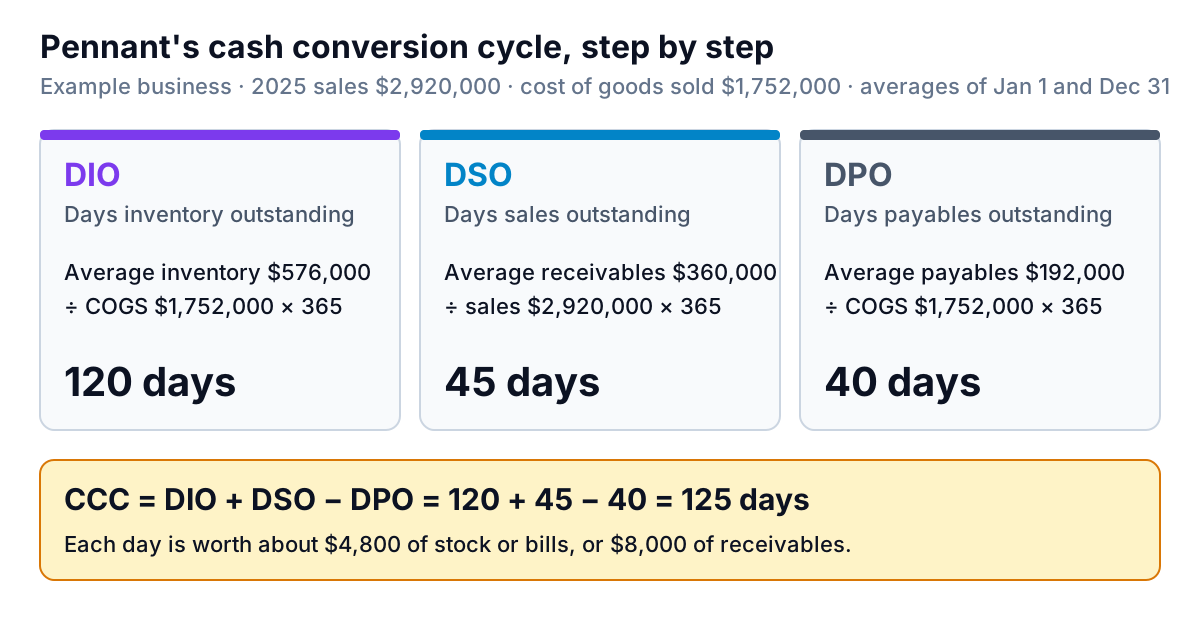
Cash Conversion Cycle: A Worked Example and How to Shorten It
How to calculate the cash conversion cycle (DIO + DSO − DPO) from small business books, what each day is worth in cash, and the changes that shorten it.
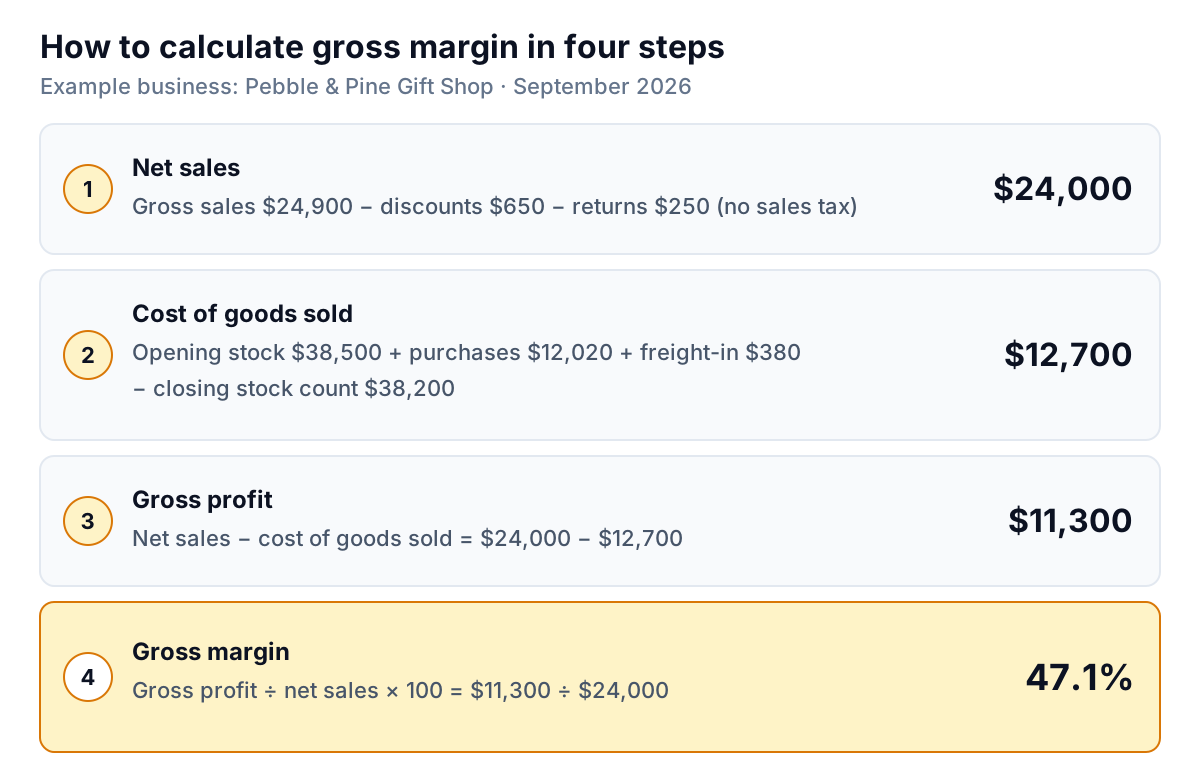
How to Calculate Gross Margin: Overall, per Product and in a Spreadsheet
How to calculate gross margin step by step, overall and per product, with spreadsheet formulas, what belongs in COGS and why your till and books disagree.
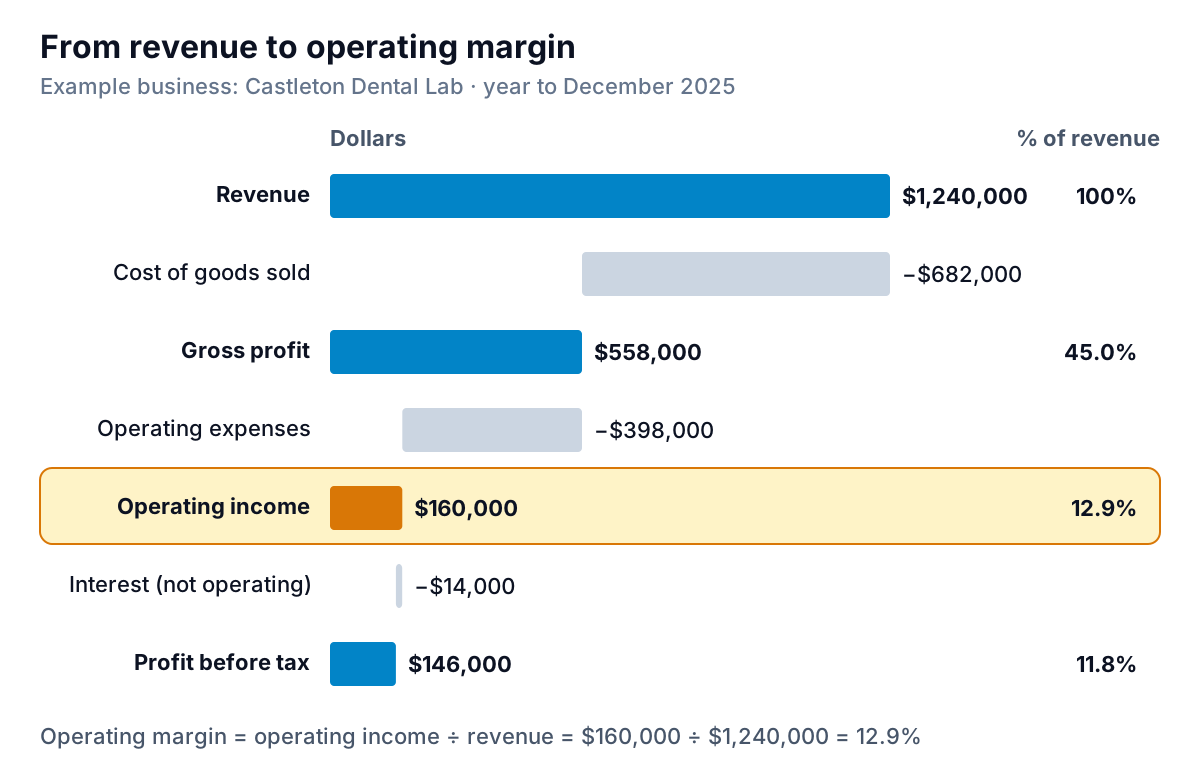
Operating Margin: What It Shows That Gross Margin Hides, and How to Raise It
Operating margin explained with a small-business example: the formula, why it can fall while sales grow, the owner's pay adjustment and fixes that move it.
Data Visualization
How to chart the numbers behind a business so the answer is obvious at a glance, with the data and the steps.
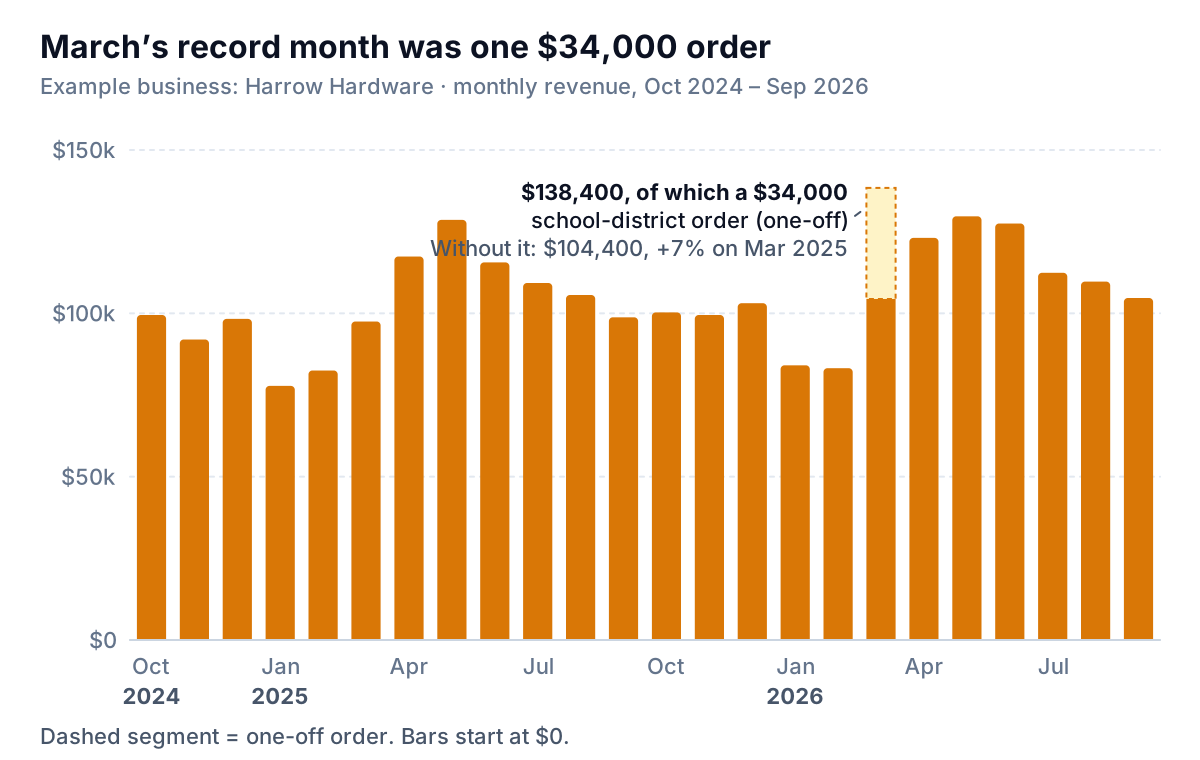
Revenue Chart: Which One Answers Your Question, and How to Build It
How to build a revenue chart that answers a real question: monthly columns, a trailing-12-month line, YTD against last year, and one-offs labelled.
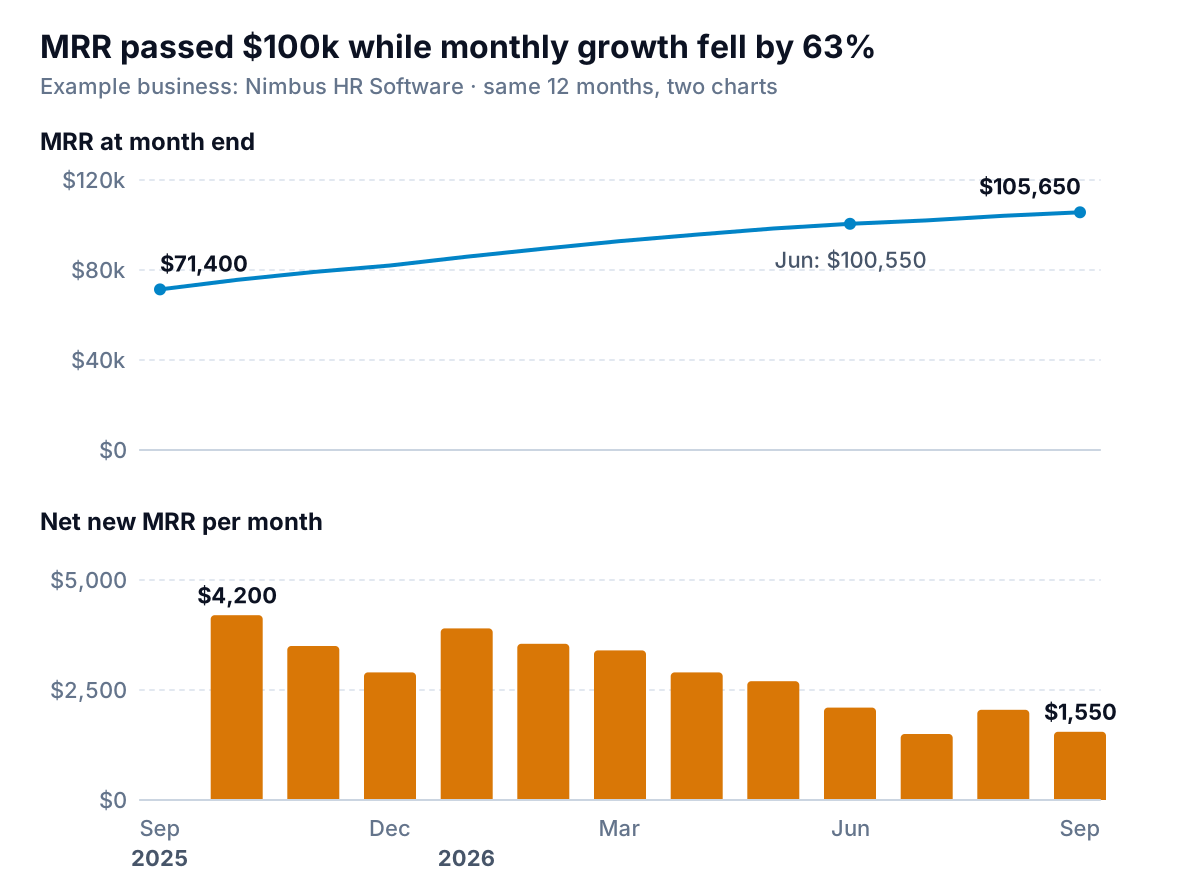
MRR Chart: The Level Line, the Movements Chart, and What Each Hides
Build an MRR chart that explains growth: a month-end MRR line plus a movements chart of new, expansion, contraction and churn MRR, made from a Stripe export.
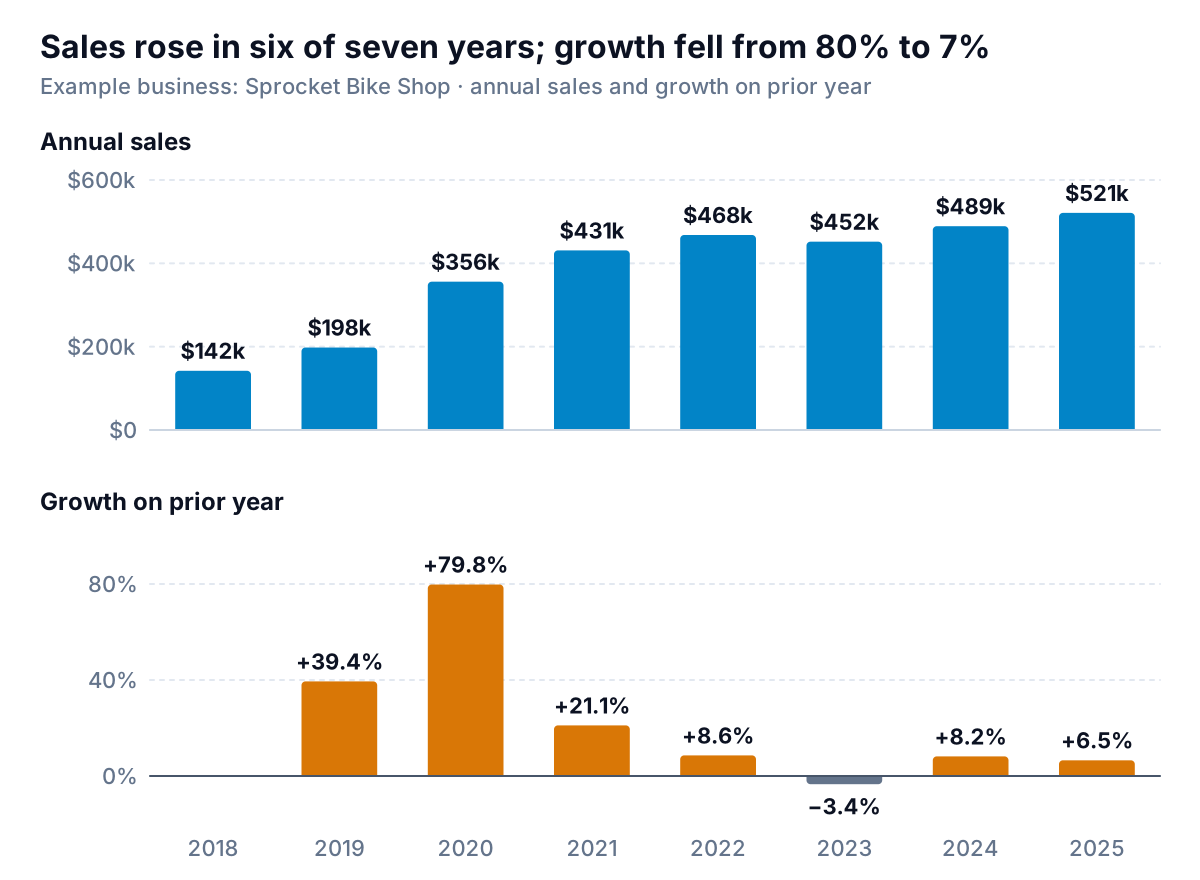
Sales Growth Chart: Growth Rates, Indexed Lines and Log Scales
How to make a sales growth chart that shows momentum: growth-rate bars, lines indexed to 100, log scales for long histories, and the small-base trap.
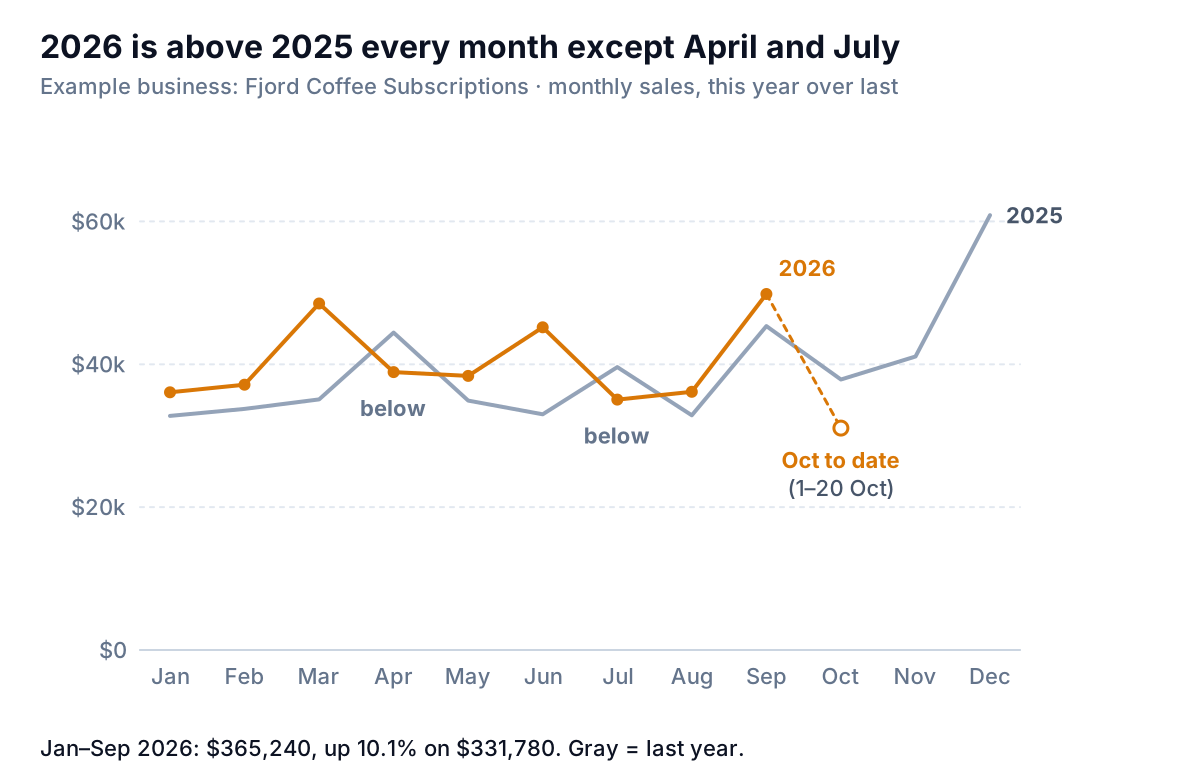
Year Over Year Comparison Chart: This Year vs Last, Without the Calendar Traps
Build a year over year comparison chart that's fair: overlaid lines, clustered columns or % change bars, plus trading days, 53-week years and partial months.
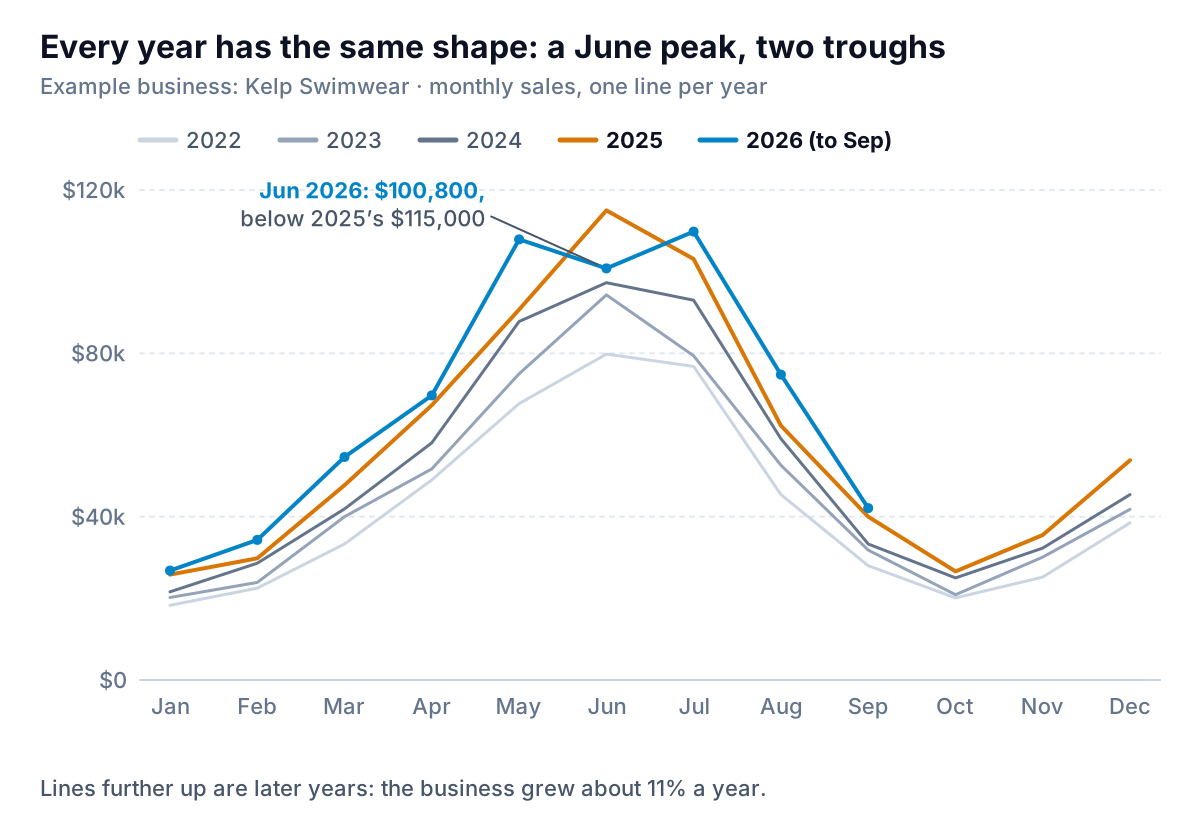
Seasonality Chart: Four Ways to See Which Dips Are Just the Calendar
Make a seasonality chart that separates season from trend: years overlaid by month, a seasonal index, a cycle plot and a seasonally adjusted sales line.
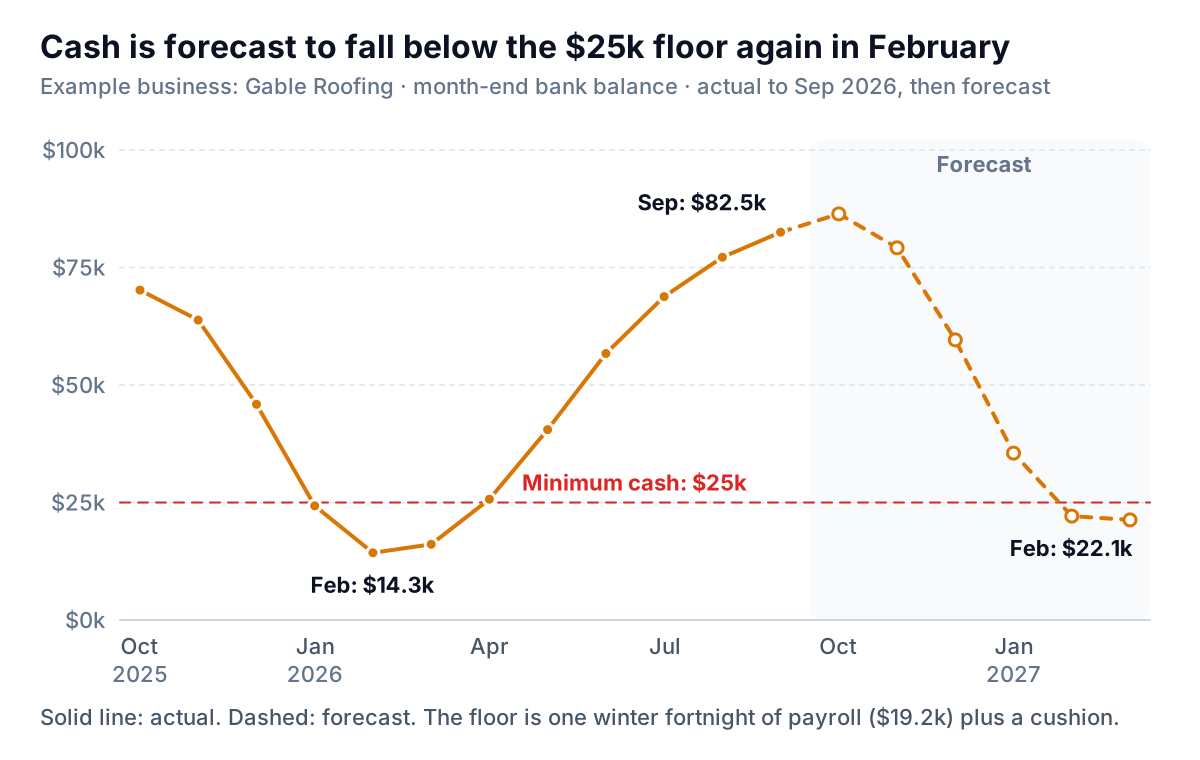
Cash Flow Chart: Four Charts That Show When Cash Gets Tight
How to build a cash flow chart that warns you early: a balance line with a minimum cash floor, in and out bars on one axis, a monthly waterfall, weekly lows.
Getting Paid
Chasing unpaid invoices, reminder emails that work, and seeing exactly who owes you what.
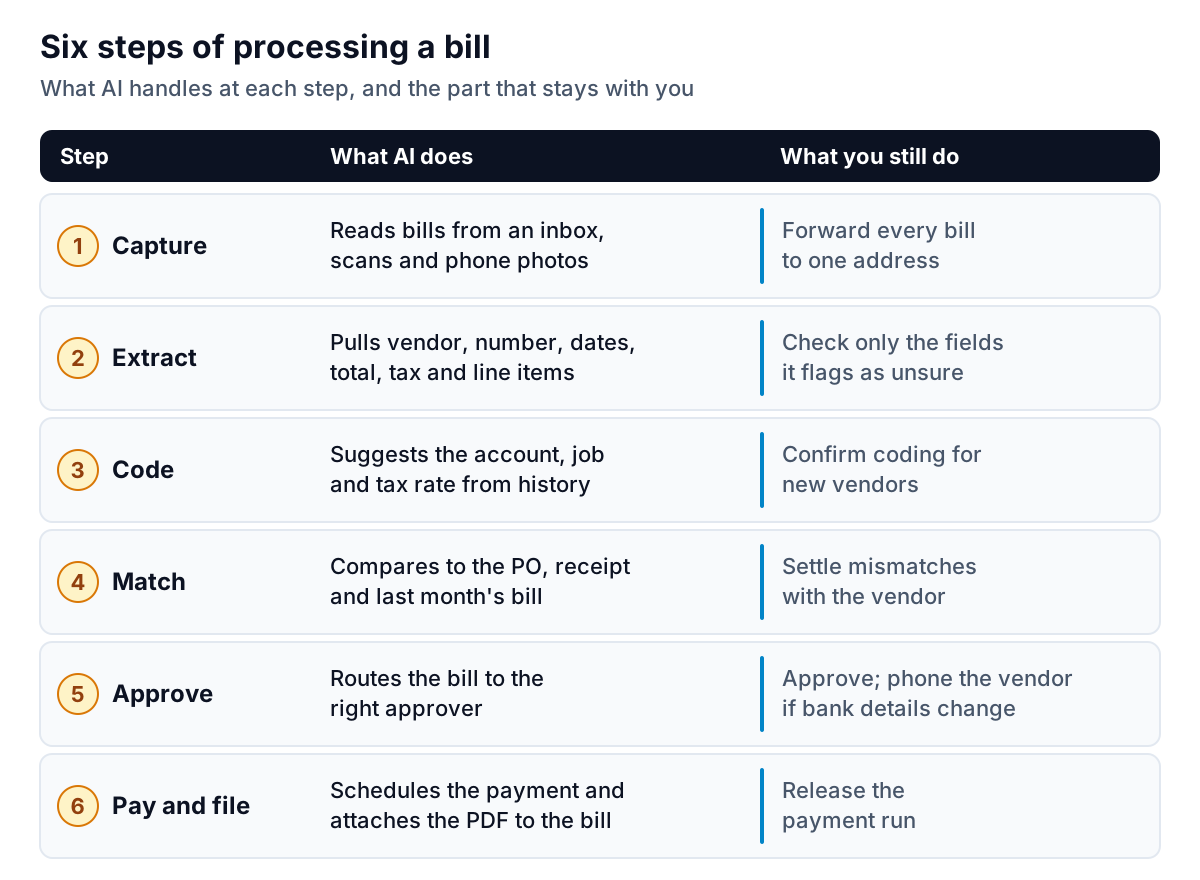
AI for Invoice Processing: What It Does, Where It Fails, and How to Start
AI for invoice processing, explained: what it does at each step, a worked time-saving example, five errors to design around and a 30-day way to start safely.
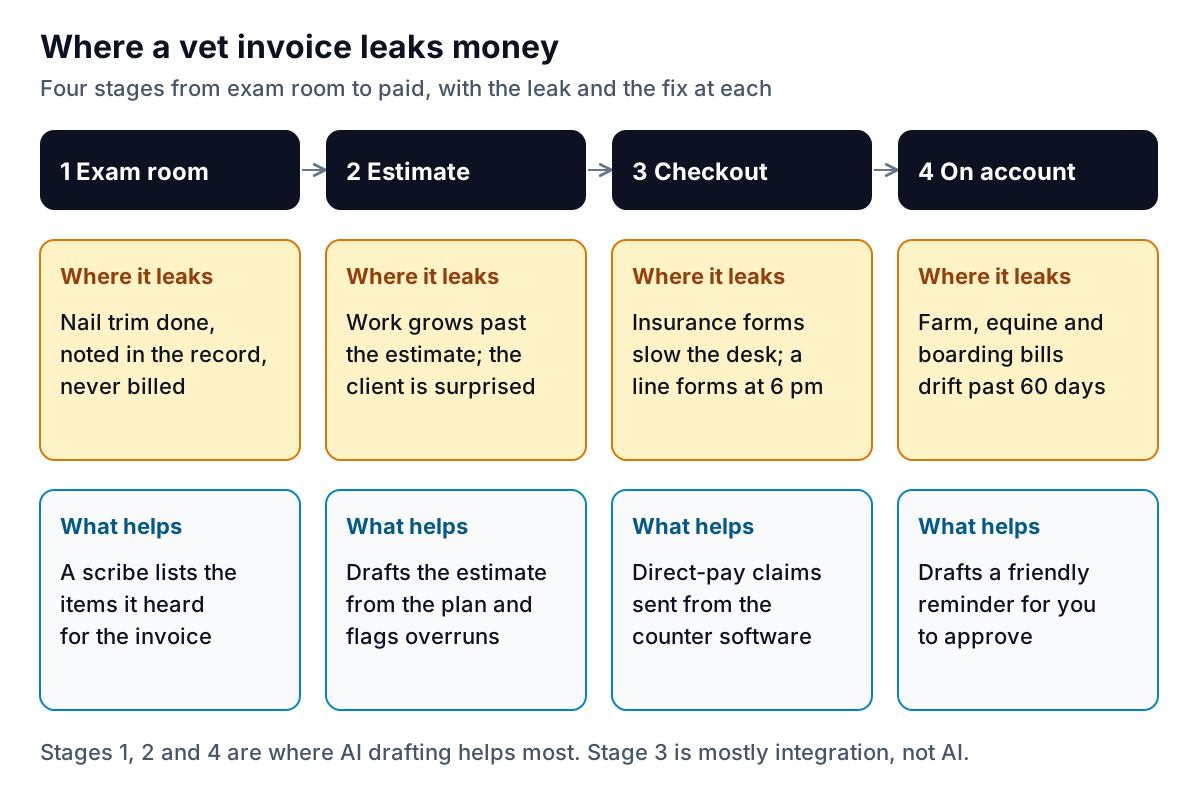
AI for Vet Clinic Invoicing: Missed Charges, Checkout and On-Account Balances
AI for vet clinic invoicing: where vet invoices leak money, which AI tools help, privacy and integration checks, and how to collect on-account balances.
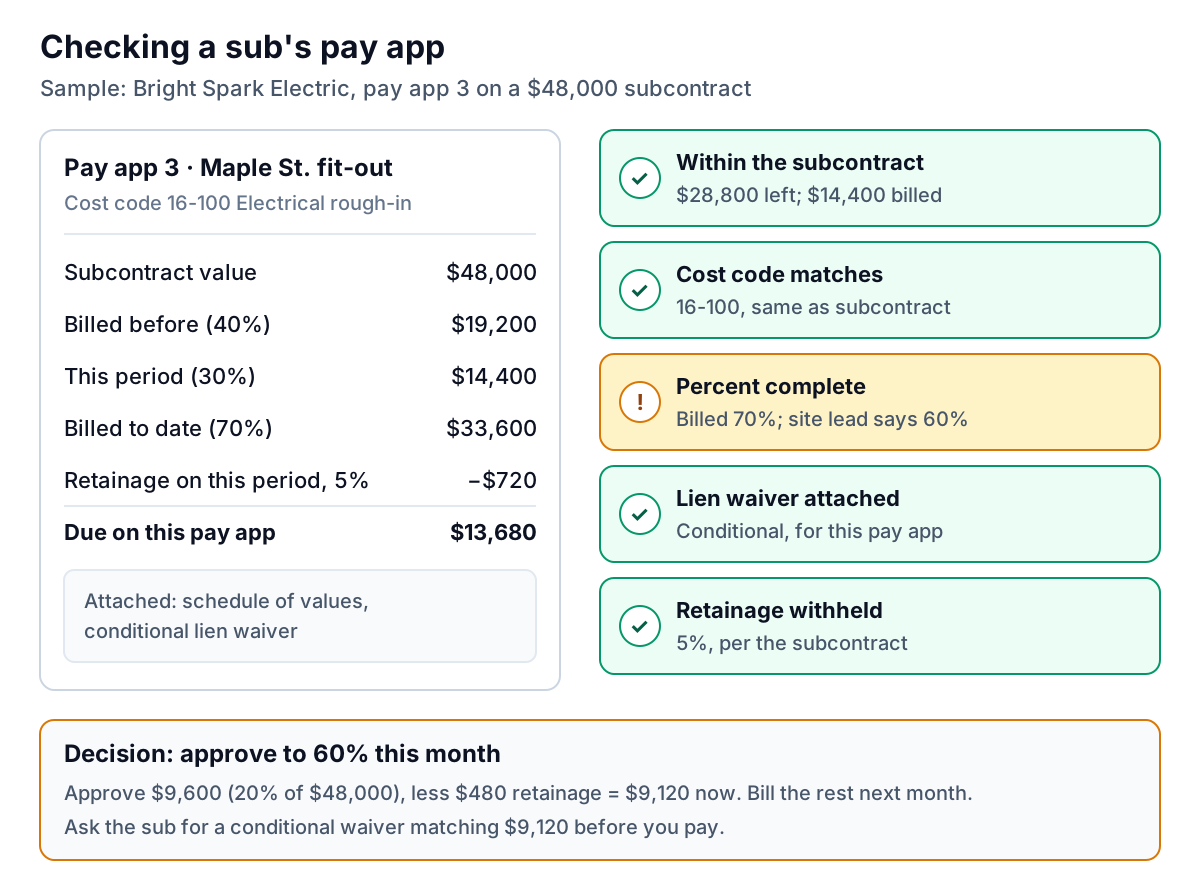
AI Invoice Processing for Contractors: Sub Pay Apps, Lien Waivers and Retainage
AI invoice processing for contractors: coding bills to jobs, checking sub pay apps, lien waivers and retainage, and chasing what owners owe you.
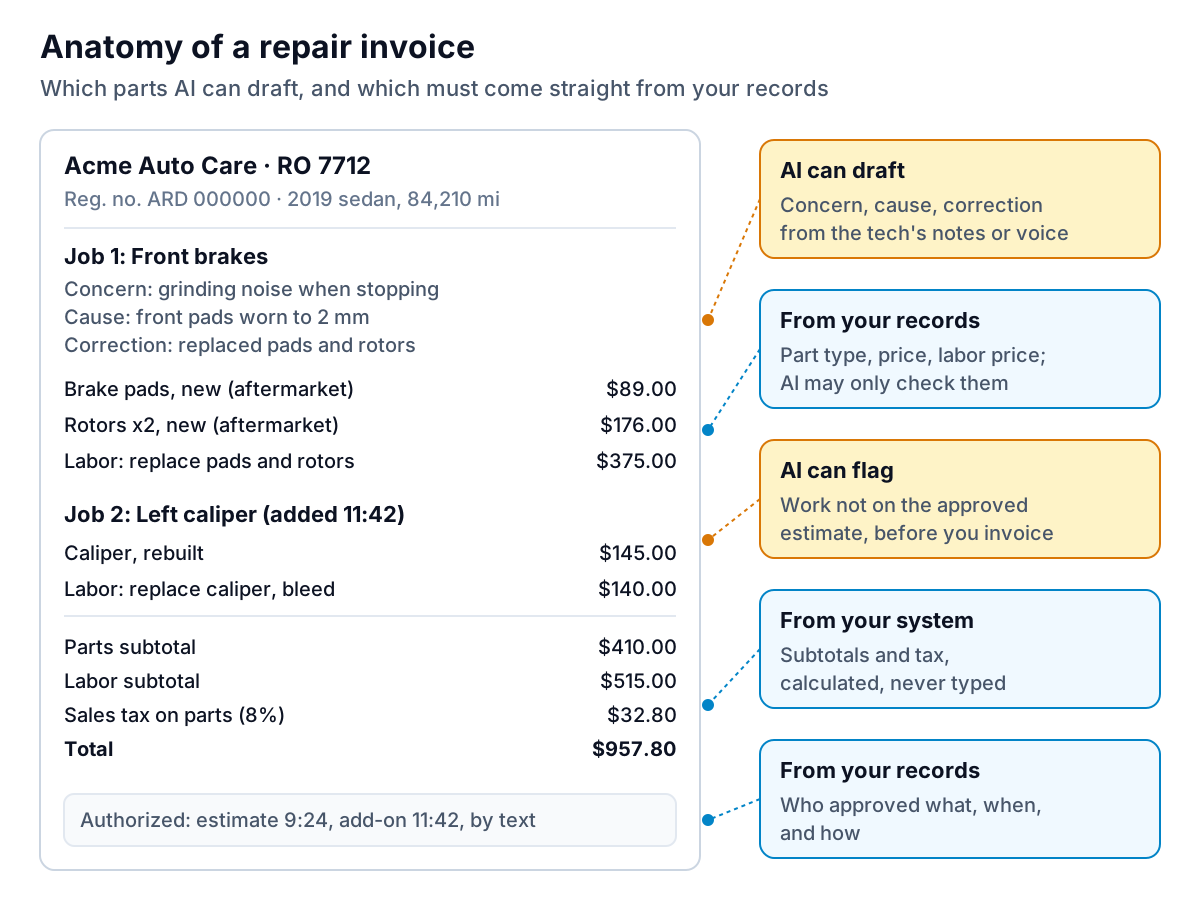
AI for Auto Shop Invoicing: Clearer Invoices, Logged Approvals, Paid Fleet Accounts
AI for auto shop invoicing: what a repair invoice must carry, where AI drafting helps, four ways it goes wrong, and how to keep fleet accounts current.
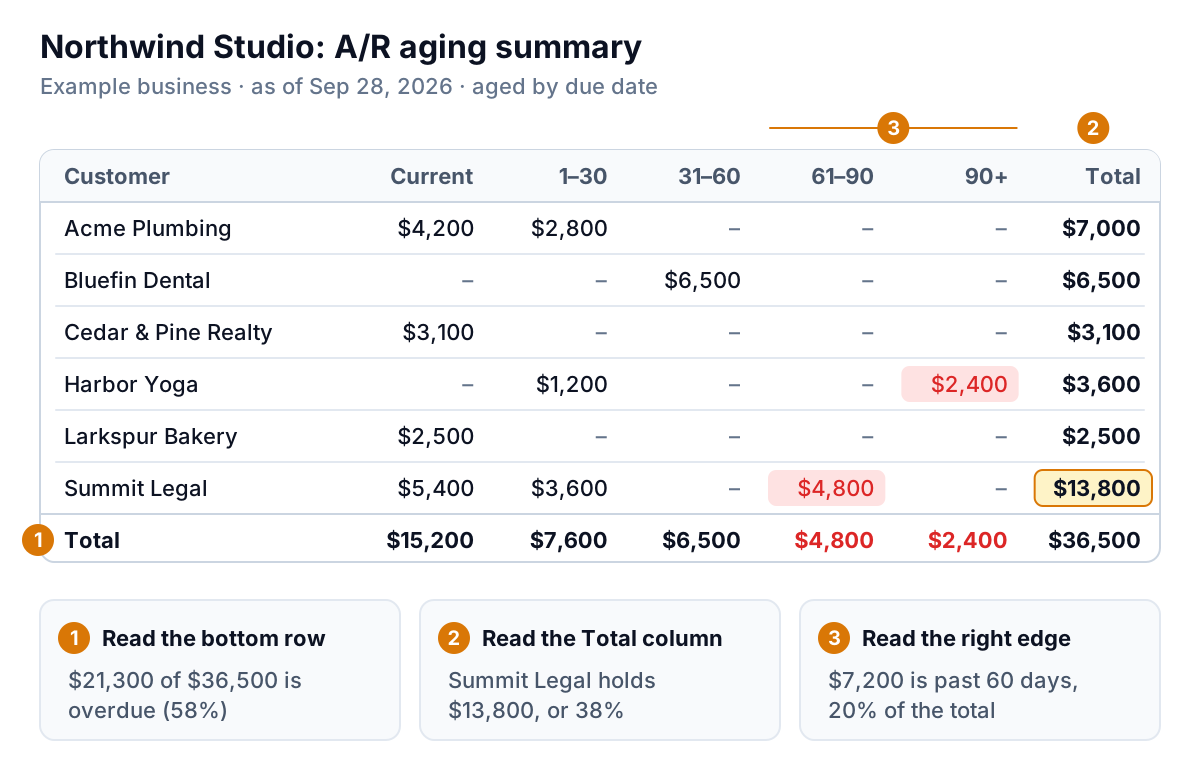
Accounts Receivable Aging Report, Explained for Owners
How to read an accounts receivable aging report in five minutes: what each bucket means, what to do about it, and the four things the report won't show you.
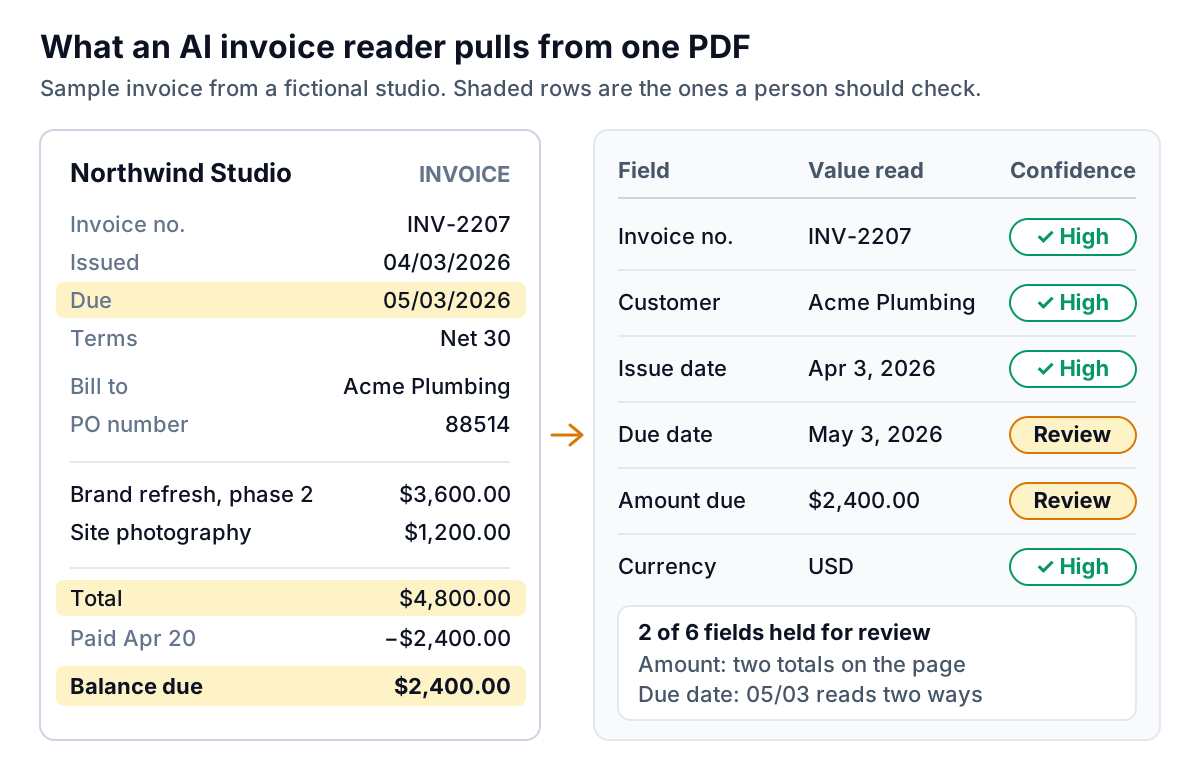
AI Invoice Readers: Pulling Data From PDF Invoices, and Why the Review Step Matters
What an AI invoice reader pulls from a PDF, the six misreads that cause wrong reminders, and a 15-minute review routine before you chase a single client.
Spreadsheet Skills
Excel and Google Sheets techniques for turning exports into answers, step by step.
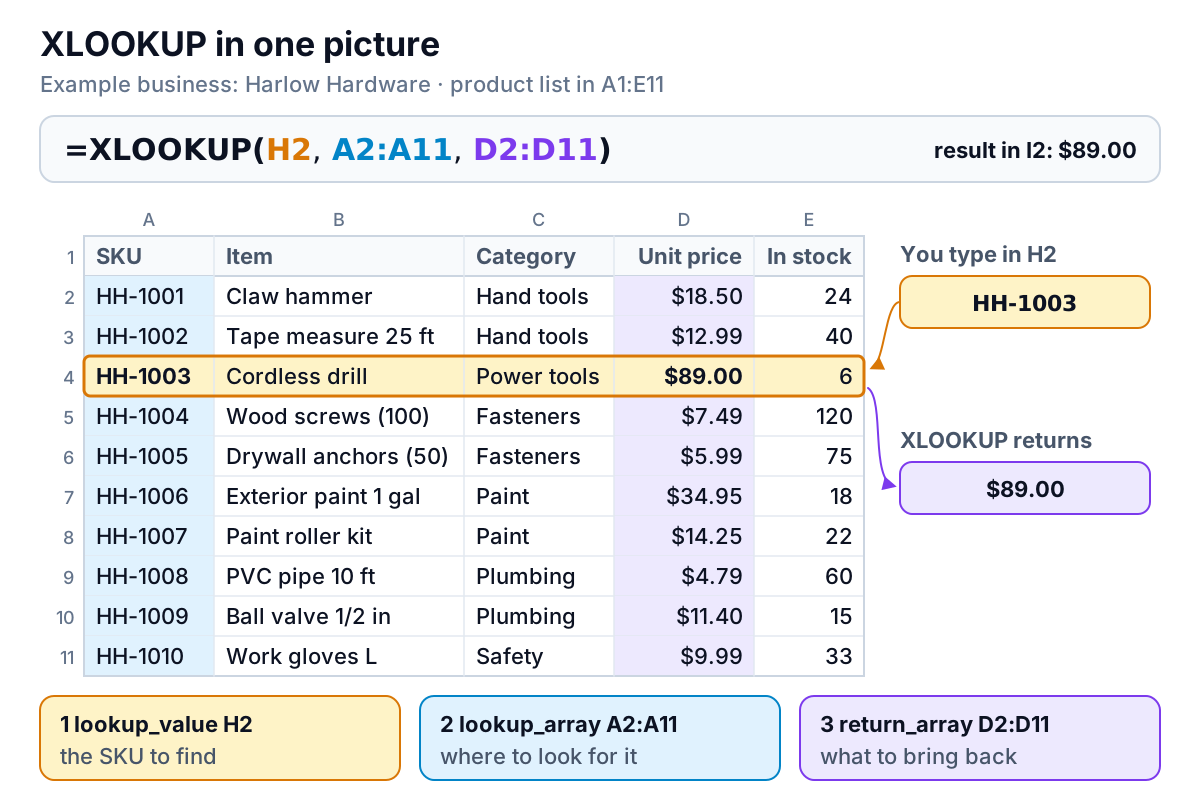
XLOOKUP in Excel: Every Argument, With Worked Examples
How to use XLOOKUP in Excel: syntax, every argument, discount tiers, wildcards, latest-entry lookups, spilled results and a fix for each error. Free workbook.
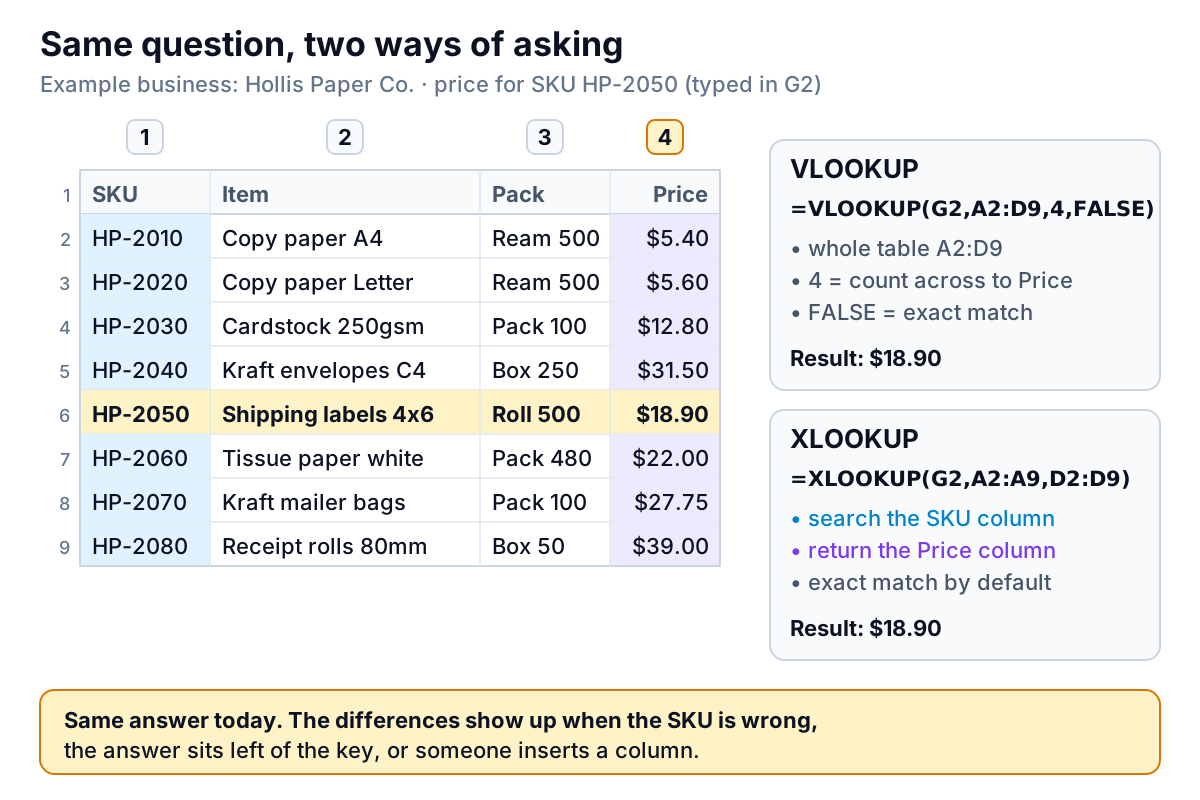
XLOOKUP vs VLOOKUP: Five Tests on the Same Price List
XLOOKUP vs VLOOKUP tested on one price list: where VLOOKUP gives a wrong answer with no error, when it still matters for older Excel, and how to convert.
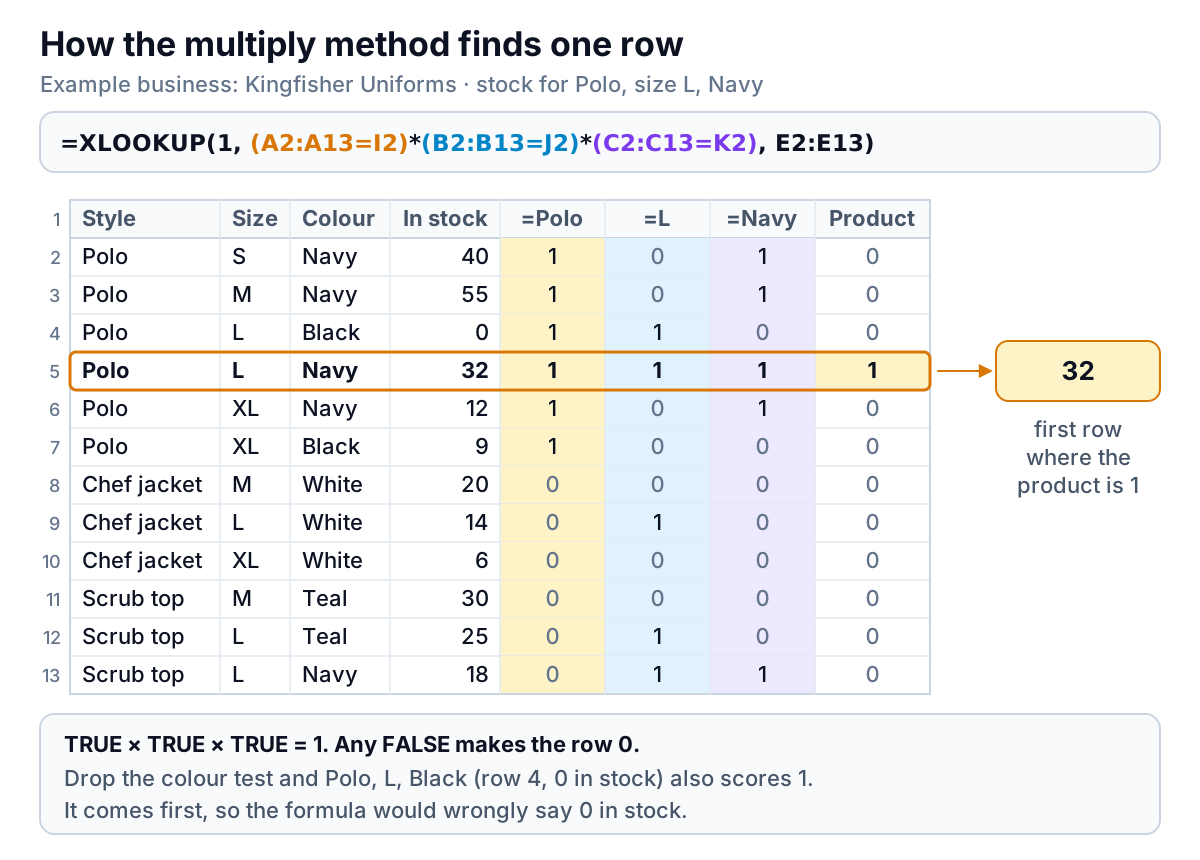
XLOOKUP With Multiple Criteria: Two Methods and Their Traps
XLOOKUP multiple criteria explained: the multiply and joined-key methods, OR and range conditions, the separator trap, speed on big sheets, and error fixes.
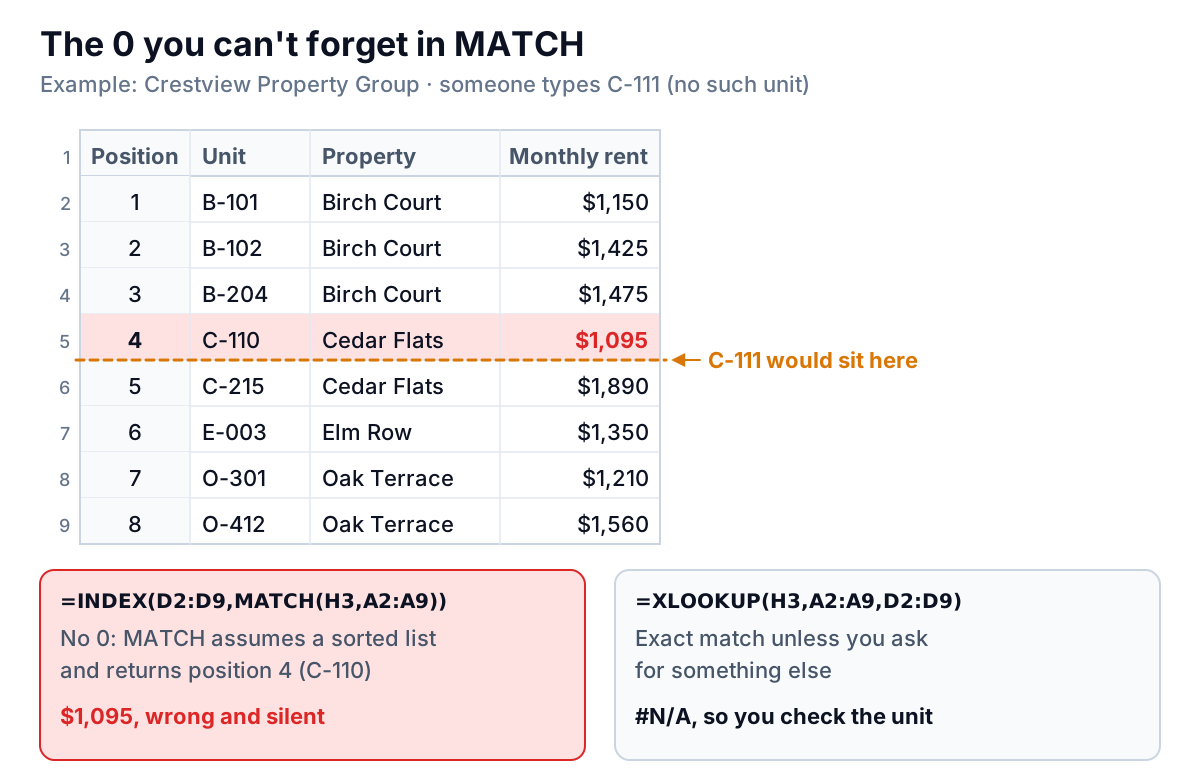
XLOOKUP vs INDEX MATCH: An Honest Comparison
XLOOKUP vs INDEX MATCH compared on real lookups: match defaults, not found, last match, two-way grids, speed and version compatibility. Free workbook.
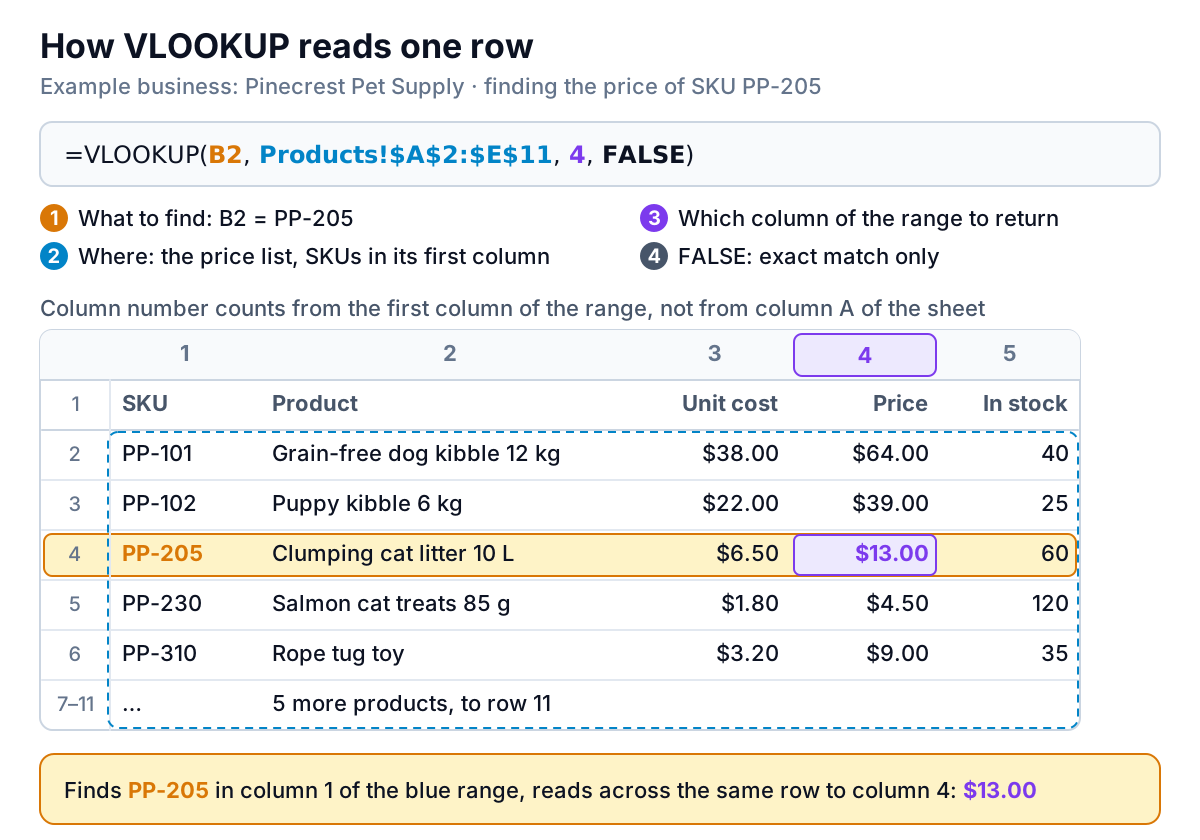
VLOOKUP: How to Use It, With Worked Examples and Fixes
How to use VLOOKUP in Excel: the four arguments, FALSE vs TRUE, locking the range, column numbers that don't break, IFERROR, plus a free practice workbook.
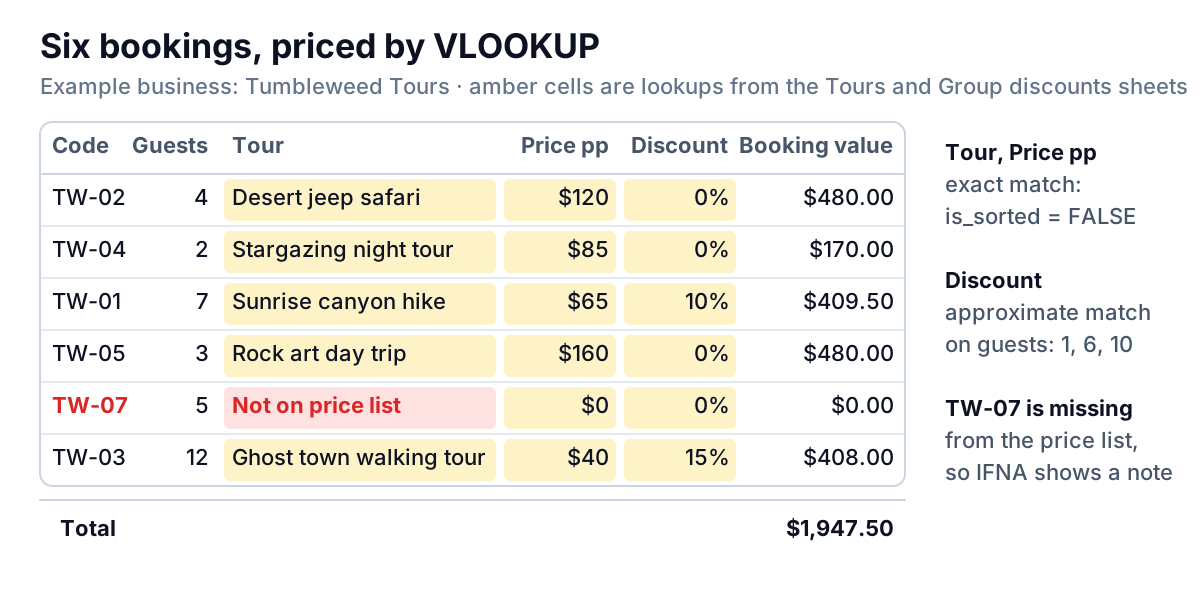
VLOOKUP in Google Sheets: Syntax, ARRAYFORMULA and IMPORTRANGE
A VLOOKUP Google Sheets guide: override the is_sorted default, fill a whole column with ARRAYFORMULA, pull from another file with IMPORTRANGE, fix errors.
AI for Small Business
Choosing, buying and running AI tools without a data team.
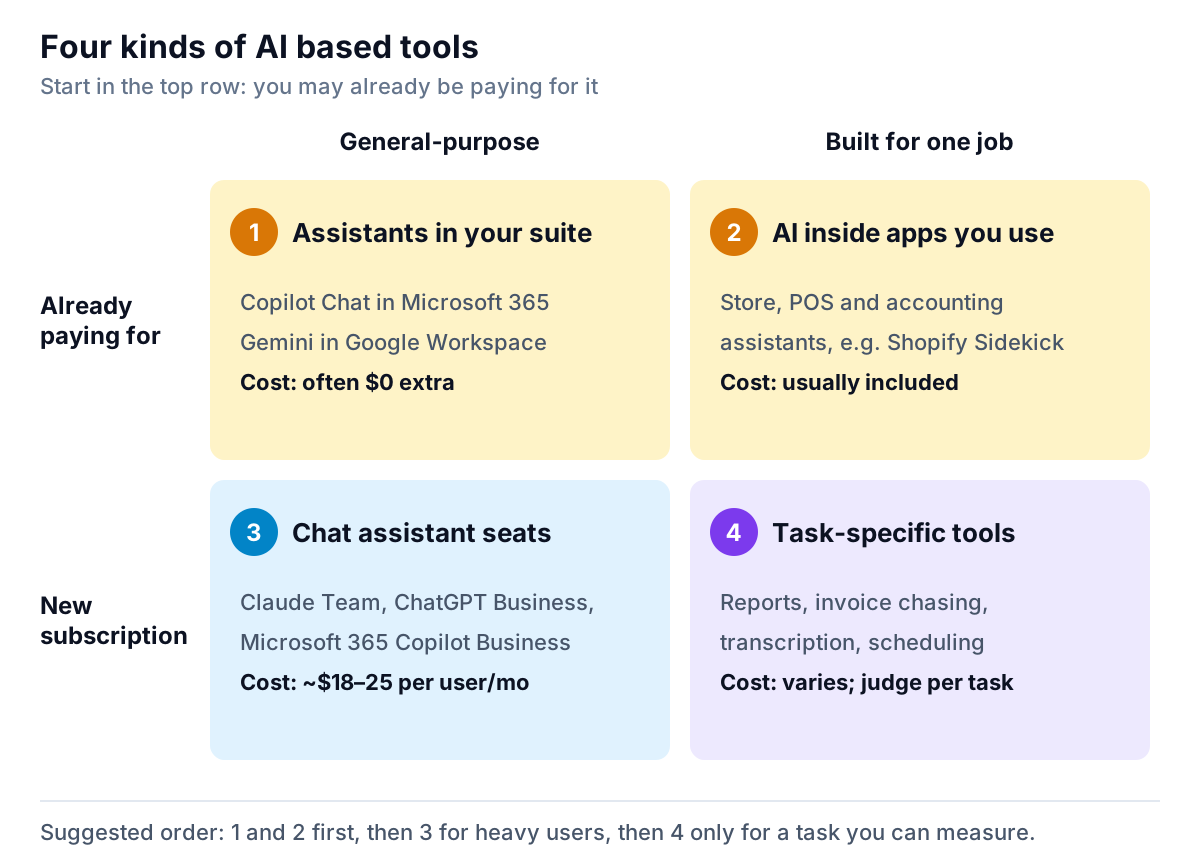
AI Based Tools for Small Business: How to Pick, Price and Test Them
How to choose AI based tools for a small business: match them to real tasks, use what you already pay for, set a sensible budget and test it in 30 days.
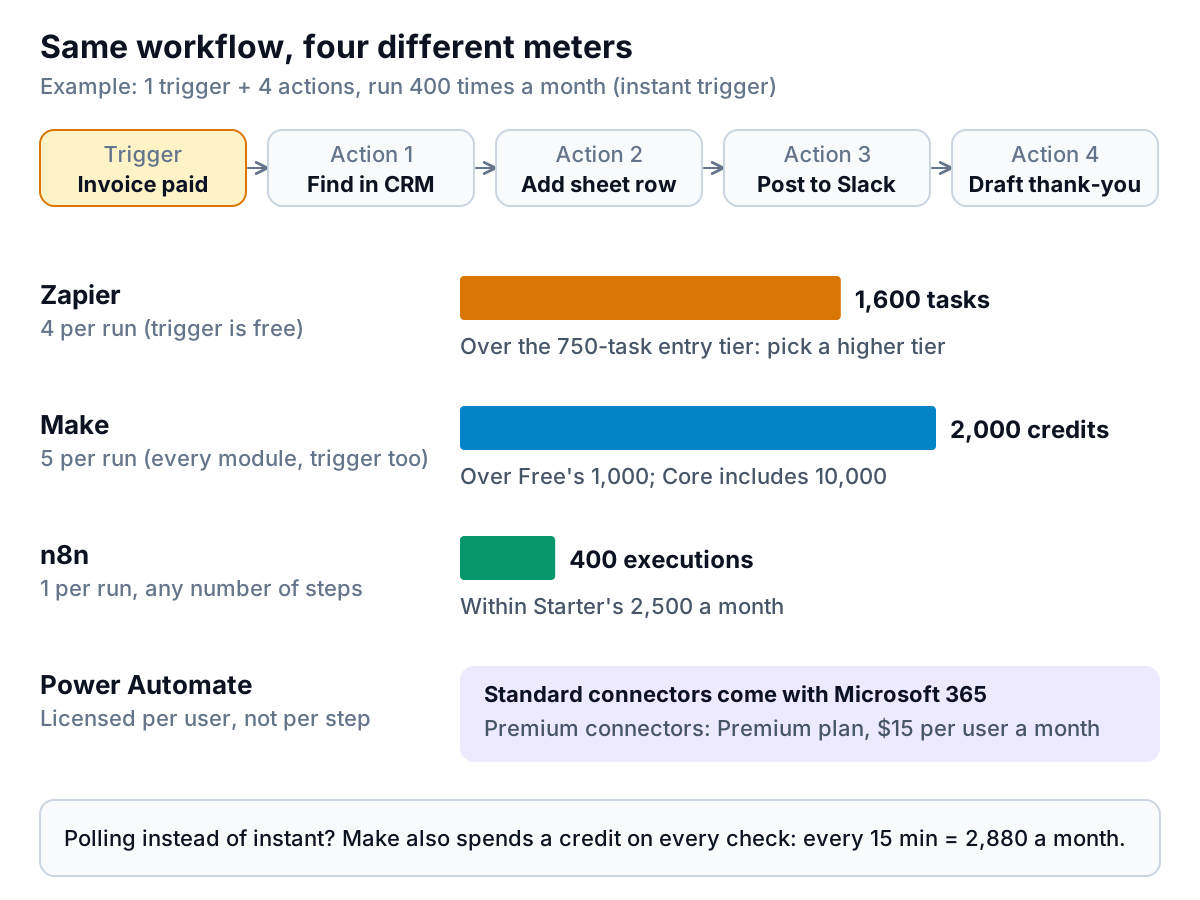
Top AI Automation Software Compared: Zapier, Make, n8n and Power Automate
Top AI automation software compared on what really drives cost: how Zapier, Make, n8n and Power Automate meter usage, what their AI does, and which to try.
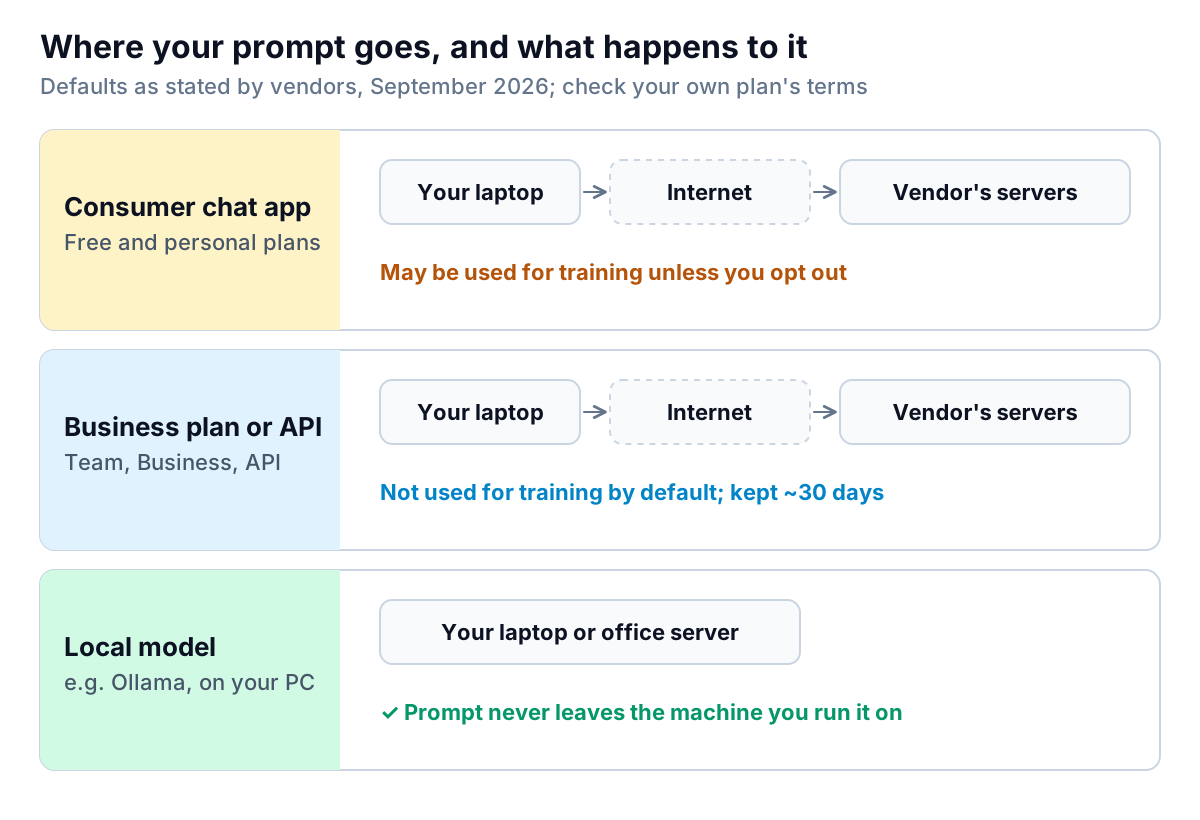
AI Technology Solutions: Cloud vs Local for a Small Business
Cloud or local AI technology solutions? Where your data goes on each plan, what running models yourself takes, a worked cost comparison and a decision table.
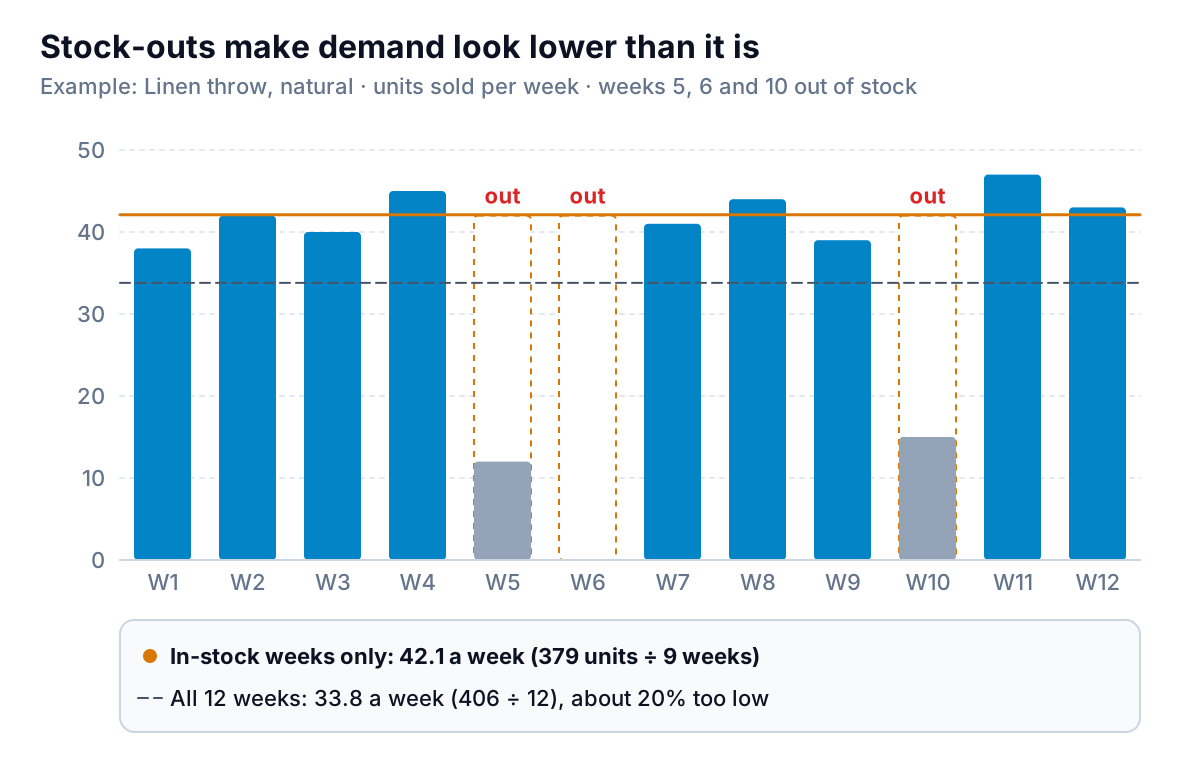
AI for Retail Demand Forecasting: A Practical Guide for Small Shops
AI for retail demand forecasting, made practical: clean stock-outs from your history, set reorder points, pick which products to forecast and test any tool.
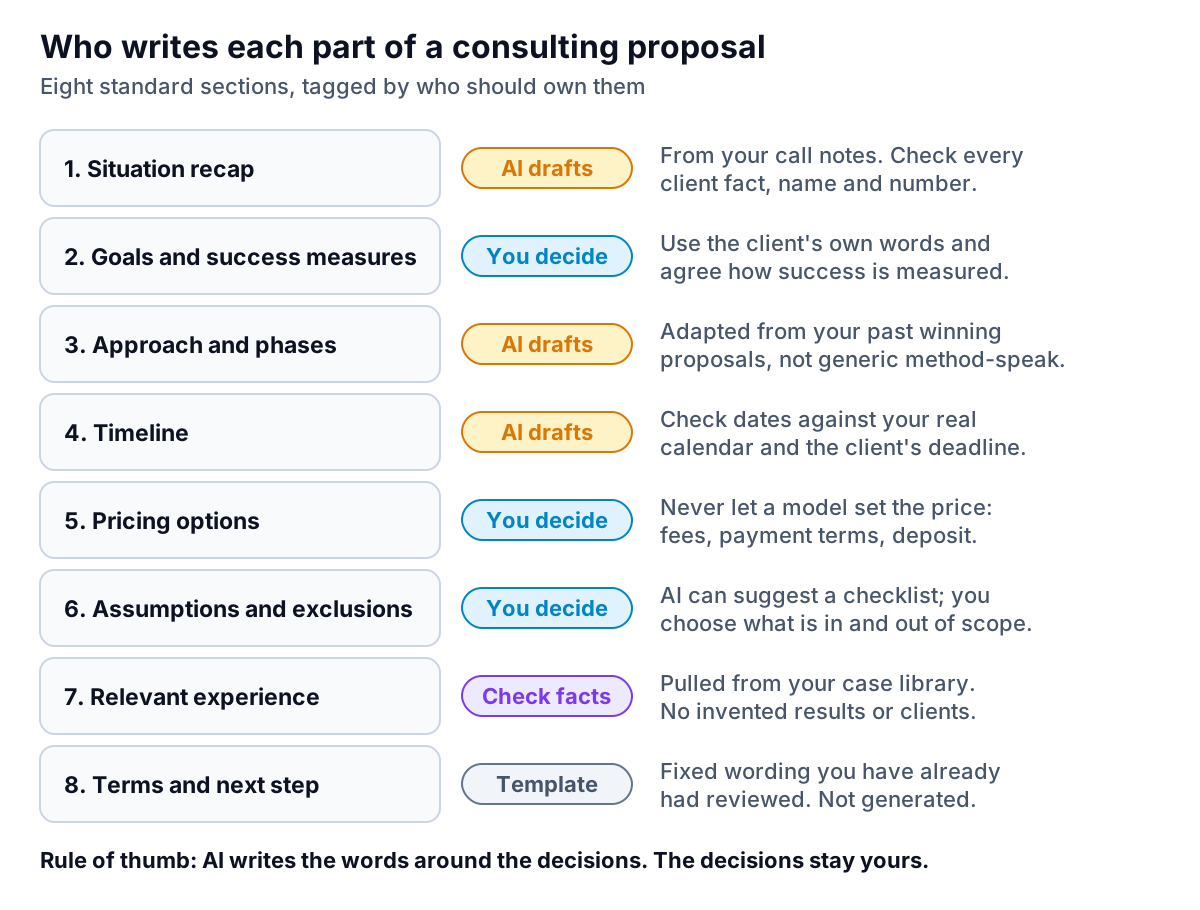
AI Proposal Generator for Consultants: Faster Drafts Without Losing the Deal
How to use an AI proposal generator for consultants: what to let it draft, what to keep, a 10-field brief, tool options and a fact check before you send.
Industry Guides
The numbers that matter in one kind of business, how to work them out, and what to do when they move.
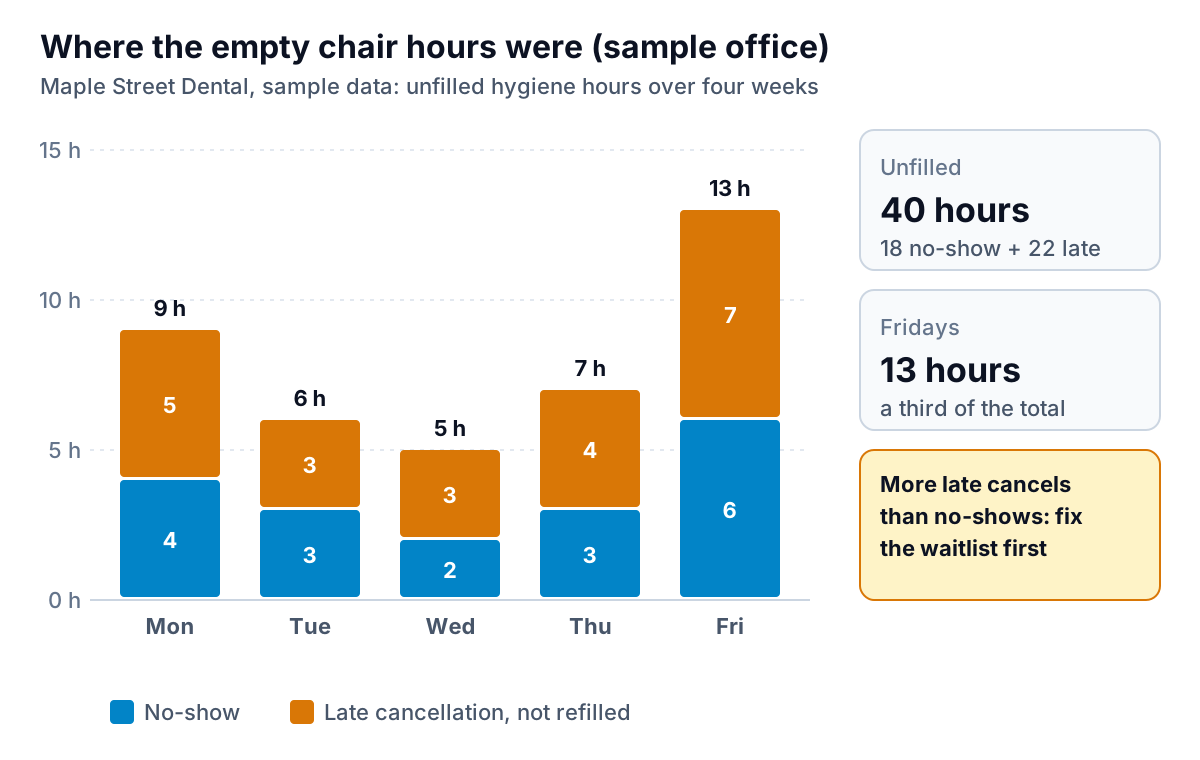
AI Appointment Scheduling for Dental Offices: Fill the Chair, Keep It HIPAA-Safe
A practical guide to AI appointment scheduling for dental office teams: measure your gaps, what the tools do, BAA and HIPAA checks, and a 30-day rollout.
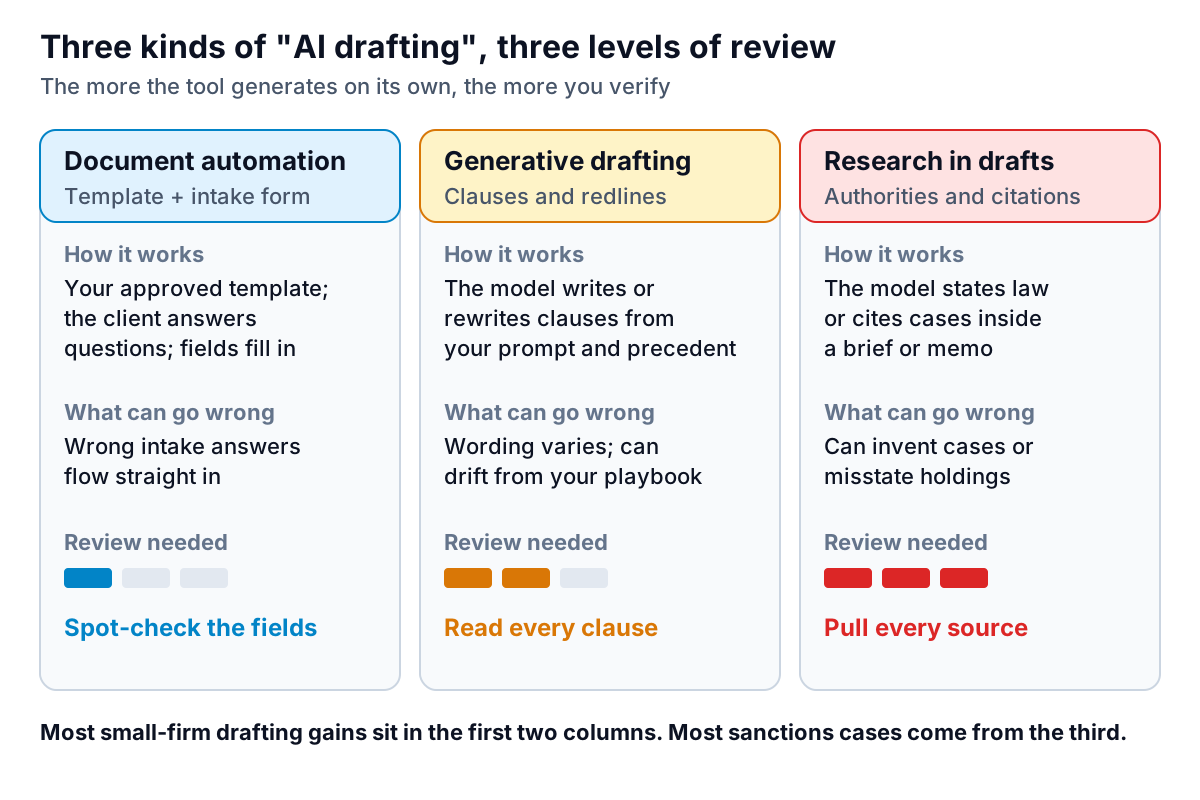
AI for Legal Document Drafting: A Small-Firm Guide to Speed, Review and Ethics
Using AI for legal document drafting in a small firm: which tools fit which work, the review pass that catches errors, and what ABA Opinion 512 asks of you.
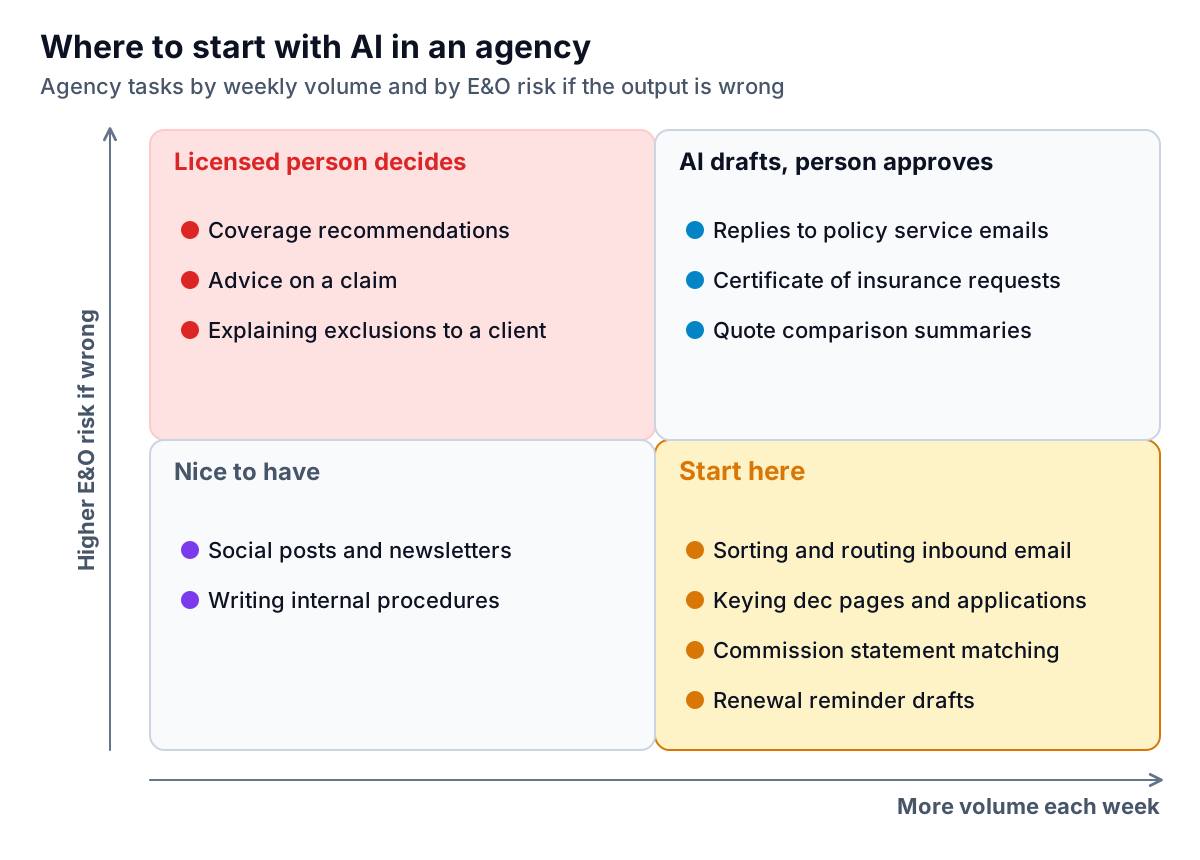
AI Tools for Insurance Agency Teams: Where to Start, What to Avoid
A practical guide to AI tools for insurance agency teams: start with low-risk, high-volume work, check E&O and data security rules, and measure the results.
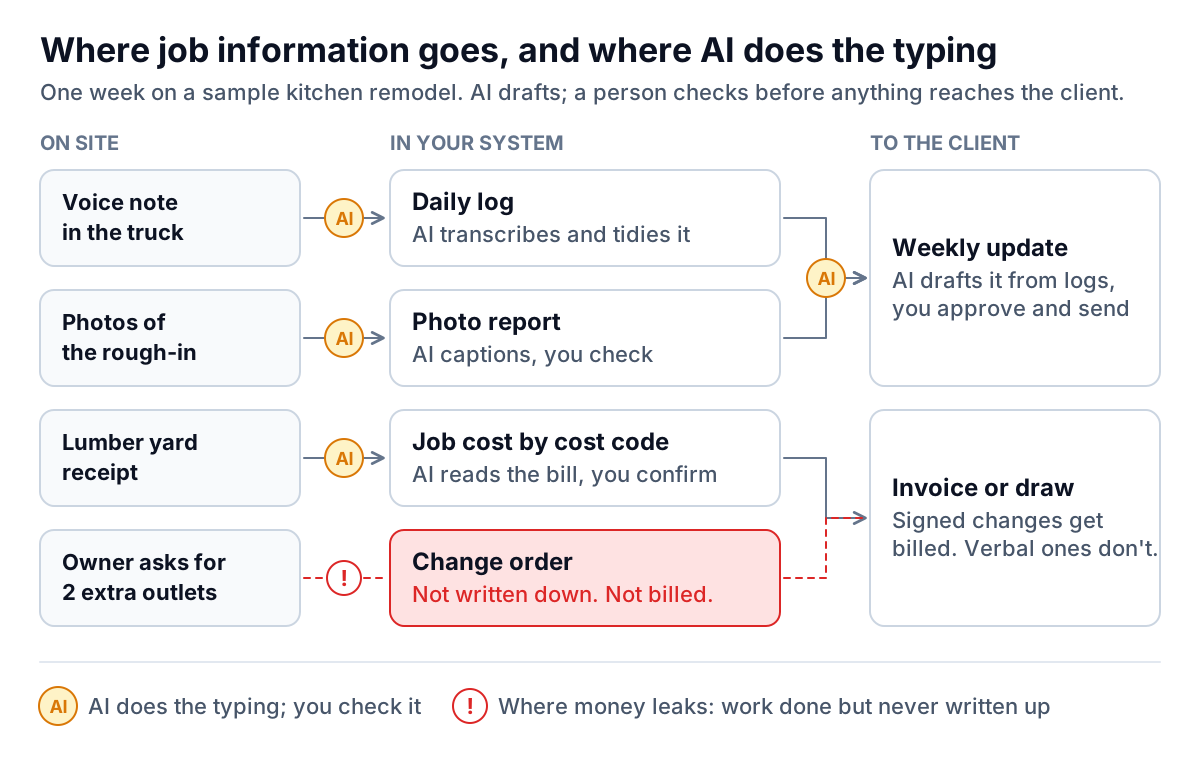
AI Project Management for Contractors: What It Does on a Real Job
AI project management for contractors, explained on a real-shaped job: daily logs, bill capture, change orders, a weekly job-cost check and what to buy first.
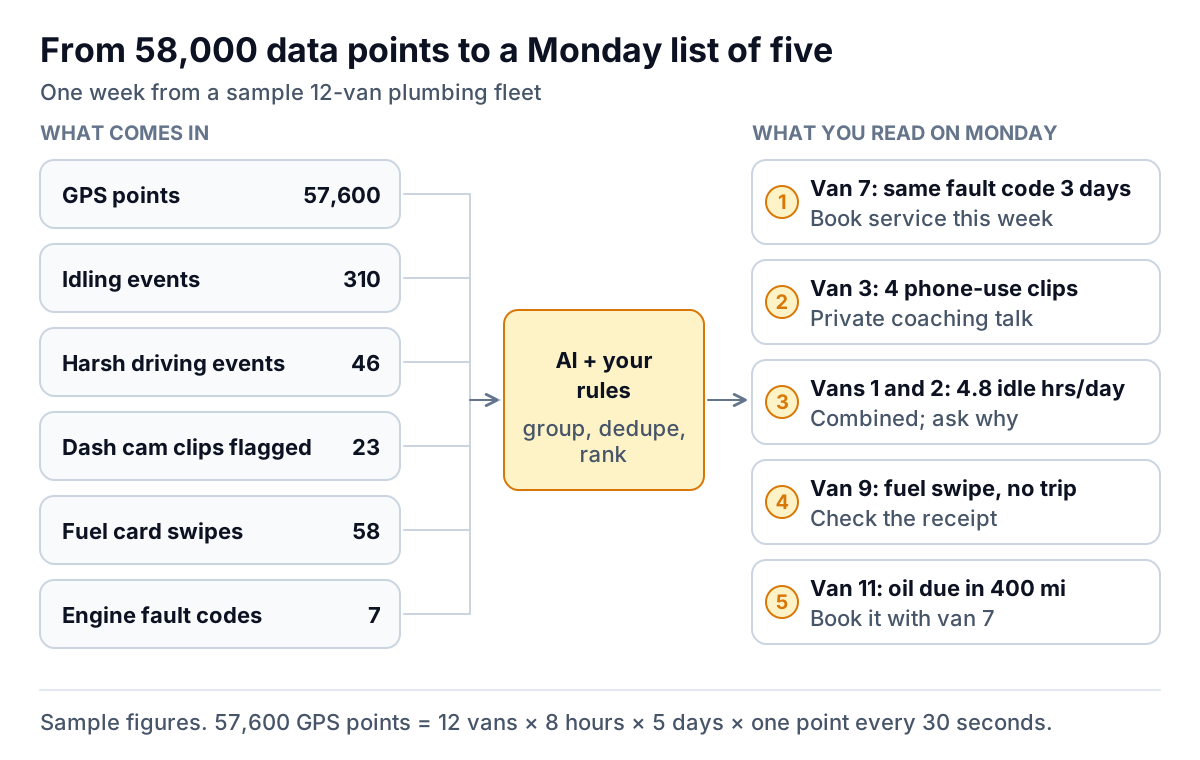
AI Fleet Management for Small Business: Costs, Tools and a Monday List
AI fleet management for small business, made practical: what telematics, AI dash cams and maintenance tools do, real costs, idling math and a weekly list.
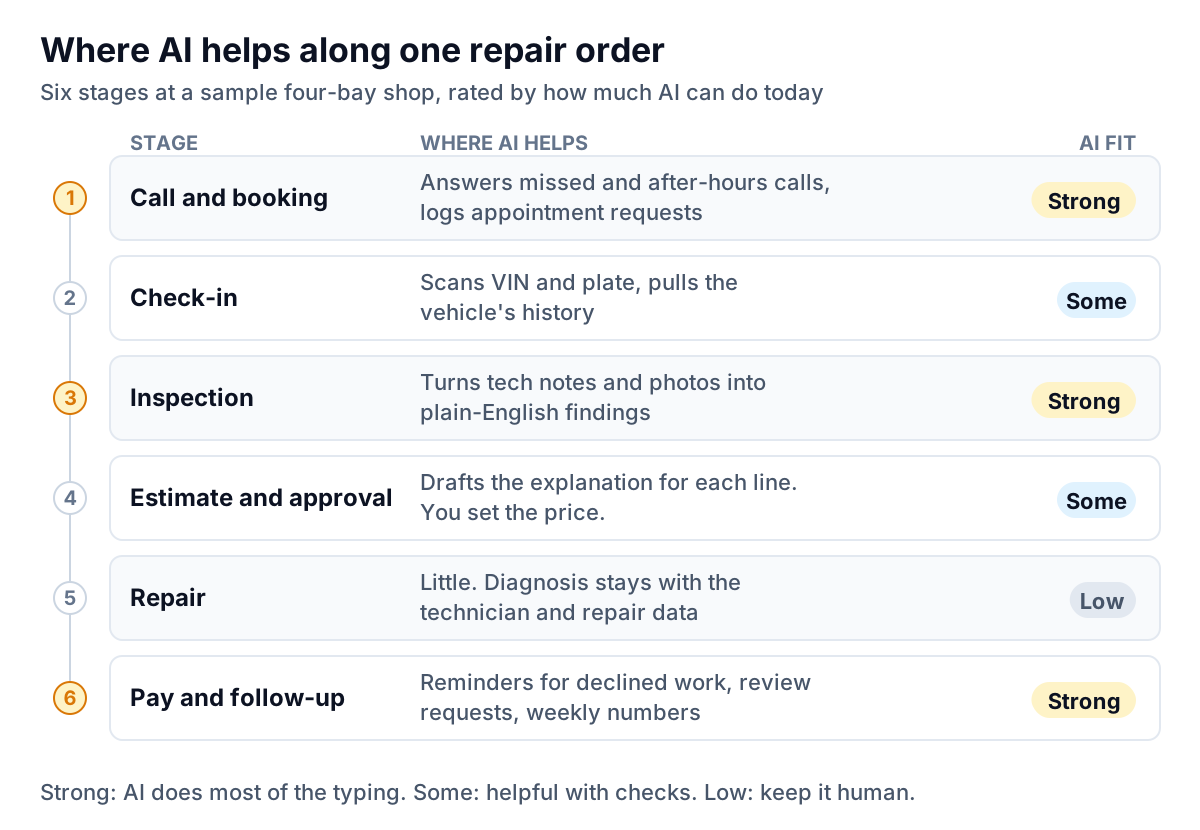
AI Tools for Auto Repair Shops: Phones, Inspections, Follow-Up
AI tools for auto repair shop owners, stage by stage: AI phone answering, inspection texts, declined-work follow-up and the weekly numbers worth tracking.
Turn a spreadsheet into a verified report
Upload a CSV or Excel file. Every number is checked against your data before you see it.