Industry Guides
The numbers that matter in one kind of business, how to work them out, and what to do when they move. 42 articles.
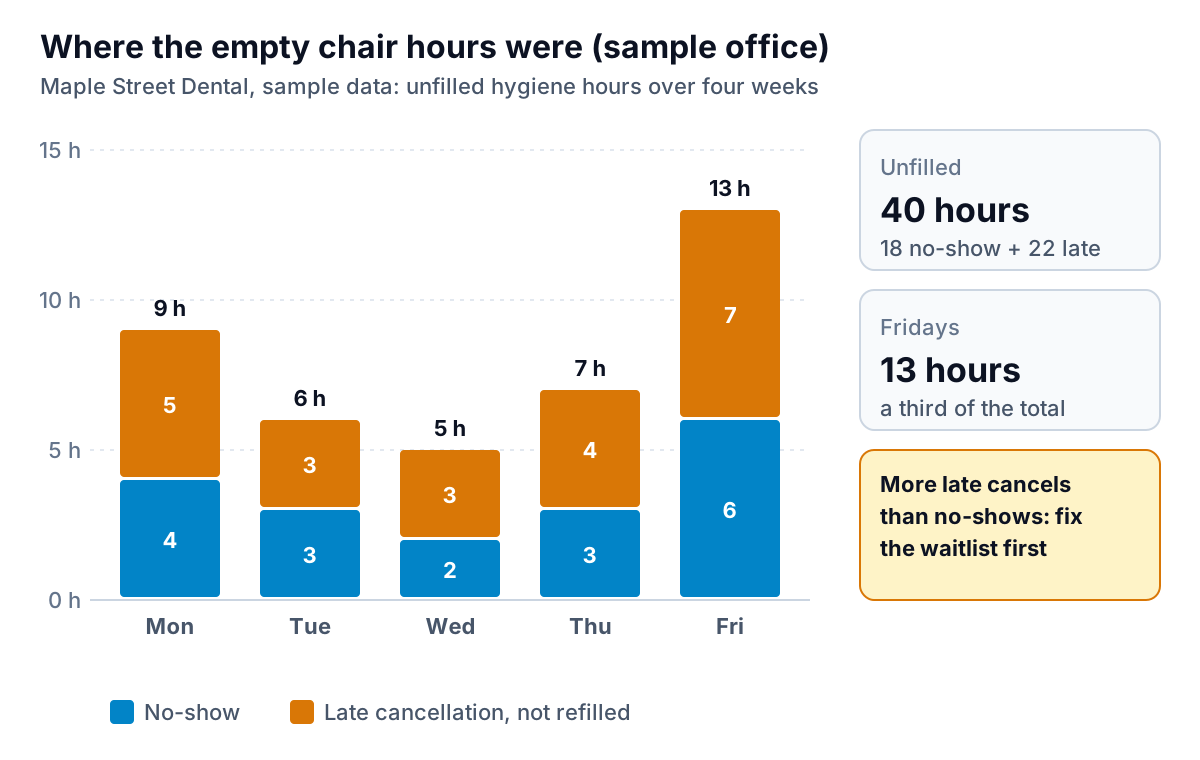
AI Appointment Scheduling for Dental Offices: Fill the Chair, Keep It HIPAA-Safe
A practical guide to AI appointment scheduling for dental office teams: measure your gaps, what the tools do, BAA and HIPAA checks, and a 30-day rollout.
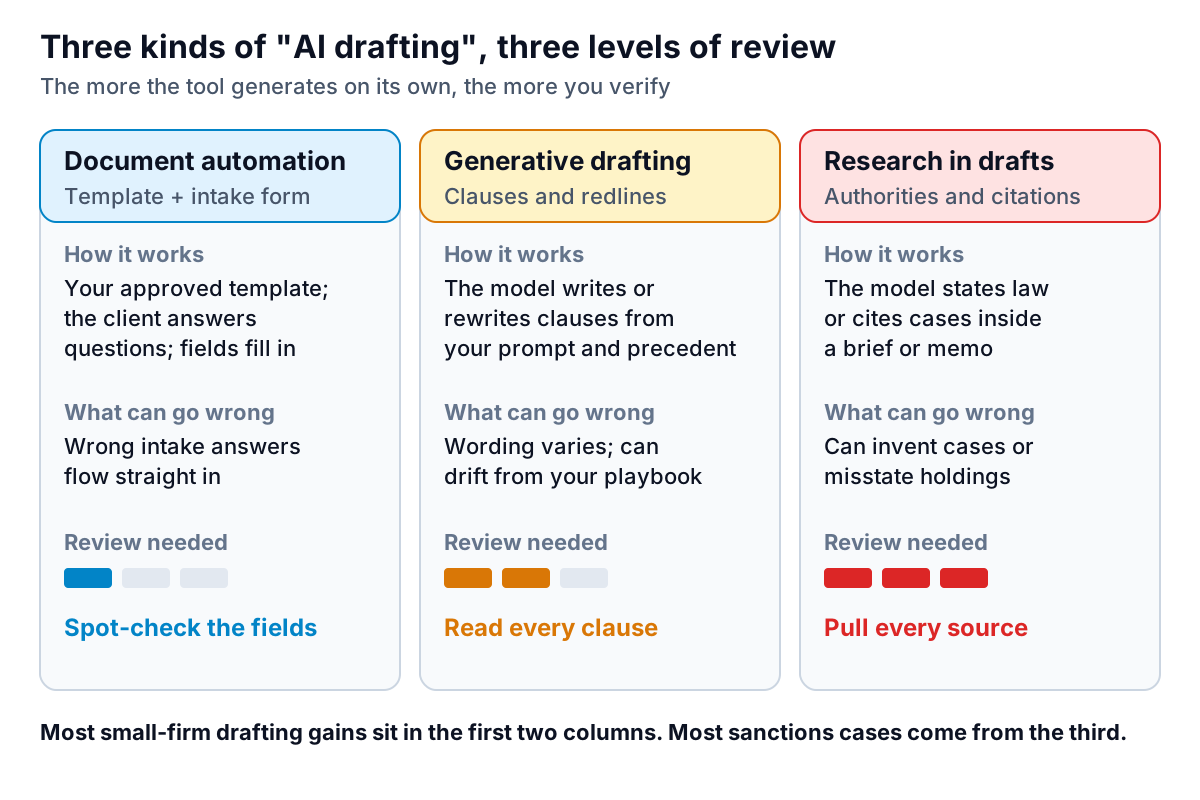
AI for Legal Document Drafting: A Small-Firm Guide to Speed, Review and Ethics
Using AI for legal document drafting in a small firm: which tools fit which work, the review pass that catches errors, and what ABA Opinion 512 asks of you.
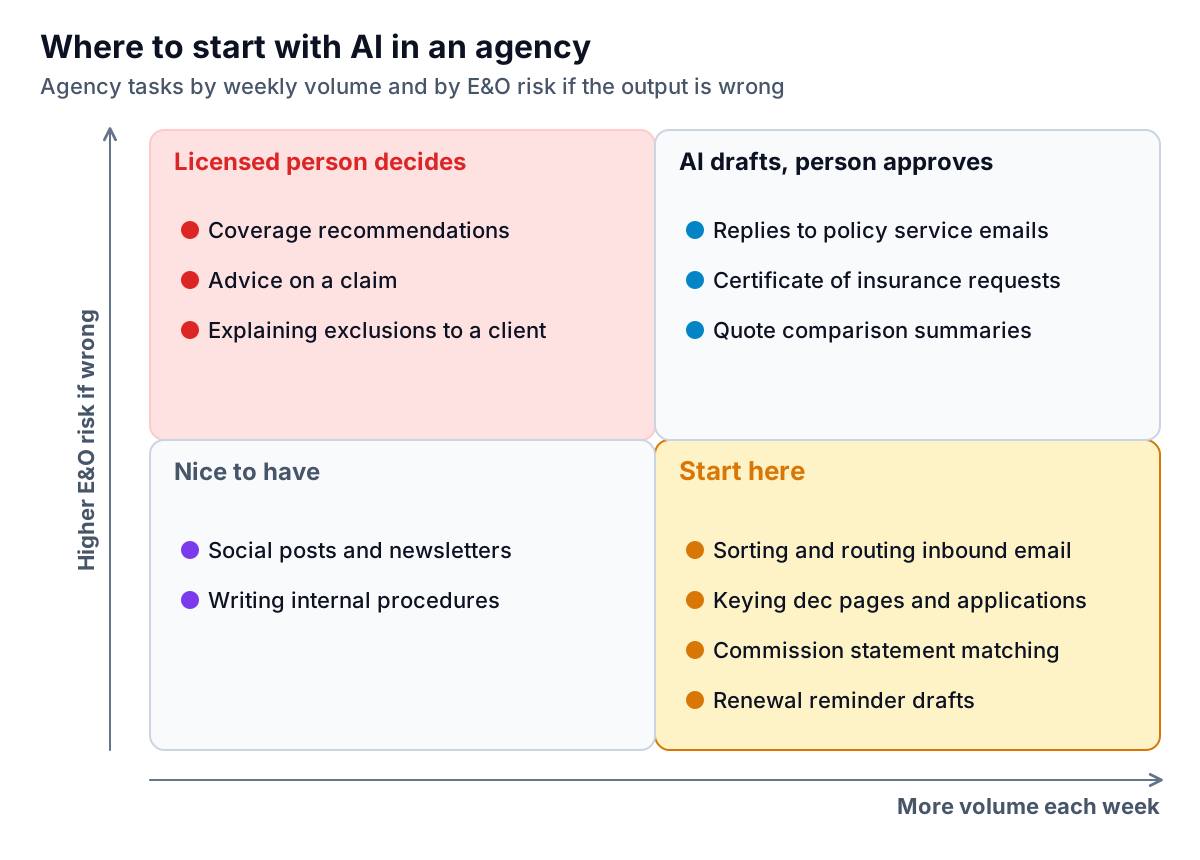
AI Tools for Insurance Agency Teams: Where to Start, What to Avoid
A practical guide to AI tools for insurance agency teams: start with low-risk, high-volume work, check E&O and data security rules, and measure the results.
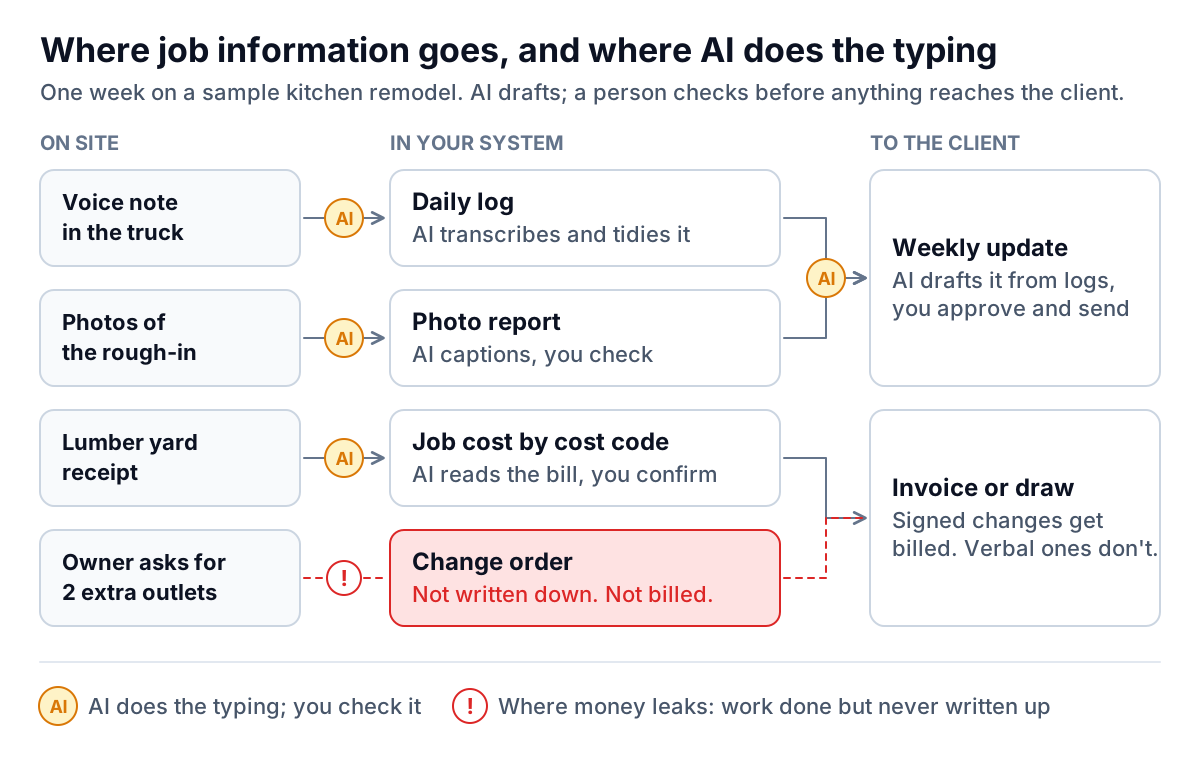
AI Project Management for Contractors: What It Does on a Real Job
AI project management for contractors, explained on a real-shaped job: daily logs, bill capture, change orders, a weekly job-cost check and what to buy first.
AI Fleet Management for Small Business: Costs, Tools and a Monday List
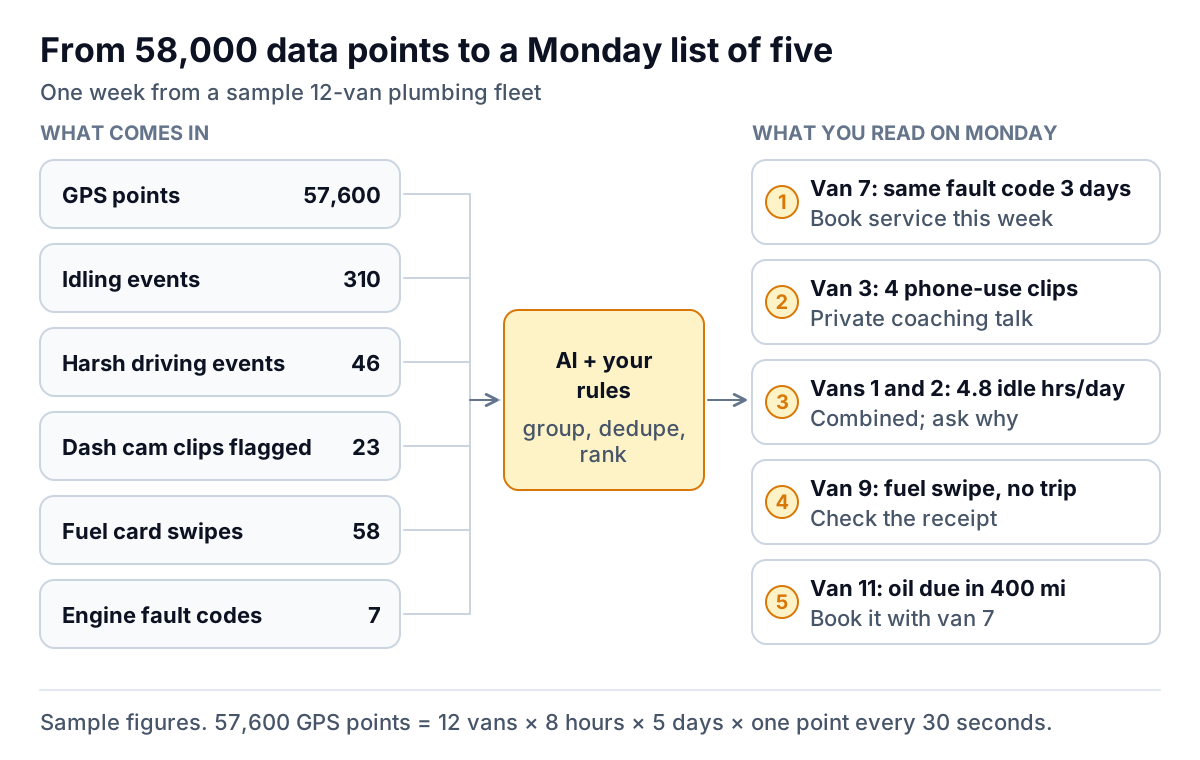
AI fleet management for small business, made practical: what telematics, AI dash cams and maintenance tools do, real costs, idling math and a weekly list.
AI Tools for Auto Repair Shops: Phones, Inspections, Follow-Up
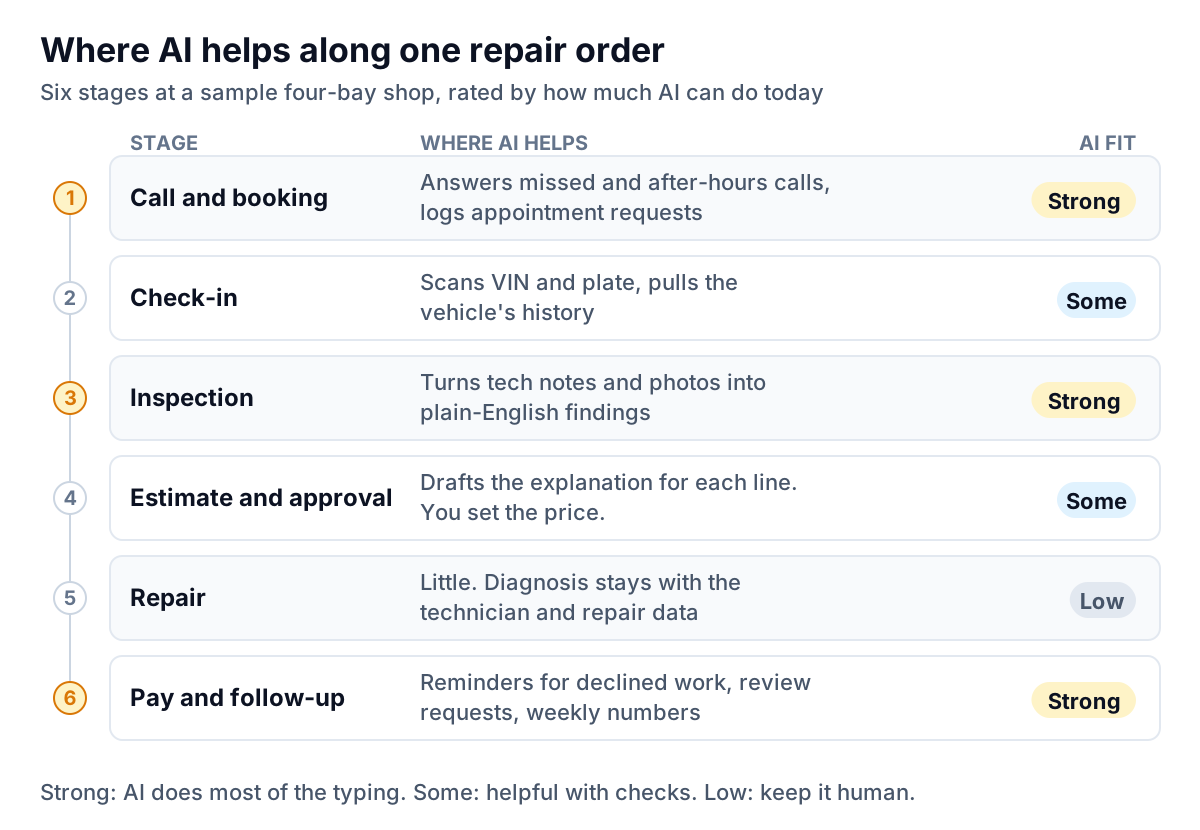
AI tools for auto repair shop owners, stage by stage: AI phone answering, inspection texts, declined-work follow-up and the weekly numbers worth tracking.
AI Inventory Management for Garden Centers: Buying for a Short Spring
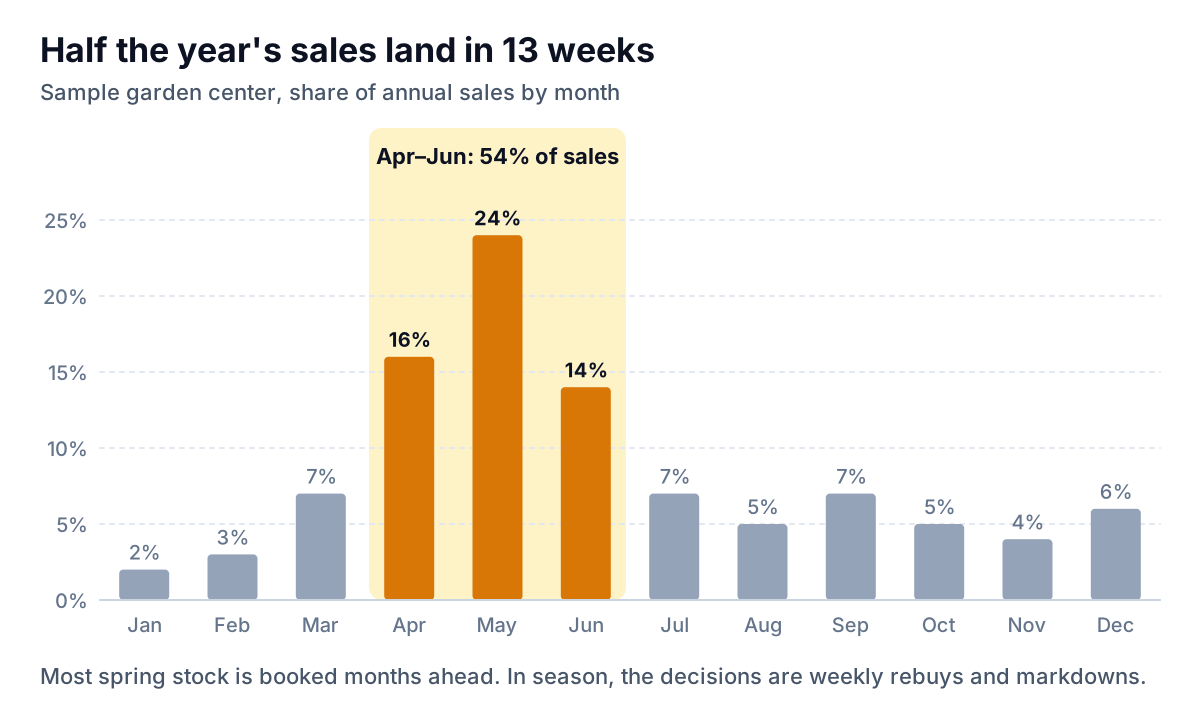
AI inventory management for garden center owners: the three logs forecasting needs, sell-through targets by shelf life, and a worked spring buy plan.
AI Tools for a Physiotherapy Clinic: What Each One Does, What It Costs You in Risk, and Where to Start
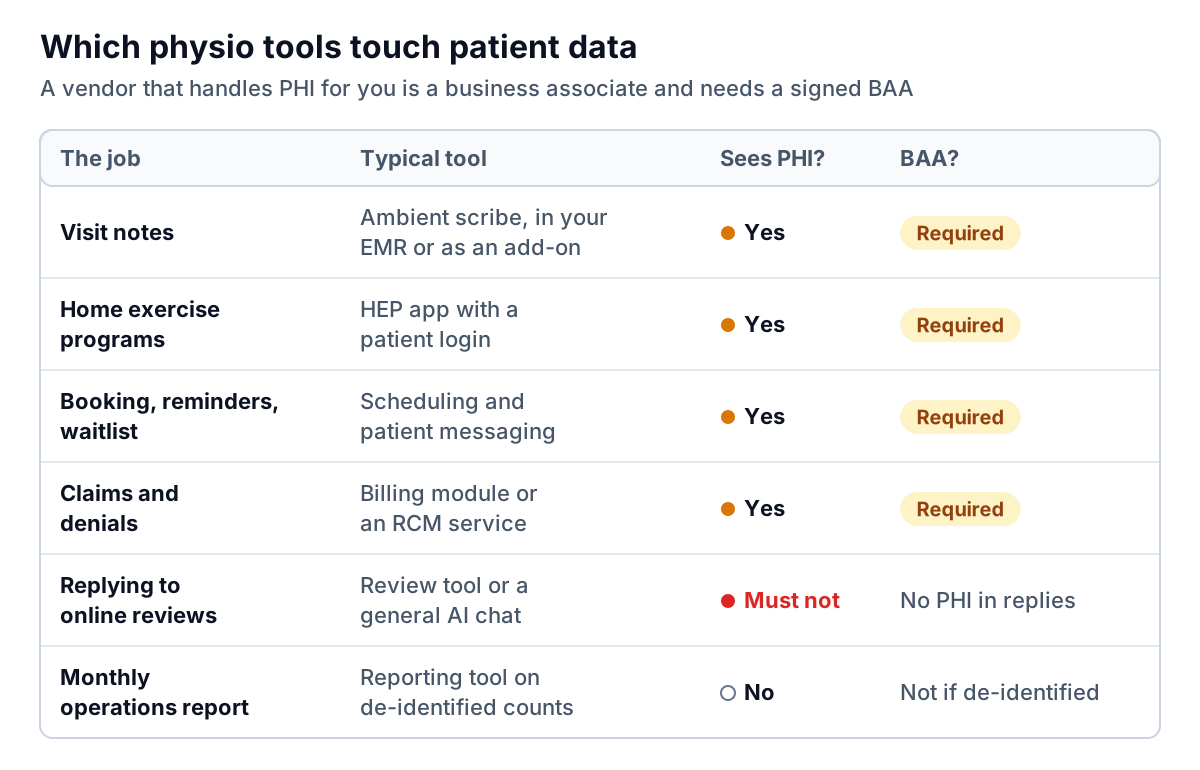
A practical guide to AI tools for physiotherapy clinic work: scribes, exercise apps, scheduling and billing, plus the HIPAA and BAA checks to do first.
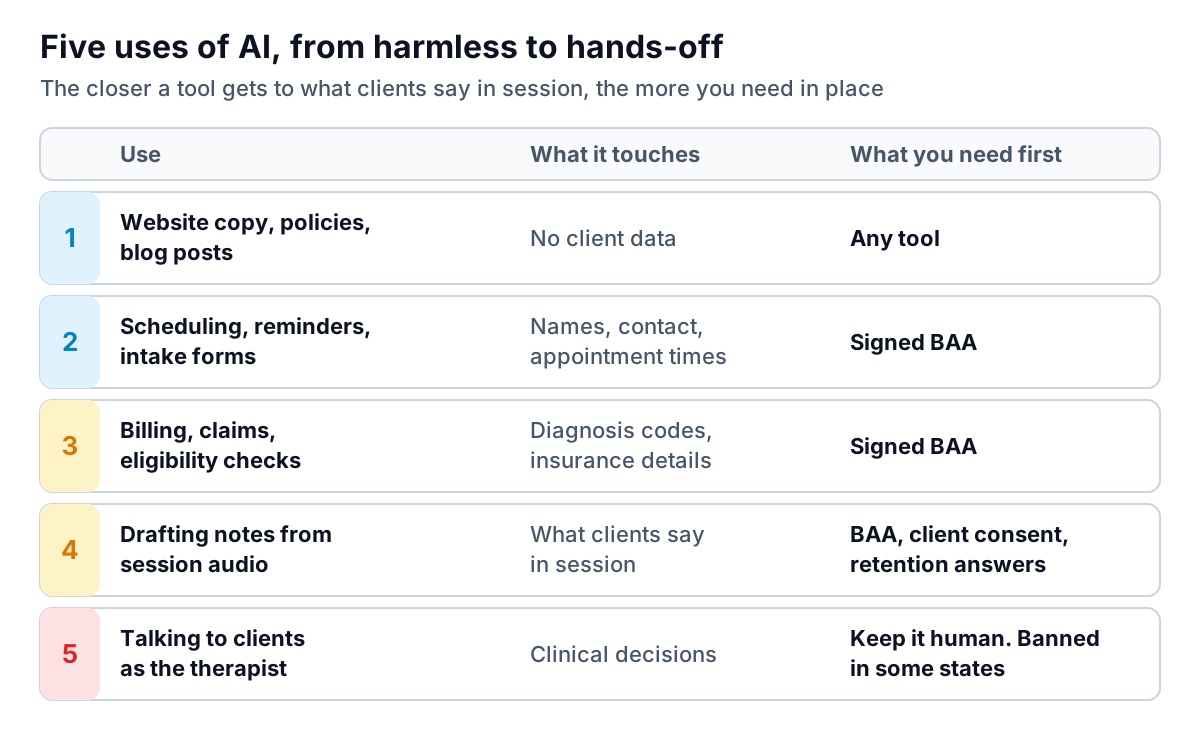
AI Tools for a Mental Health Practice: How to Choose Them Without Putting Clients at Risk
How to choose AI tools for mental health practice work: note assistants, client consent, psychotherapy notes, state AI laws and a vendor scorecard.
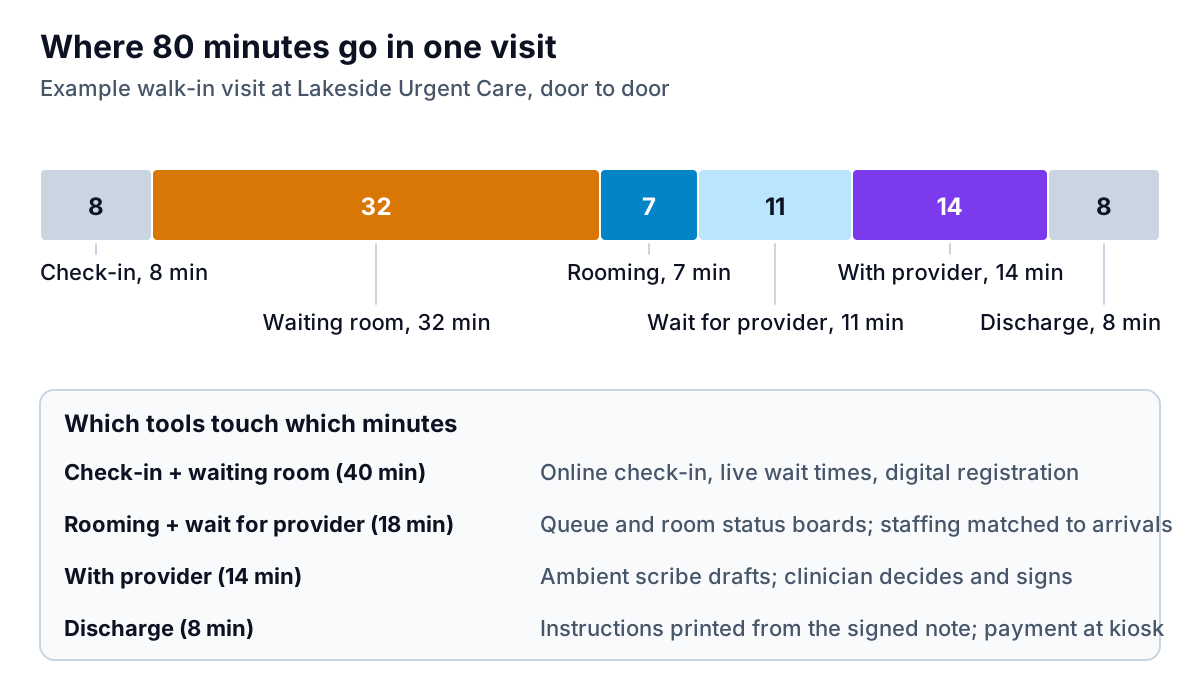
AI Tools for an Urgent Care Center: Fix the Queue, the Charting and the Staffing Grid
A practical guide to AI tools for urgent care center operations: online check-in, scribes, coding help and staffing to arrivals, plus HIPAA checks.
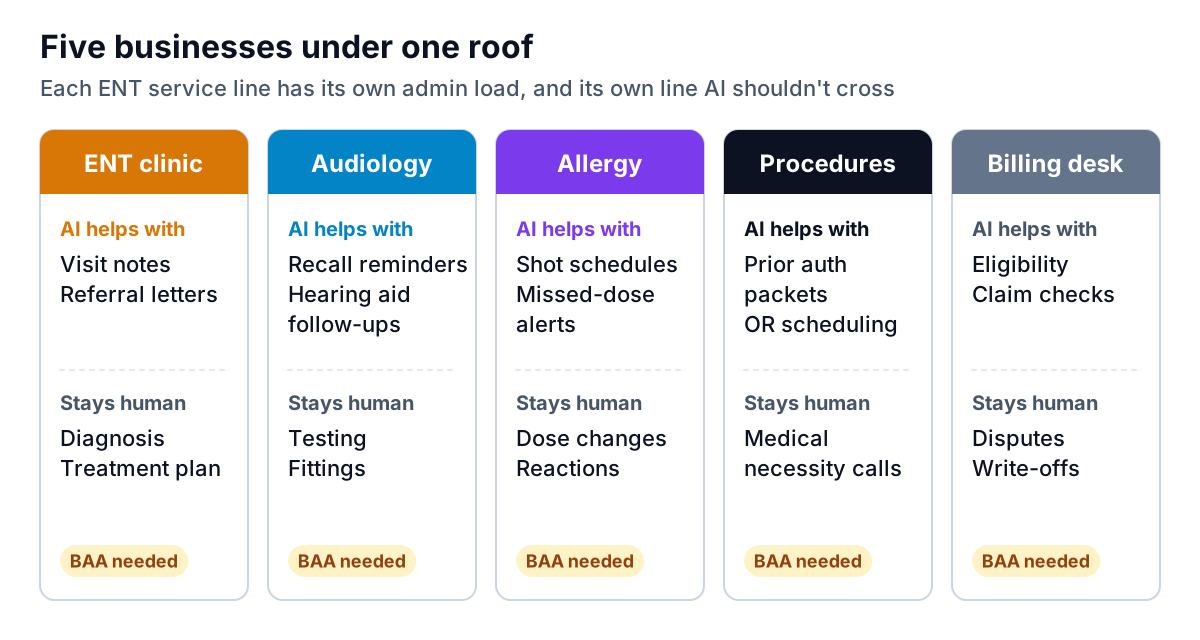
AI Tools for an ENT Clinic: A Service-Line Guide to Notes, Prior Auths, Audiology and Allergy
A service-line guide to AI tools for ENT clinic work: scribes, prior auth tracking, audiology recalls and allergy shot schedules, with HIPAA checks first.
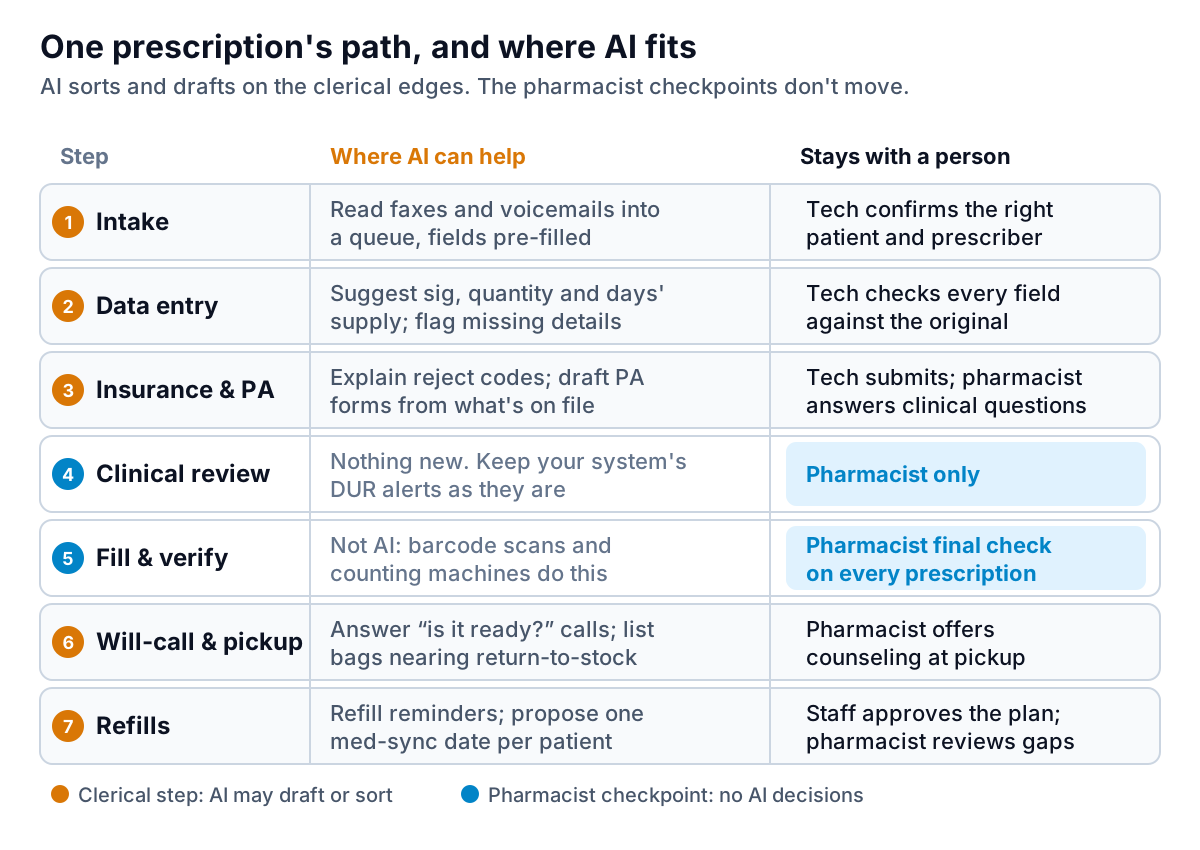
How to Build an AI Workflow for Your Pharmacy, One Queue at a Time
Map each prescription step, count the interruptions, and pilot one AI workflow for pharmacy tasks safely, with BAAs in place and the pharmacist in charge.
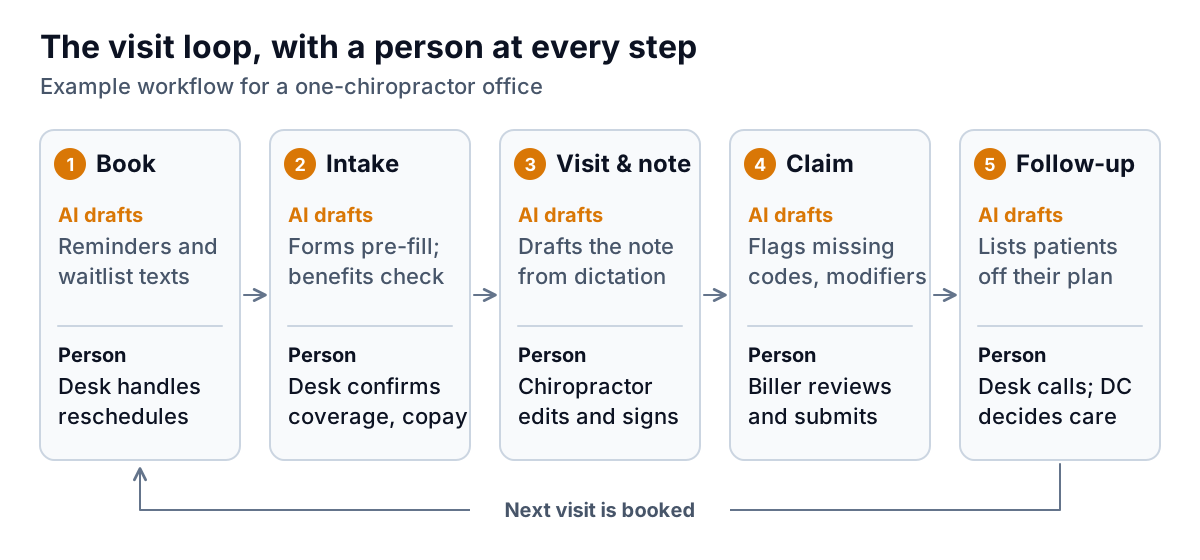
An AI Workflow for Your Chiropractic Office: One Visit, Five Steps, a Person at Each
Build an AI workflow for chiropractic office tasks: reminders, intake, note drafts you sign, Medicare claim flags and patient follow-up, with BAAs in place.
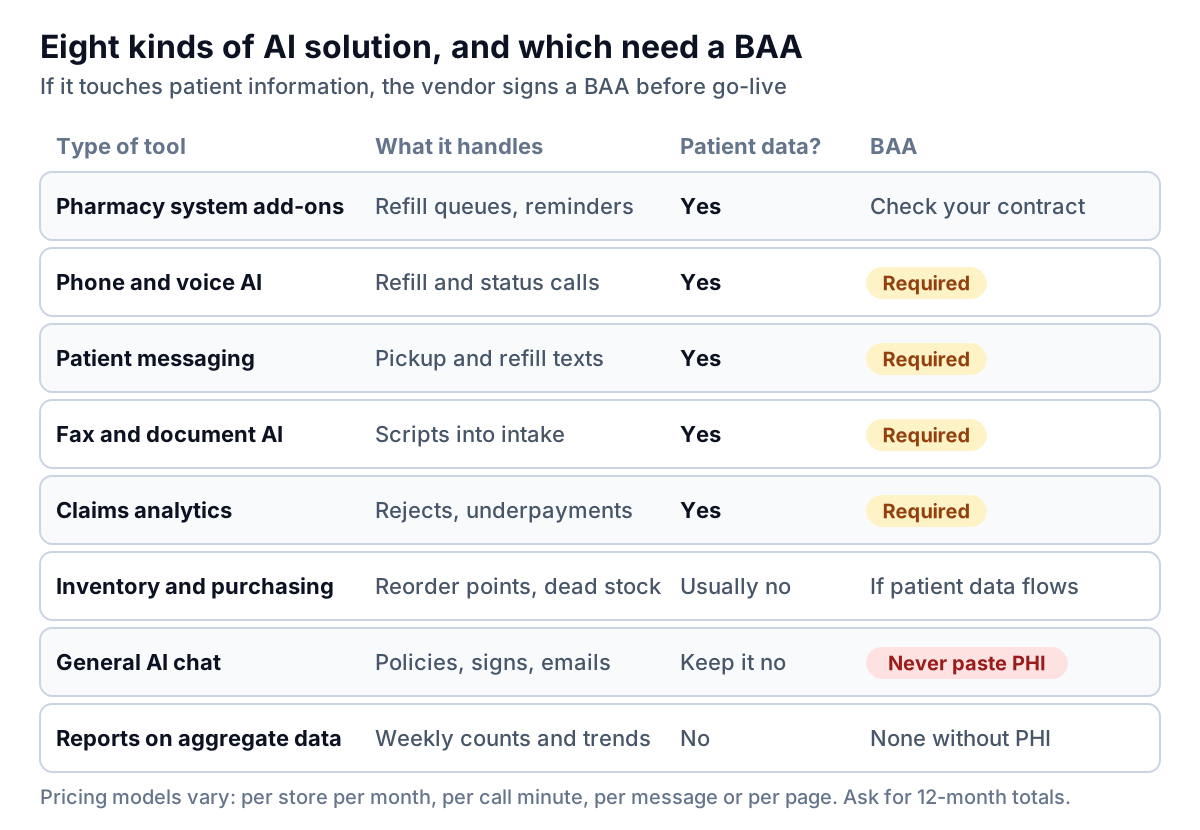
Choosing an AI Solution for Your Pharmacy: Categories, Contracts and Cost Math
How to choose an AI solution for pharmacy operations: the eight tool types, BAA and data terms to settle, a vendor scorecard and the break-even arithmetic.
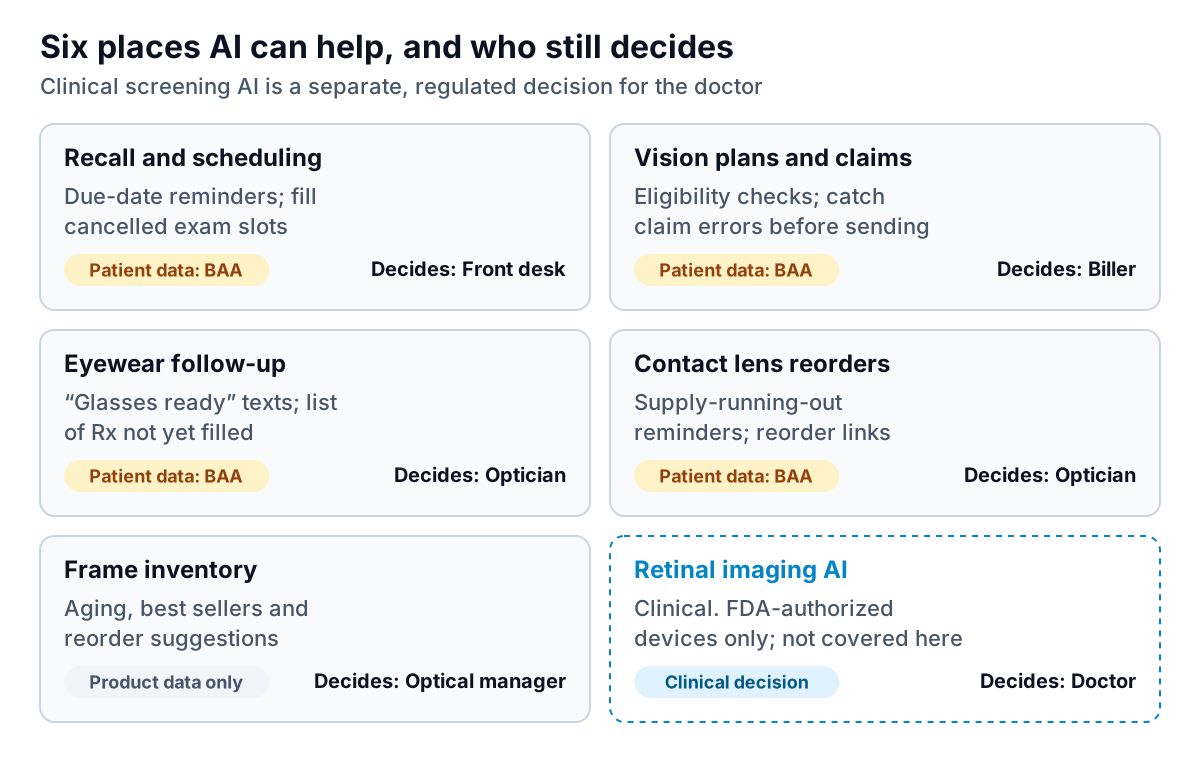
Choosing an AI Solution for Your Optometry Practice: Clinic Side and Optical Side
How to pick an AI solution for optometry practice operations: recalls, vision plan claims, optical capture rate and frame inventory, with HIPAA and FTC rules.
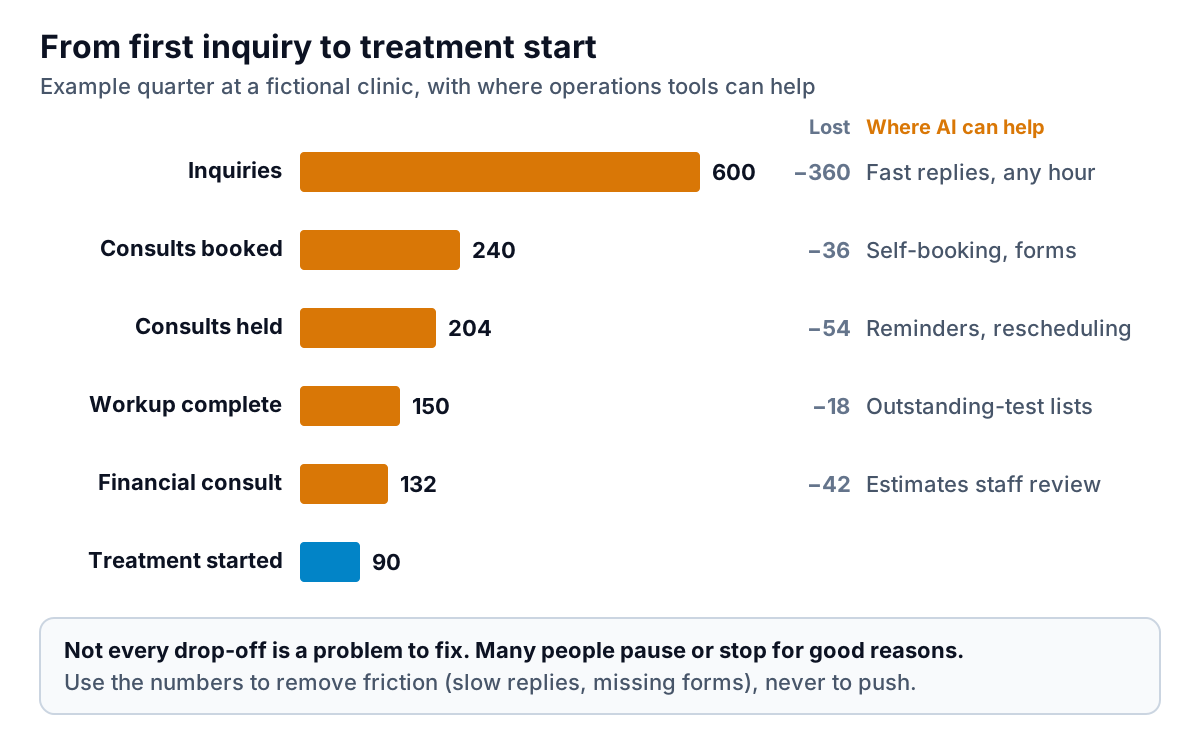
An AI Solution for Your Fertility Clinic's Operations: What Helps, What Never Should
Where an AI solution for fertility clinic operations helps: inquiries, message sorting, cost estimates and reporting, with BAAs, privacy rules and limits.
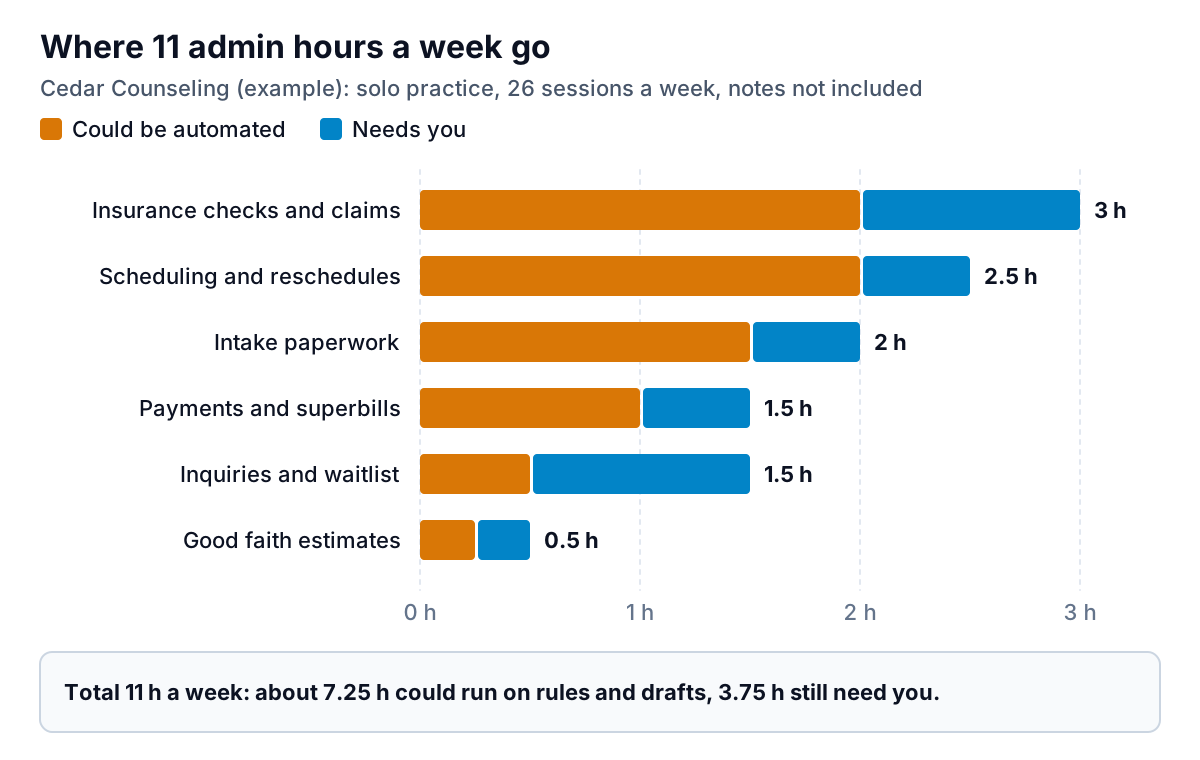
AI Automation for a Mental Health Practice: What to Automate First, With Rules and Guardrails
AI automation for mental health practice admin: audit your week, pick tasks by frequency and harm, and automate intake, reminders and billing with guardrails.
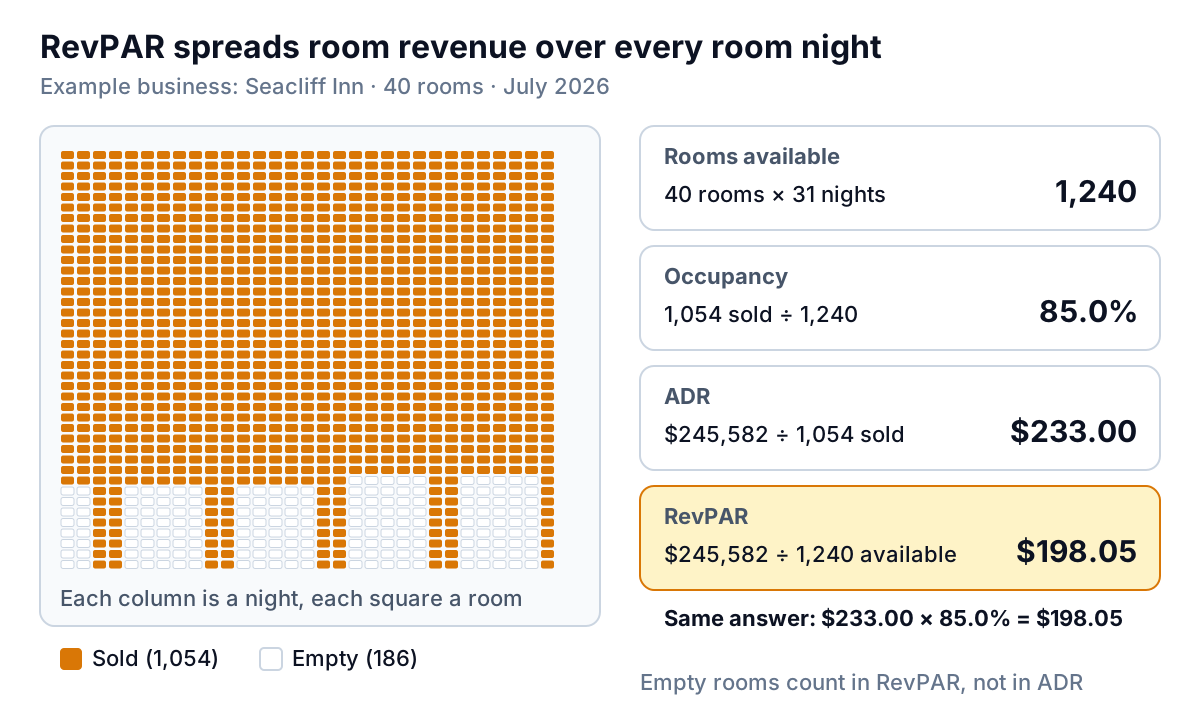
RevPAR: How to Calculate It, Read It and Allow for the Seasons
RevPAR is room revenue ÷ rooms available, or ADR × occupancy. How to calculate it from your PMS, read it against occupancy and ADR, and handle seasonality.
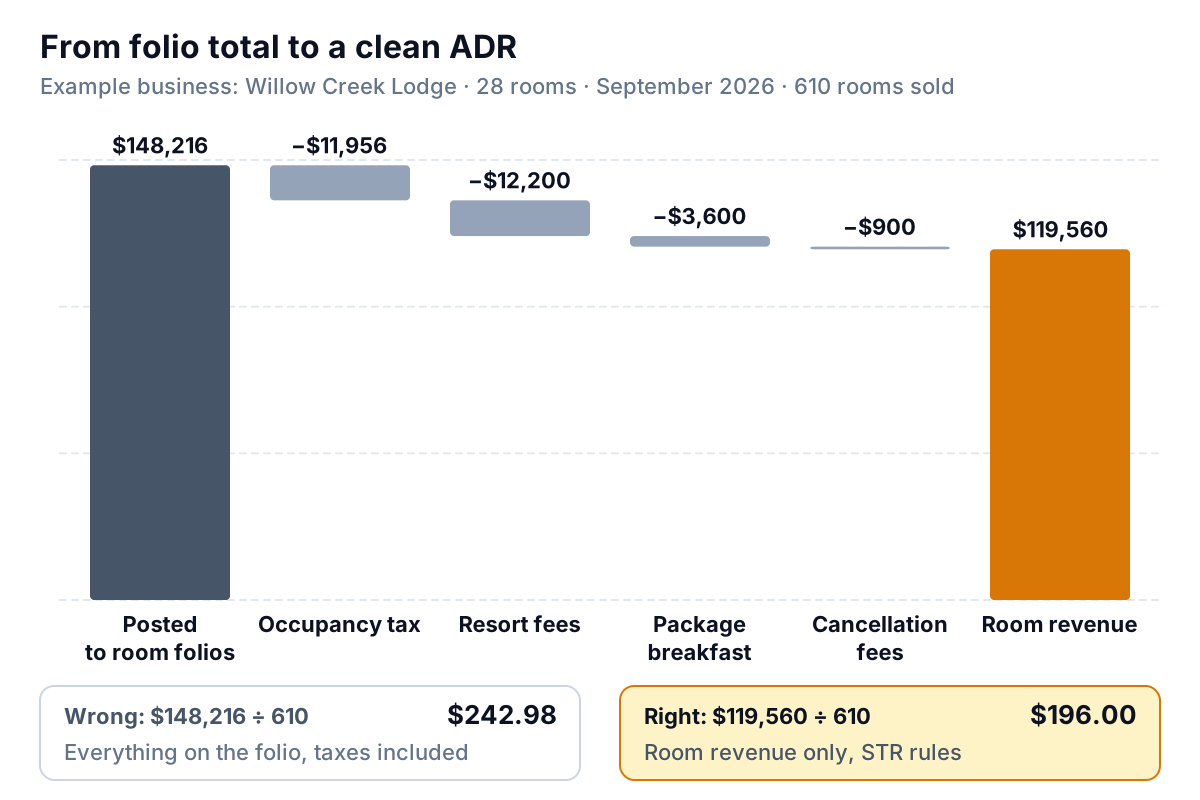
Hotel ADR: The Average Daily Rate Formula and What Belongs in It
ADR hotel guide: average daily rate is room revenue ÷ rooms sold. What to leave out (taxes, resort fees, comps, packages) and how ADR differs from RevPAR.
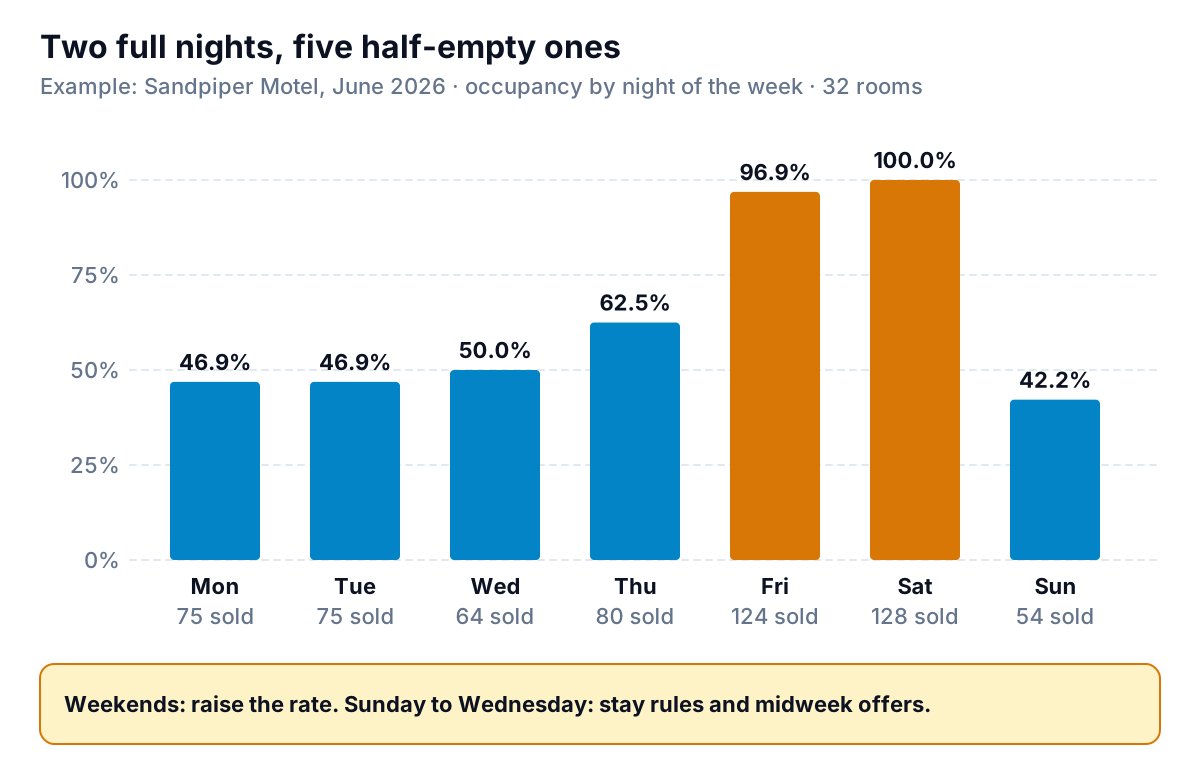
How to Increase RevPAR Without Giving Away Your Profit
How to increase RevPAR: rate, discounts, stay rules and channel mix, worked through for an example motel with the RevPAR and profit effect of each lever.
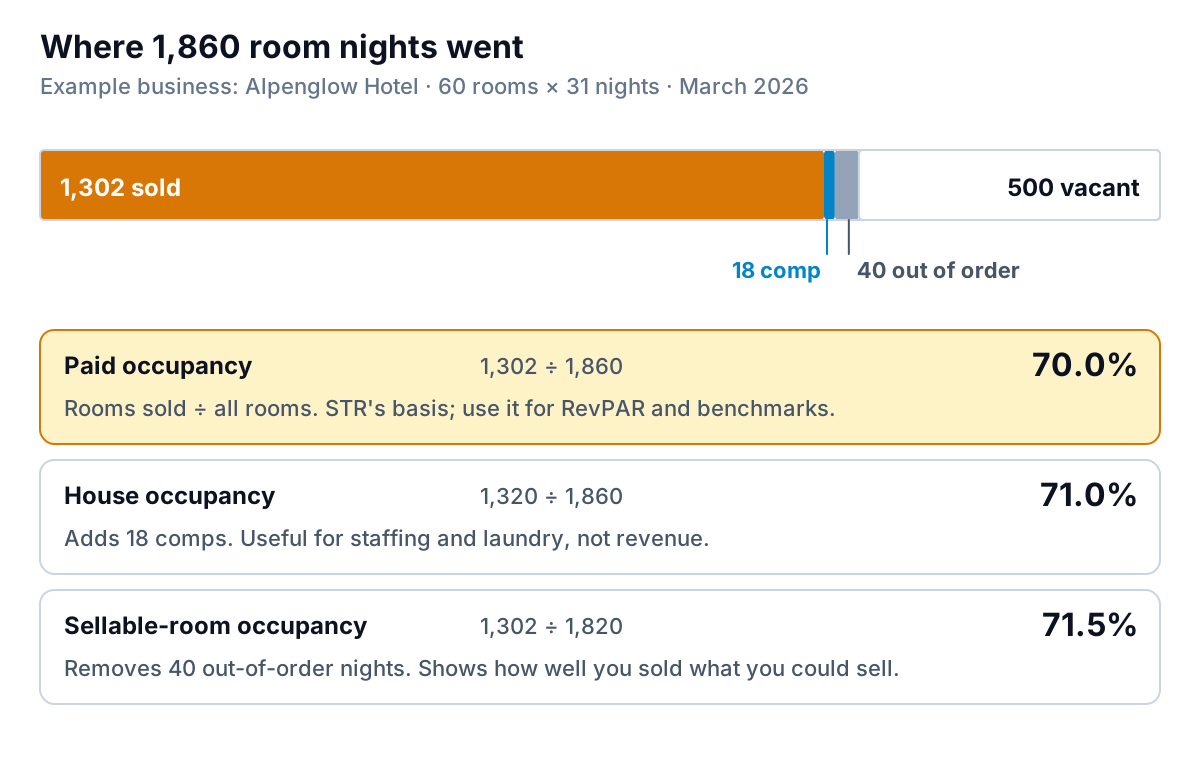
Hotel Occupancy Rate: The Formula, Out-of-Order Rooms and How to Raise It
Hotel occupancy rate is rooms sold ÷ rooms available. How to treat comps and out-of-order rooms, what's typical in CoStar data, and how to raise it by night.
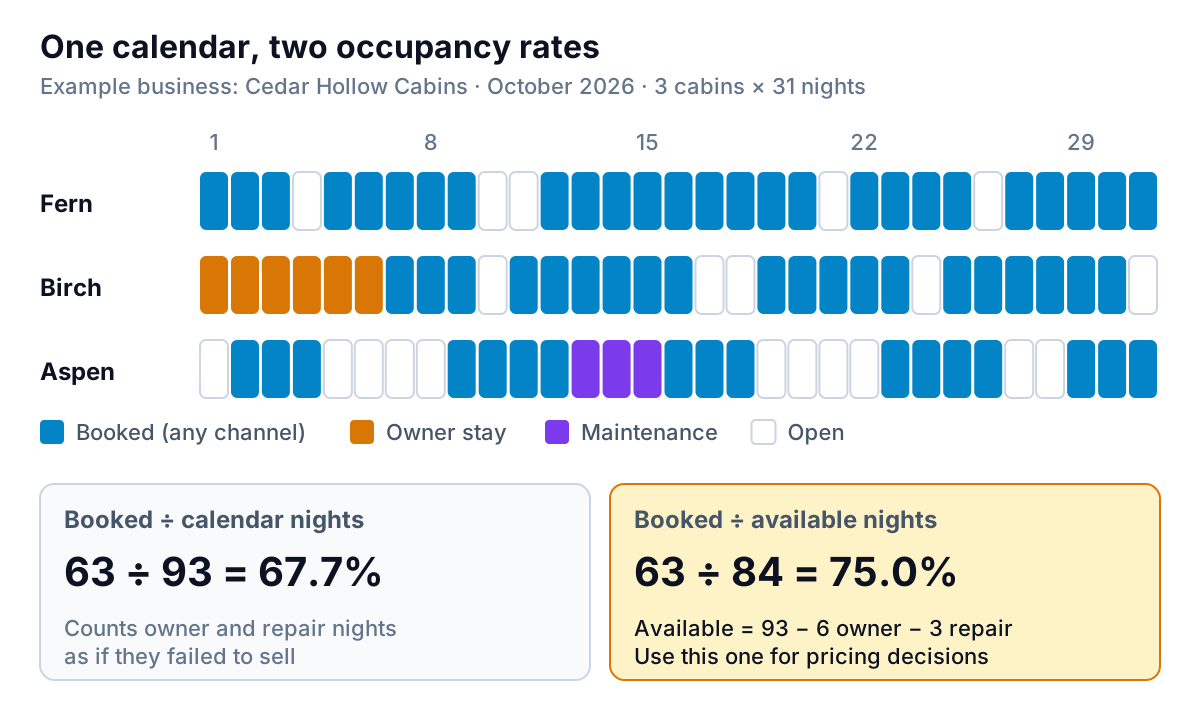
Airbnb Occupancy Rate: Which Nights Count, What's Typical, and When to Act
Calculate Airbnb occupancy rate from booked and available nights, see why owner blocks change it, what AirDNA's 2026 data shows, and how to pair it with ADR.
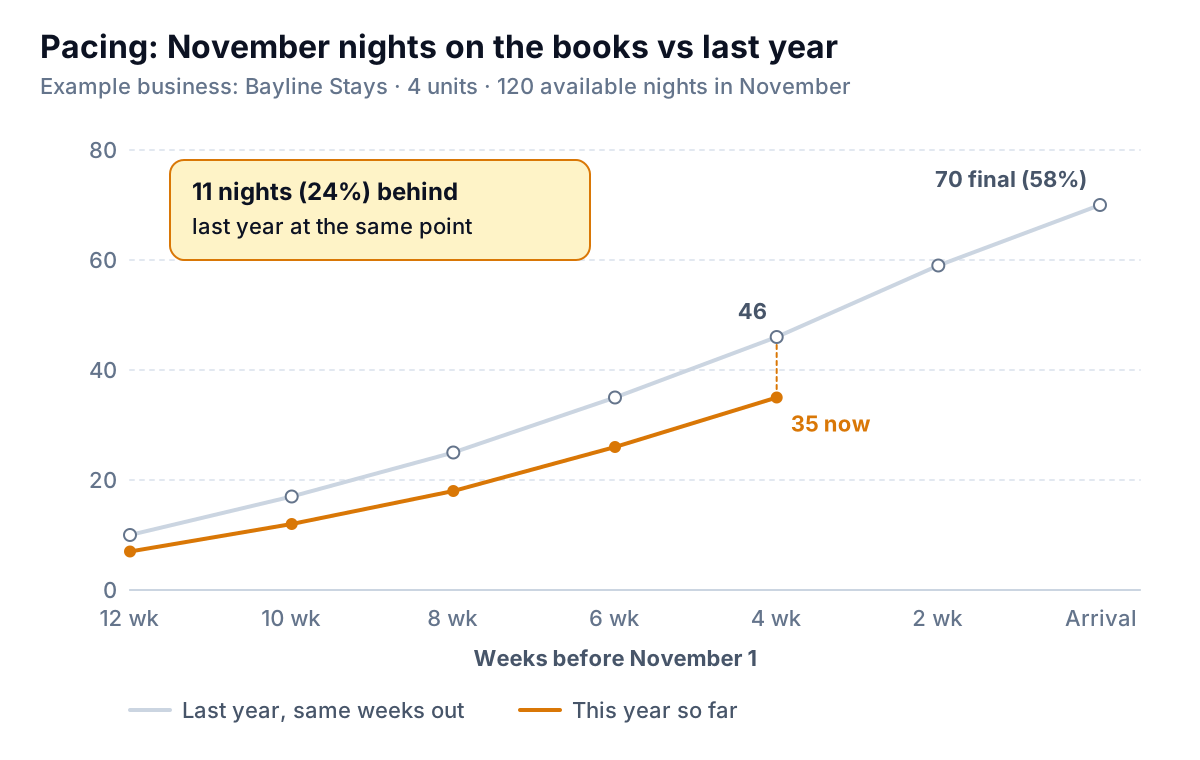
Airbnb Revenue Management for Small Hosts: Rates, Minimum Stays and Proof It Worked
Airbnb revenue management for small hosts: a seasonal rate card, pacing by lead time, minimum stays that prevent orphan nights, and net revenue per night.
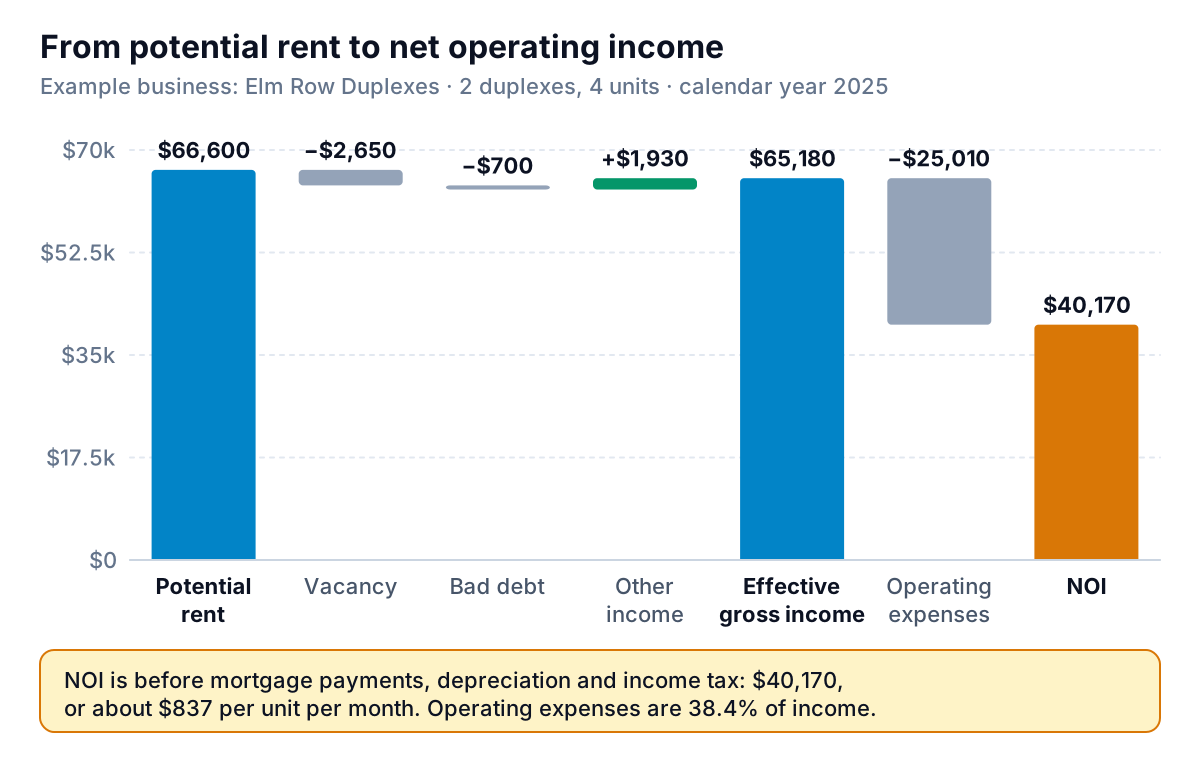
Rental Property Income Statement: A Line-by-Line Example, NOI and Schedule E
Build a rental property income statement line by line: potential rent to NOI, interest and depreciation below the line, and how each line maps to Schedule E.
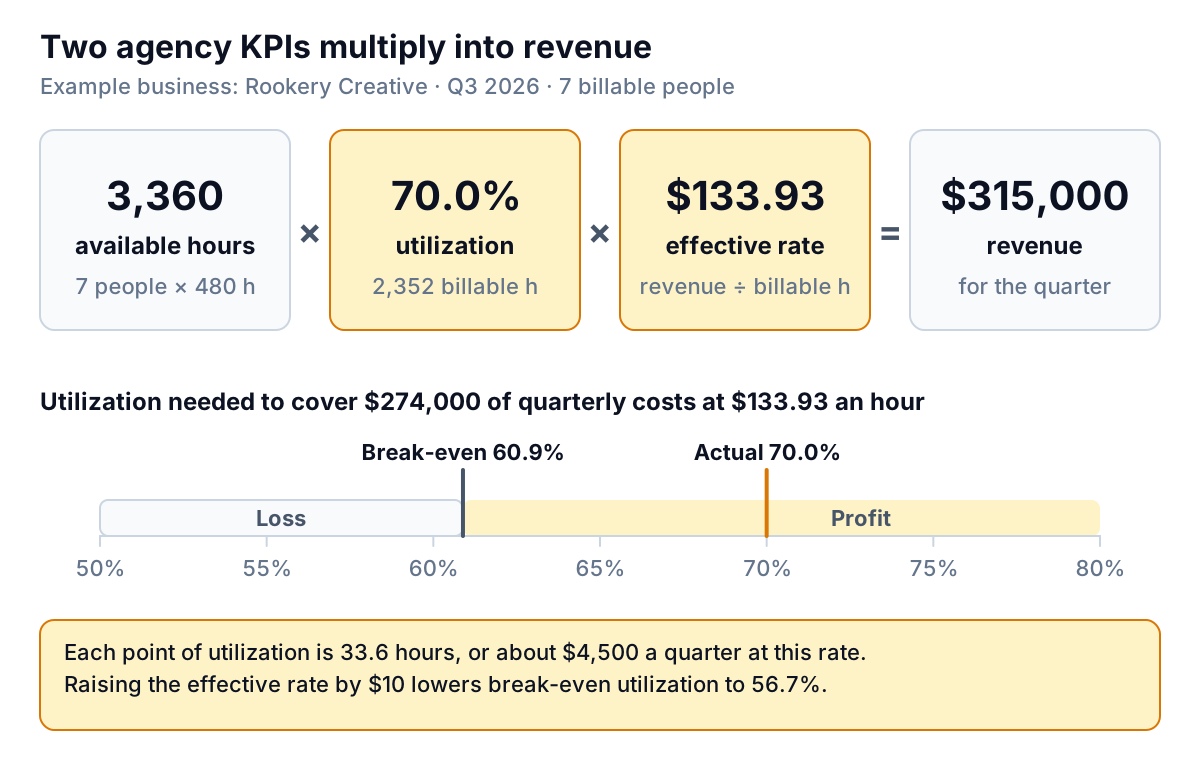
Agency KPIs That Decide Profit: Utilization, Effective Rate, Retainers, Concentration and Pipeline
The agency KPI set that decides profit: utilization and effective rate, break-even utilization, retainer health, client concentration and pipeline coverage.
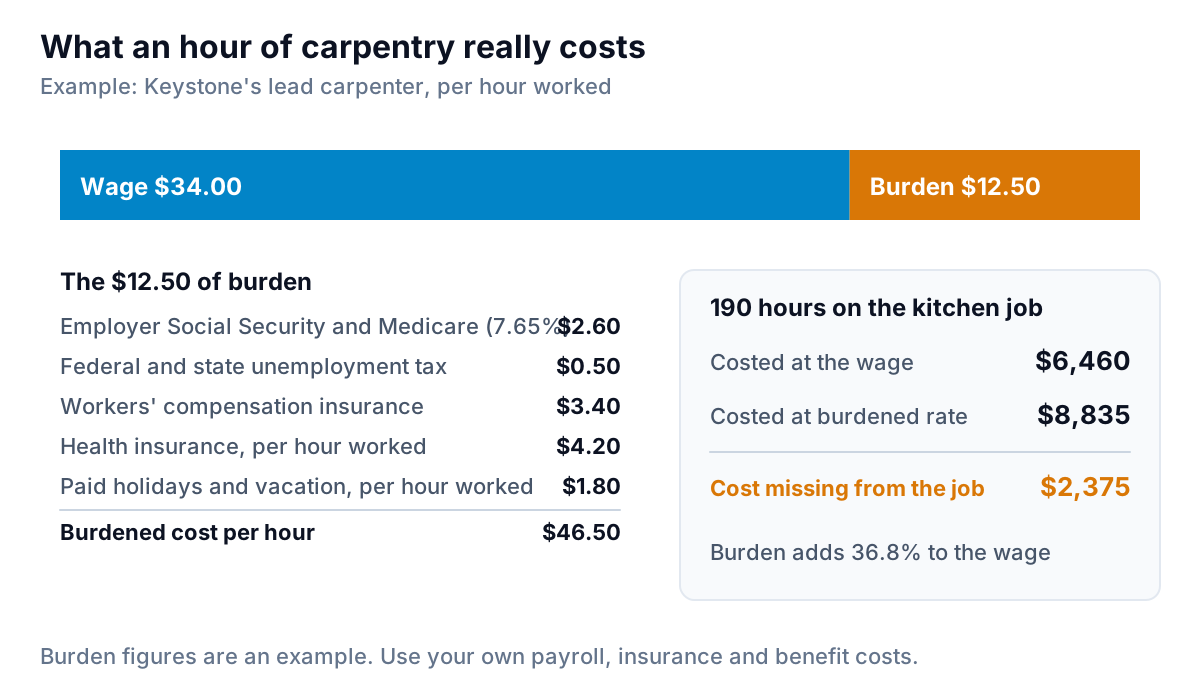
Job Costing for Contractors: Cost Codes, Labor Burden and Estimate vs Actual
Job costing for contractors, worked through one remodel: cost codes that match the estimate, burdened labor, change orders and where the margin really went.
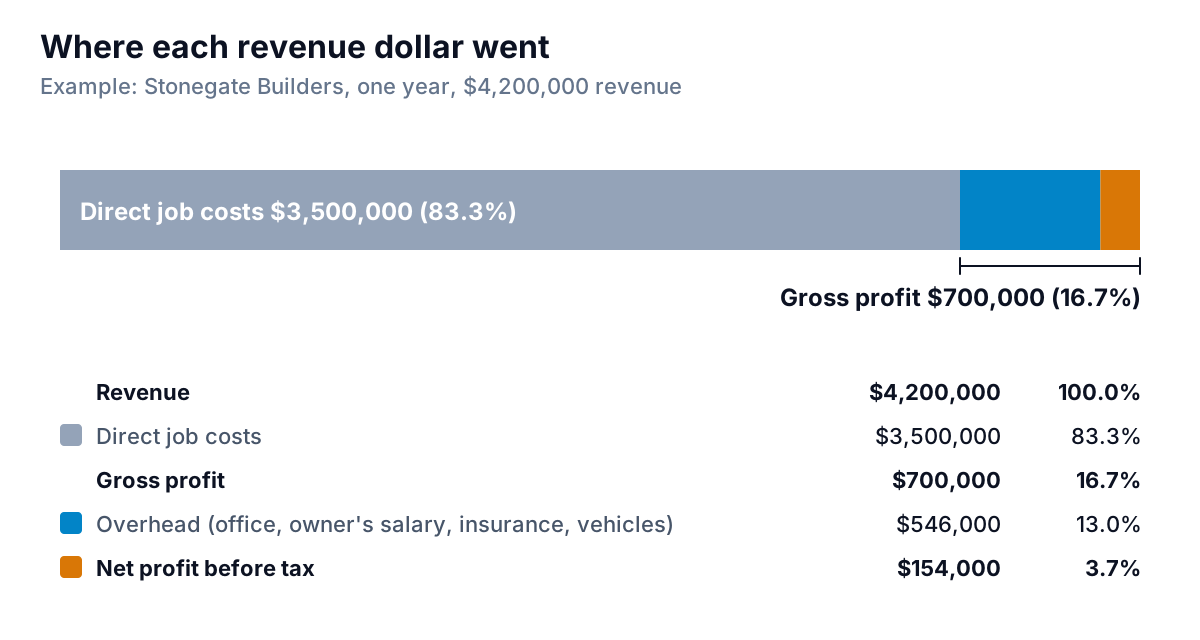
Construction Profit Margin: Gross vs Net, the Markup Trap and Overhead Recovery
Construction profit margin with a worked example: gross vs net, why a 20% markup is a 16.7% margin, the markup your overhead needs, and NAHB figures.
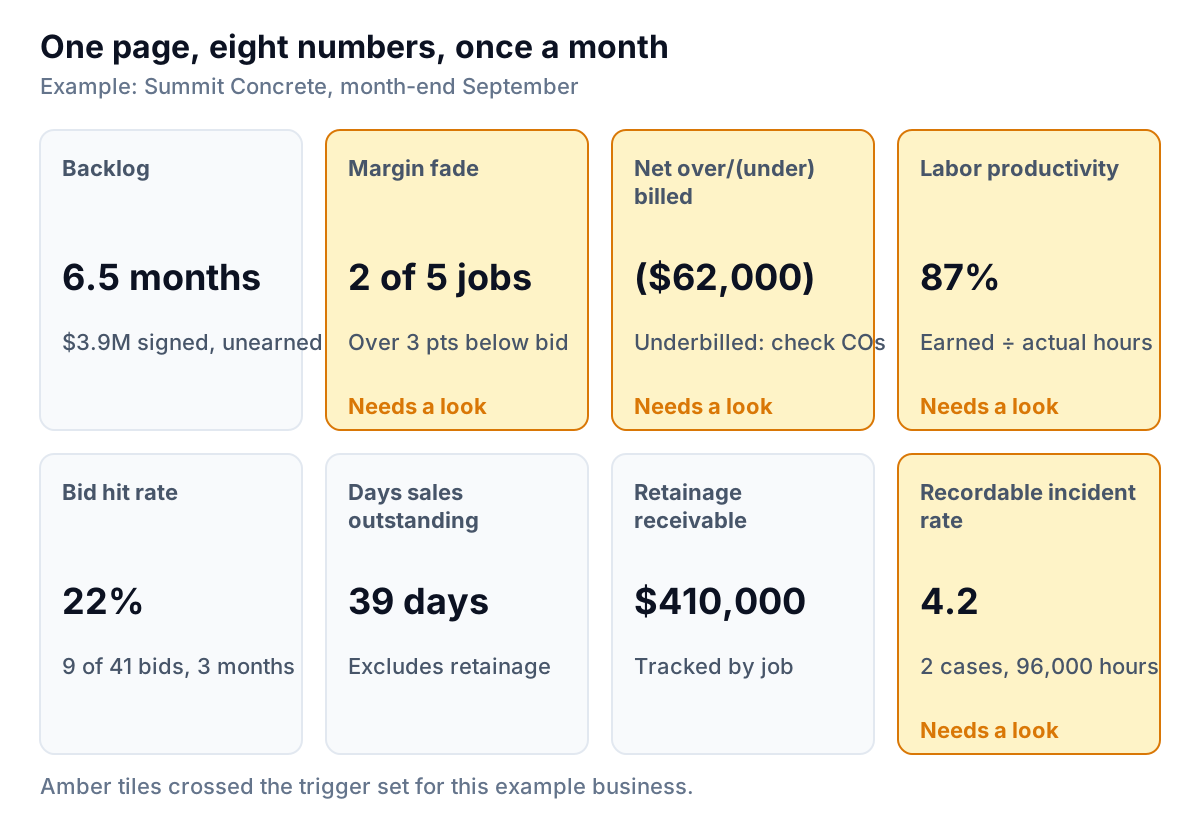
Construction KPIs: The Eight Numbers a Small Contractor Should Review Monthly
Eight construction KPI formulas worked through for an example concrete sub: backlog, margin fade, labor productivity, billing, DSO, retainage and safety.
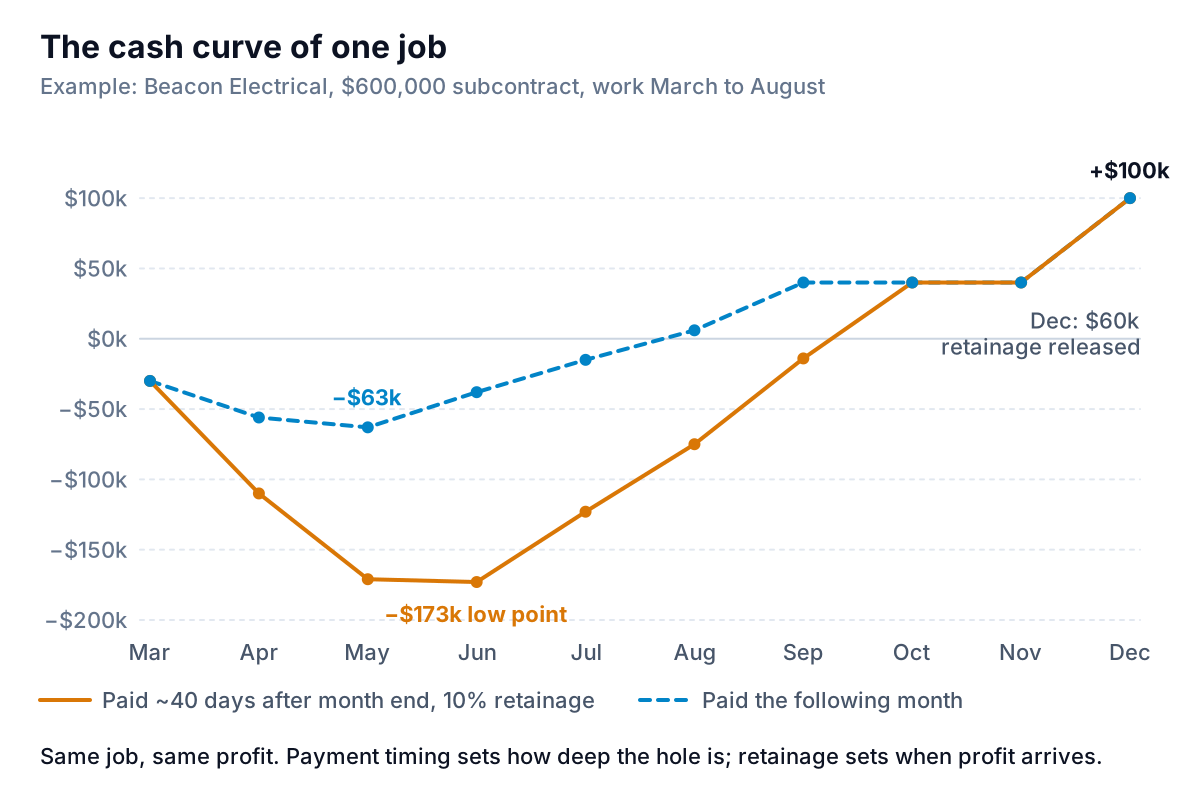
Construction Cash Flow: Retainage, Pay-When-Paid and the Cash Curve of a Job
Construction cash flow on one $600,000 subcontract: why the hole is $173,000 deep, how retainage, pay-when-paid and pay apps shape it, and what to do.
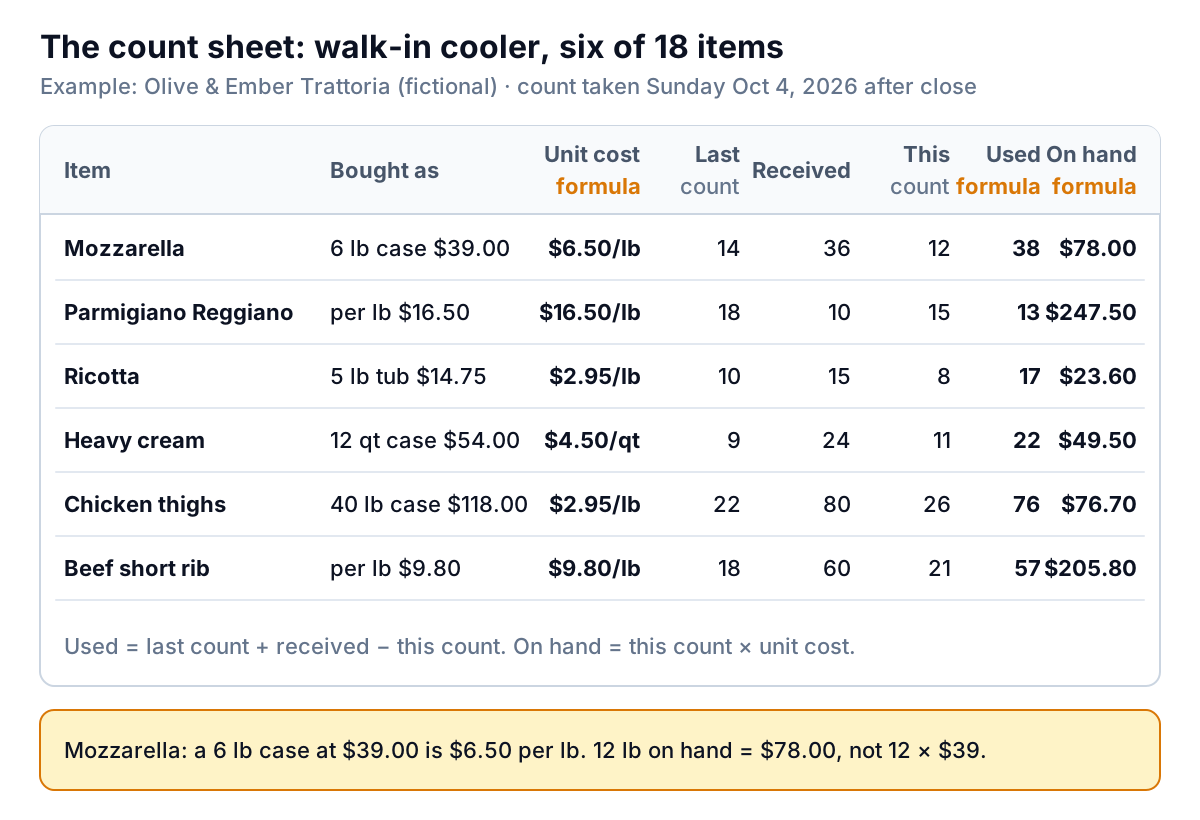
Restaurant Inventory Template: From the Walk-In Count to Food Cost %
Free restaurant inventory template for Excel: count by storage area, price each line from invoices, and get usage, food cost % and days on hand.
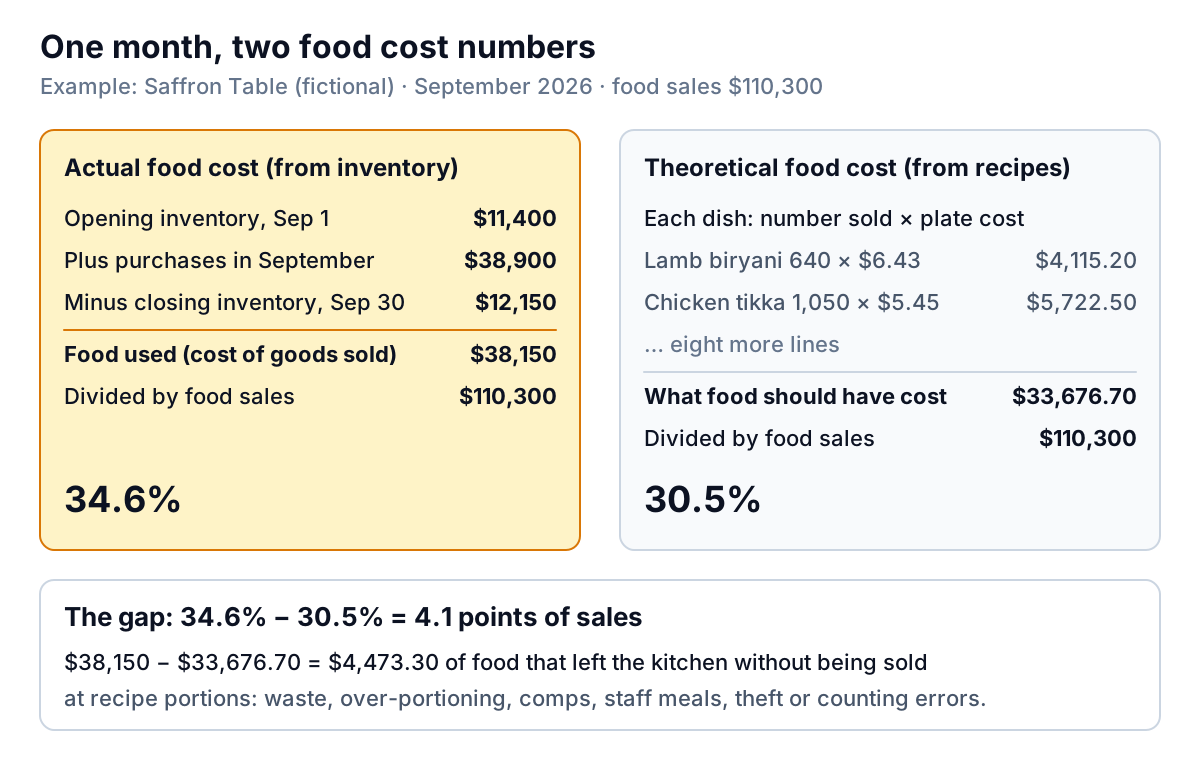
Food Cost Percentage: The Formula, Plate Cost and What's Good
How to calculate food cost percentage from inventory, cost a plate, find the gap between theoretical and actual, and what survey data says is typical.
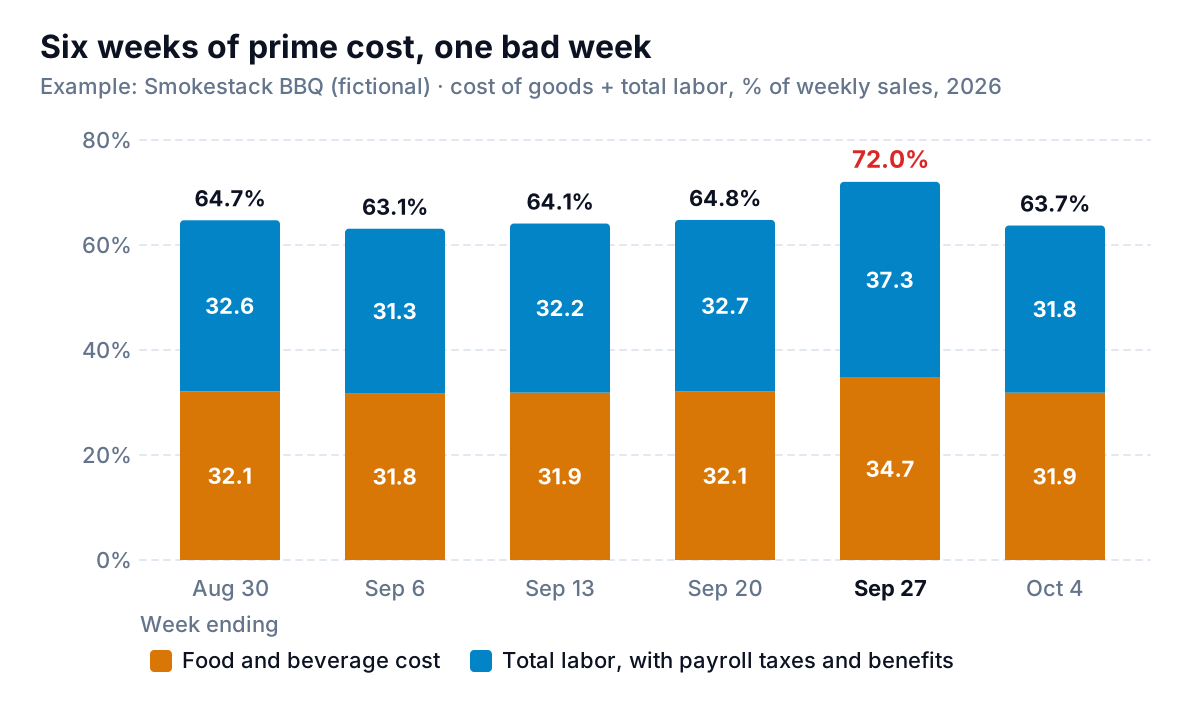
Restaurant Prime Cost: Track It Weekly and Take Apart a Bad Week
Prime cost restaurant guide: food and beverage cost plus total labor, tracked weekly, with a worked example, survey data and a bad week taken apart.
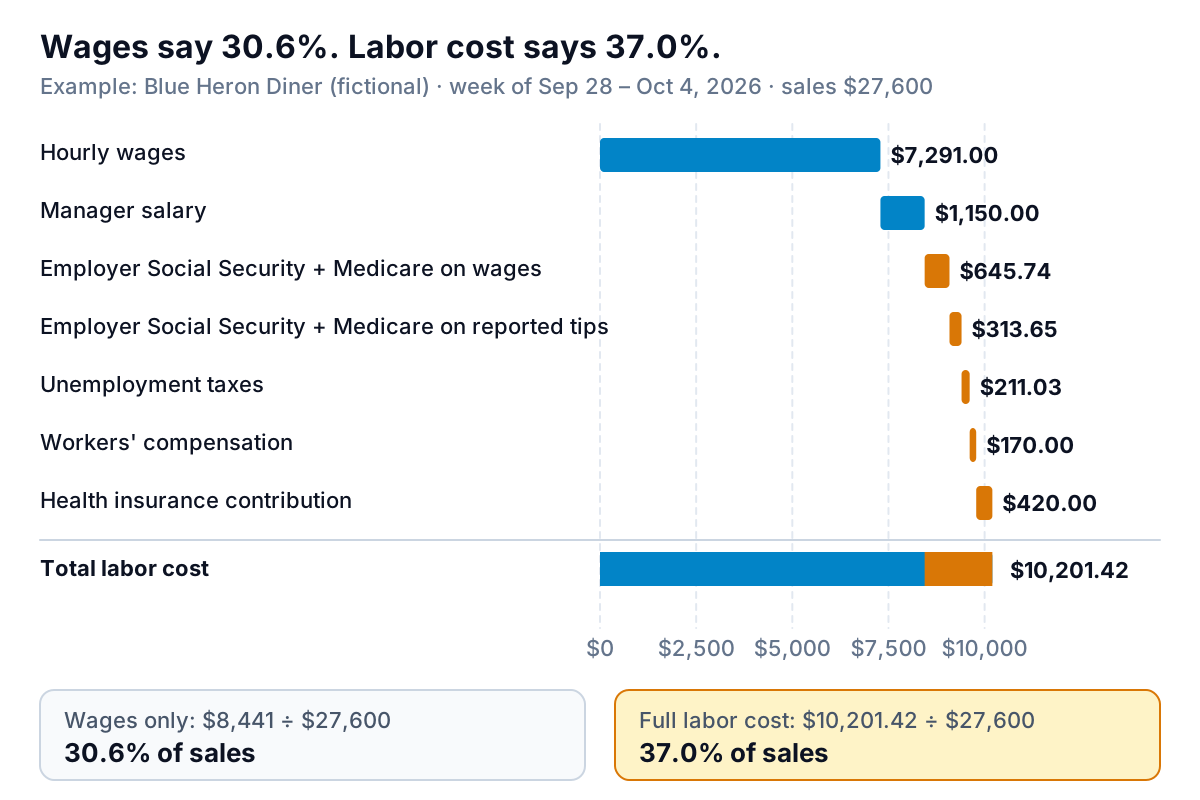
Restaurant Labor Cost Percentage: The Full Cost, SPLH and the Schedule
Restaurant labor cost percentage done properly: wages plus payroll taxes, tip taxes and benefits, front vs back of house, sales per labor hour and data.
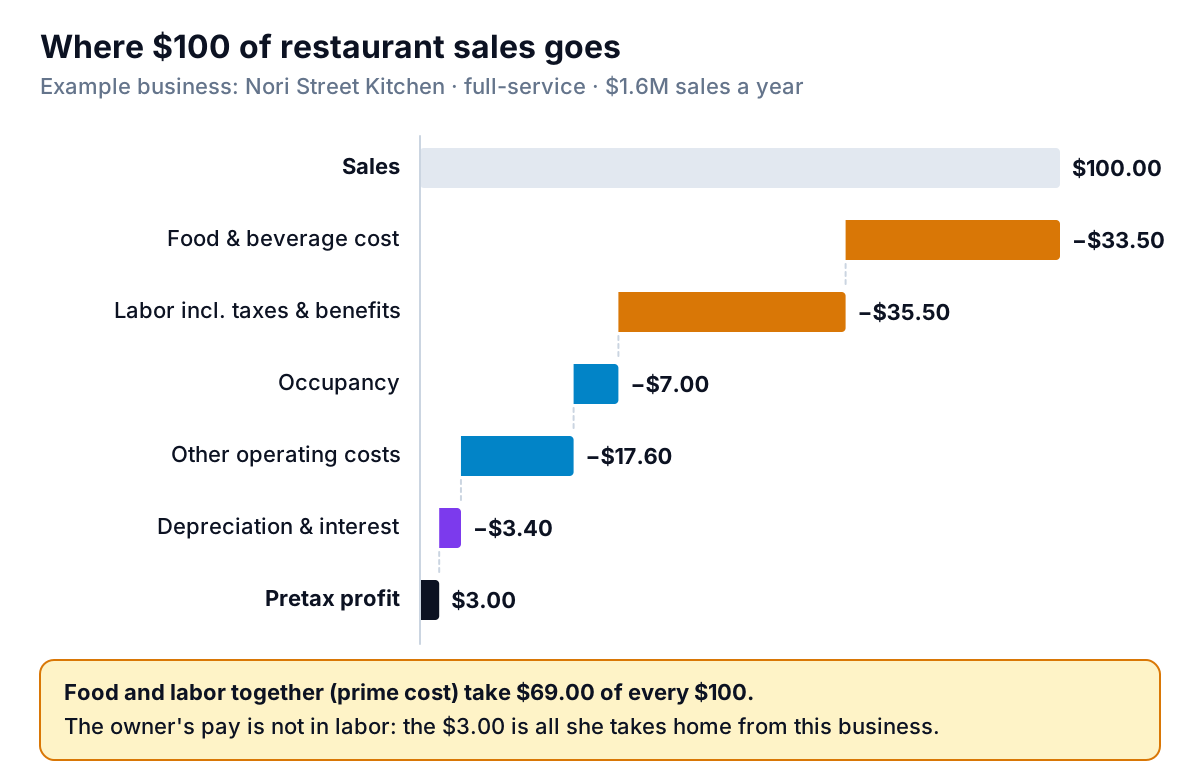
Restaurant Profit Margin: Where Every Dollar Goes, Line by Line
Restaurant profit margin explained with a full P&L: where each dollar goes, sourced 2024 medians by segment, and what one point of margin is worth to you.
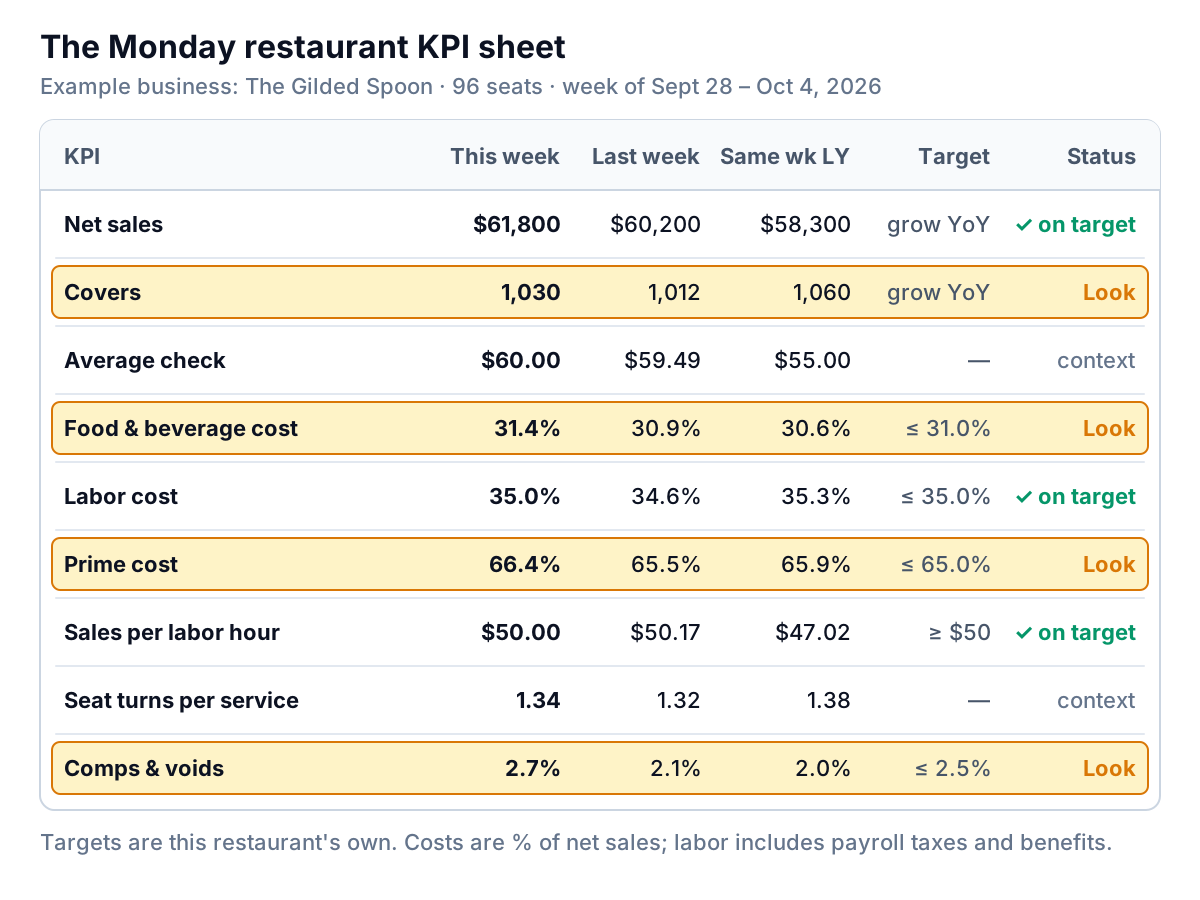
Restaurant KPIs: The Nine Numbers Worth Reading Every Monday
A weekly restaurant KPI sheet in nine numbers: the formulas, where each lives in your POS and payroll, splitting sales into covers and check, and when to act.
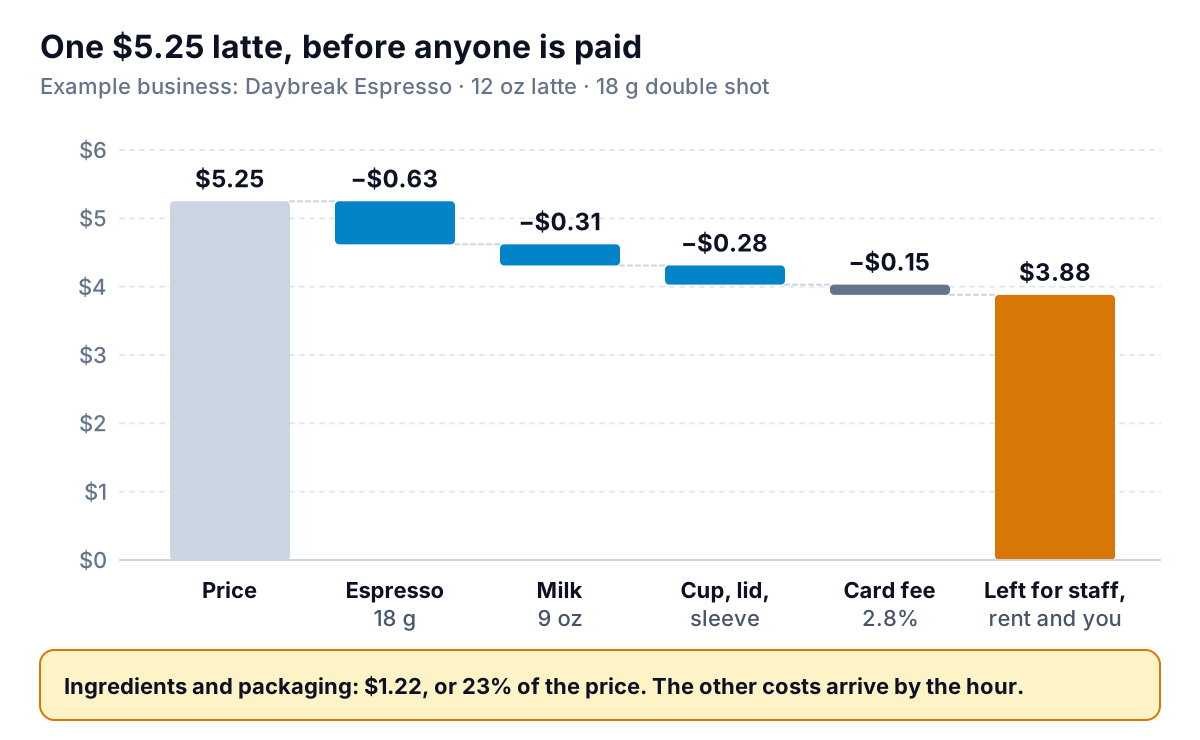
Coffee Shop Profit Margin: From One Latte to What the Owner Earns
Coffee shop profit margin built from one $5.25 latte to a full year: drink costs, staff, rent, break-even tickets a day and what the owner really takes home.
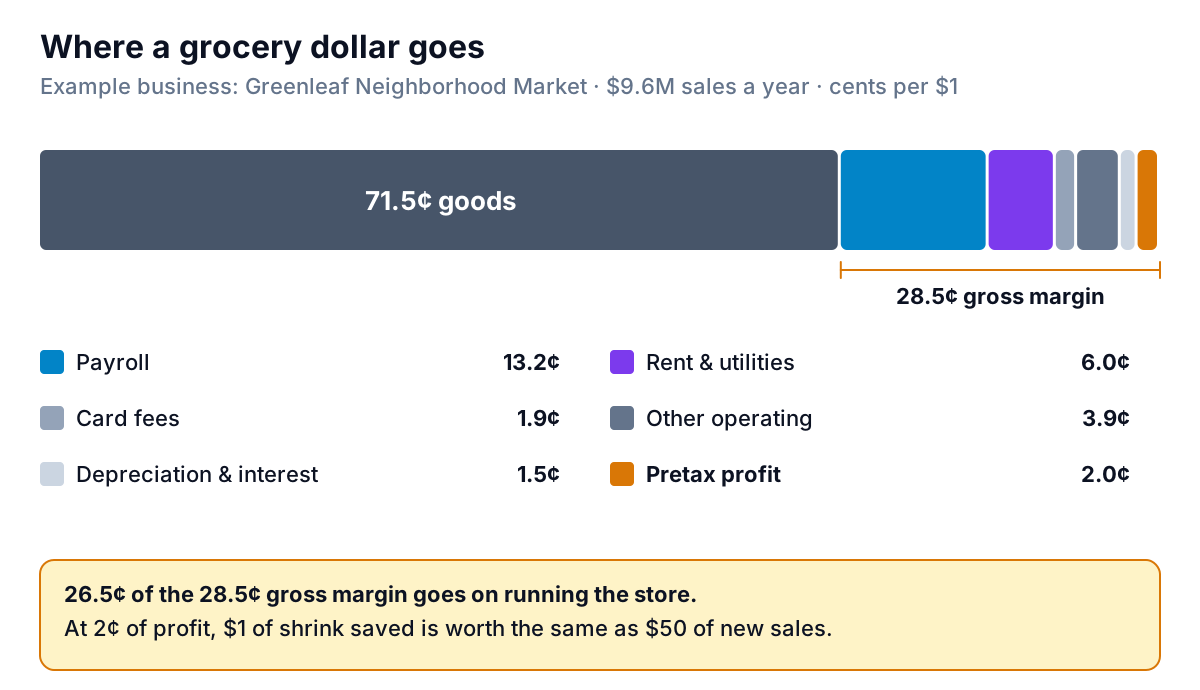
Grocery Store Profit Margin: Why It's 2 Cents and How the Best Make More
Why the grocery store profit margin is about 2%: sourced FMI, NGA and Census figures, department margins, shrink and inventory turns, with a worked example.
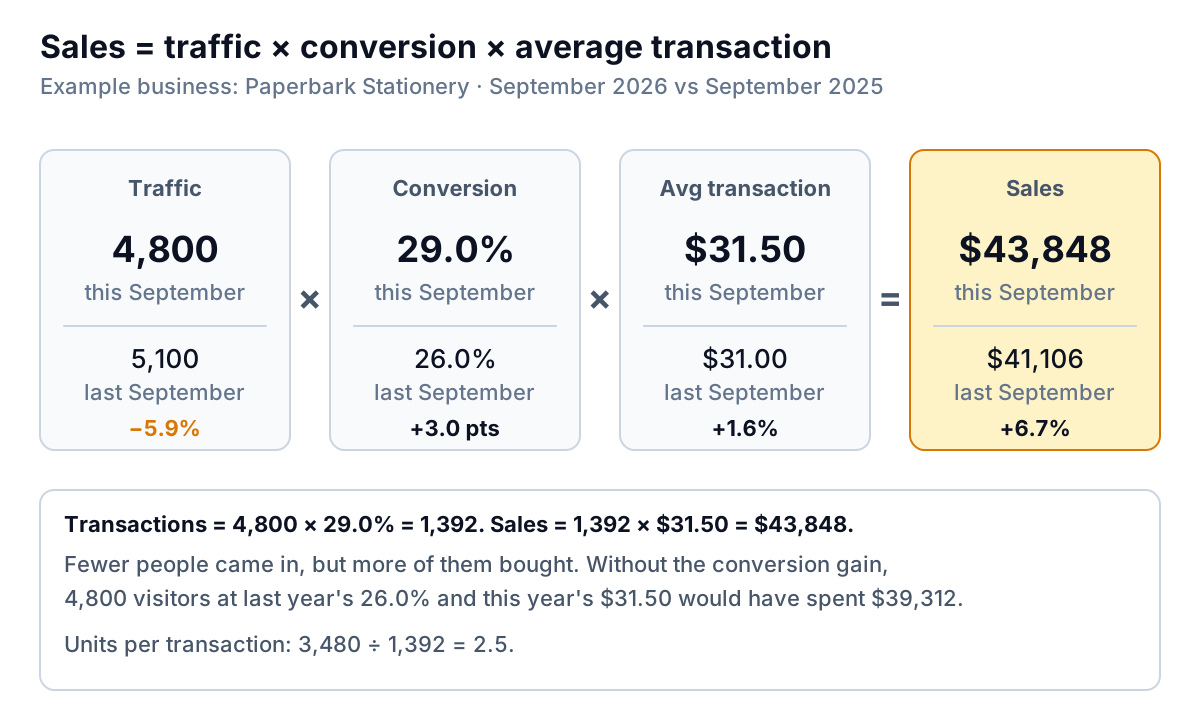
Retail KPIs: The Eight Numbers a Small Shop Should Track
What a retail KPI is and the eight a small shop needs: traffic, conversion, ATV, sales per sq ft, gross margin, sell-through and GMROI, with a worked example.
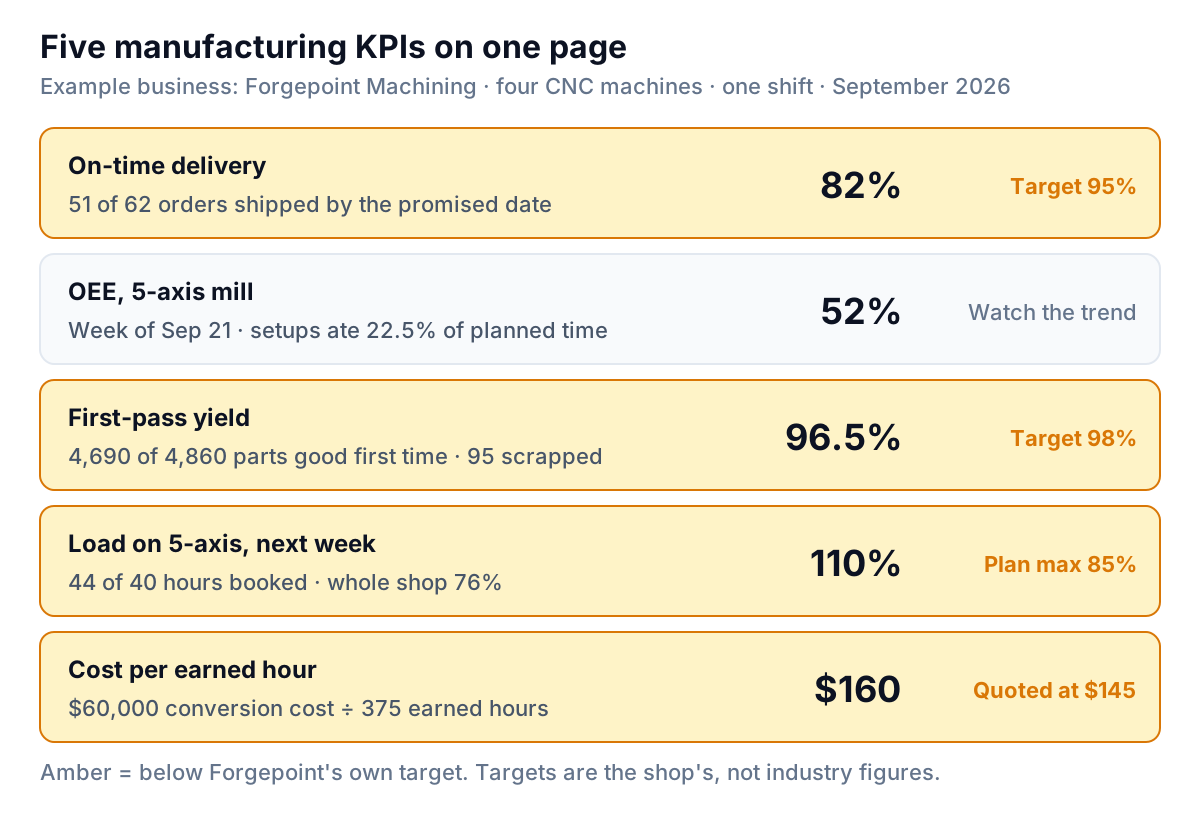
Manufacturing KPIs for a Small Shop: OEE, Scrap, On-Time Delivery and Cost per Hour
The five manufacturing KPI numbers a small shop needs: on-time delivery, OEE, first-pass yield, machine load and cost per earned hour, with a worked example.
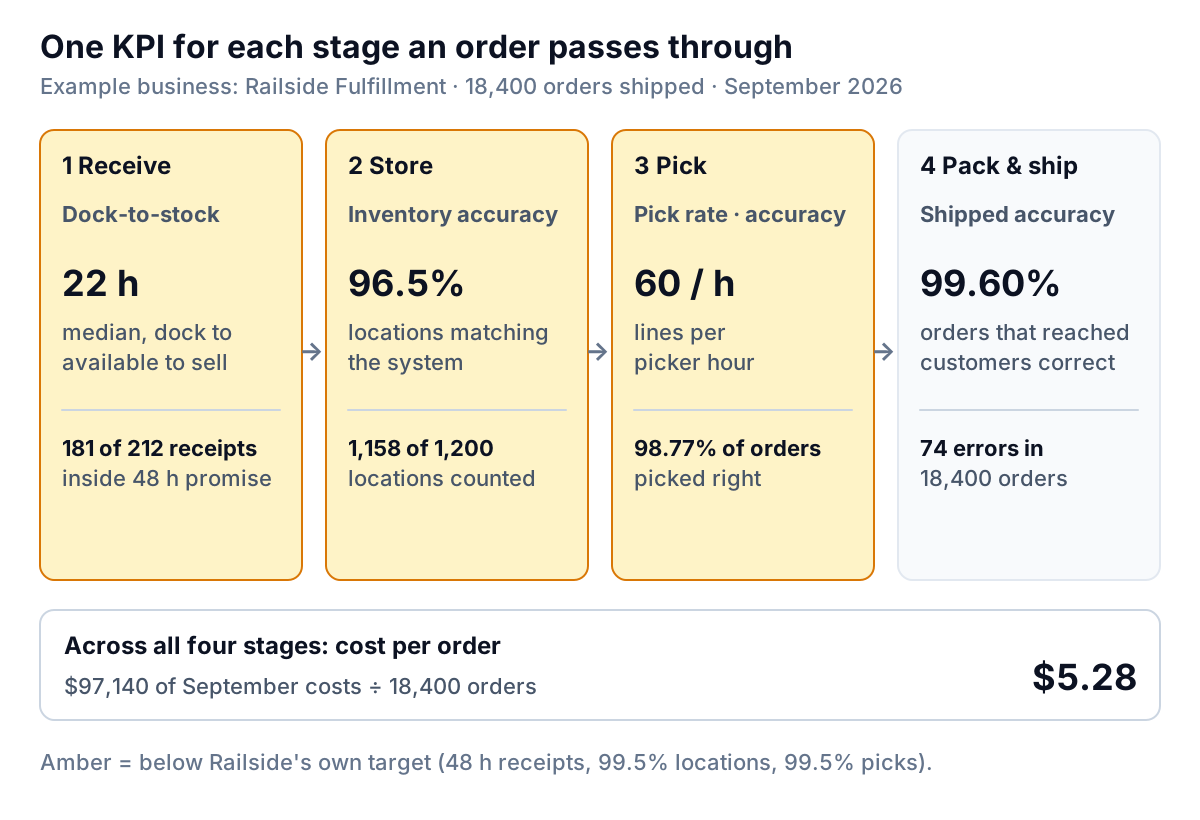
Warehouse KPIs: Order Accuracy, Pick Rate, Dock-to-Stock and Cost per Order
Five warehouse KPI formulas for a small operation: dock-to-stock, inventory accuracy, pick rate, order accuracy and cost per order, with a worked example.
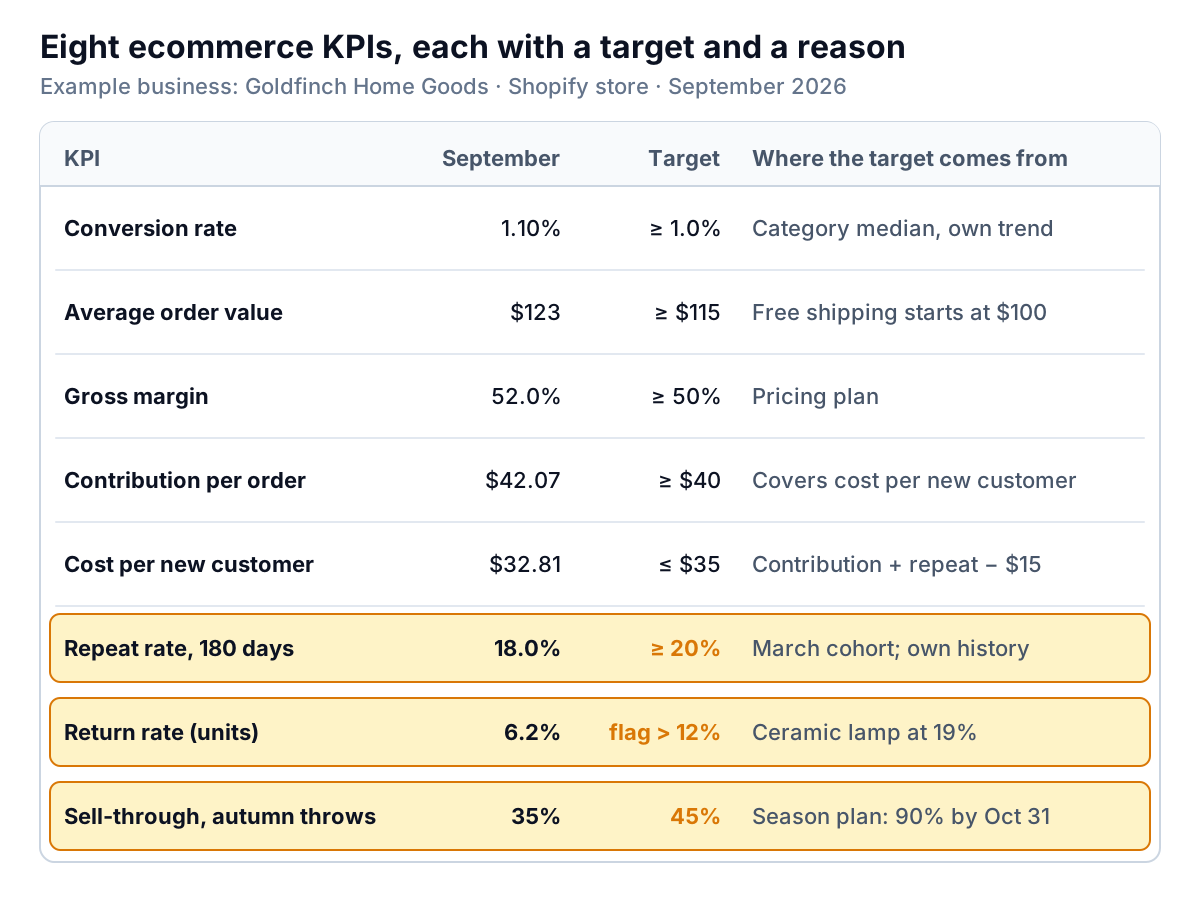
Ecommerce KPIs: Eight Numbers for a Small Store, and Where Each Target Comes From
Eight ecommerce KPI numbers for an online store, with a target for each built from your own margins: conversion, AOV, customer cost, repeat rate, returns.
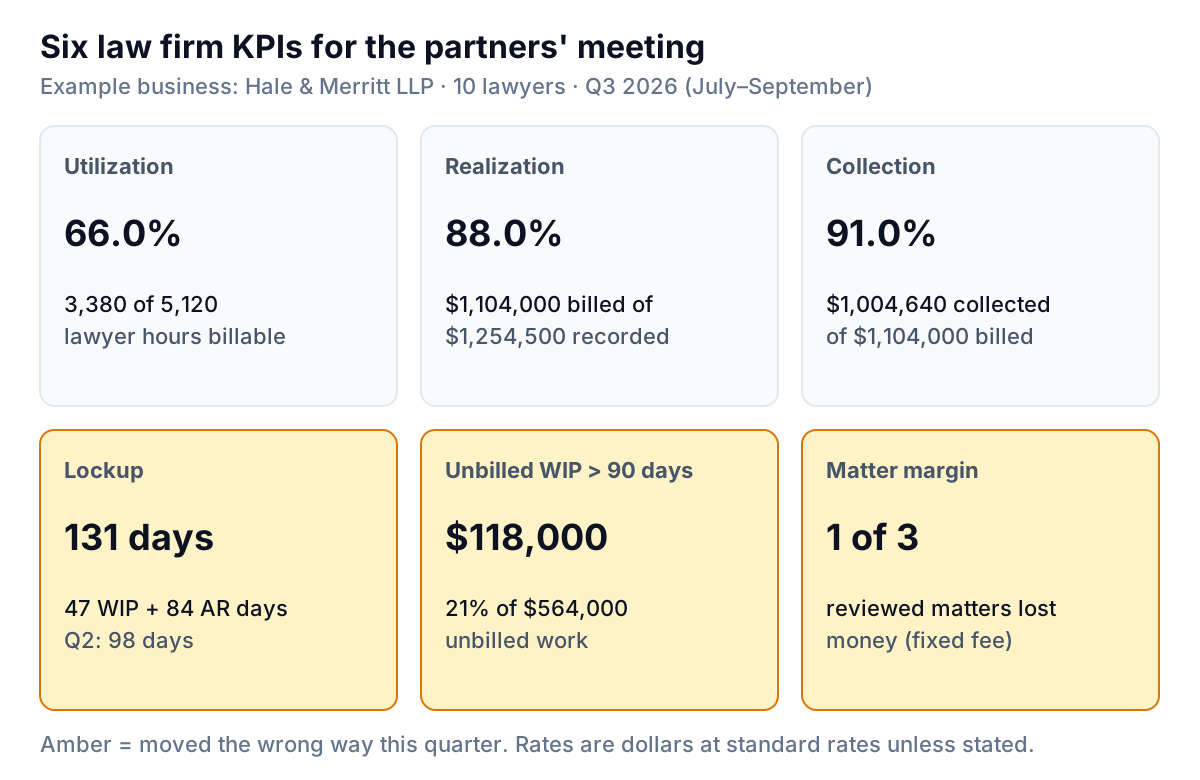
Law Firm KPIs: Utilization, Realization, Collection, Lockup and Matter Profitability
The law firm KPI set for a small firm: utilization, realization, collection, lockup in WIP and AR days, and matter profitability, with a worked example.