The demo always goes well. The rep calls the test line, the voice assistant recognises a made-up patient, reads back a made-up refill, and everyone in the back room nods. Six months later the same pharmacy is paying $400 a month for a tool that can't see half its prescriptions because it only reads from one field in the pharmacy system, and nobody remembers who signed the contract or what it says about data.
Picking an AI solution for pharmacy operations is mostly a buying problem, not a technology problem. The tools exist and some are good. The hard parts are knowing which category you actually need, getting the business associate agreement and data terms right, scoring vendors on what matters in your store, and doing the cost arithmetic before you sign. This guide covers each in turn. If you haven't yet worked out which job to automate, start with the companion guide on building an AI workflow for your pharmacy, which maps the prescription path and runs a pilot; this one assumes you know the job and are choosing the tool.
Start with what you already pay for
Before you take a single demo, email your pharmacy management system vendor and ask for a list of the automation and AI features available on your current plan and as add-ons. Many systems already offer refill reminders, interactive phone menus, text notifications, reporting and inventory suggestions. Some of those features are switched off by default, or were never set up when the system went in.
A built-in module has three advantages over a separate product. It reads and writes the same records, so there's no integration to break. Your existing contract may already cover patient data, though you should check that it does. And there's one support line when something goes wrong. A specialist product needs to be clearly better at the job to beat that.
Ask your vendor three specific questions:
- Which of these features are included in what we pay now, and which cost extra?
- For each add-on, does our existing agreement with you cover the patient data it uses, or is a new agreement needed?
- Which third-party AI products have a supported integration with your system, and is that integration read-only or can it write back (for example, queue a refill)?
The third answer is your shortlist filter. A phone assistant that can only read prescription status can answer "is it ready?" but can't queue a refill, which halves its value.
The eight kinds of AI solution for pharmacy work
"AI for pharmacy" covers products that have almost nothing in common. Sort them by what they handle and whether patient information flows through them, because that decides the contract you need.
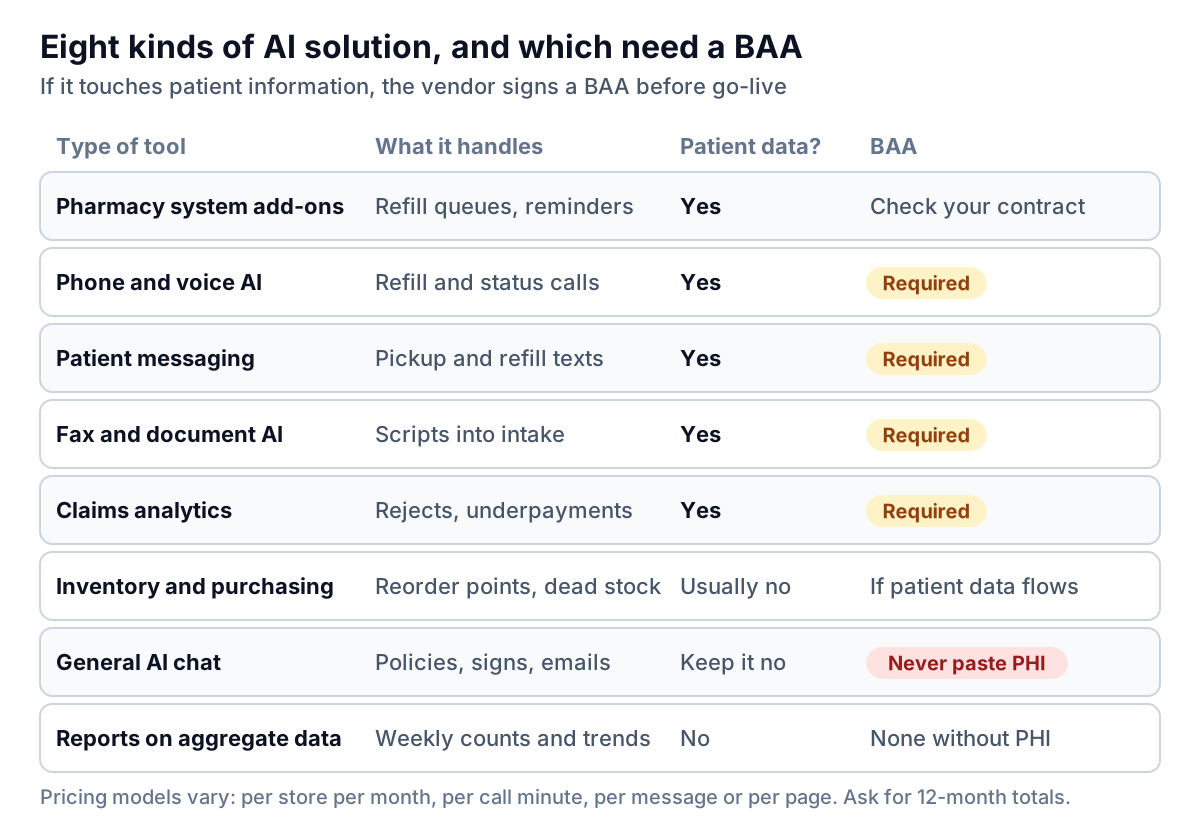
A few notes on the categories that cause the most confusion:
- Claims analytics tools look at your claims and remittances to find rejects that were never resolved and payments below your contracted rate. They need claim-level data, which is PHI, and they are sometimes priced as a share of what they recover. Read that clause carefully: understand what counts as "recovered" before you agree to a percentage.
- Inventory and purchasing tools work at the product level (NDC, quantity on hand, sales velocity) and usually don't need patient data at all. If a vendor asks for patient-level dispensing history to "improve forecasts", ask whether aggregated daily quantities would do.
- General AI chat, the consumer and business chatbots, are useful for drafting a staff policy, rewriting a sign or summarising a long PBM bulletin. They should never see a patient name, date of birth or prescription.
Contract questions to settle before any patient data flows
Under HIPAA, a company that creates, receives, maintains or transmits protected health information on your behalf is a business associate. HHS's business associate guidance names a third-party AI chatbot that handles patients' reminders and scheduling as an example, and requires a business associate agreement (BAA) that limits how the vendor may use and disclose the information. HHS's cloud computing guidance adds that this applies even when the vendor stores only encrypted data it can't read.
So the BAA is a gate, not a score. Beyond it, get written answers to these:
- Training: Is our data, including call recordings and transcripts, used to train or improve your models or anyone else's? The answer you want is no, in the contract.
- Subprocessors: Which other companies (cloud hosts, speech-to-text providers, AI model providers) handle our data, and do you have BAAs with them? HHS's guidance says a business associate needs a BAA with its own subcontractors before sharing PHI.
- Retention and deletion: How long are recordings and transcripts kept? Can we set that? What happens to our data, and in what format do we get it back, if we cancel?
- Logs and access: Can we search every automated conversation? Who at your company can listen to recordings, and is that access logged?
- Breach notice: How quickly will you tell us about a security incident, and to whom?
- Exit: What's the minimum term, the notice period, and any fee for leaving early?
None of this is legal advice. Have your compliance adviser or attorney review the BAA itself; the questions above are about the commercial terms around it.
Score the shortlist, then do the arithmetic
Once two or three vendors pass the BAA gate and support a real integration with your system, run a short trial with each, ideally two weeks on live traffic with your team auditing the results, and score them on criteria you weighted before the trial began. Weighting first stops the cheapest or most charming rep from winning by default. It also leaves a written record of why you picked one AI solution for pharmacy calls over the others.
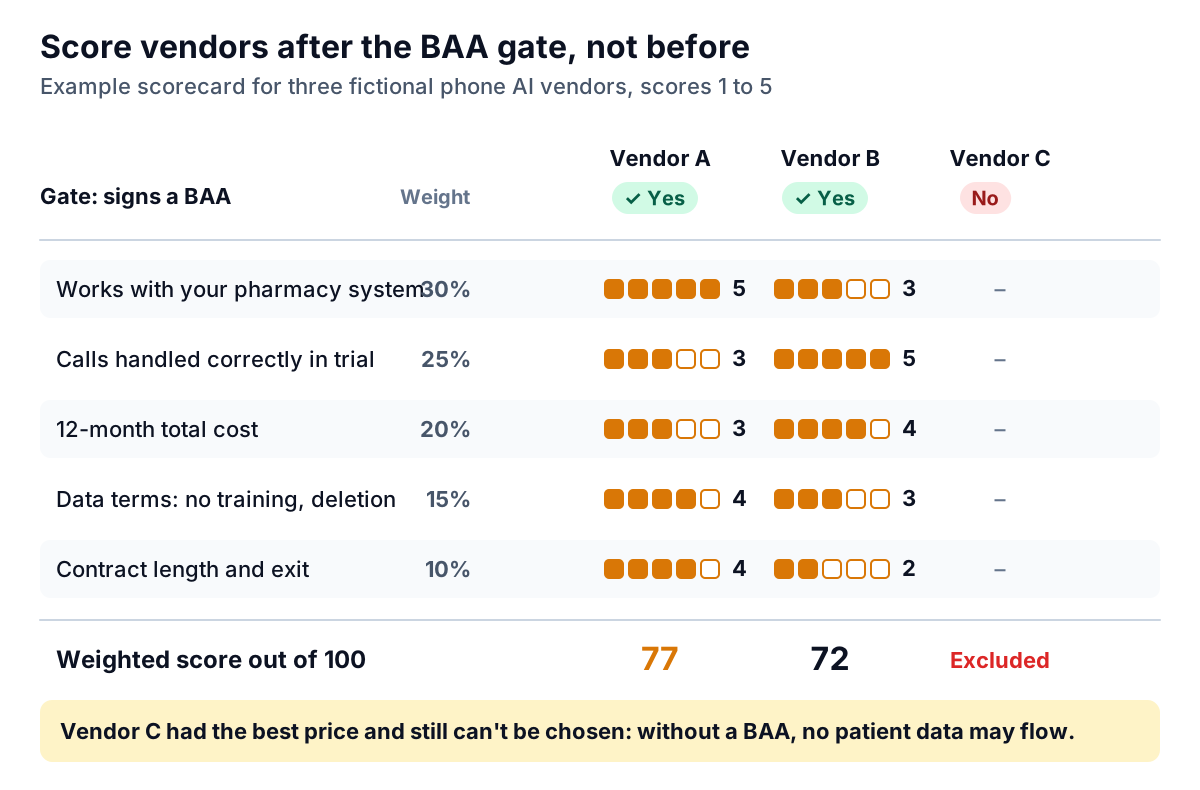
Two things in this example are worth copying. Integration carries the most weight, because a tool that can't write a refill into your system creates a to-do list for your technicians instead of removing one. And "calls handled correctly in trial" is measured by your own audit, not the vendor's dashboard: have a technician check 20 automated conversations a day and count the ones that ended in the right place.
Call a reference pharmacy
Ask each finalist for a reference customer of a similar size on the same pharmacy system, then call the pharmacist or manager, not the person the vendor suggests you email. Four questions get honest answers:
- What did you have to change in your own workflow to make it work?
- What's the most common thing it gets wrong, and how do you catch it?
- How long did support take to fix your last problem?
- If your contract ended tomorrow, would you renew at the same price?
The cost math
Then put the leading vendor's price next to the time it saved in your trial, and include the time your team spends checking it.
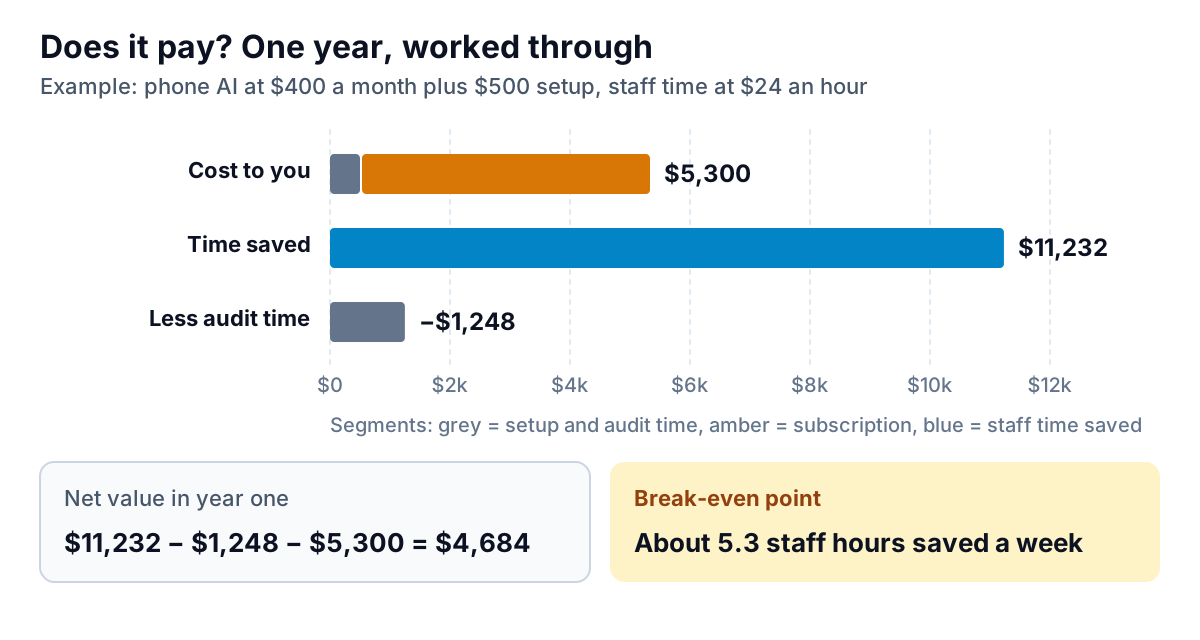
The break-even calculation is simple: (yearly cost + yearly audit time cost) ÷ (52 weeks × hourly staff cost). In the example, ($5,300 + $1,248) ÷ ($24 × 52) ≈ 5.3 hours a week. Use your own numbers. If your trial saved nine hours, you have margin. If it saved four, the tool costs more than it returns, however good it sounded, unless it fixes something you can't price, such as callers abandoning on hold.
Saved time only counts if it goes somewhere. Decide in advance what technicians will do with it: clearing the will-call backlog, chasing prior authorizations, or giving the pharmacist uninterrupted verification time.
Red flags in pharmacy AI sales pitches
- Clinical claims. "Our assistant answers medication questions" or "catches interactions your system misses". Clinical judgment belongs to the pharmacist and your existing, validated screening. Walk away.
- "We're HIPAA compliant" with no BAA. Compliance isn't a badge a vendor can hold on your behalf. Ask for the BAA. If they hesitate, stop.
- Vague integration. "We integrate with all major systems" should become a named list, a read or read-write answer for yours, and a reference customer on the same system.
- Outcome promises. A vendor's average results tell you little about your store. Your own trial numbers are the only ones that count.
- Long lock-ins before a trial. A 36-month minimum on a product you haven't run on your own calls puts all the risk on you.
- No human hand-off. Every patient must be able to reach a person by asking. Test it yourself during the demo.
Where reporting fits, and where Parity does
Whichever AI solution for pharmacy work you choose, you'll want a monthly view of whether it's earning its place: calls handled versus handed off, refills queued, hours saved, cost. Most of that comes out of the vendor's portal and your phone system as aggregate counts, with no patient details needed.
Parity's reporting tool turns that kind of export into a readable report. Upload the CSV or Excel file, describe what you need ("monthly calls handled versus handed off, cost per handled call, trend since go-live"), and it builds charts, summary tables and a short written summary, with every figure checked against the full file before you see it. Parity is not a HIPAA-covered tool, so use it only with de-identified or aggregate operational data such as call counts, prescription volume by day, front-store sales by category or payer mix percentages. Never upload a patient-level export. HHS's de-identification guidance sets out what must be removed for data to count as de-identified.
For the broader picture, see how to weigh cloud and local AI options and a comparison of automation software; for front-store ordering, the guide to AI demand forecasting for small retail applies directly.
Upload the vendor's monthly export (counts only, no patient details) and ask for a cost-versus-value report. Build a report from your data free