An inquiry form arrives at 9:40 on a Sunday night. The person filling it in has spent months deciding to ask for help, and they've filled in forms at three clinics. The first clinic to reply with a real consult time, not an autoresponder, is the one they'll probably book. In many clinics that reply goes out on Monday afternoon, once the new-patient coordinator has worked through the weekend's inbox.
That's the kind of problem an AI solution for fertility clinic operations can actually solve. The lab and the clinical team work with some of the most carefully measured data in medicine. The business around them, covering inquiries, consult scheduling, patient messages, cost estimates and reporting, often runs on shared inboxes and spreadsheets. This guide is about that business side: where AI tools help, what they must never do, the privacy rules that apply with extra force in reproductive care, and how to measure whether any of it worked.
Where an AI solution for fertility clinic work fits, and where it doesn't
Draw the line first. AI products that assess embryos, interpret ultrasounds or suggest stimulation protocols are clinical tools. Whether to use one is a decision for your medical and laboratory directors, and products that make diagnostic or treatment claims are regulated as medical devices. The FDA's list of AI-enabled medical devices is the place to check whether a product is authorized and for what intended use. This guide doesn't evaluate or recommend clinical AI.
Everything else, the path a person takes from first inquiry to the day treatment starts, is operations, and that's where most clinics lose people for reasons that have nothing to do with medicine.
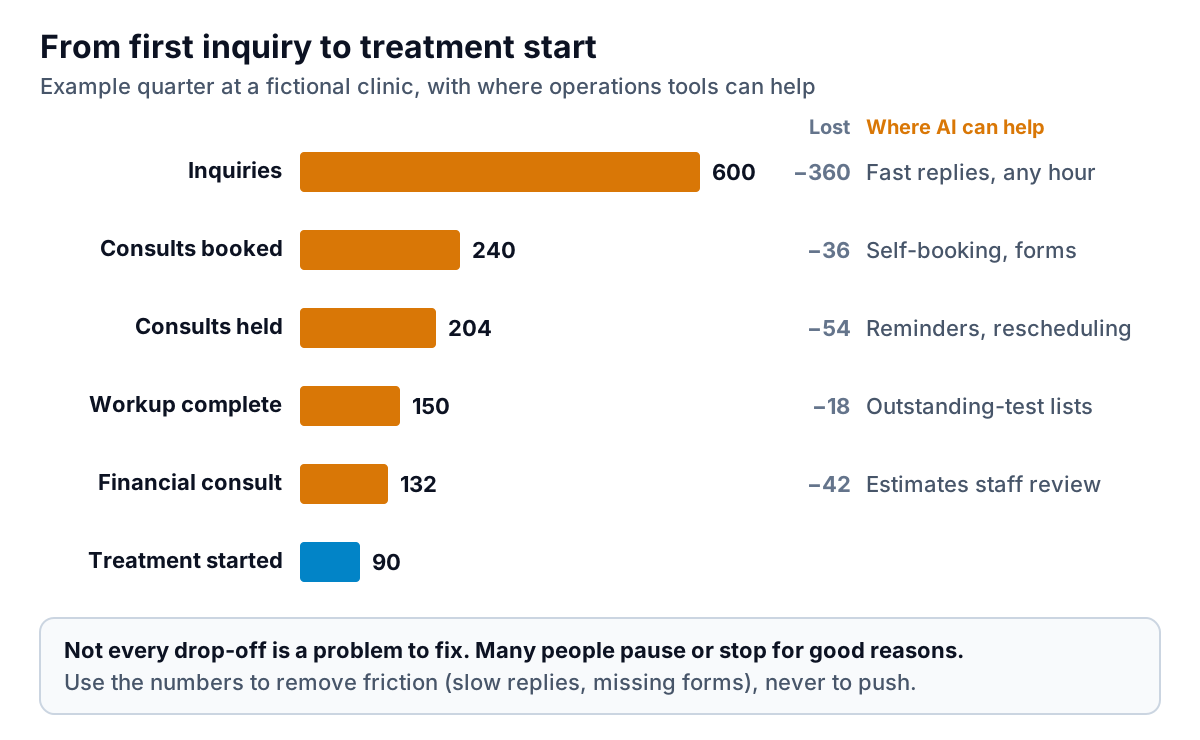
Read the example from the top. Of 600 inquiries, 240 booked a consult; 360 didn't. Some were never good fits, and some were just looking. But a share were lost to slow replies, phone tag and forms nobody could find, and that's the friction tools can remove. Further down, people who started a workup but never finished often stalled on a single outstanding test or form. A list of who is waiting on what, reviewed weekly by a coordinator, catches most of them.
Not every drop-off is a problem. People pause treatment for money, health, relationships or simply time, and that is their decision. Use the numbers to make the path easier for people who want to continue, never to pressure people who don't.
First contact and consults
Three tools do most of the work here, and all three handle health information, so all three need a signed business associate agreement (BAA) before they go live.
- Inquiry response. A web form or chat assistant that answers basic questions (location, hours, which insurance plans you work with, what a first consult involves) and offers real consult slots from your calendar, at any hour. It must not give medical opinions, and it must hand off to a person when someone asks something clinical or personal.
- Intake packets. Digital forms that collect history and records before the consult, with automatic reminders for anything missing. The clinical team reviews what comes in; the tool only collects it.
- Reminders and rescheduling. Consult and appointment reminders with a one-tap reschedule link. Fertility schedules shift with cycles, so easy rescheduling matters more here than in most specialties.
Write the inquiry assistant's script as carefully as you'd write a brochure, because it is the first conversation many patients have with you. Keep it warm, short and factual, and test it yourself with the questions people actually ask, including the hard ones.
Patient messages: sort, don't answer
Once treatment starts, portal messages multiply: medication timing, appointment changes, billing questions, results, worry. Nurses and coordinators can spend hours a day reading messages just to work out who should handle each one. Sorting is a job software can do. Answering clinical questions is not.
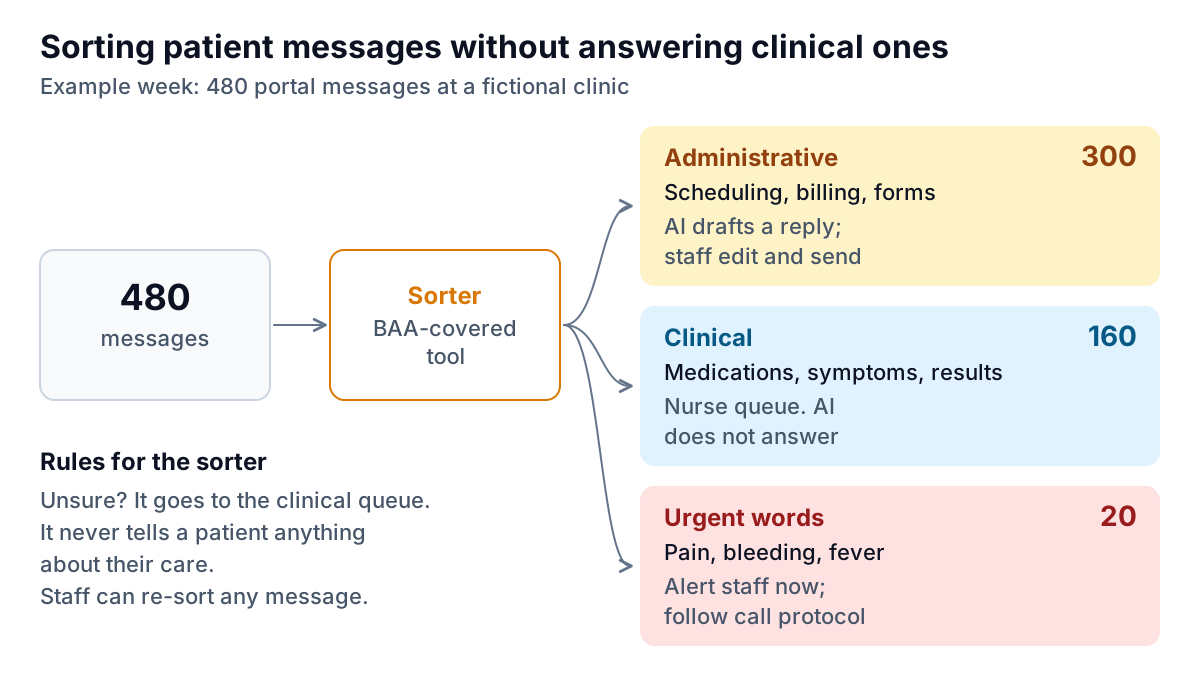
The rules in the figure are the important part. When the sorter is unsure, the message goes to the clinical queue. Urgent words trigger an alert to staff, not an automated reply. Administrative drafts are reviewed before sending. And staff can re-sort anything, with those corrections feeding back into how the sorter is configured.
HHS's business associate guidance specifically lists a third-party AI chatbot on a provider's patient portal that handles PHI, for example for symptom assessment, reminders or scheduling, as a business associate. A messaging tool needs a BAA, and you should know which subcontractors (cloud hosts, AI model providers) it uses and that they're covered too.
Financial counseling: drafts a counselor delivers
Cost is one of the main reasons people delay or stop fertility treatment, and estimates are hard to produce. Insurance coverage for fertility care varies widely by state, employer and plan; medications are often billed separately from the clinic's fees; and self-pay packages have their own terms. Financial counselors spend hours assembling each estimate.
AI can draft the estimate: pull the treatment plan code, the fee schedule, the patient's verified benefits and any package pricing into a structured draft with every assumption listed. The counselor checks each line, corrects it, and talks it through with the patient. Two rules: no estimate goes to a patient without a counselor's review, and every draft shows its sources, so a counselor can see where a number came from. A wrong estimate in fertility care isn't a minor billing error; it can change whether someone starts treatment.
Privacy is stricter here: what to check
Reproductive health information is among the most sensitive data a practice holds, and the rules around it have shifted. HHS issued a HIPAA Privacy Rule to Support Reproductive Health Care Privacy in 2024. According to HHS's reproductive health page, a federal court in Texas vacated most of that rule on June 18, 2025, while some changes to Notice of Privacy Practices requirements remain in effect, with compliance required by February 16, 2026. Many states also have their own health privacy laws. This is an area for your privacy officer and counsel, not a blog post, but it shapes how you buy software:
- Fewer vendors, tighter scope. Every tool that touches patient data is another place that data lives. Prefer features in systems you already have under a BAA over new standalone tools.
- Retention you control. Ask how long messages, call recordings and transcripts are kept, and set the shortest period that works.
- No training on your data. Get it in the contract.
- Encryption isn't a substitute for a BAA. HHS's cloud computing guidance says a provider storing encrypted health data is still a business associate even without the key.
Separately, clinics performing assisted reproductive technology must report cycle data to the CDC each year under the Fertility Clinic Success Rate and Certification Act of 1992, through the National ART Surveillance System. Nothing in an operations tool changes that obligation, and reporting data should stay in the validated systems you use for it.
Measure operations with aggregate numbers
You'll want to know whether each AI solution for fertility clinic work you added actually helped: inquiry-to-consult conversion, time to first reply, consult no-shows, workup completion, revenue by service line and payer type. All of those can be measured from counts and totals. None of them needs a patient's name.
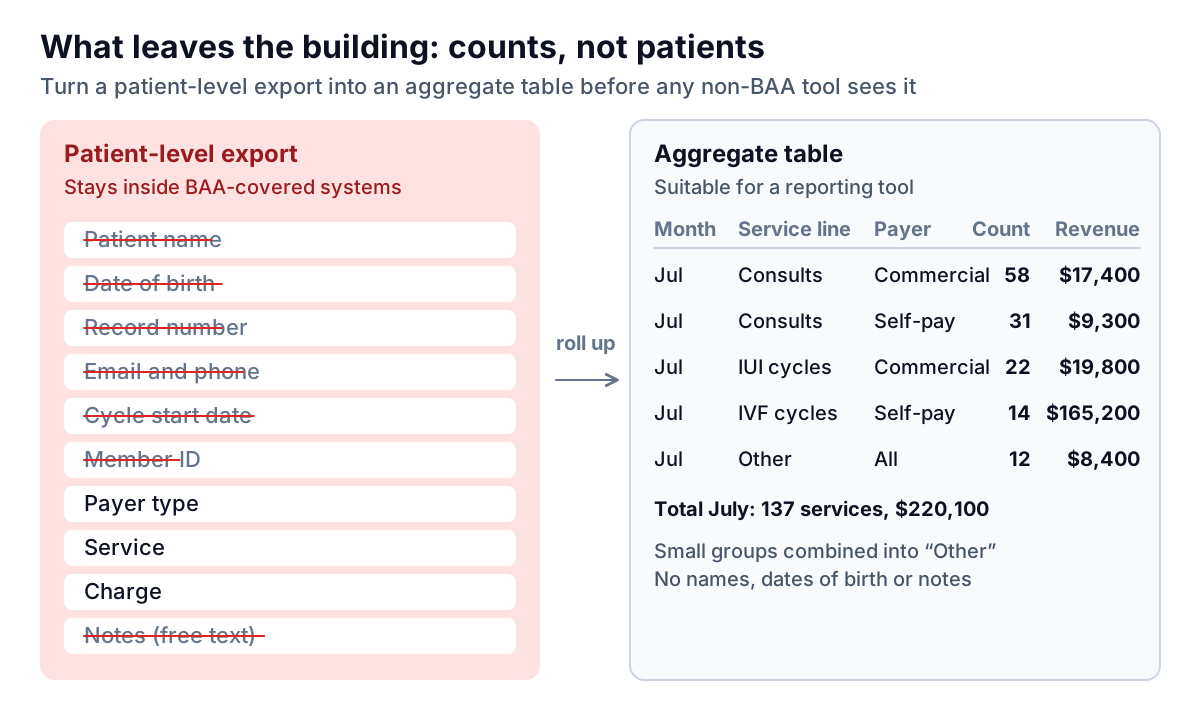
This is where Parity fits, and only here. Parity's reporting tool takes a CSV or Excel file and builds a report or dashboard (KPI tiles, charts, summary tables and a written summary) with every number checked against the full file before you see it. Parity is not a HIPAA-covered tool. Use it only with de-identified or aggregate operational data like the table on the right above: counts and revenue by month, service line and payer type, inquiry and consult counts by week, reply times by channel. Never upload patient-level exports, names, dates of birth, record numbers or notes. HHS's de-identification guidance explains the two accepted methods for de-identifying record-level data; for small groups that could point to an individual, combine them, as the "Other" row does. If you're unsure whether an export is safe, ask your privacy officer before uploading.
Six questions for any vendor
- Will you sign our BAA, and which subcontractors handle our data under their own BAAs?
- Is any of our data, including messages, transcripts or recordings, used to train models? We need "no" in the contract.
- How long do you keep each type of data, and can we shorten it?
- Can you show us, in a live test, what happens when a patient asks a clinical question or uses an urgent word?
- Does it work inside our EHR and practice management system, or does staff copy information between systems?
- What does it cost over 12 months for our volume, and what are the notice period and exit terms?
A realistic first step
Pick the single biggest drop in your own funnel. For most clinics it's inquiry to booked consult. Measure the median time to first real reply for a month, then add one BAA-covered tool to shorten it, and measure again. If conversion rises and your coordinators get their mornings back, you've found the first AI solution for fertility clinic operations worth keeping.
For related reading, the guide to AI tools for mental health practices covers another setting where sensitive data shapes every buying decision, AI report generation for diagnostic labs covers reporting in a regulated lab, and dashboards for service businesses covers the weekly numbers.
Upload counts and revenue by month and service line, with no patient data, and describe what you want to see. Build a report from your data free