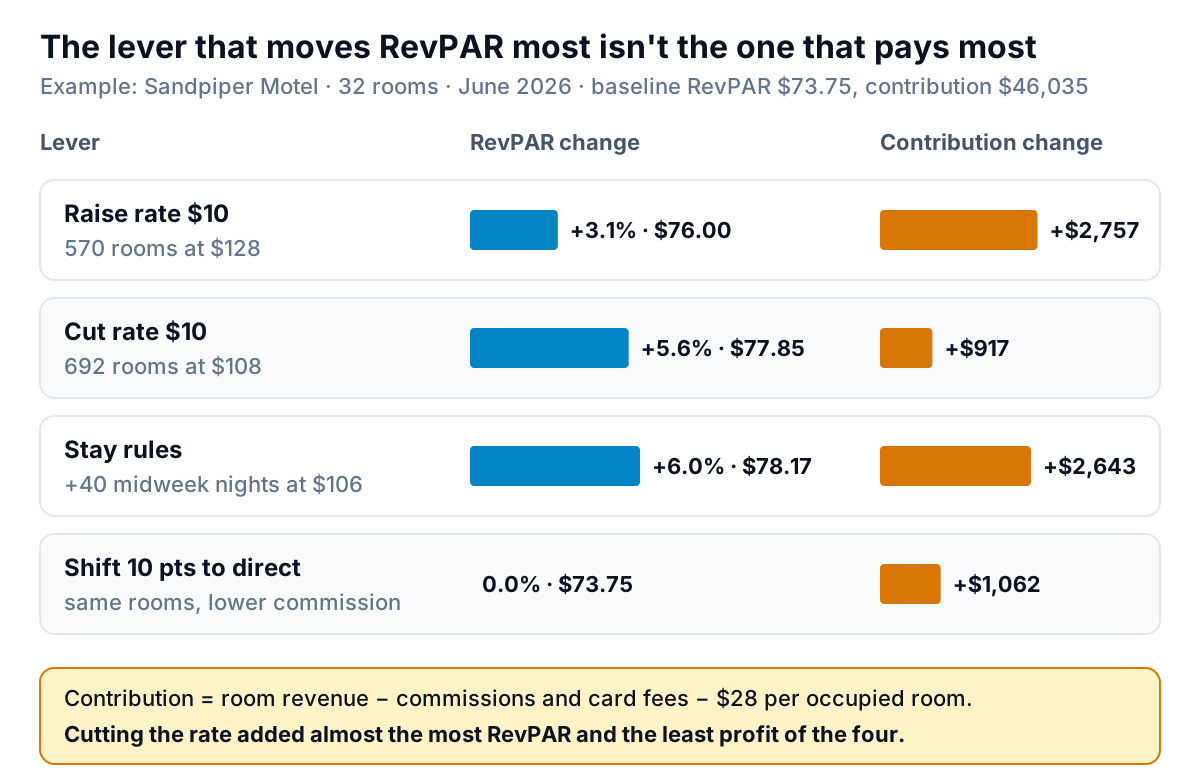
Cut the rate at Sandpiper Motel, the 32-room example motel in this guide, by $10 and RevPAR rises 5.6%. Raise it by $10 instead and RevPAR rises only 3.1%, yet the motel keeps three times as much extra money. That gap is the problem with most advice on how to increase RevPAR. RevPAR is room revenue divided by every room night you had to sell, which is the same as ADR × occupancy, so there are only two ways to raise it: sell more of the empty room nights, or get more for the ones you sell.
Choosing between those, night by night, means counting what each choice costs. A rate cut that fills 90 more rooms raises RevPAR nicely and can leave you with less money, because each of those rooms has to be cleaned and many came with a commission. This guide follows Sandpiper through four levers in June 2026, with the RevPAR and the profit effect of each.
Sandpiper's starting point
In June 2026 Sandpiper had 960 room nights available (32 rooms × 30 nights). It sold 600 at an average daily rate of $118, for $70,800 of room revenue.
- Occupancy: 600 ÷ 960 = 62.5%
- ADR: $70,800 ÷ 600 = $118.00
- RevPAR: $70,800 ÷ 960 = $73.75
If those terms need a refresher, our guides to RevPAR and hotel ADR cover the definitions and what belongs in room revenue. Here we need one more number, because RevPAR can't see costs.
Score every lever on contribution, too
Contribution here means room revenue minus the costs that rise with each booking: commission and card fees, and the cost of turning a room. For Sandpiper, as an example:
- 55% of room nights come through online travel agencies (OTAs) at 18% commission. That's an example rate; commissions depend on your contract and programs, so use yours.
- 45% are direct, with about 3% in card fees.
- Each occupied room costs $28 in housekeeping wages, laundry, amenities and energy.
Blended channel cost is 0.55 × 18% + 0.45 × 3% = 11.25% of room revenue. June's contribution: $70,800 × (1 − 0.1125) − 600 × $28 = $62,835 − $16,800 = $46,035. Each lever below is modelled on June's numbers and judged on what it does to both RevPAR and that $46,035. (The idea is the same as contribution margin in any business: what's left of each sale after the costs that come with it.)
Find the empty nights before you change anything
A monthly occupancy of 62.5% sounds like a motel that's 37.5% empty. It isn't. Split June by night of the week and Sandpiper has two problems that need opposite fixes.
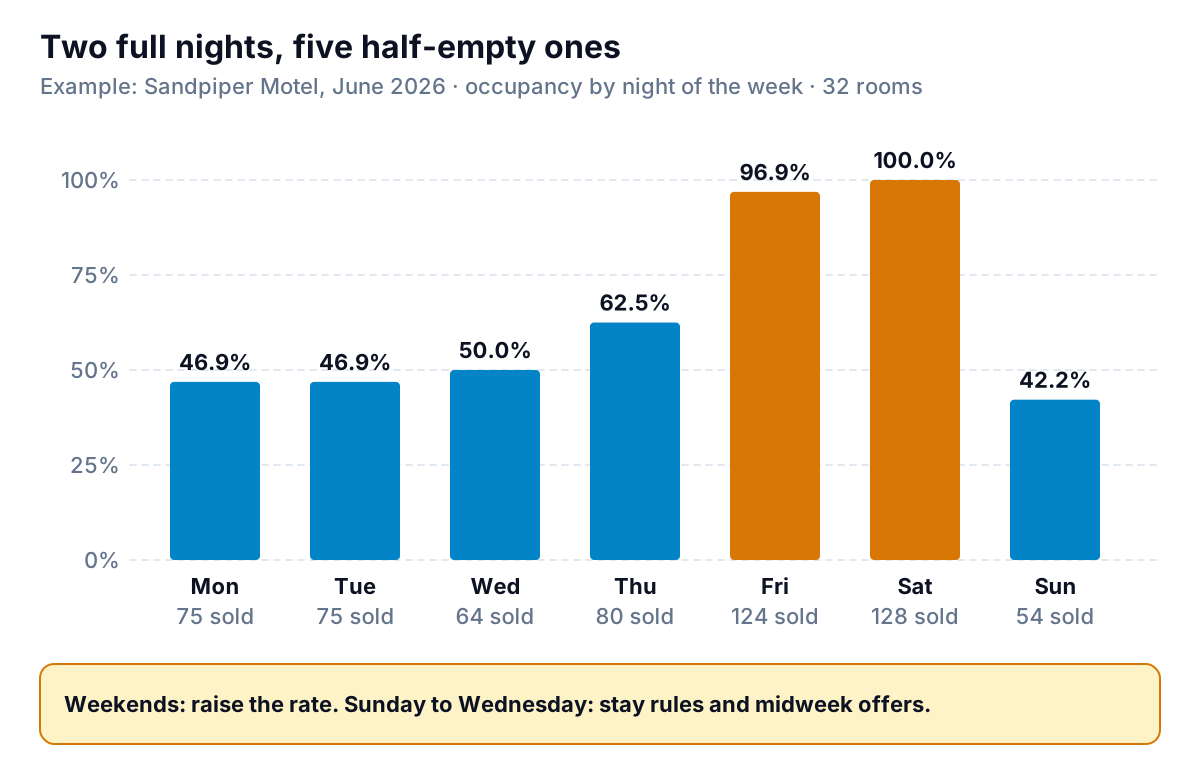
Friday and Saturday were effectively sold out at $118, which usually means the rate was too low on those nights: guests who would have paid more got the same price as everyone else, and some who booked late were turned away. Sunday to Wednesday ran under 51%. The weekend needs a higher rate; the week needs more guests. A single motel-wide price change fixes neither.
Your property management system (PMS) or channel manager can export occupancy and ADR by stay date. Pivot it by day of week and by month, and mark any night above about 90% as "rate" territory and any night below about 60% as "volume" territory. Those thresholds are a starting point for this example, not an industry standard; set your own once you've seen a few months.
How to increase RevPAR: four levers, with the numbers
1. Raise the rate where you sell out
Sandpiper tests $128 instead of $118 on weekends. In this example, weekend demand thins a little and the motel sells 570 rooms for the month at an average of $128 (we've simplified to a single rate to keep the arithmetic clean).
- Room revenue: 570 × $128 = $72,960. RevPAR $76.00, up 3.1%.
- Contribution: $72,960 × 0.8875 − 570 × $28 = $64,752 − $15,960 = $48,792, up $2,757.
RevPAR rose modestly. Profit rose by more than any other lever, because the extra revenue came with no extra rooms to clean.
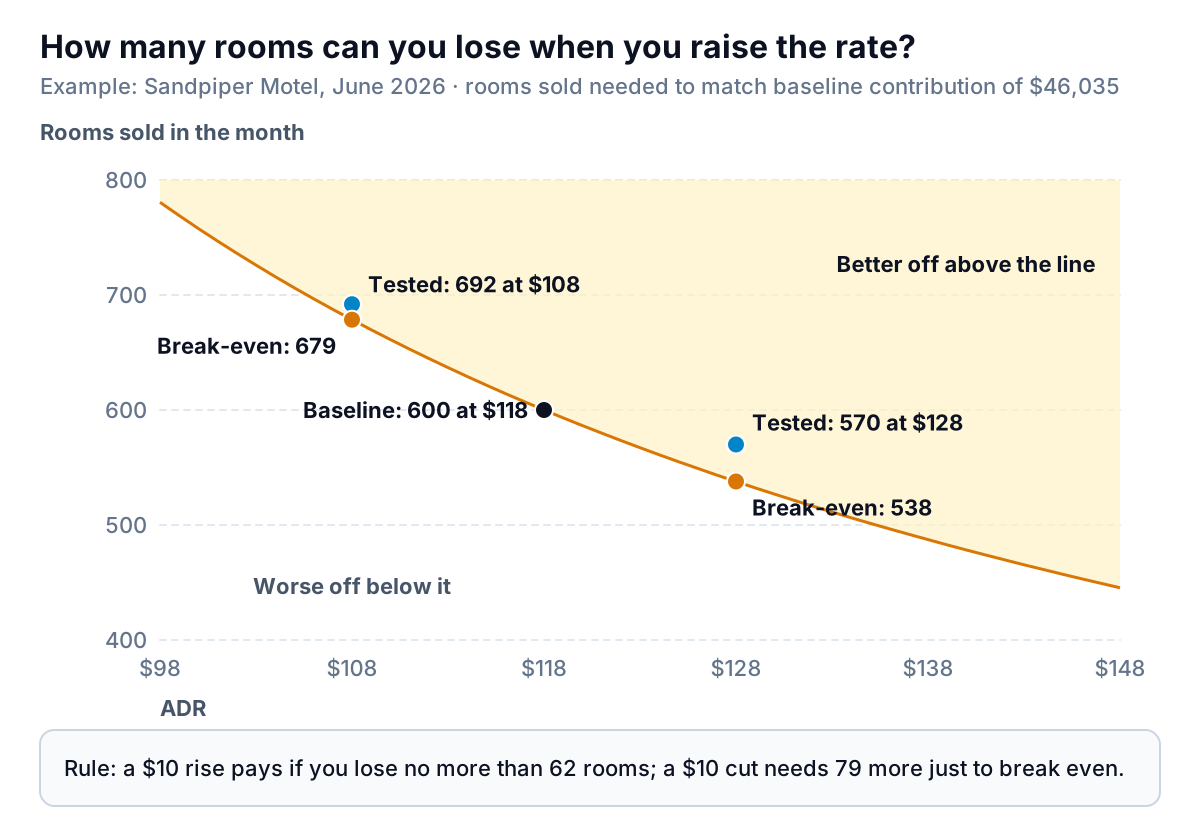
The question every owner asks is how many guests they can afford to lose. Work it out before you change the price:
Break-even rooms = current rooms sold × current net per room ÷ new net per room, where net per room = rate × (1 − channel cost) − cost per occupied room.
At $118, Sandpiper's net per room is $118 × 0.8875 − $28 = $76.73. At $128 it's $85.60. So 600 × $76.73 ÷ $85.60 = 538 rooms. Sandpiper can lose up to 62 room nights a month at the higher rate and still be no worse off.
2. Cut the rate to fill the week
The opposite move: $108 instead of $118. In the example, it brings 92 more room nights, for 692.
- Room revenue: 692 × $108 = $74,736. RevPAR $77.85, up 5.6%.
- Contribution: $74,736 × 0.8875 − 692 × $28 = $66,328 − $19,376 = $46,952, up $917.
RevPAR went up almost twice as much as with the rate rise, and profit went up a third as much. The break-even curve shows why: at $108, Sandpiper needs 679 rooms just to stand still, 79 more than today. Discounts have to win a lot of extra business to pay, and a motel-wide discount also hands the lower price to guests who would have paid $118. If you do discount, keep it to the nights that need it, and judge it on contribution, not RevPAR.
3. Use stay rules to fill the gaps
Length-of-stay controls change which nights guests book, not what they pay. Sandpiper tries two in the example:
- A two-night minimum on Saturday arrivals, so a full Saturday pulls Friday or Sunday guests with it.
- A three-night midweek rate of $106 (about 10% off) for stays between Sunday and Thursday.
Suppose they add 40 midweek room nights at $106 and the weekend stays as it was:
- Room revenue: $70,800 + 40 × $106 = $75,040 on 640 rooms. ADR dips to $117.25; RevPAR rises to $78.17, up 6.0%.
- Contribution: $75,040 × 0.8875 − 640 × $28 = $66,598 − $17,920 = $48,678, up $2,643.
This is the best result on both measures, because the discount only went to nights that would otherwise have been empty. It also tends to cut cleaning costs, since a stay-over room usually takes less work than a checkout, which we haven't counted here. The risk is the minimum stay: if Saturday demand isn't strong enough, you lose one-night guests you'd have had. Watch Saturday occupancy for the first month; if it slips below where it was, drop the rule.
Look for orphan nights too: a single empty night between two bookings that no one will book on its own. A PMS calendar export shows them. Some owners open those nights to one-night stays or offer them to the guest either side at a lower price.
4. Shift bookings to direct
Move ten percentage points of room nights from OTAs to direct bookings (45% OTA, 55% direct) and nothing changes in RevPAR: same rooms, same rates, $73.75. Contribution changes:
- Channel cost: 0.45 × 18% + 0.55 × 3% = 9.75%, down from 11.25%.
- Contribution: $70,800 × 0.9025 − $16,800 = $47,097, up $1,062.
RevPAR is blind to this lever, which is why it's easy to neglect. It isn't free, though. Winning direct bookings costs something: a better booking engine, metasearch ads, a loyalty rate, staff time on the phone. Spend $400 a month to get there and the gain is $662. Count the cost of acquisition next to the commission saved.
All four, side by side
The rules for how to increase RevPAR that come out of Sandpiper's month:
- Nights above about 90% occupancy: raise the rate in steps. Check against the break-even rooms before each step.
- Nights below about 60%: try stay rules and targeted offers on those dates before any general discount.
- Every month: read the change in RevPAR and in contribution together. RevPAR up and contribution down means you bought occupancy at a loss.
- Every quarter: check channel mix and what each channel costs you, including the cost of winning direct bookings.
For context on the wider market: in August 2026, U.S. hotels reported RevPAR up 2.0% on a year earlier, with ADR up 1.5% and occupancy up 0.5%, according to CoStar. CoStar and Tourism Economics forecast 4.4% RevPAR growth for 2026, with ADR up 3.1%. Nationally, more of the growth is coming from rate than from occupancy. That's an industry-wide figure, not a target for a 32-room motel, but if your RevPAR is flat while the market's is rising, the gap is worth explaining.
Other levers worth checking
- Out-of-order rooms. A room out of service on a sold-out Saturday is a lost sale at your highest rate. Track out-of-order room nights alongside occupancy, and schedule repairs for your weakest nights. Our hotel occupancy rate guide covers how to count them.
- Room-type pricing. If your larger or better rooms sell out first, the gap between room types is probably too small.
- Midweek groups and contracts. Work crews, sports teams and local companies book Sunday to Thursday. A contract rate below your public rate can still pay if it fills nights that were empty; test it with the break-even formula.
- Booking pace. Compare rooms on the books for next month with where you were at the same point last year. If you're behind with three weeks to go, act on the soft nights now rather than discounting in the last few days.
Measuring whether it worked
Any plan for how to increase RevPAR needs a fair test. Change one lever at a time where you can, and compare the result with the same month last year, not the month before, because seasonality will swamp almost any pricing change. Track five numbers each month: occupancy, ADR, RevPAR, contribution and channel mix. If you subscribe to a benchmarking service, add your RevPAR index against your competitive set, so you can tell a market-wide rise from your own.
The data sits in two places. Room nights, rates and channels come from your PMS or channel manager as a CSV or Excel export; commissions, card fees and housekeeping costs sit in your accounting system. A spreadsheet can join them each month. It takes some care to keep the definitions steady, and our budget vs actual guide shows how to set the results against a plan.
Parity can build that monthly view for you. Upload the PMS export and it builds a dashboard with occupancy, ADR and RevPAR as headline numbers with their trends, charts by night of week and by channel, what explains each change, and a table of nights that need attention. Every number is checked against queries on the full dataset before you see it. Ask it to "add contribution using 18% OTA commission, 3% card fees and $28 per occupied room" and refine from there; if your costs are in QuickBooks Online you can connect that too. Save it as a template and update it with next month's file.
Upload your PMS export and get a checked dashboard of RevPAR, occupancy and ADR by night, month and channel. Build a report from your data free
RevPAR is the right scoreboard for a hotel. It's just not the whole game. Pick levers by what they leave in the bank, and use RevPAR to make sure you're not giving up ground to the motel down the road while you do it.