For two weeks in September 2025, one night in seven at Bayline Stays, an example business with four condos in a coastal town, could not be sold at any price. Its own minimum-stay rules had stranded 8 nights between bookings. Catching that is part of Airbnb revenue management: setting your price, minimum stay and availability night by night so each listing earns the most it can per available night, after costs. The scorecard is one number: net revenue per available night = (nightly revenue − platform fees − per-stay costs) ÷ available nights.
Most advice on the subject stops at "use dynamic pricing". Pricing tools help, but they don't decide your seasons, they don't see your cleaning costs, and they can't tell you whether last month's changes worked. This guide follows Bayline through the decisions a small host actually makes: a rate card by season and day of week, what to do as arrival gets closer, minimum stays and the orphan nights they create, and how to measure the result without fooling yourself.
Start with a rate card you can explain
Before any tool sets prices for you, write down what a night is worth in each season and on each day of the week. That gives you a base to argue with, and it gives a pricing tool sensible floors and ceilings. Bayline's card, built from three years of its own bookings:
| Season (example) | Sun–Thu night | Fri–Sat night | Minimum stay |
|---|---|---|---|
| Low: November–March | $135 | $165 | 2 nights |
| Shoulder: April–June, September–October | $180 | $225 | 2 nights (was 3 on weekdays) |
| Peak: July–August | $245 | $285 | 4 nights |
| Holiday weekends and local events | Set by hand | 20–40% over the season's weekend rate | 3 nights |
Three rules make a rate card useful:
- Seasons come from your own data. Rank last year's months by revenue per available night, not by what feels busy. Bayline found that early October earned more per night than June.
- Weekends get their own rate. If Friday and Saturday sell out weeks ahead every time, the gap between weekday and weekend rates is too small.
- Events get dates, not a percentage. A festival weekend is a handful of specific nights. Price those by hand.
Where Airbnb's own tools fit
If you use Airbnb's Smart Pricing, you must give it a minimum and maximum price, and your rate card is where those come from. Two details from Airbnb's help centre matter: discounts such as an early-bird discount can take the price a guest pays below your Smart Pricing minimum, and weekly, monthly and trip-length discounts override Smart Pricing. Hosts on professional hosting tools can instead build rule-sets for seasons, discounts and trip lengths and apply them to chosen dates; Airbnb says Smart Pricing has to be off for rule-sets to apply.
Lead time: price the calendar you'll have, not the one you have
A night 90 days away and the same night 5 days away are different products. Far out, you're competing for planners; close in, for whoever is still looking. The tool for judging which situation you're in is pacing: how many nights you have on the books for a future month compared with the same number of weeks before that month last year.
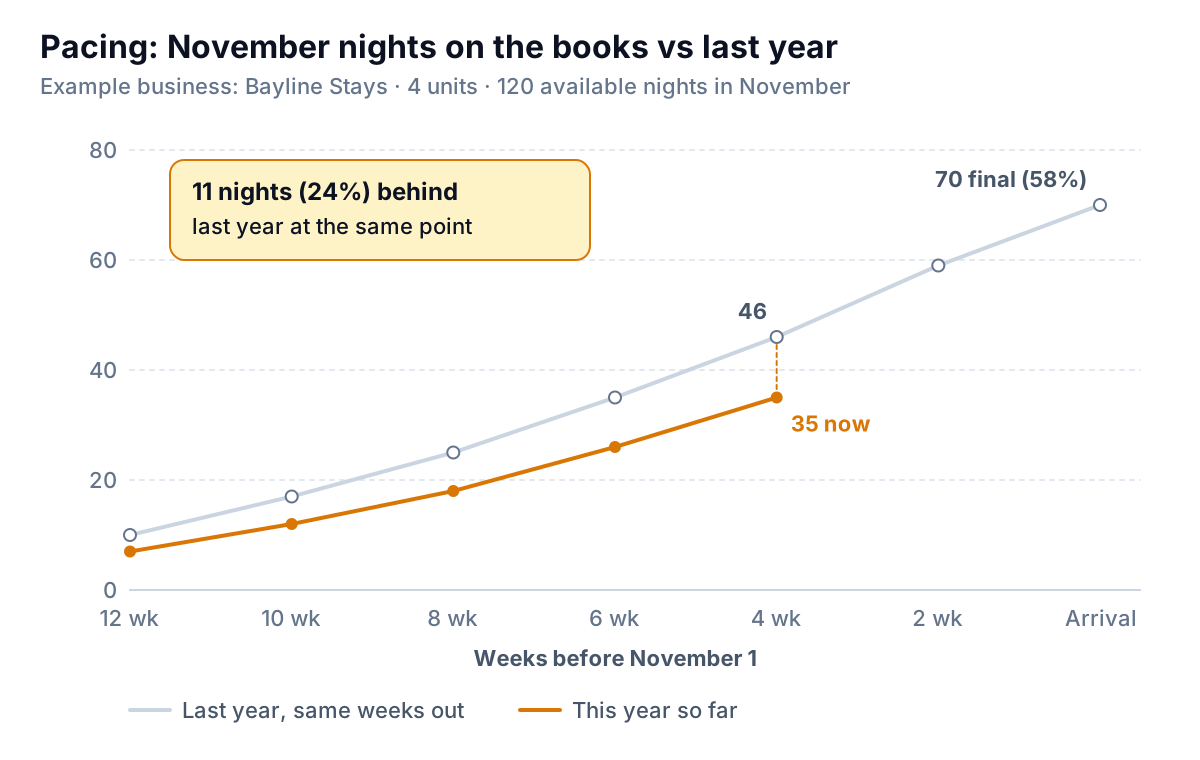
Bayline is 11 nights behind last year's pace for November. Before cutting prices, check two things:
- Are guests just booking later? AirDNA, a short-term rental data vendor, reported in its July 2026 midyear outlook that booking windows have been shrinking since 2023 across its six location types, with urban markets at just over 20 days on average, and warned that pacing data "can appear softer than demand ultimately turns out to be". If the last two weeks before arrival brought a bigger share of nights this year than last, a gap at four weeks may close by itself.
- Is it you or the market? Look up similar listings for the same dates. If they're still open at similar prices, demand is soft everywhere and a deep cut just moves money to guests who would have booked anyway. If they're full or priced higher, your listing or your price is the problem.
Then act in steps. Bayline's rules, which are its own starting points rather than industry standards:
- More than 15% behind pace at 4 weeks, and comparable listings filling: trim weekday rates 5–10% on the open nights.
- Still behind at 2 weeks: add a last-minute discount. Airbnb's last-minute discount applies to reservations confirmed 1 to 28 days before check-in; Bayline uses 10% inside 7 days.
- More than 10% ahead of pace: raise the rate on the remaining nights, weekends first. Being ahead early usually means the price was too low.
Mind how discounts combine. In Airbnb's rule-sets, pricing rules apply in a fixed order (nightly and weekend adjustments, then length-of-stay discounts, then early-bird and last-minute), and in Airbnb's own example a trip that qualifies for both a 20% early-bird and a 30% monthly discount gets only the 30%. Check the price a guest would actually see before assuming two discounts stack.
Minimum stays and orphan nights
Minimum stays protect you from a calendar full of one-night bookings, each with its own turnover. They also create orphan nights: gaps between two bookings that are shorter than your minimum, so nobody can book them. Airbnb's calendar shows these as blocked by your availability settings, which makes them easy to miss.
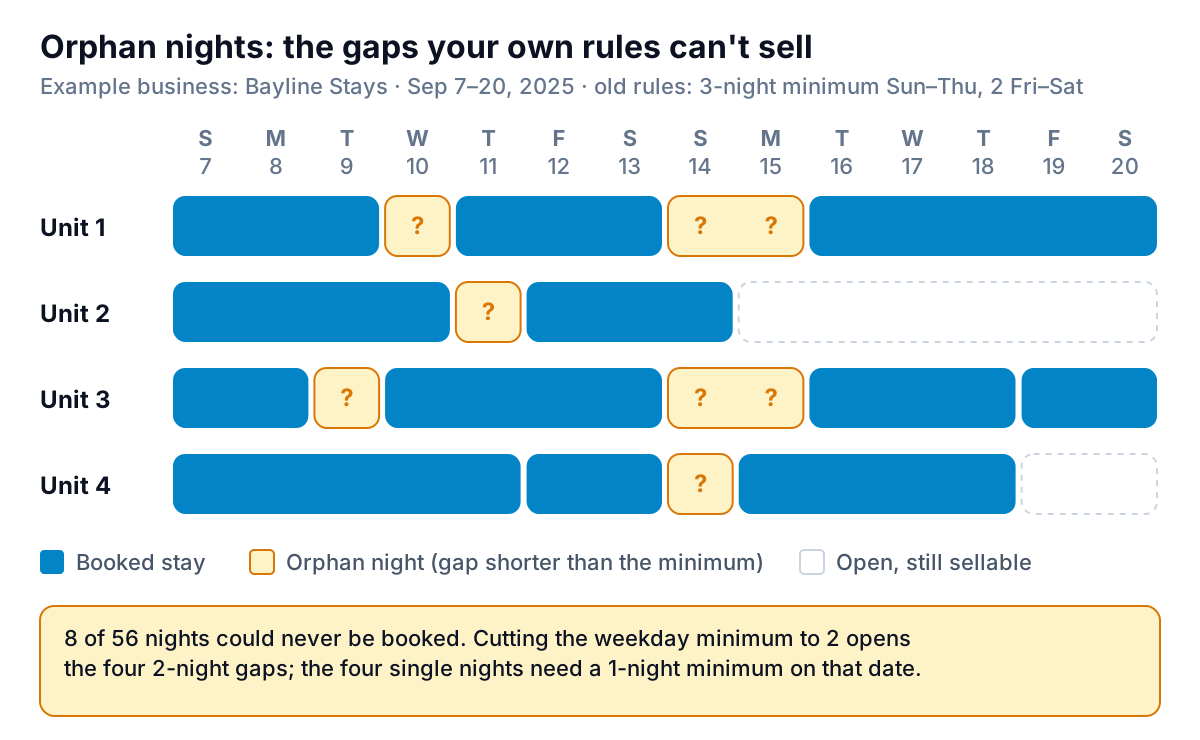
Over two weeks in September 2025, Bayline's four units had 56 nights. Guests booked 40, 8 were open and could still sell, and 8 were orphans. Four of those were two-night gaps starting on a Sunday, which a 3-night weekday minimum ruled out; the other four were single nights.
The fixes, in the order Bayline tried them:
- Set minimums by check-in day. Airbnb lets you customise minimum nights by check-in day (for example, two nights for a Friday check-in and one for other days). Bayline cut Sunday to Thursday check-ins from 3 nights to 2, which made the two-night gaps bookable.
- Open single gaps by hand. For a one-night hole, set a one-night minimum on that date. With professional hosting tools, a rule-set can set trip length for specific dates. Some pricing tools and channel managers can do this automatically; check yours.
- Price the gap to its cost. A one-night stay costs a full turnover. Price it so the night clears your per-stay costs, not at a fire-sale rate.
Shorter minimums mean more stays per month, so the turnover cost rises. That's why the result has to be measured after costs, which is the next step.
Measuring whether your Airbnb revenue management worked
Bayline made three changes for September 2026: weekday minimum stays from 3 nights to 2, a 10% last-minute discount inside 7 days, and weekend rates raised $15. Here is September against the same month a year earlier:
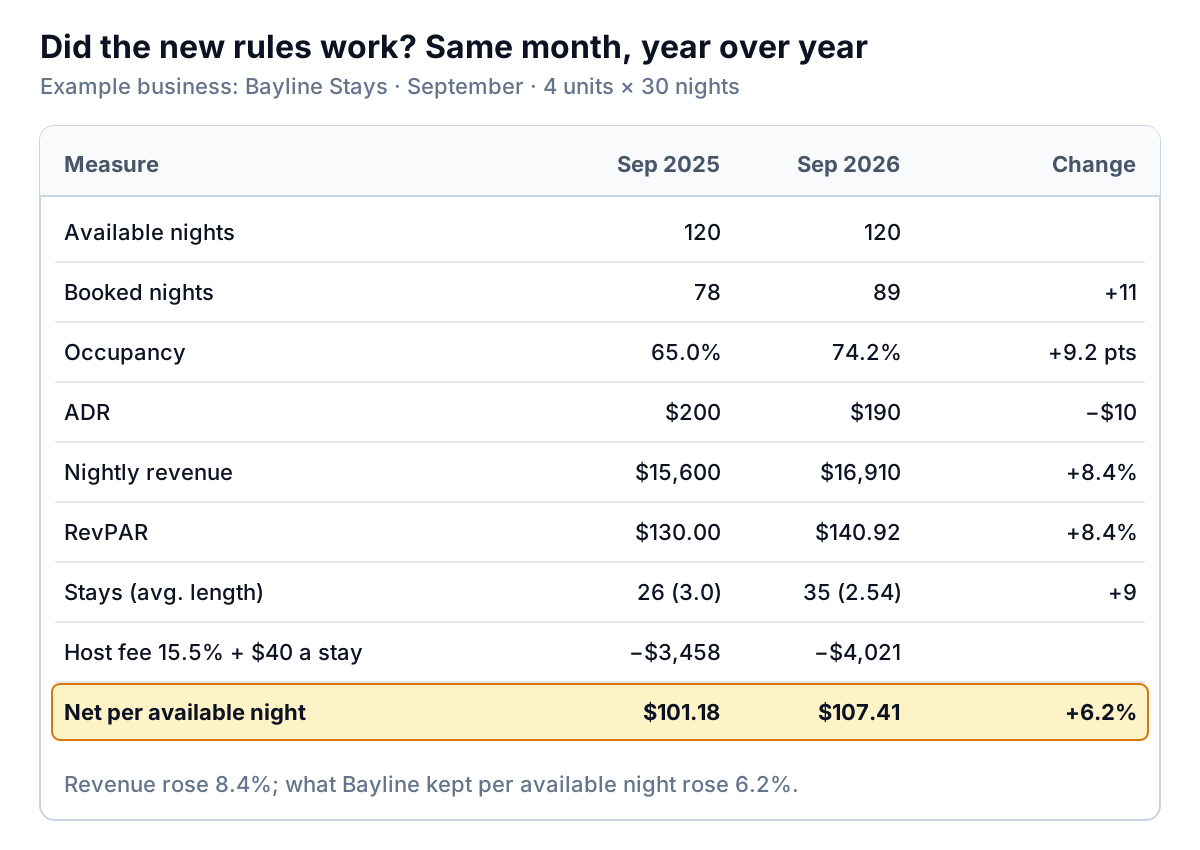
Occupancy rose 9.2 points and the average daily rate (ADR) fell $10, because more weekday and last-minute nights sold at lower rates. Revenue per available night (RevPAR) rose 8.4%. That headline overstates the gain: nine extra stays at $40 each and a bigger fee bill mean Bayline kept $107.41 per available night, up 6.2% rather than 8.4%. That's still a win, worth $746.95 for the month across four units.
The costs in that table:
- Host fee: Airbnb's single-fee structure deducts 15.5% for most hosts, and Airbnb says all hosts are moving to it. Use the rate on your own payouts.
- Per-stay cost: whatever each turnover costs you beyond the cleaning fee the guest pays: cleaner's time over the fee, laundry, restocking. Bayline's is $40.
Three habits keep the measurement honest:
- Compare like with like. Same month last year, same number of units, available nights in the denominator. Our guide to Airbnb occupancy rate covers which nights count as available.
- Check the market moved less than you did. AirDNA's midyear report put US short-term rental RevPAR growth at roughly 3% year over year in April and May 2026. If your RevPAR rose 3%, you may have done nothing at all. Airbnb's Insights lets you compare with similar listings nearby, which is closer to home.
- Change one thing per unit at a time when you can. Bayline changed three things at once, so it knows the bundle worked but not which part. Next season it will test the last-minute discount on two units and leave the other two as a comparison.
A weekly routine that fits in half an hour
Airbnb revenue management for a few listings doesn't need a revenue manager. It needs the same short checklist every week:
- Pace the next three months. Nights on the books per month against the same weeks out last year.
- Scan the next 30 days for orphan nights and open them with a shorter minimum where the gap allows.
- Check the next four weekends and any event dates against similar listings. Sold out early means raise.
- Look at last week's bookings: lead time, length of stay, channel, and any that used a discount.
- Log every change with the date, unit and reason, so the monthly review can tie results to decisions.
Once a month, review the previous month against the same month last year using net revenue per available night, as in the table above. Our budget vs actual guide shows how to set a monthly target per unit and track the gap.
Keeping score without a weekly spreadsheet rebuild
All of this runs on two exports: reservations (unit, check-in, check-out, channel, nightly revenue, fees) and a list of blocked nights. Airbnb lets you export earnings as a CSV from the Earnings page, with host service fees and cleaning fees per reservation; other channels and channel managers have their own exports.
Parity turns those files into the review for you. Upload them (or keep them in Google Sheets and connect it) and it builds a dashboard: the headline numbers with their trends, charts by unit and month, what explains the changes, and a table of what needs attention, such as units behind pace or with orphan nights. Every number is checked against queries on the full dataset before you see it. Ask for "net per available night after a 15.5% fee and $40 a stay, this September vs last" and it adds it; save the result as a template and update it next month with the newer export. If you co-own with someone, share a read-only link instead of a spreadsheet.
Upload your reservation exports and get a checked dashboard of occupancy, ADR, RevPAR and net per available night, by unit and month. Build a report from your data free
Airbnb revenue management done well is unglamorous: a rate card you can defend, a pace check every week, minimum stays that don't strand nights, and a monthly number that counts what you keep. For the hotel-industry view of the same levers, see our sibling guide to RevPAR.