Monday morning at a ten-person independent agency: 140 unread emails in the shared service inbox, a stack of renewal dec pages waiting to be keyed into the management system, a carrier commission statement that doesn't match what the system expects, and a client on the phone asking whether her policy covers the tree that fell on her neighbour's fence. Only the last of those needs a licensed professional's judgment. The rest is volume.
That split is the most useful way to think about AI tools for insurance agency work. The safest, fastest wins are in the volume: reading documents, sorting email, matching statements. The riskiest place to use AI is the call about the fence, where a confident wrong answer becomes an errors-and-omissions claim. This guide maps agency tasks by risk, looks at what the major management systems now build in, walks through a commission reconciliation example, and covers the data security and AI rules regulators have issued. It's general information, not legal or compliance advice.
Where AI tools for insurance agency work belong, and where they don't
Most agencies are early. The Big "I" Agents Council for Technology's 2026 Tech Trends Report found that two-thirds of independent agencies plan to increase their AI use in the next year, but only about 8% say AI is embedded in daily workflows, and more than 55% have no written AI use policy (IA Magazine). If that describes your agency, you're in the majority, and you have the advantage of choosing where to start rather than cleaning up later.
Sort your work by two questions: how often does this task happen, and what happens if the output is wrong?
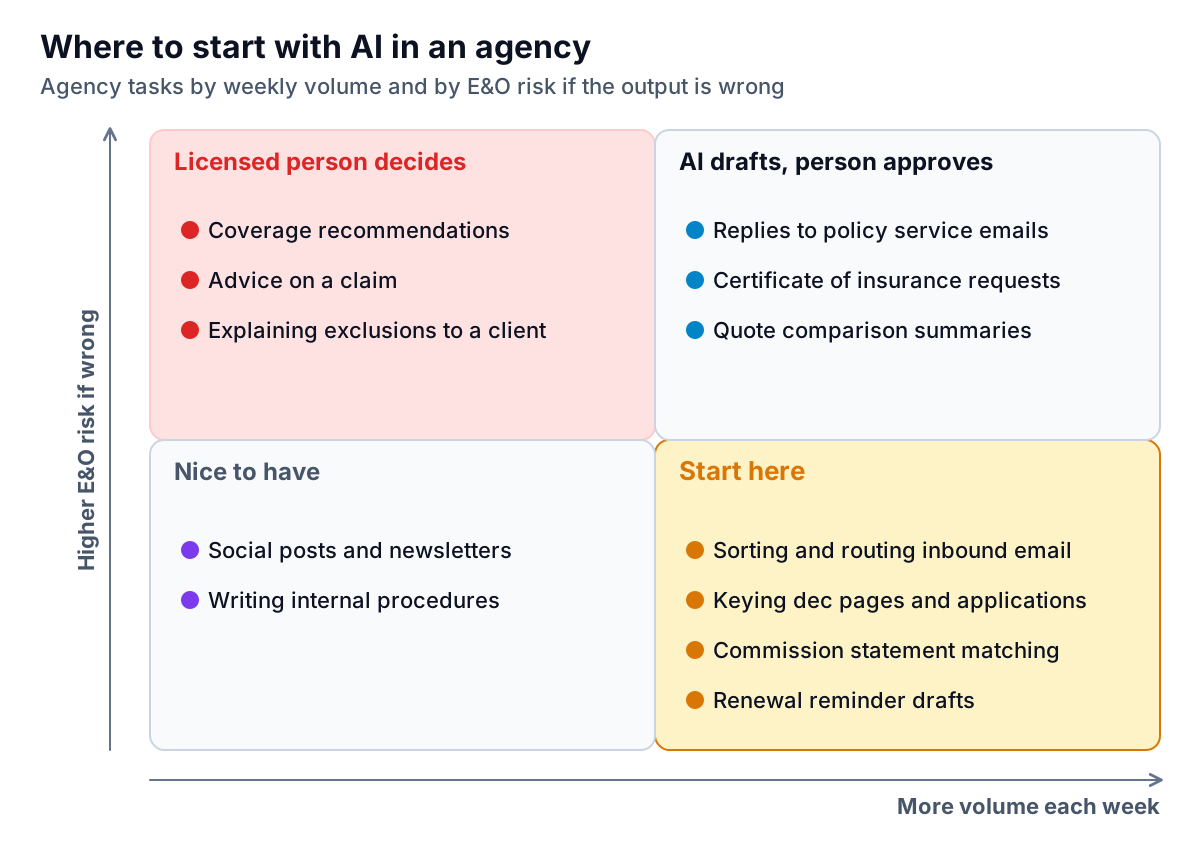
- Start here (high volume, lower risk): email triage, extracting data from dec pages and applications, commission statement matching, and drafting renewal reminders. Mistakes are caught by the next step in the process, and the time saved is large.
- AI drafts, a person approves: replies to routine service emails, certificate of insurance requests and summaries comparing quotes. These go to clients or third parties, so a person reads every one before it leaves.
- A licensed person decides: coverage recommendations, advice on a claim and explanations of exclusions. AI can help you find the right policy language faster. It shouldn't be the one interpreting it for a client.
What your management system may already do
Before buying new AI tools for insurance agency work, check what your agency management system (AMS) has added. Both of the largest vendors announced significant AI features in 2026, and using AI inside the system that already holds your data avoids another vendor, another integration and another copy of client information.
- Applied Epic. Applied launched Applied Recon in May 2026, which it describes as using AI to ingest, extract and match direct bill carrier statements inside Epic, with more than 140 agencies using it before launch (Applied). In September 2026 it announced Epic Conductor, an AI layer inside Epic covering natural language search across records and attachments, and extraction of data from carrier documents such as dec pages and applications back into Epic (Applied).
- Vertafore. In April 2026 Vertafore introduced its Velocity AI Platform with six agents, including an Email Agent that reads Outlook emails and starts actions in AMS360, a Reconciliation Agent for carrier statements in AMS360, an Insurance Expert Agent in ReferenceConnect, and a Benefit Plan Agent for BenefitPoint. Availability was staged through 2026, so check which are live for your edition (Vertafore).
Vendor announcements describe what a product is designed to do. Ask for a demo on your own documents, and ask which features are included in your current subscription and which cost extra. If you're on a smaller AMS, ask its vendor the same questions; integrations with third-party AI tools are common.
Outside the AMS
Three other categories come up often. General AI assistants (ChatGPT, Claude, Gemini, Copilot) are good at drafting marketing copy, internal procedures and first drafts of routine emails, provided no client personal information goes into a consumer account. AI phone and chat answering services can take after-hours calls and service requests; treat anything they say to a client about coverage as you would a new employee's first week. Document extraction tools read PDFs and pull fields into a spreadsheet; the guides to AI tools that analyze PDFs and AI invoice processing explain how they work and why a review step matters.
A worked example: commission reconciliation
Commission reconciliation is a good first project because it is repetitive, rule-based and checkable. Every line either matches or it doesn't. Here's one carrier's monthly statement for a sample agency, matched against what the AMS expected:
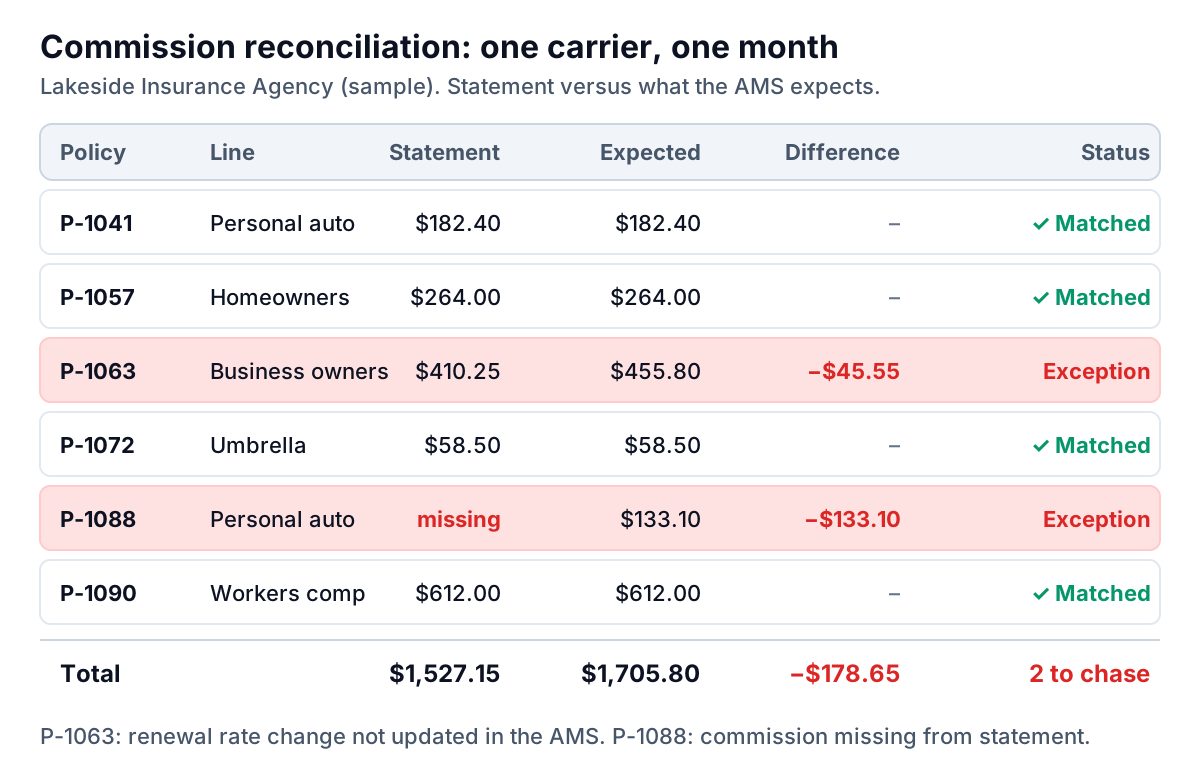
The value of automation here isn't the four matches. A person would tick those in seconds. It's that the two exceptions surface on their own, with the amounts, instead of hiding in a statement total that's "about right." In this example one exception is the agency's own error (a renewal rate change never updated in the AMS) and one is the carrier's (a commission missing from the statement). Both are worth $178.65 this month and much more over a year if nobody notices.
Whatever tool does the matching, keep three rules:
- A person resolves every exception. The software flags; your accounting lead decides whether it's a timing difference, a rate change or a missed payment.
- Totals must tie out. The statement total in the tool should equal the carrier's printed total. If they differ, something didn't extract correctly.
- Track exceptions by carrier. A carrier that's short three months running is a conversation for your marketing rep, not just your bookkeeper.
The rules: E&O, data security and AI governance
Insurance is regulated state by state, and the rules relevant to AI fall into three areas. Your state insurance department, your compliance counsel and your E&O carrier are the right people to confirm what applies to you.
Data security
The NAIC's Insurance Data Security Model Law (#668) requires licensees, including agents, to maintain an information security program based on a risk assessment, to investigate cybersecurity events and to notify the insurance commissioner. It also phases in oversight of third-party service providers. As of the NAIC's August 2025 update, 28 jurisdictions had implemented it. The model exempts licensees with fewer than 10 employees from the information security program section, though state versions vary (NAIC brief). In practice, an AI vendor that receives client data is a third-party service provider. Ask it the security questions you'd ask any vendor: where data is stored, who can access it, whether it's used to train models, and how you'd be told about a breach.
AI governance
In December 2023 the NAIC adopted a Model Bulletin on the Use of Artificial Intelligence Systems by Insurers. By the end of August 2026, 26 jurisdictions had adopted it, and California, Colorado, New York and Texas had issued their own insurance-specific guidance (NAIC adoption map). The bulletin is aimed at insurers, not agencies. But insurers are expected to oversee AI used by third parties acting on their behalf, so carriers may start asking agencies how they use AI in quoting, binding or service. Having a written answer ready is easier than writing one under deadline.
E&O
The simplest protection is the matrix above: AI doesn't give coverage advice to clients without a licensed person's review, and every client-facing AI draft is read before it's sent. Ask your E&O carrier whether it has guidance or requirements on AI use. The Agents Council for Technology runs Agency AI Labs, free AI training for independent agencies, with resources that include an AI SOP generator and an AI governance framework.
Measure your book before and after
The question every owner asks six months after adopting new tools is "did it help?" Answering it means looking at a few numbers consistently: policies in force, retention by line, renewals coming due, commission received against expected, and service turnaround. Most AMS platforms can export these, but the exports are raw tables that someone has to turn into something readable.
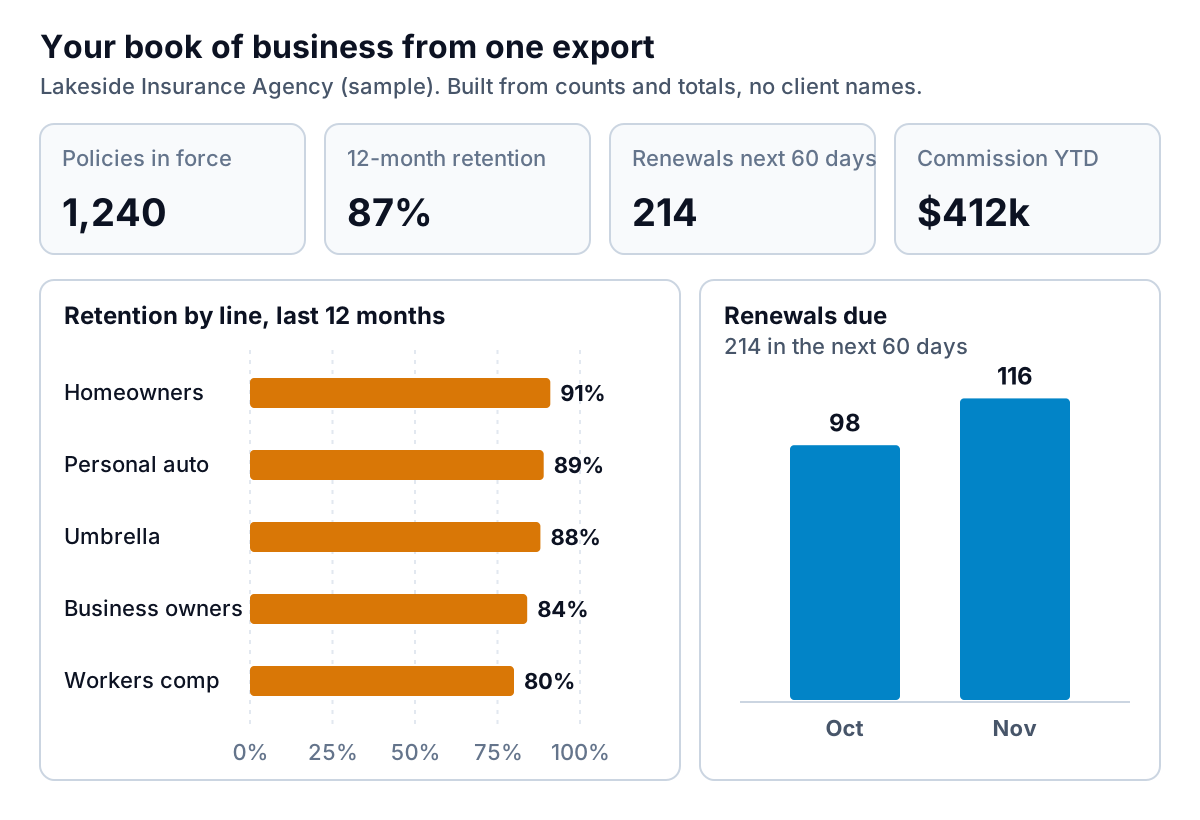
That's the job Parity's reporting tool does. You upload a CSV or Excel export, describe what you want ("retention by line for the last 12 months, and renewals due by month"), and it builds a dashboard or report with KPI tiles, charts, summary tables and a short executive summary. Every number and chart is checked against queries on the full dataset before you see it, and you can refine it by chat and export it to PDF for a partner meeting. Uploaded files are deleted once the report is built and never used for training.
Keep the data-security point from above in mind: export counts and totals by line, carrier and month, and remove client names, addresses, policy numbers and other personal information before uploading. The guide to AI tools for Excel reports has more on preparing a clean export.
Upload a de-identified export and get verified charts of retention, renewals and commission you can share with your partners. Build a report from your data free
Your first 30 days
- Week 1: List your ten most time-consuming recurring tasks and place each on the matrix. Write the one-paragraph AI policy.
- Week 2: Ask your AMS vendor for a demo of its AI features on your own documents, starting with statement reconciliation or dec page extraction.
- Week 3: Pilot one bottom-right task with one person. Count time spent and errors caught, before and after.
- Week 4: Decide to expand, change or stop. Build a baseline dashboard of your book so you can see the effect over the next two quarters.
The agencies that get the most from AI tools for insurance agency work won't be the ones with the most tools. They'll be the ones that picked the right first task, wrote down the rules, and kept a licensed person on every answer that matters to a client.