A half-ton pickup costs $1.10 a mile to own and run, according to AAA's 2026 Your Driving Costs study, counting fuel, maintenance, repairs, tires, registration, taxes, depreciation and finance charges. AAA models personal driving over 75,000 miles in five years, so a work truck's numbers will differ. But as a rough guide, twelve trucks at 15,000 miles a year come to about $198,000 a year. For a plumbing, HVAC, landscaping or delivery business, the fleet is often the biggest cost after payroll.
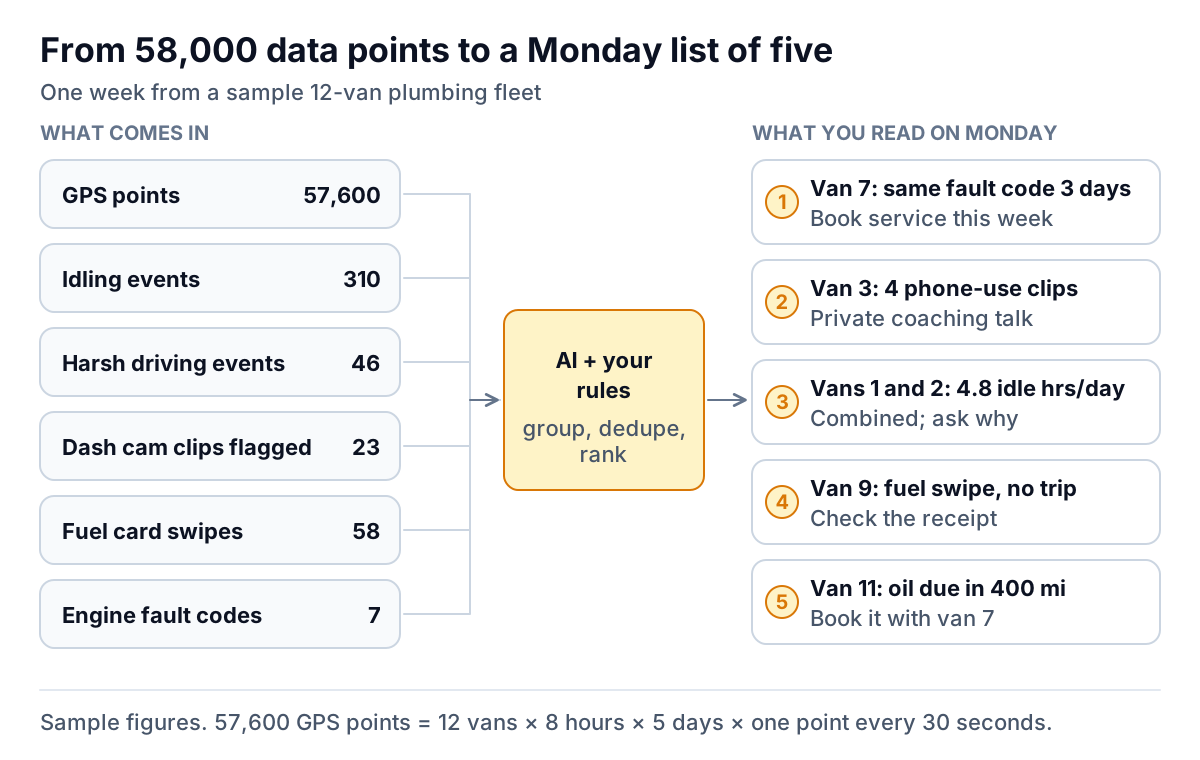
That's the case for AI fleet management for small business, and it's also the trap. The tools produce an enormous amount of data. A 12-van fleet generates tens of thousands of GPS points a week, plus idling alerts, harsh-braking events, camera clips and fault codes. The useful part is the handful of decisions buried in all that. This guide covers what the AI actually does, the three places it saves real money (idling, maintenance and driving behavior), what it costs, and how to set it up so you read five items on Monday instead of five hundred.
What AI fleet management for small business covers
"Fleet management" is sold as one thing but bought as four layers. You don't need all four on day one. Most AI fleet management for small business starts with the first layer and adds the others as the fleet grows.
- Telematics. A GPS and engine-data device in each vehicle, either plugged into the diagnostic port or wired in. It reports location, speed, idling, mileage and engine fault codes. This is the data layer everything else depends on.
- AI dash cams. Cameras that run vision models to spot risky behavior and flag a clip. Samsara's AI dash cams list detections including mobile phone use, following distance, drowsiness, rolling stops, lane departure and seat belt use, with in-cab alerts. Motive's AI Dashcam Plus lists phone use, close following, unsafe lane changes, stop-sign violations, seat belt violations and speeding.
- Maintenance software. Service schedules by miles, hours or date, inspection forms, work orders and cost history per vehicle. Fleetio is a well-known example for small fleets. Its pricing page lists Essential at $4 per vehicle per month billed annually ($5 monthly), Professional at $7 and Premium at $10. Those prices are for a band of five assets, and it offers a 14-day free trial. Fleetio markets an AI Service Advisor and lists an AI Data Analyst under its Premium plan's advanced analytics.
- Analysis and reporting. Cost per vehicle, cost per mile, idle hours, fuel-card matching and replacement timing. Some of this comes built into the platforms. The rest happens in exports and spreadsheets.
The "AI" in these products mostly does three things. It classifies (is this clip a phone in hand or a coffee cup?), it summarizes (one van has thrown the same code for three days), and it ranks (these five items matter this week). It doesn't decide whether a driver keeps their job or whether a van gets replaced. Those decisions stay with you.
Set up the Monday list before anything else
Every fleet platform can send alerts. Turn most of them off. An owner who gets 40 notifications a day reads none of them by Thursday. Decide instead what earns a place on a weekly list, and send only true emergencies (a crash detection, a vehicle where it shouldn't be at 2 a.m.) in real time.
A workable set of rules for a 5 to 30 vehicle fleet:
- Any engine fault code that repeats on two or more days. One-off codes are often noise. Repeats are a pattern.
- Any driver with three or more camera events of the same kind in a week. One hard-braking event is often someone else's fault. Four phone-use clips aren't.
- The two vehicles with the most idle time, with their daily average.
- Any fuel-card transaction with no matching trip, or a fill bigger than the tank.
- Any service due within 500 miles or two weeks, so you can batch bookings.
Ask every vendor in the demo to build exactly this report, or something close, from their scheduled reports and AI summaries. If they can't, you'll be building it yourself from exports, which is fine, but know that before you sign.
Idling: the easiest money in the fleet
An idling light-duty gasoline vehicle burns about 0.23 gallons an hour, according to the Department of Energy's Alternative Fuels Data Center. Medium-duty diesels burn about 0.6. That sounds small until you multiply it out. At $4.152 a gallon, the price of regular AAA used in its September 2026 study, every idle hour in a pickup or van costs about 95 cents in fuel alone, before engine wear.
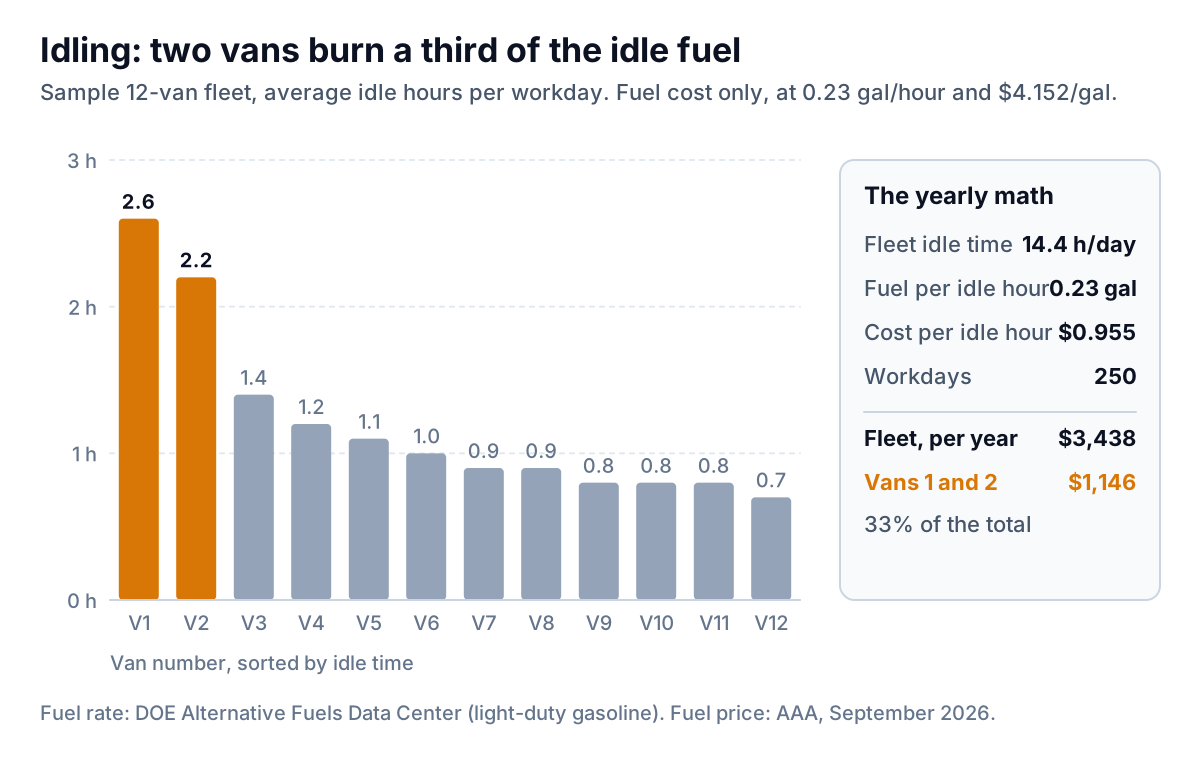
In the sample fleet, idling costs about $3,400 a year in fuel. That's real money, but not enormous. The more useful finding is the shape: two vans account for a third of it. That turns a vague "everyone idle less" memo into two conversations, and often there's a good reason behind the number:
- The van runs a tool that needs the engine on (a jetter, a lift, a compressor). That's working time, so tag it as such in the platform if you can.
- The driver waits in the cab between jobs because there's nowhere else to go. That's a scheduling problem, not a driver problem.
- Winter warm-up. Set a seasonal threshold rather than fighting it.
- Habit. This is the one coaching fixes.
Set the idle alert threshold at around five minutes so short stops at lights and loading don't pollute the data. Some states and cities also limit commercial vehicle idling, so check your local rules.
Maintenance: from fault codes to booked service
Telematics devices read the same diagnostic codes a mechanic's scanner does, and they read them every day. That changes maintenance from "when someone notices" to "when the data says". The catch is volume. Many codes are minor or temporary, and an owner who books every one into the shop wastes days of van time.
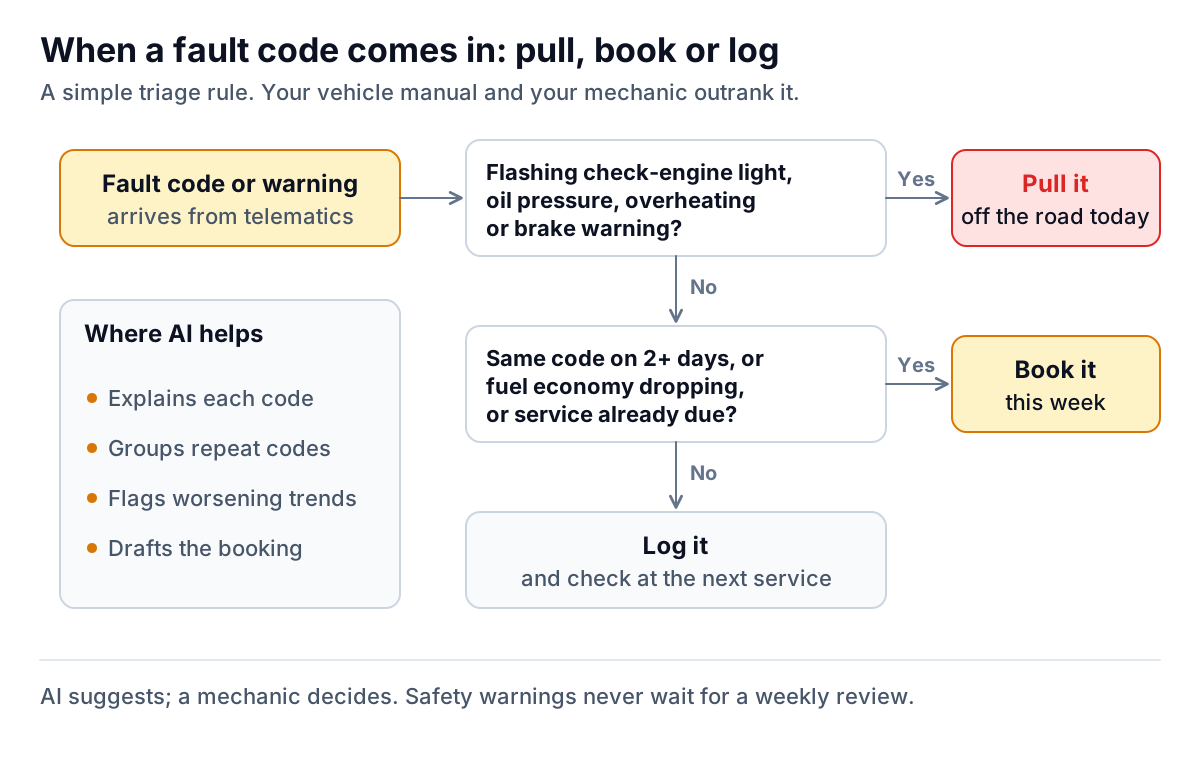
AI helps in two specific ways here. It translates a code like P0420 into plain English and a likely urgency, which saves a phone call. And it notices patterns a person misses, such as a van whose fuel economy has slipped 8% over six weeks while throwing an intermittent code. Treat its explanation as a starting point for your mechanic, not a diagnosis. Your vehicle's manual and your shop decide what's safe to drive.
The quieter win is batching. If van 7 needs a look and van 11's oil change is due in 400 miles, book them together and lose one morning instead of two. A weekly list makes that obvious. A stream of alerts hides it.
If you work with an independent shop, our guide to AI tools for auto repair shops shows the other side of the counter. It's useful for knowing what a good shop can send you, such as inspection photos and estimates by text.
AI dash cams: coaching, not catching
Dash cams are where small fleets get the most value and the most pushback. The value is real. A clip that shows the other driver ran the light can settle a claim in your favor, and in-cab alerts correct a habit in the moment, before anyone gets hurt. The pushback is real too. Drivers who feel watched leave, and in a tight labor market that costs more than the cameras save.
What works in small fleets:
- Tell people before you install. Explain in writing what the cameras record, whether there's a driver-facing lens, whether audio is captured, who can see footage and how long it's kept.
- Lead with protection. The first clip you share with the team should be one that cleared a driver, not one that caught somebody.
- Coach in private, on patterns. One harsh-braking event is noise. Four phone-use clips in a week is a conversation, held one to one, with the clip.
- Check the law. Rules on recording audio, monitoring employees and using driver-facing cameras vary by state. Get advice from an employment lawyer before you roll out driver-facing cameras or audio.
What it costs, and how to choose by fleet size
Budgeting for AI fleet management for small business is harder than it should be, because prices are often quote-based. Samsara's pricing page starts by asking how many vehicles you have rather than showing a price list, and Motive's dash cam page sends you to sales. Expect a per-vehicle monthly fee, a hardware cost or hardware bundled into a multi-year contract, and sometimes installation. Fleetio publishes its per-vehicle prices, quoted above.
| Fleet size | Sensible starting setup | What to skip for now |
|---|---|---|
| 3 to 10 vehicles | Basic GPS and engine telematics, plus a maintenance schedule (in a maintenance app or a spreadsheet) | Driver-facing cameras, route optimization, custom dashboards |
| 10 to 30 | Telematics with road-facing AI dash cams, maintenance software with service reminders, fuel cards that sync | Building your own integrations |
| 30 and up | All of the above, with someone who owns fleet data weekly and a written camera policy | Running it all from alerts. You need scheduled reports. |
Questions to ask in every demo:
- What's the contract length, and what happens to the hardware if we leave?
- Can I export trips, idling, fault codes and camera events to CSV whenever I like?
- Who owns the footage and the data, and is it used to train your models?
- Can I turn individual alerts off and get a weekly summary instead?
- Does it work with my fuel cards and my maintenance shop's records?
- What does it cost all-in per vehicle per month, including hardware, over the full contract?
Where Parity fits, and a first step
Parity isn't a fleet platform. It doesn't track vehicles or watch dash cams. It's an AI reporting tool, and it fits one specific job: turning the exports you already have (a fuel-card CSV, a telematics trip report, a maintenance log from your shop) into a cost-per-vehicle report you can actually read. Upload the files, describe what you want ("fuel, maintenance and idle hours per van, last 6 months, flag the top three by cost per mile"), and it builds KPI tiles, charts and a summary. Every number is checked against queries on the full dataset before you see it, and you can export the result to PDF. It's handy before a replace-or-repair decision, or when the platform's built-in reports don't join fuel and maintenance together. For more on dashboards for field businesses, see our guide to dashboards for service businesses. If you're weighing tools for data work in general, read AI tools for data analysis.
A first step you can take this week, with or without new software: pull last quarter's fuel-card statement and your maintenance invoices into one spreadsheet, one row per vehicle, and divide by miles driven. The two vehicles at the top of that cost-per-mile list are where your first fleet conversation, and your first AI tool, should focus.
Upload fuel, trip and maintenance exports, and Parity builds a checked fleet cost report in minutes. Build a report from your data free