$1.22. That's what the espresso, milk, cup and lid in a $5.25 latte cost Daybreak Espresso, a one-location café we'll use as an example in this guide. Its coffee shop profit margin is a different number: profit after every cost ÷ sales, which last year came to $97,300 ÷ $525,000 = 18.5%, before the owner paid herself anything. The 77% margin on the cup is why people open coffee shops; the drop to 18.5% is why so many owners are surprised when the year ends.
The gap between the two isn't a mystery. It's staff hours, rent and a lot of small bills, and the owner's own time on the bar. This guide builds Daybreak's year from one drink upward, so you can do the same with your own prices and see where your margin really comes from, what you're actually earning, and which change would move it most.
Start with one drink
Cost a drink the way a supplier invoice would: by weight and volume, not by guess.
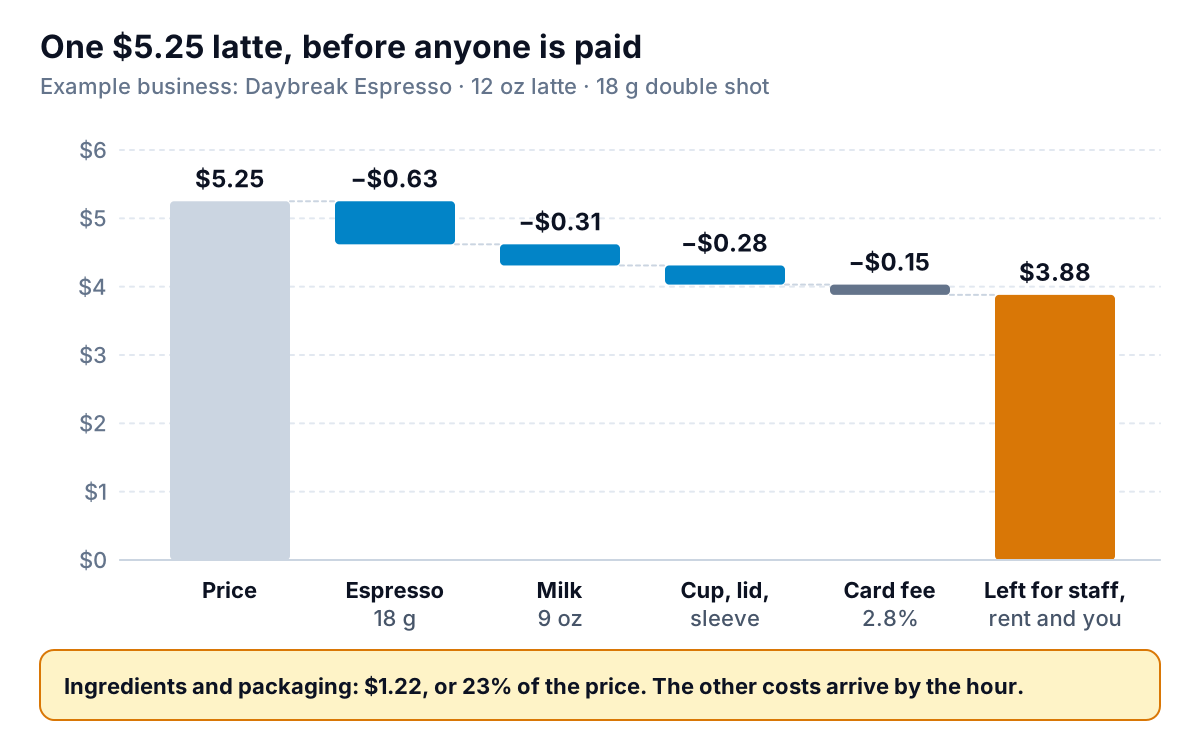
- Espresso: Daybreak pays its roaster $16.00 a pound, about 3.5 cents a gram. An 18-gram double shot costs $0.63. Count the grams you actually use, including the shots you dial in each morning and pour away.
- Milk: about 9 ounces poured and steamed for a 12-ounce latte, including what's left in the pitcher. At $4.40 a gallon, $0.31.
- Cup, lid and sleeve: $0.28. Packaging is the cost most often left out of drink costing, and on a drip coffee it can be half the cost.
- Card fee: at an example blended rate of 2.8%, $0.15.
That leaves $3.88 a latte. Daybreak's drip coffee ($3.00, costing $0.53 with the cup) leaves more in percentage terms; a pastry bought in from a bakery at $1.90 and sold for $4.25 leaves much less. Across everything it sells, Daybreak's goods cost comes to 28% of sales.
Coffee prices are moving. The Bureau of Labor Statistics' average retail price for ground roast coffee rose from $6.31 a pound in August 2024 to $9.30 in August 2026, about 47%. That's a supermarket shelf price, not what your roaster charges you, but it shows the direction. If your drink costs were set two years ago, re-cost them.
From drinks to a year: the coffee shop P&L
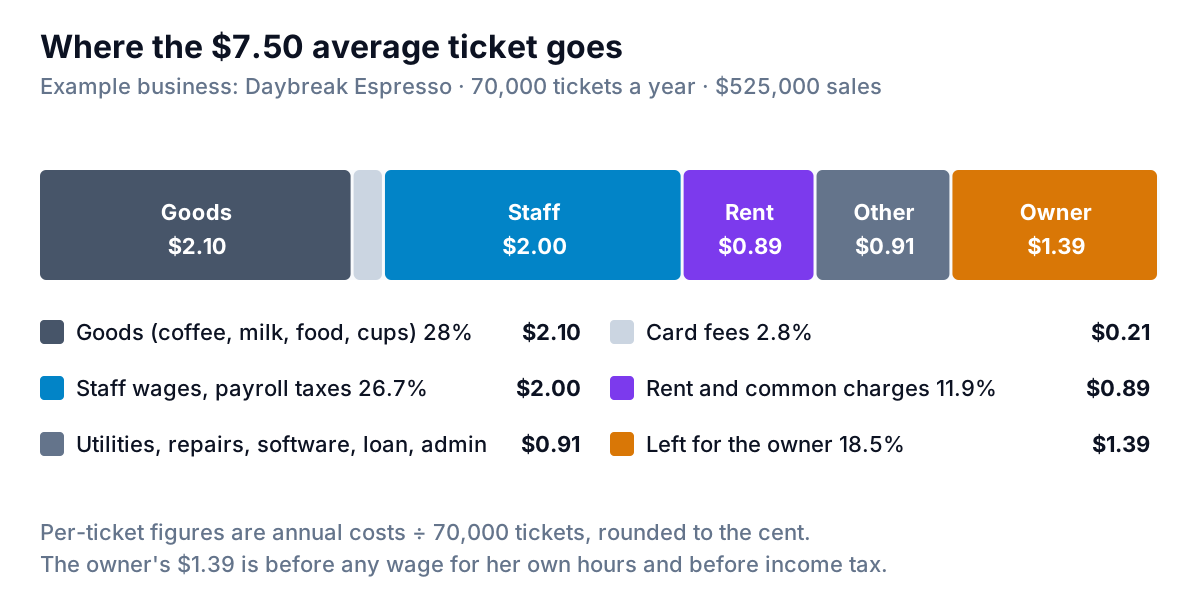
Daybreak opens 350 days a year and serves about 200 tickets a day at an average of $7.50 (a drink, and sometimes a pastry). That's 70,000 tickets and $525,000 in sales. Here's the year:
| Line | Annual | % of sales |
|---|---|---|
| Sales | $525,000 | 100.0% |
| Goods: coffee, milk, syrups, food, cups | $147,000 | 28.0% |
| Staff: 7,875 hours at $16.00, plus $14,000 payroll taxes and workers' comp | $140,000 | 26.7% |
| Rent and common area charges ($5,200 a month) | $62,400 | 11.9% |
| Card processing | $14,700 | 2.8% |
| Utilities | $14,400 | 2.7% |
| Espresso machine loan: interest and depreciation | $18,000 | 3.4% |
| Accounting, insurance, licences | $9,900 | 1.9% |
| Cleaning supplies and smallwares | $7,500 | 1.4% |
| Repairs and machine servicing | $6,000 | 1.1% |
| POS, music, internet and software | $4,800 | 0.9% |
| Marketing | $3,000 | 0.6% |
| Profit before the owner's pay | $97,300 | 18.5% |
Staff hours are the second-biggest cost and the one that behaves least like the drink math. Daybreak runs two baristas through the day and a third for the morning rush: about 22.5 hours a day, whether 150 people come in or 250. Daybreak's $16.00 average is a little above the national median of $15.00 an hour that the Bureau of Labor Statistics reported for fast food and counter workers, the occupation group that includes baristas, in May 2025. Tips are paid by customers and aren't in either figure.
Rent is the other big fixed line. A café's tickets are small, so rent takes a bigger share of each one than it does in a restaurant.
What's a normal coffee shop profit margin?
This is where honest answers get thin. We looked for a current, published survey of coffee shop profitability with a stated sample and a clear definition of profit, and didn't find one that's free to read. Figures like "10% to 25%" circulate widely, but the sources behind them rarely say how many shops they asked or whether the owner's wage was counted as a cost. Treat them with care.
The closest solid benchmark is the National Restaurant Association's 2025 Restaurant Operations Data Abstract, built from 2024 data from more than 900 restaurants. Counter-service coffee shops would sit in its limited-service segment, alongside quick-service restaurants of every kind, where median income before taxes was 4.0% of sales. The same data put limited-service labor at a median of 31.7% of sales and occupancy at a median of 5.2%.
Two cautions before comparing Daybreak's 18.5% with that 4.0%:
- Owner labor. In a restaurant group the manager is on payroll. In a small café the manager is often the owner, unpaid, so the profit line includes her wage. Daybreak's owner works about 50 hours a week on the bar.
- Shape of costs. A café typically has lower goods cost than a burger counter and higher rent per dollar of sales. Daybreak's rent at 11.9% of sales is more than double the limited-service median, which is common for a small shop on a busy street and dangerous if traffic falls.
What the owner actually earns
Daybreak's $97,300 is the owner's pay and her return on the money she put in. To see the business's own margin, price her job. If she hired a manager to run the shop at $52,000 a year, plus about $6,240 in payroll taxes, the profit would drop to $39,060: a margin of 7.4%.
Both numbers are true, and both matter:
- 18.5% is what she takes home today for a full-time job plus ownership. It's a decent wage, not a windfall.
- 7.4% is what the business would earn without her behind the bar. That's the number a buyer, a lender or a second location depends on.
Profit also isn't cash. The machine loan's principal payments come out of the bank account but not the P&L, and income tax on the profit is hers to pay. How a sole proprietor or LLC owner is taxed varies, so ask your accountant what to set aside.
Four mistakes that flatter a coffee shop profit margin
- Costing drinks without packaging or waste. The cup, lid and the dialled-in shots you pour away are real goods cost.
- Using purchases as goods cost. A month you stocked up on beans looks bad, and the next looks too good. Adjust for what's still on the shelf.
- Leaving out the owner's hours. If you work the bar, the profit includes your wage. Look at the margin with and without it.
- Ignoring the slow months. A café that clears 18% in spring can lose money in a wet January. Look at the margin by month, not only by year.
How many cups you need to sell
A coffee shop has mostly fixed costs. Staff hours, rent and overheads arrive whether the line is out the door or not. That makes break-even the most useful number on the wall.
From each $7.50 ticket, Daybreak keeps 69.2% after goods (28%) and card fees (2.8%). That's its contribution margin. Its fixed costs are $266,000 a year: staff, rent and every overhead in the table except card fees. So:
- Break-even sales = $266,000 ÷ 69.2% = $384,393 a year, or $1,098 a day, or 147 tickets.
- Sales to pay a manager too = ($266,000 + $58,240) ÷ 69.2% = $468,555, or 179 tickets a day.
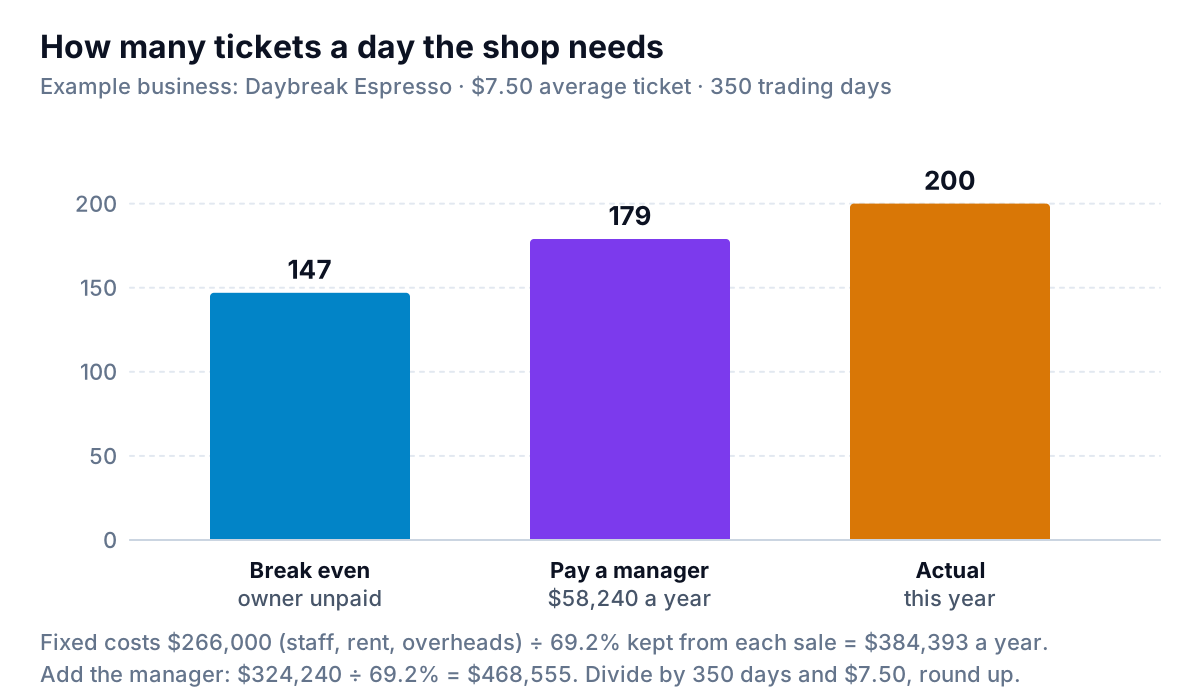
That's the uncomfortable truth about café margins: they're mostly a traffic business. Every ticket above break-even keeps $5.19 (69.2% of $7.50). Every ticket below it costs the same.
Which change moves the margin most
Price each idea in dollars a year before you try it. For Daybreak:
| Change | Arithmetic | Added profit a year |
|---|---|---|
| Raise the average ticket by $0.25 (a price rise or more food attached), same traffic | 70,000 × $0.25 × 97.2% after card fees, if goods cost doesn't rise | $17,010 |
| 10 more tickets a day | 3,500 × $7.50 × 69.2% | $18,165 |
| Cut one staff hour a day in the slowest afternoon slot | 350 hours × $16.00 × 1.11 for payroll taxes | $6,216 |
| Cut milk waste in the pitcher by 1 ounce a latte (100 lattes a day) | 35,000 × $0.034 | $1,190 |
The pattern is typical. Traffic and ticket size move a café's margin far more than trimming ingredients. That doesn't make waste unimportant; it means ingredient work is housekeeping and traffic is strategy.
Decision rules that follow from the numbers:
- If daily tickets are within 15% of break-even, everything else waits. Work on the morning rush first, where most of your tickets are, through speed and pre-ordering.
- If your rent is above about 12% of sales, add sales hours or a second product line (lunch, retail beans) before you sign a renewal. A Daybreak-sized rent only works at Daybreak-sized traffic.
- If staff cost per ticket rises for a month, look at hourly sales against scheduled hours, not at the hourly rate.
- Re-cost the menu every time your roaster or dairy changes price, and raise prices in small steps rather than one big jump.
The 15% and 12% lines are rules of thumb for this example, not industry benchmarks; set your own from your own P&L.
Tracking it from your own systems
The inputs are already recorded somewhere: tickets, average ticket and sales by hour in your POS; goods in roaster, dairy and bakery invoices; hours and wages in payroll; rent and the rest in your accounting software. A monthly check of four numbers (sales, goods %, staff % and tickets a day against break-even) is enough for most cafés. Our guide to calculating gross margin covers the goods side, and the labor cost percentage guide applies to a café as much as a restaurant.
If you'd rather not rebuild a spreadsheet each month, Parity connects Square and QuickBooks Online directly, or takes a CSV or Excel export from any other POS, and builds a dashboard from it: headline numbers with their trends, charts, what explains them and a table of what needs attention. Every number is checked against queries on the full dataset before you see it. You can ask for changes by chat ("show tickets by hour against break-even", "goods cost by month"), save the dashboard as a template and update it with next month's export. If you ask, it writes the month's report for a partner or lender from the same data.
Connect Square or QuickBooks, or upload a POS export, and get a checked dashboard of sales, costs and tickets a day. Build a report from your data free
The latte's 77% margin is real, and so is the 18.5% at the bottom, and so is the 7.4% once the owner is paid. A good coffee shop profit margin is one where you know all three, and know how many cups stand between you and the next one down.