Business Numbers
The numbers behind a small business, what each one tells you, and how to work it out from your own books. 51 articles.
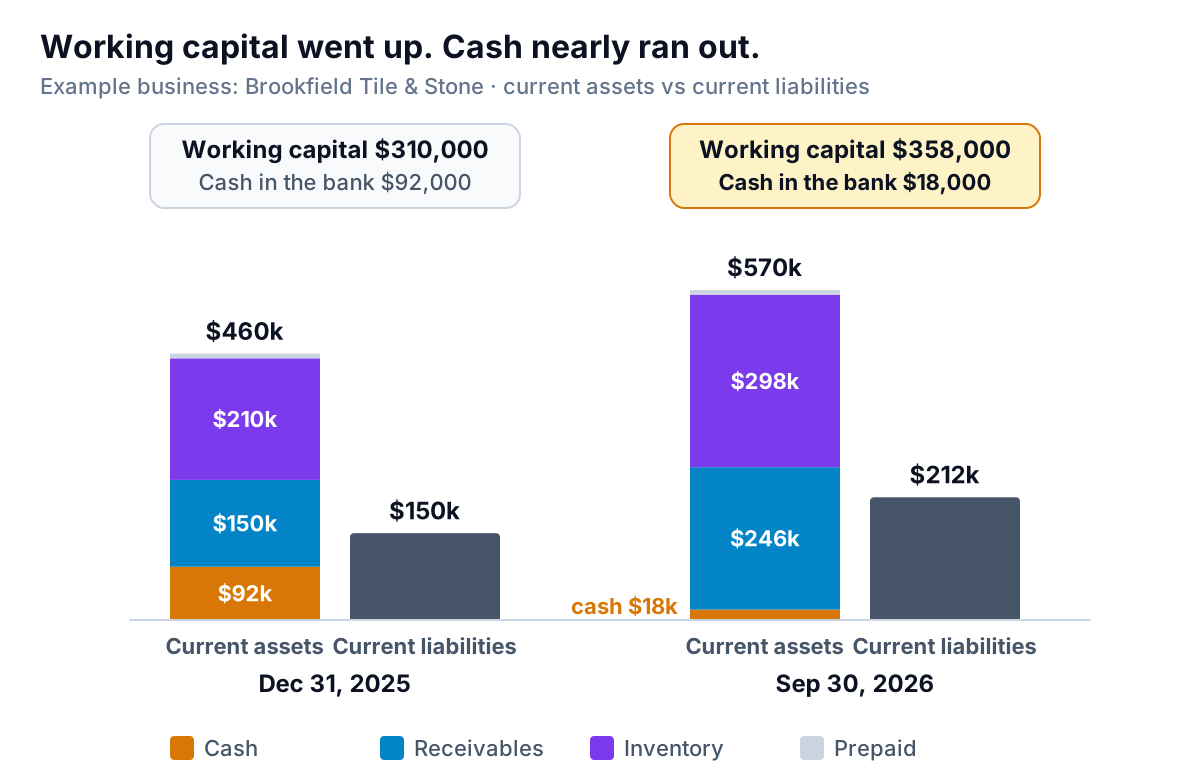
Working Capital: Why a Profitable Business Runs Out of Cash, and How to Free It
What working capital is, the formula, why profitable small businesses run short as they grow, and four ways to free cash, worked through an example.
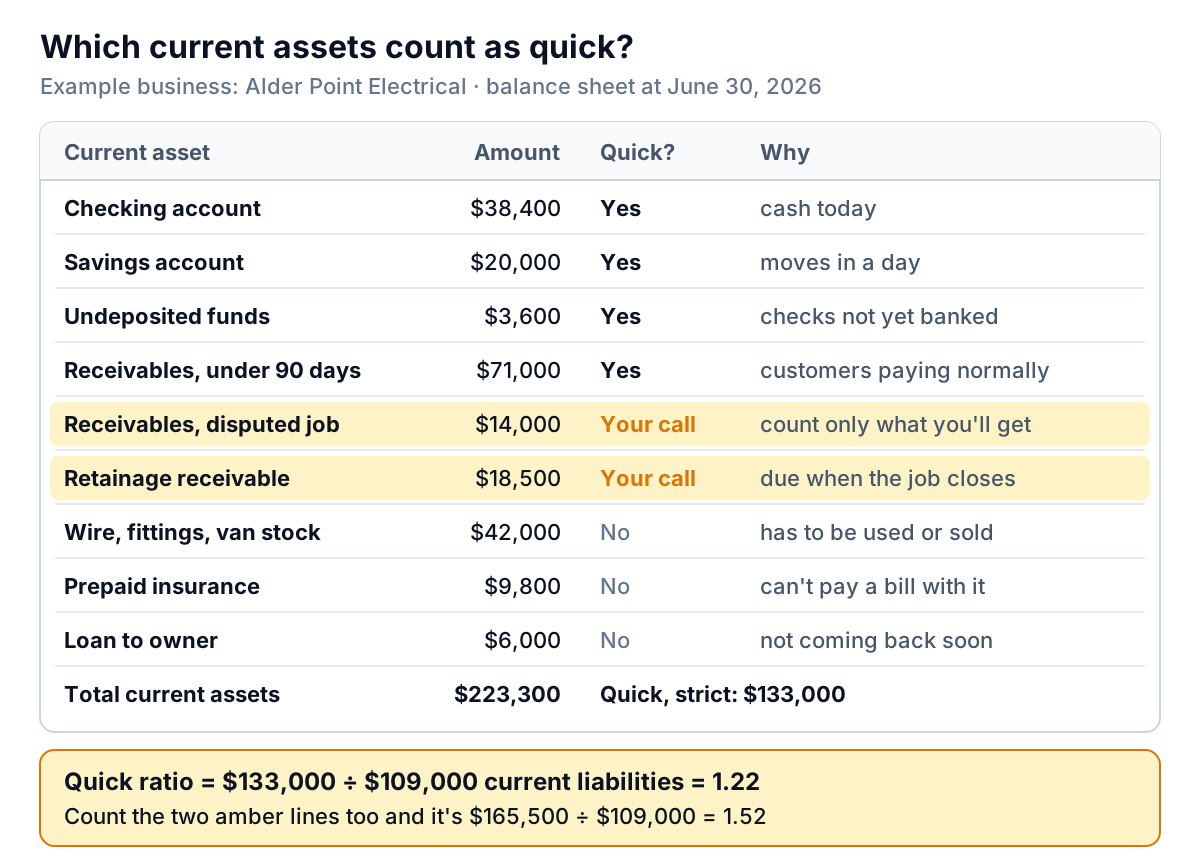
Quick Ratio: What Really Counts as a Quick Asset (With a Worked Example)
The quick ratio formula, which assets count as quick line by line, how it differs from the current ratio, and what to do when it falls, with an example.
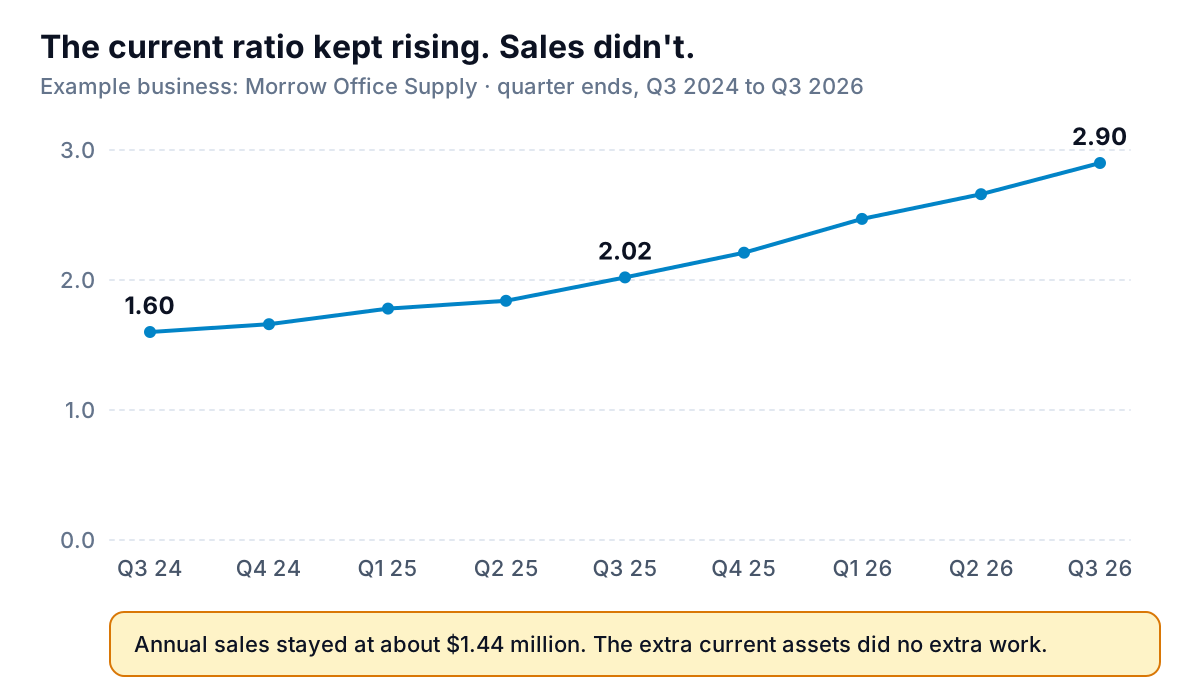
Current Ratio: What's Good for Your Business, and When High Is a Warning
The current ratio formula with a worked example, what a good current ratio looks like for different businesses, and why a rising one can be a warning sign.
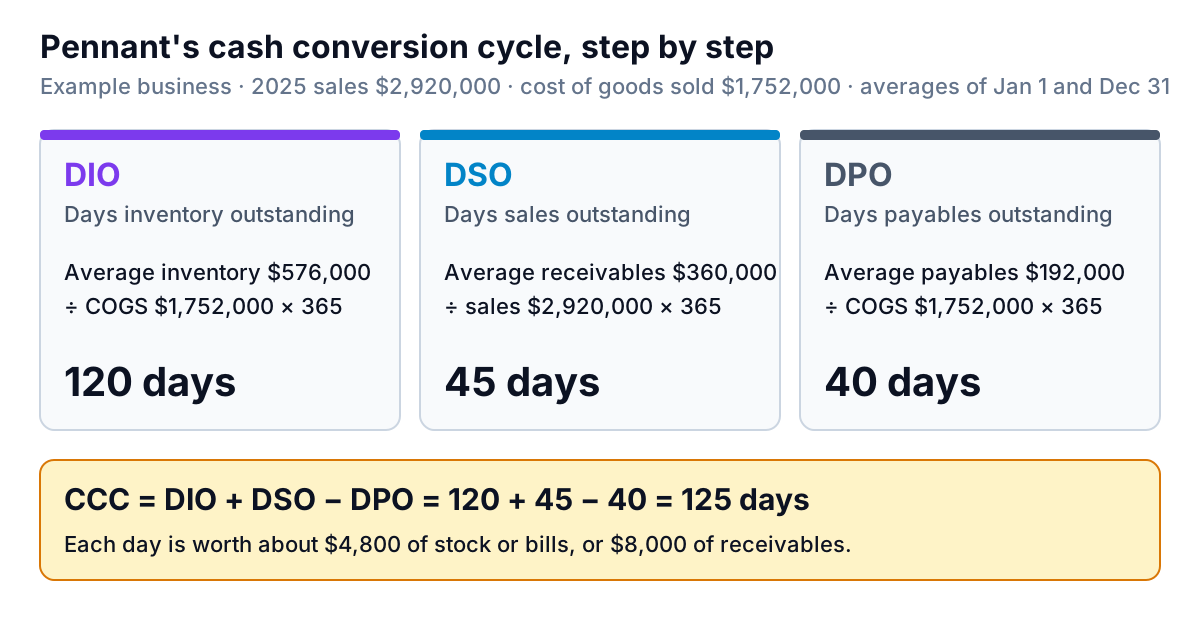
Cash Conversion Cycle: A Worked Example and How to Shorten It
How to calculate the cash conversion cycle (DIO + DSO − DPO) from small business books, what each day is worth in cash, and the changes that shorten it.
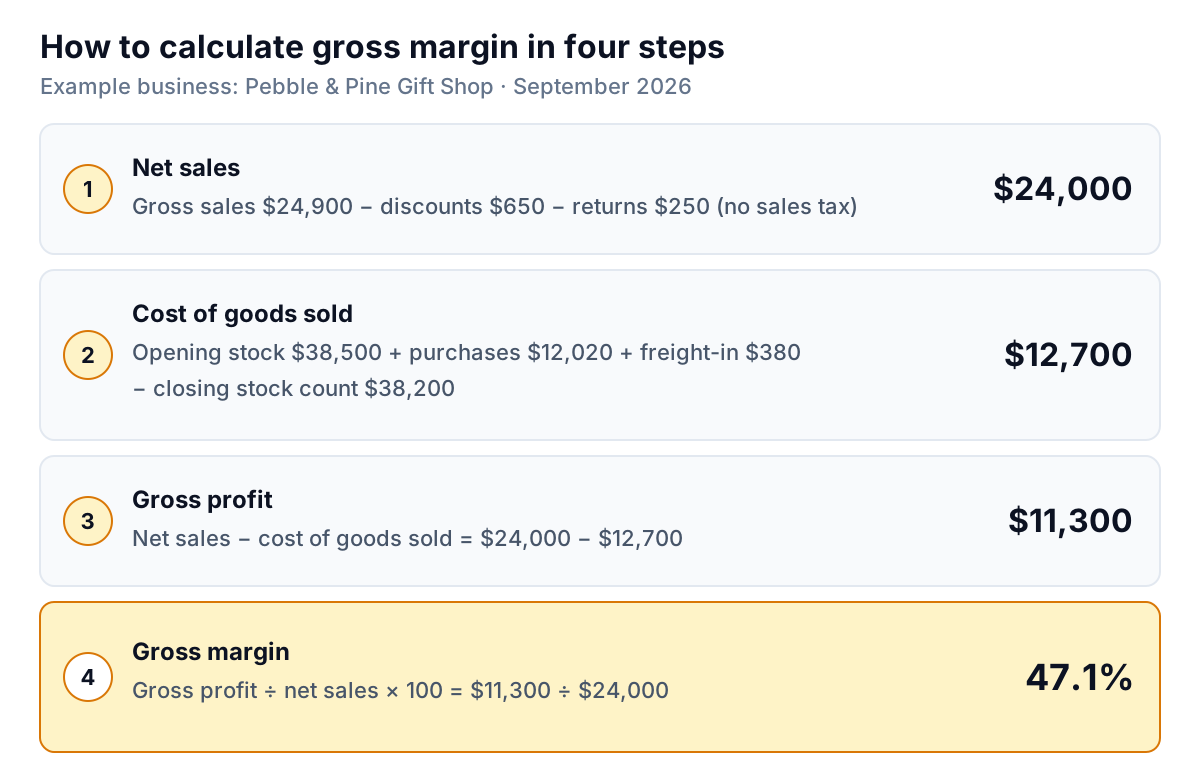
How to Calculate Gross Margin: Overall, per Product and in a Spreadsheet
How to calculate gross margin step by step, overall and per product, with spreadsheet formulas, what belongs in COGS and why your till and books disagree.
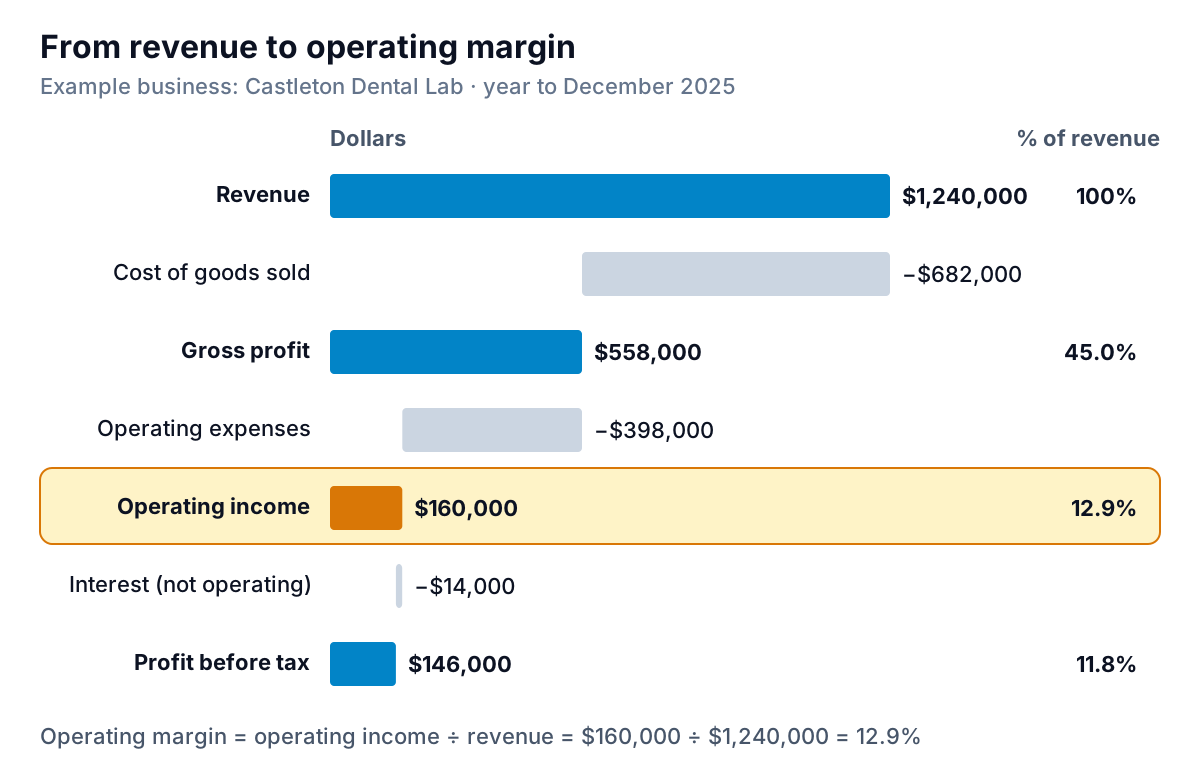
Operating Margin: What It Shows That Gross Margin Hides, and How to Raise It
Operating margin explained with a small-business example: the formula, why it can fall while sales grow, the owner's pay adjustment and fixes that move it.
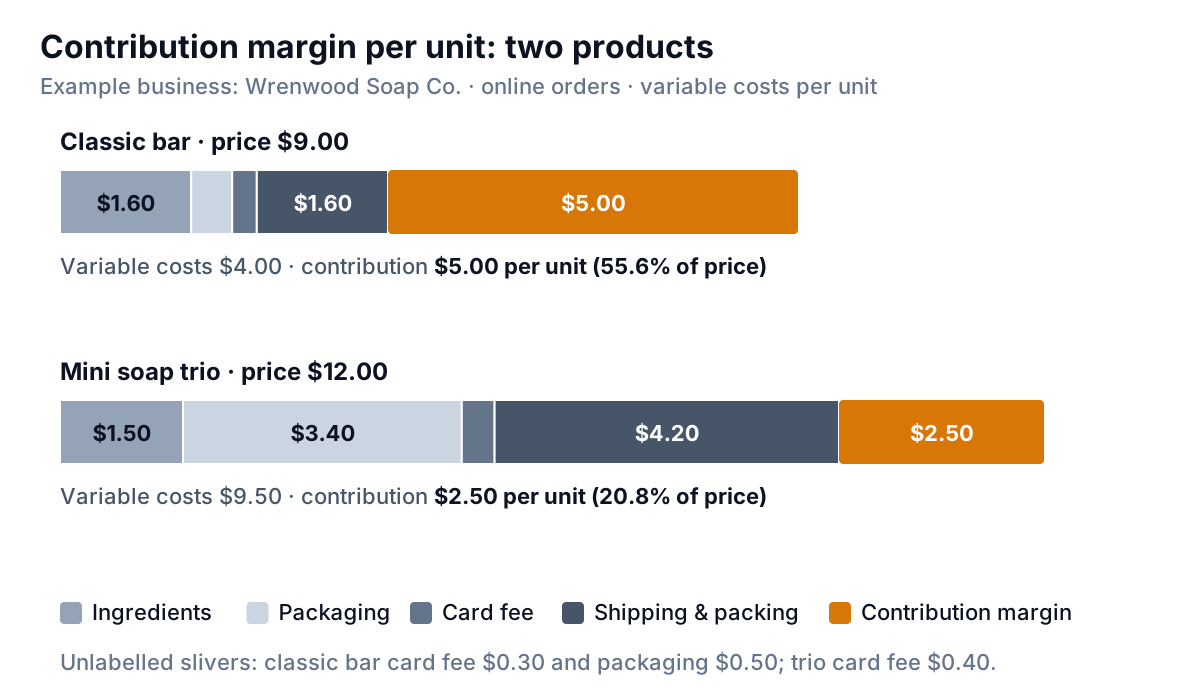
Contribution Margin: Per Unit, Total and Ratio, and Which Products to Push
Contribution margin per unit, in total and as a ratio, with a worked product table, rules for which products to push, fix or drop, and break-even in one step.
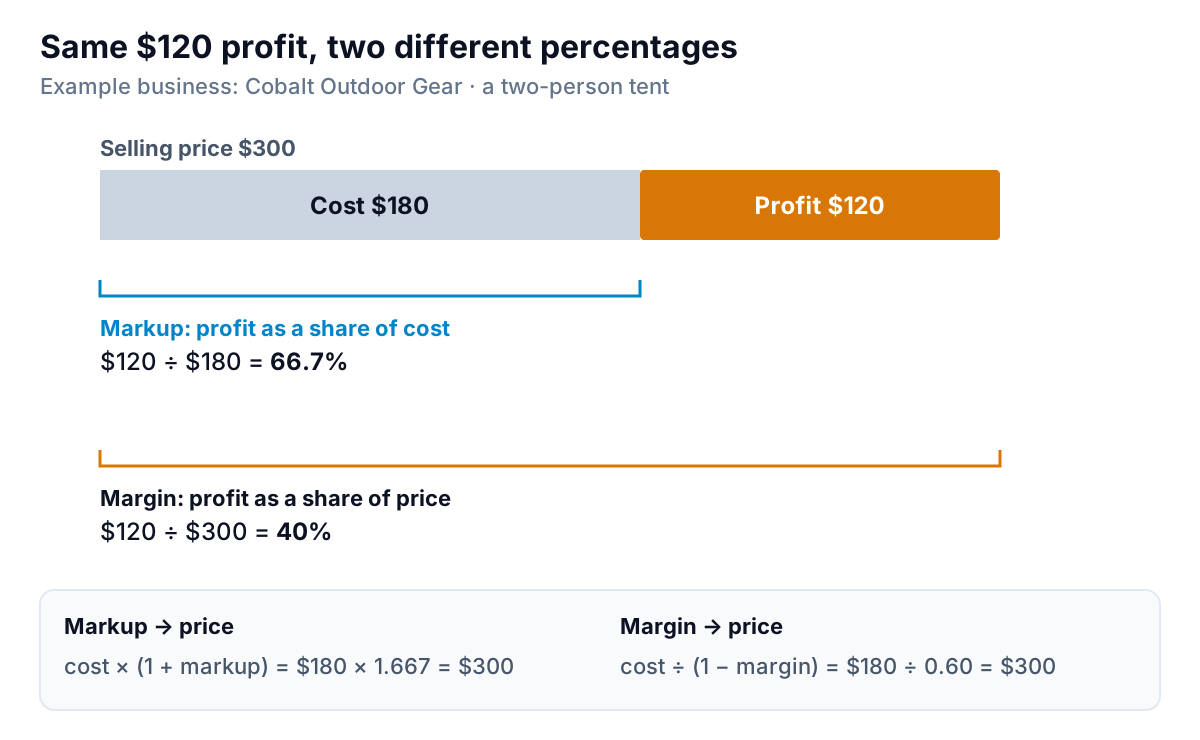
Margin vs Markup: The Difference, a Conversion Table and the Pricing Mistakes It Causes
Margin vs markup explained with one picture, a conversion table, spreadsheet formulas and five pricing mistakes the mix-up causes, each priced out in dollars.
What Is EBITDA? A Small-Business Guide With a Worked Example
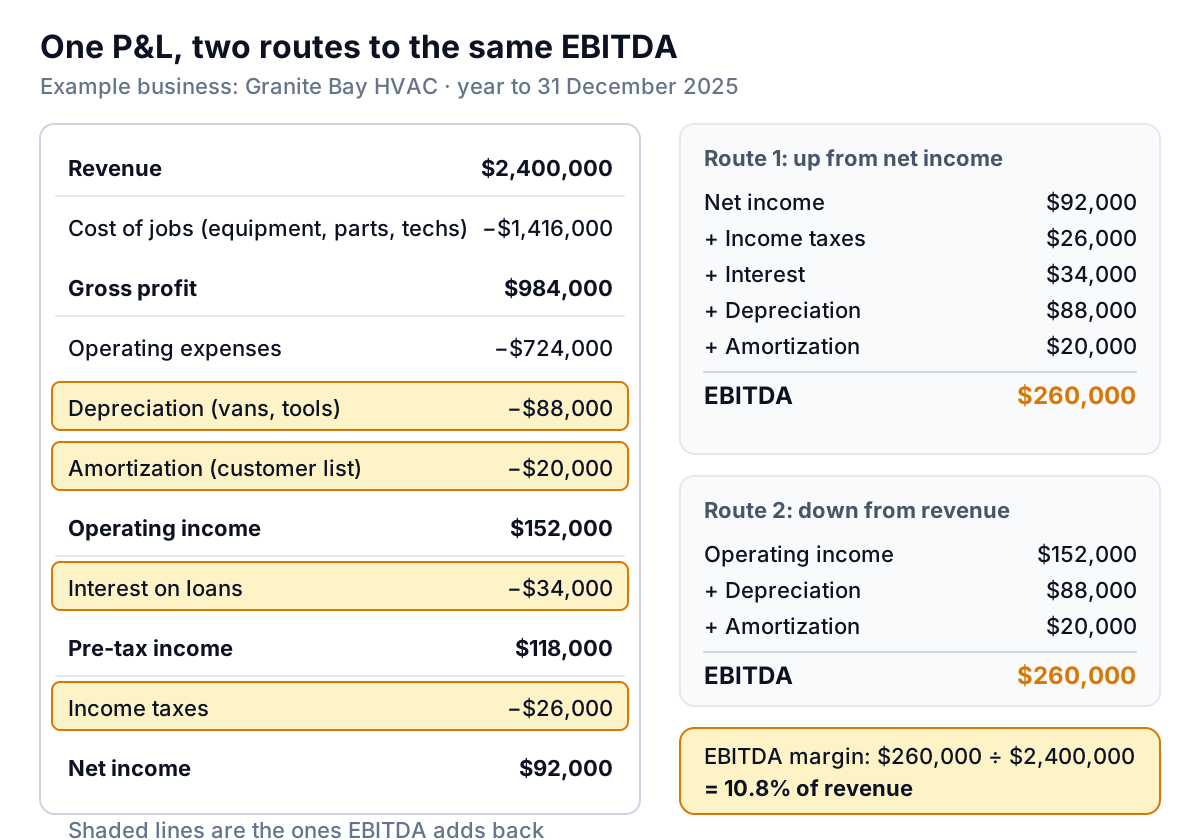
What EBITDA is, how to calculate it from your P&L, why lenders and buyers use it, how it differs from SDE and cash flow, with a worked small-business example.
EBITDA Margin: How to Calculate It, Compare It and Find What Moved It
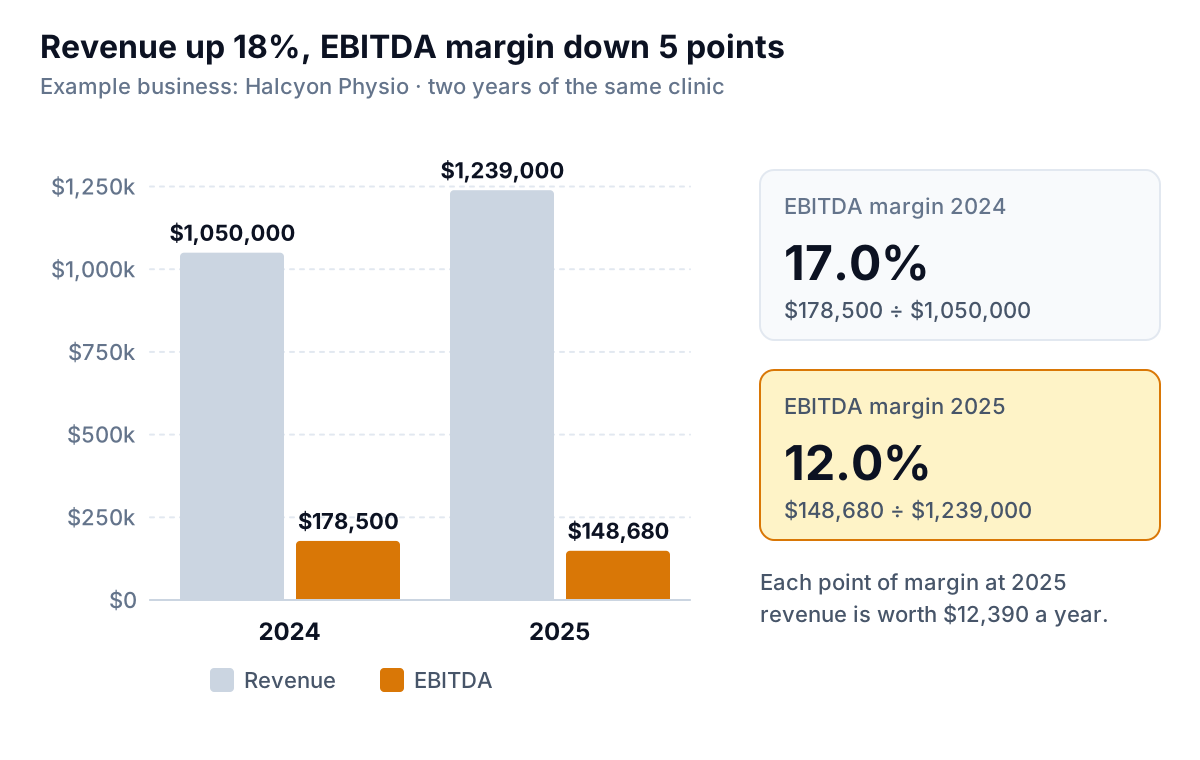
How to calculate EBITDA margin, find which cost moved it, compare it fairly, and when adjusted EBITDA is fair, with a worked physiotherapy clinic example.
Burn Rate: Gross vs Net, Runway, and What to Cut First
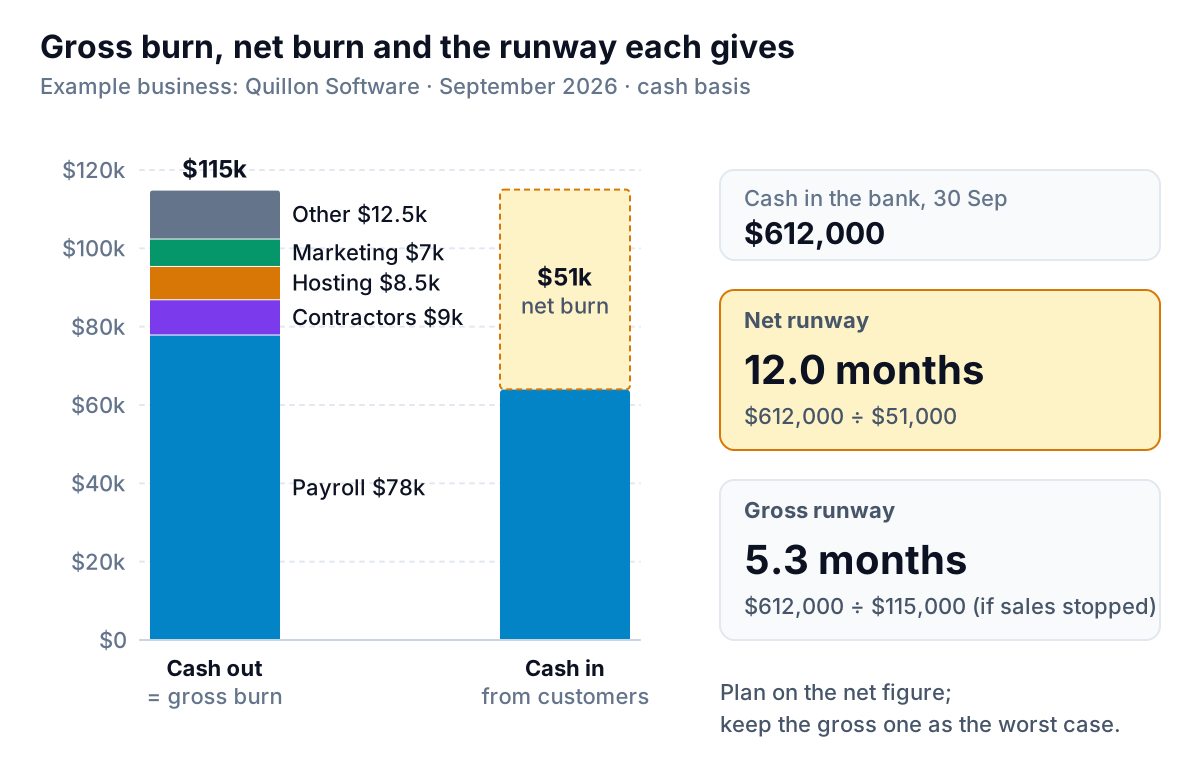
How to calculate gross and net burn rate from your bank balance, turn it into runway, test whether you're default alive, and decide what to cut first.
Run Rate: How to Calculate It, When It Misleads, and Run Rate vs ARR
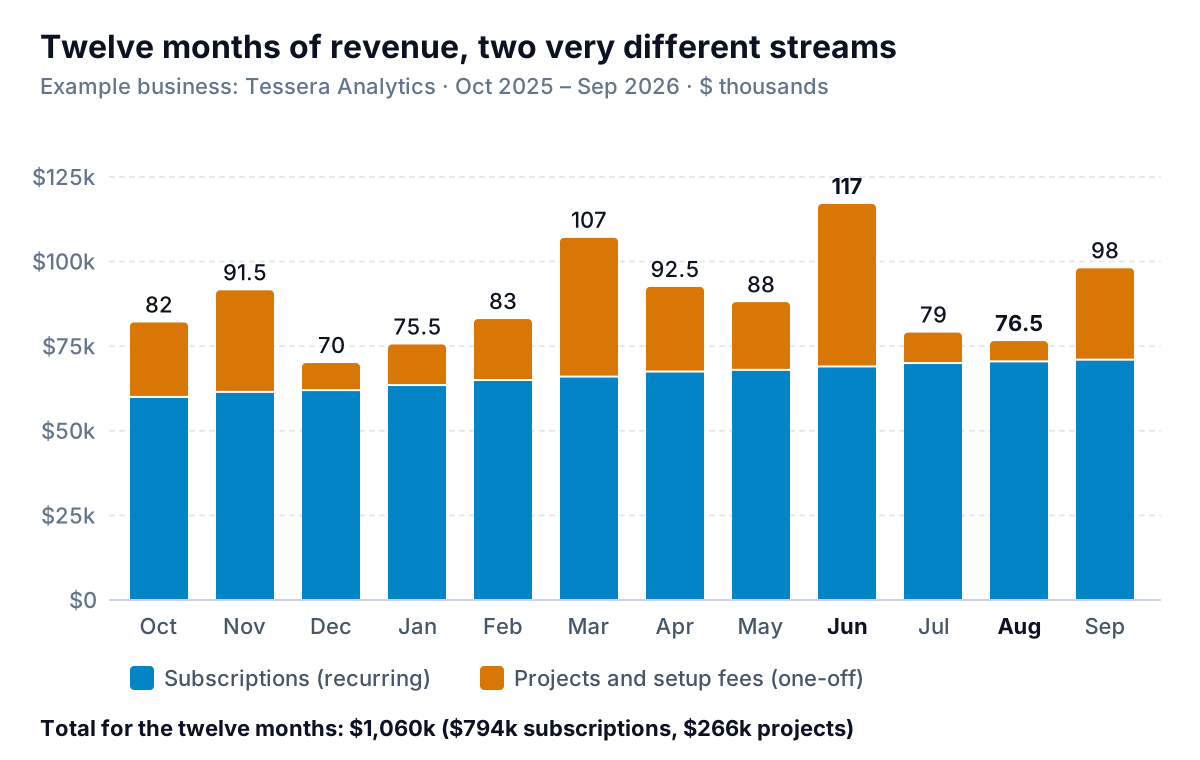
How to calculate a revenue run rate, why one-off deals and seasonality distort it, and when to use ARR or trailing twelve months, with a worked example.
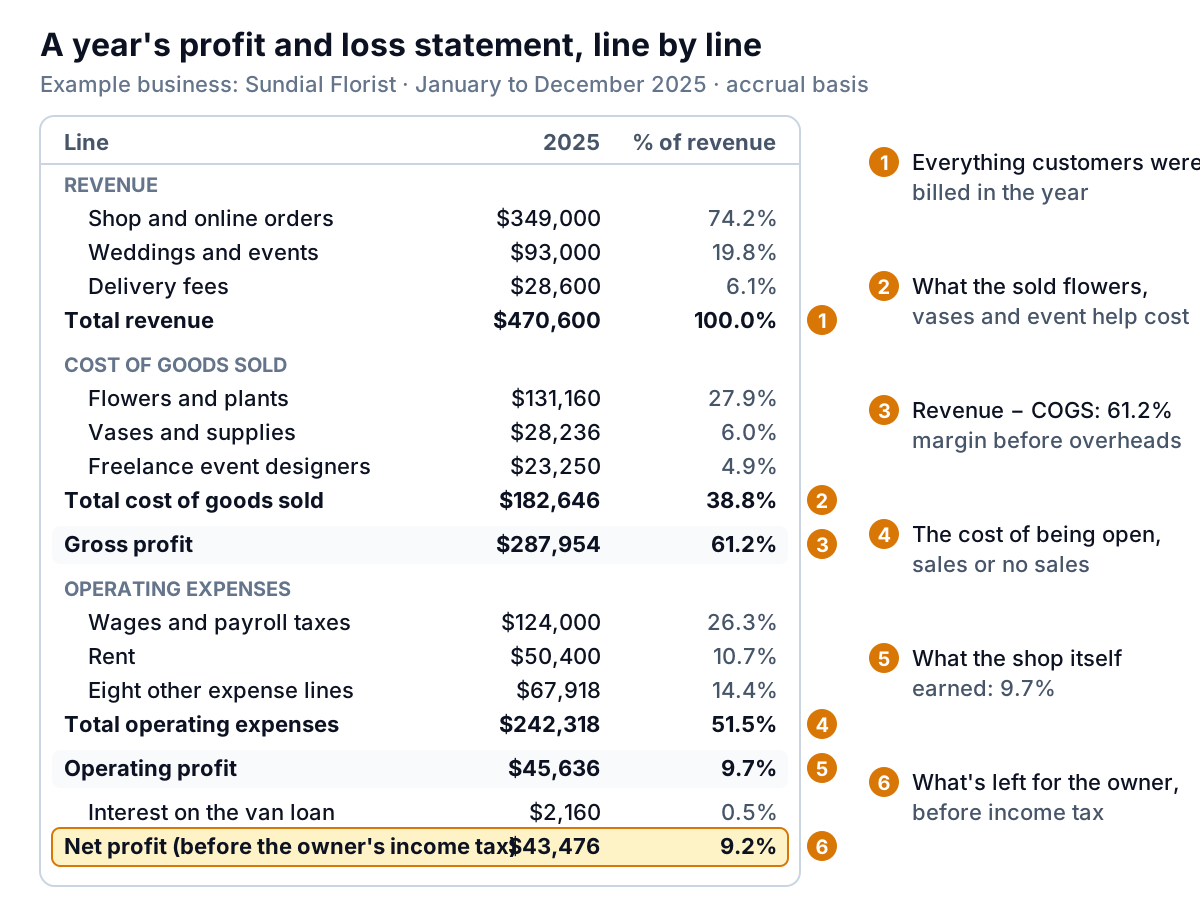
Profit and Loss Statement: How to Read One, Line by Line
How to read a profit and loss statement line by line, with a florist's year as the example: monthly vs annual views, five key ratios and the common mistakes.
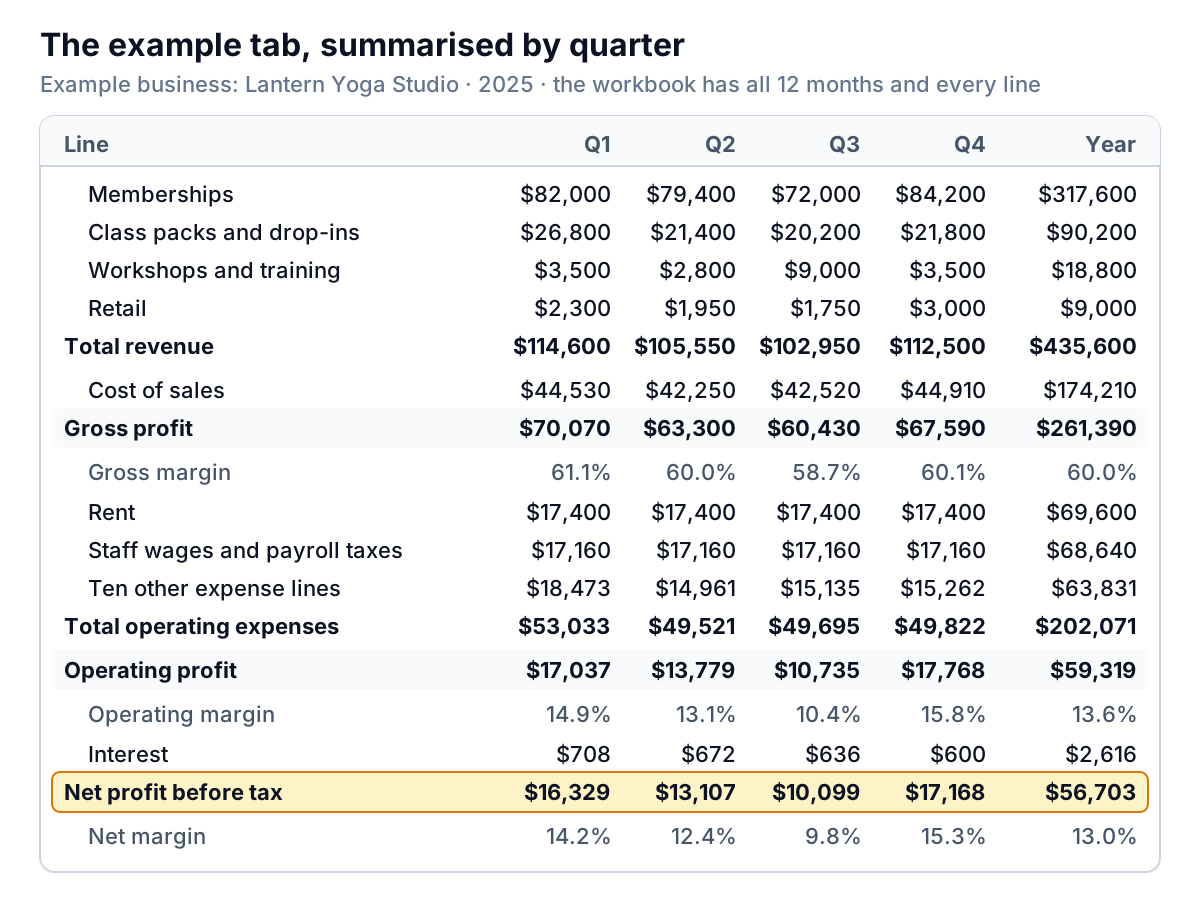
Profit and Loss Statement Template: 12 Months with % of Revenue (Free .xlsx)
A free profit and loss statement template: 12 monthly columns, year totals, each line as a % of revenue and built-in checks, with a filled-in example.
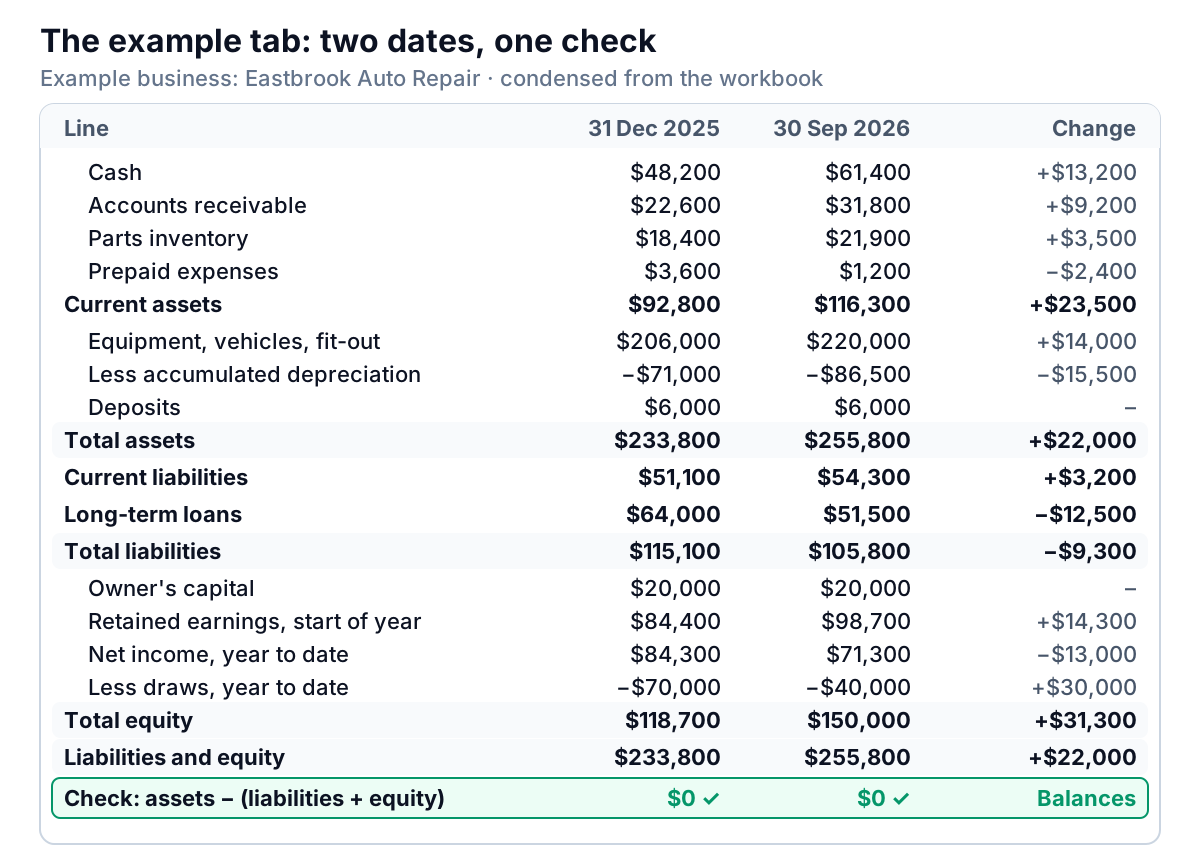
Balance Sheet Template: Two Dates, a Check Cell and Key Ratios (Free .xlsx)
A free balance sheet template that compares two dates and checks itself: a $0 check cell, a retained earnings test, key ratios and a worked example.
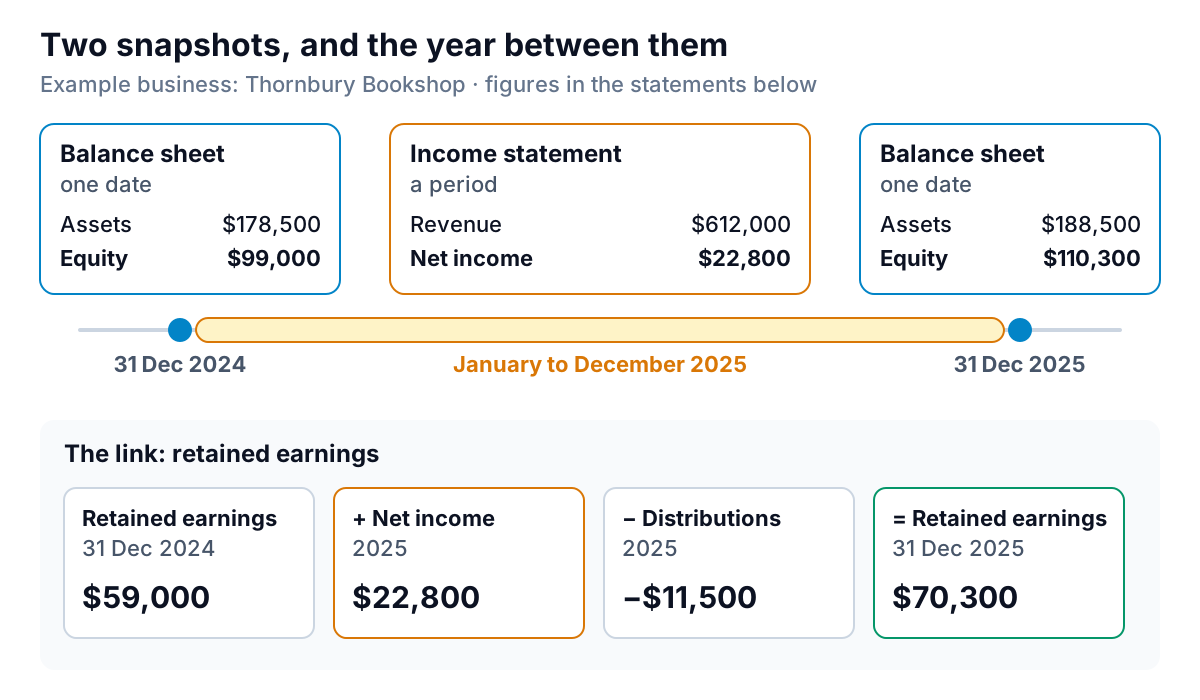
Balance Sheet vs Income Statement: One Bookshop, Shown Both Ways
Balance sheet vs income statement, explained with one bookshop's books: what each shows, how retained earnings link them, and why profit isn't cash.
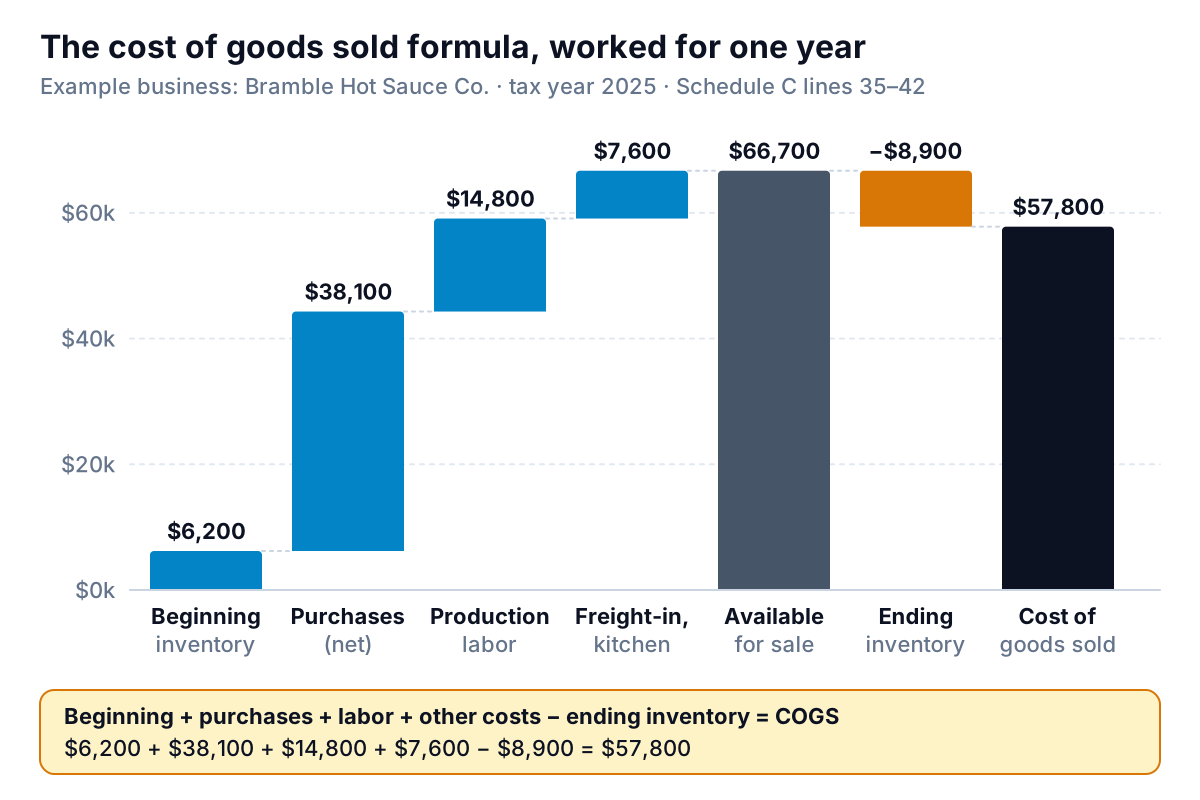
The Cost of Goods Sold Formula, Worked Through One Year at a Small Maker
The cost of goods sold formula with a worked example from a small hot sauce maker: what goes in, what stays out, how to count inventory, and the IRS rules.
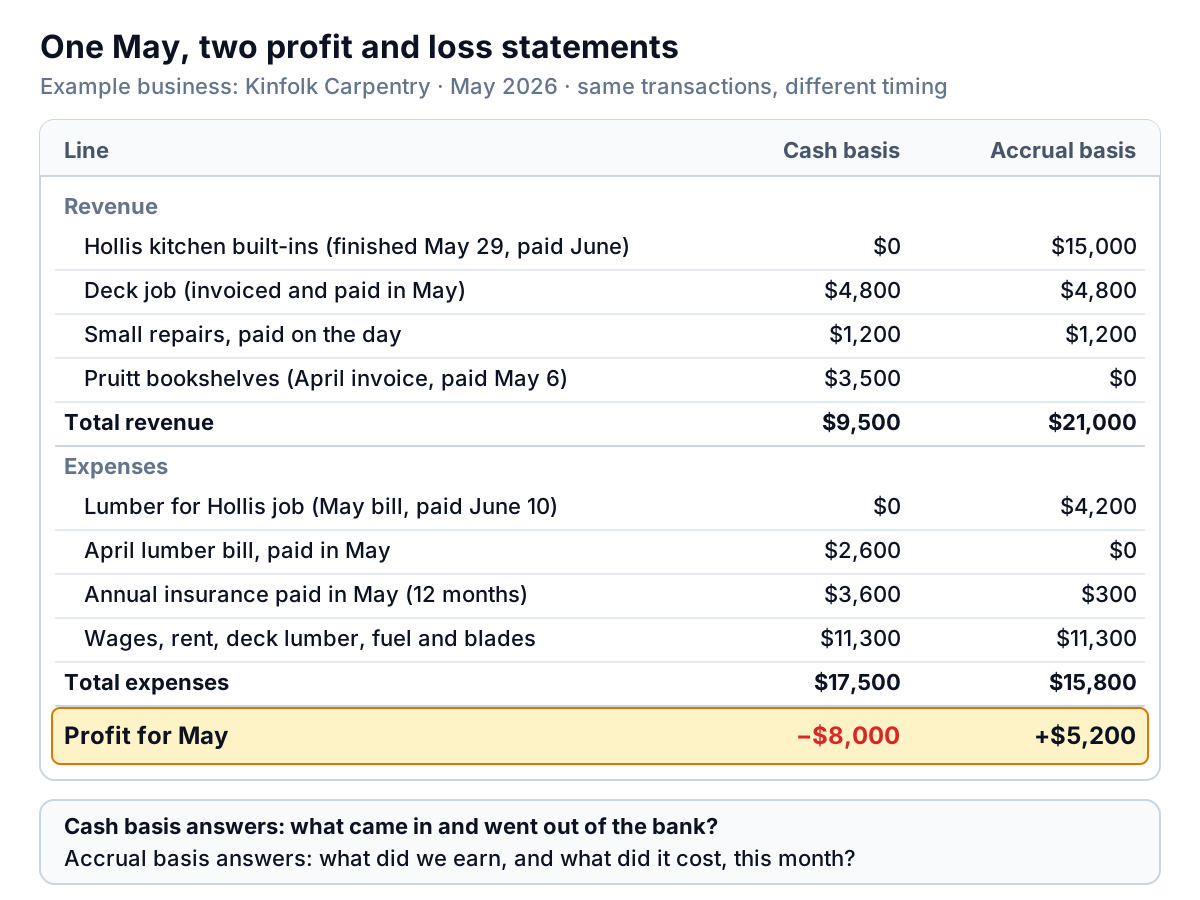
Cash vs Accrual Accounting: One Month at a Carpentry Shop, Done Both Ways
Cash vs accrual accounting shown with one month of a carpentry shop's books: why a $5,200 profit became an $8,000 loss, which to use, and what the IRS says.
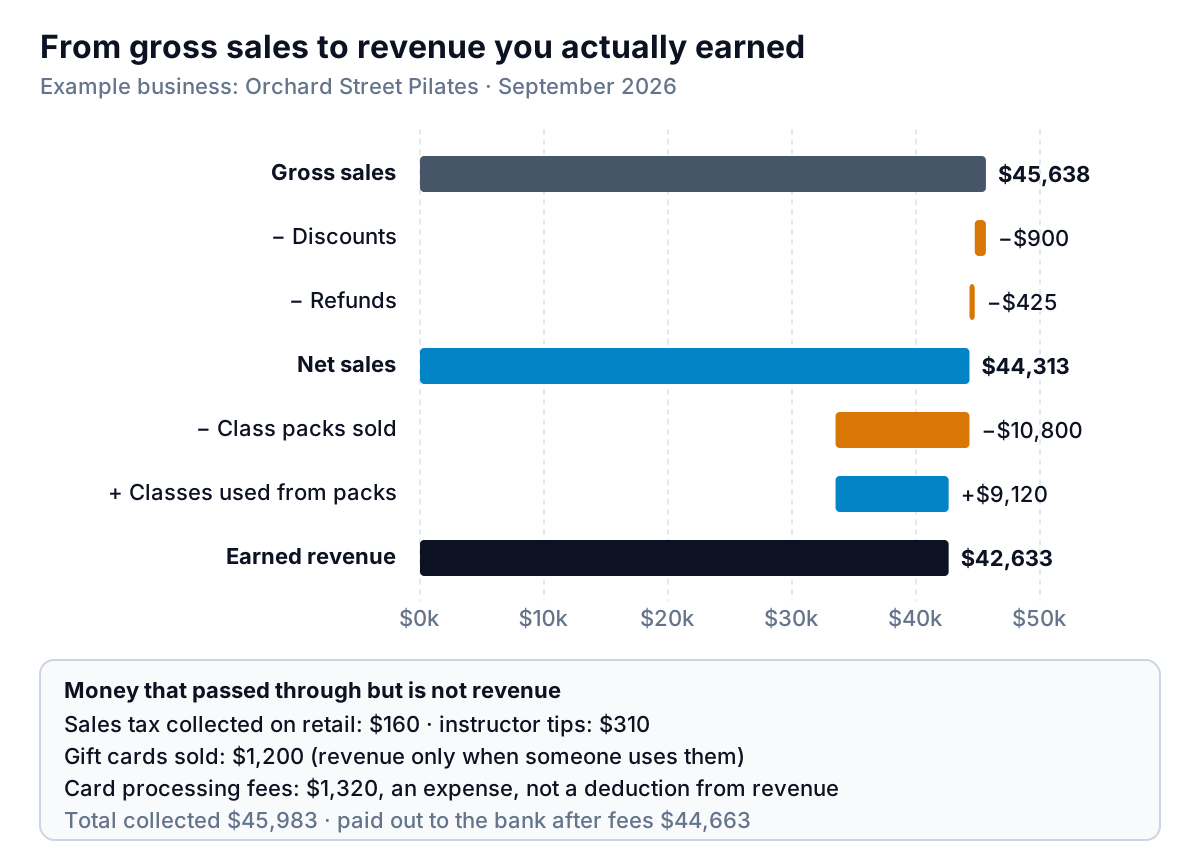
How to Calculate Revenue: Gross, Net and Earned, With One Studio's Month
How to calculate revenue step by step with a pilates studio's month: gross vs net, what isn't revenue, when prepaid packs count, and revenue by stream.
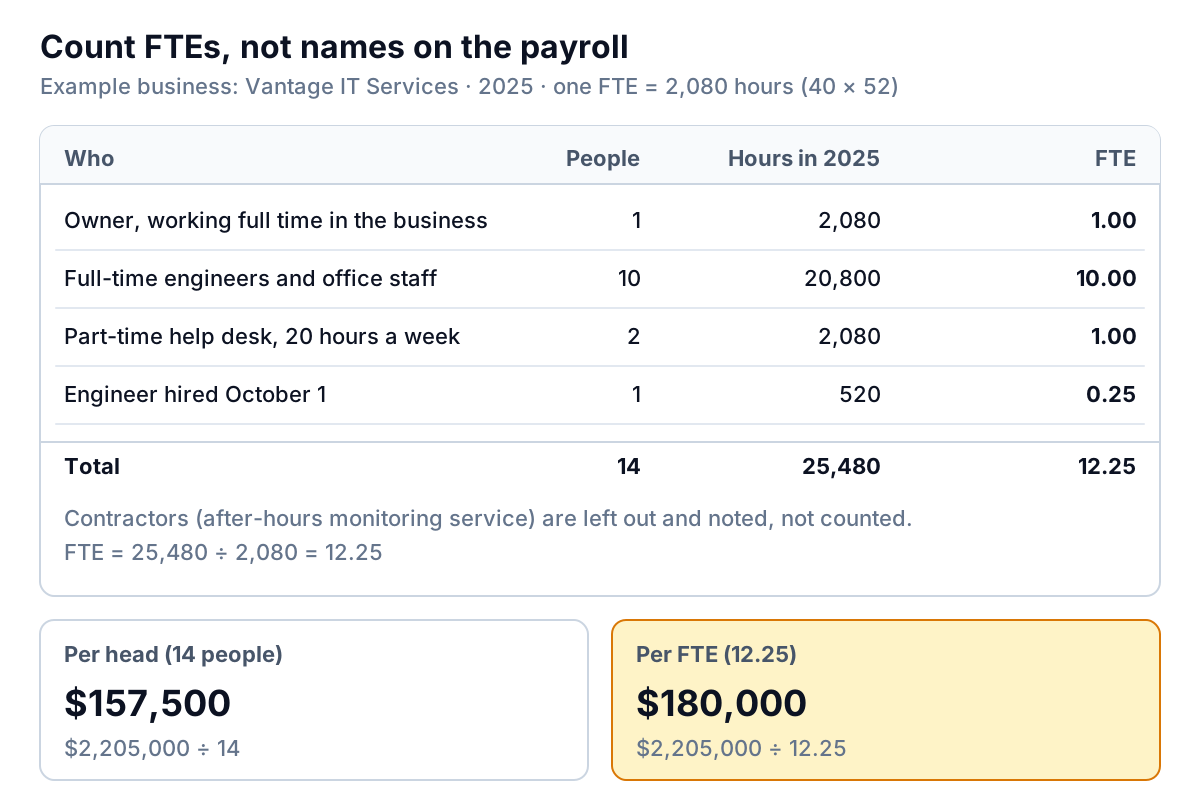
Revenue per Employee: How to Count It So It Means Something
Revenue per employee for a small firm: the formula, counting FTEs, why pass-through revenue misleads, how to compare with care, and what to do when it moves.
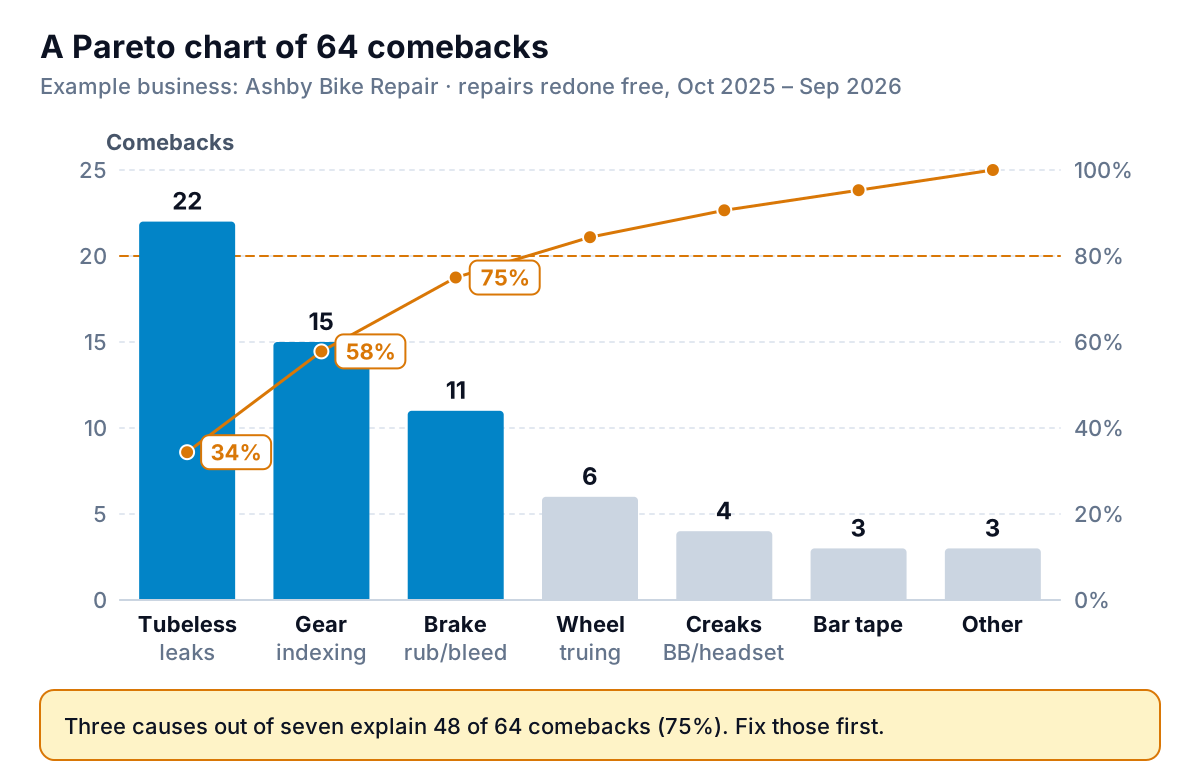
Pareto Analysis: Find the Few Causes Behind Most of Your Problems
How to do a Pareto analysis in a spreadsheet: rank causes, add a cumulative %, chart it, and weight by cost. Worked on a bike shop's comebacks and customers.
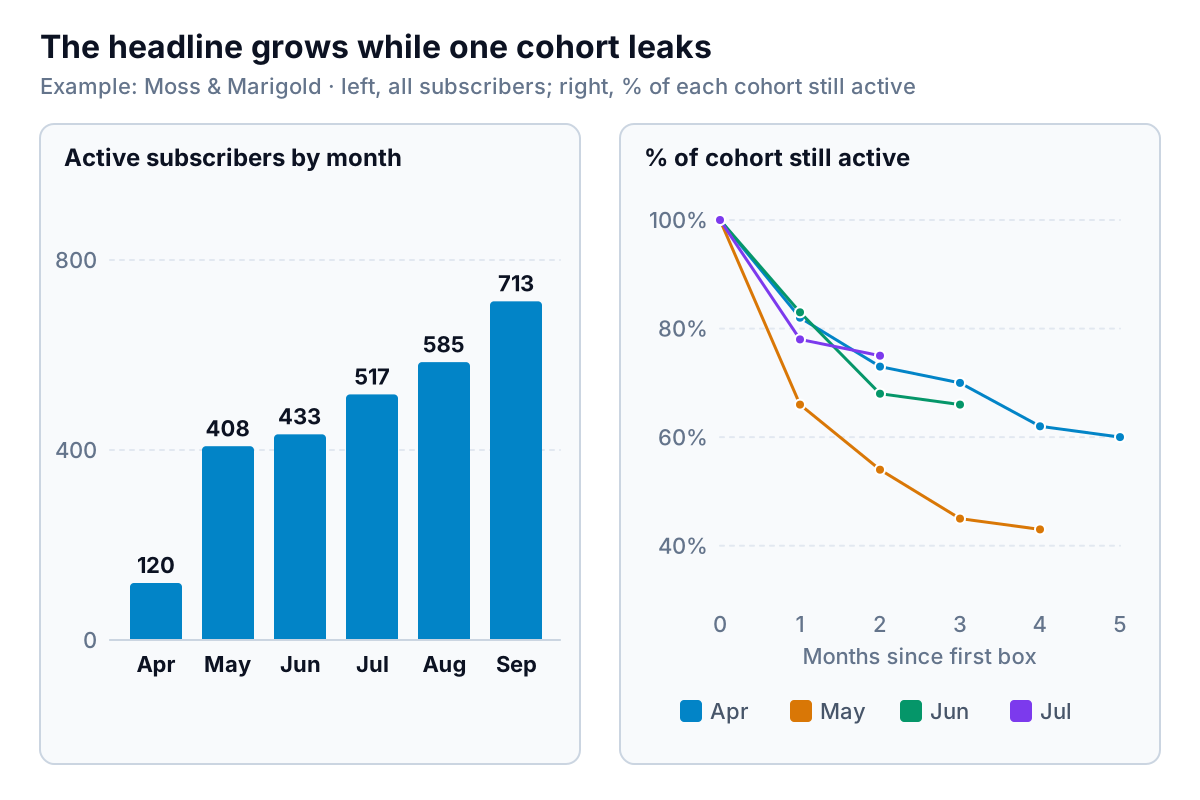
Cohort Analysis: Build a Retention Table From Your Order Export
A step-by-step cohort analysis from a plain order export: formulas, a pivot, a retention table, and how to read rows, columns and diagonals to spot churn.
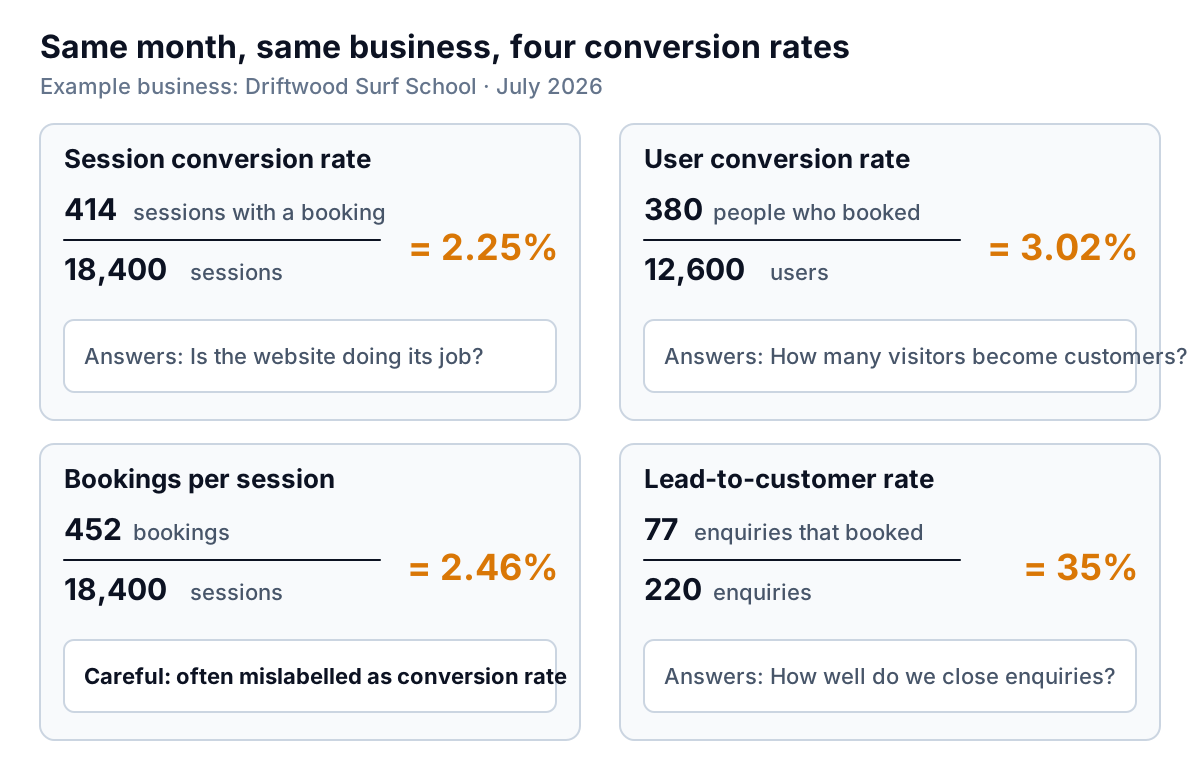
Conversion Rate Formula: Four Versions and Which One to Use
The conversion rate formula in four versions (sessions, users, orders, leads), worked on one month of real-looking numbers, and the traps that skew it.
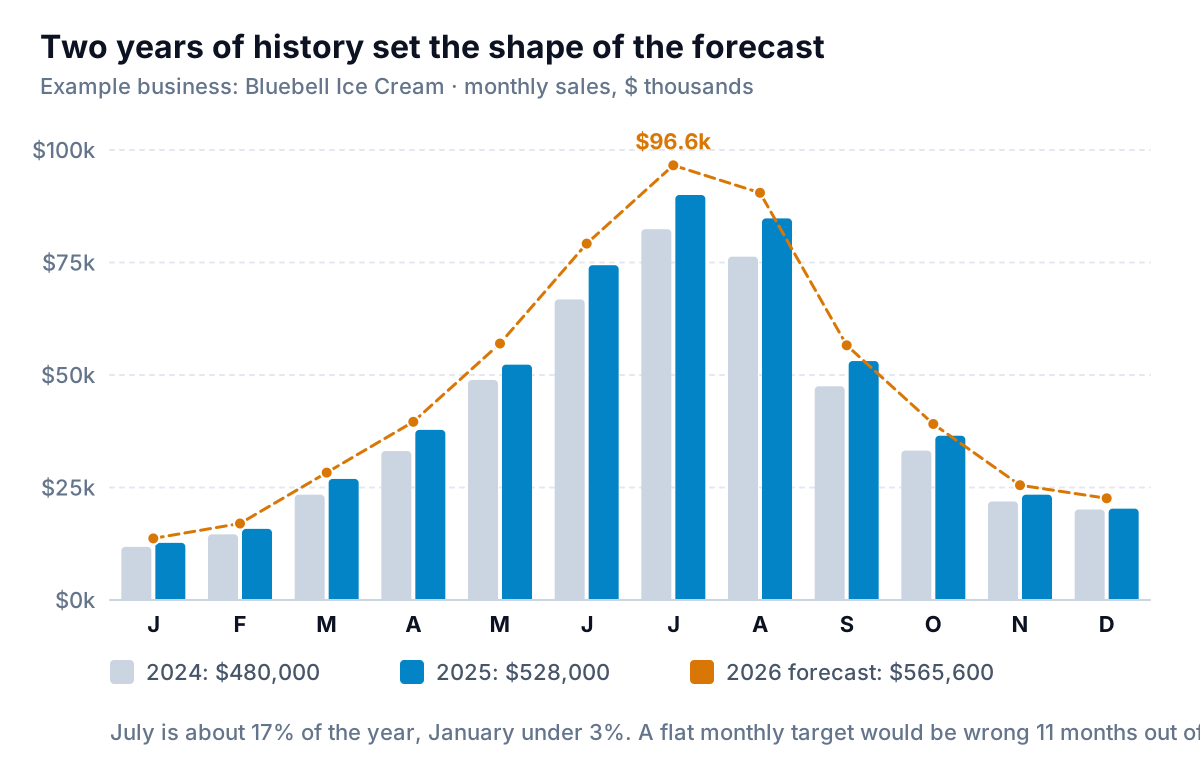
How to Create a Sales Forecast From Your Own Sales History
How to create a sales forecast in seven steps: a seasonal index from your history, price and volume drivers, a bottom-up check and monthly variance rules.
Billable Hours: Targets, Utilization, Realization and Collection
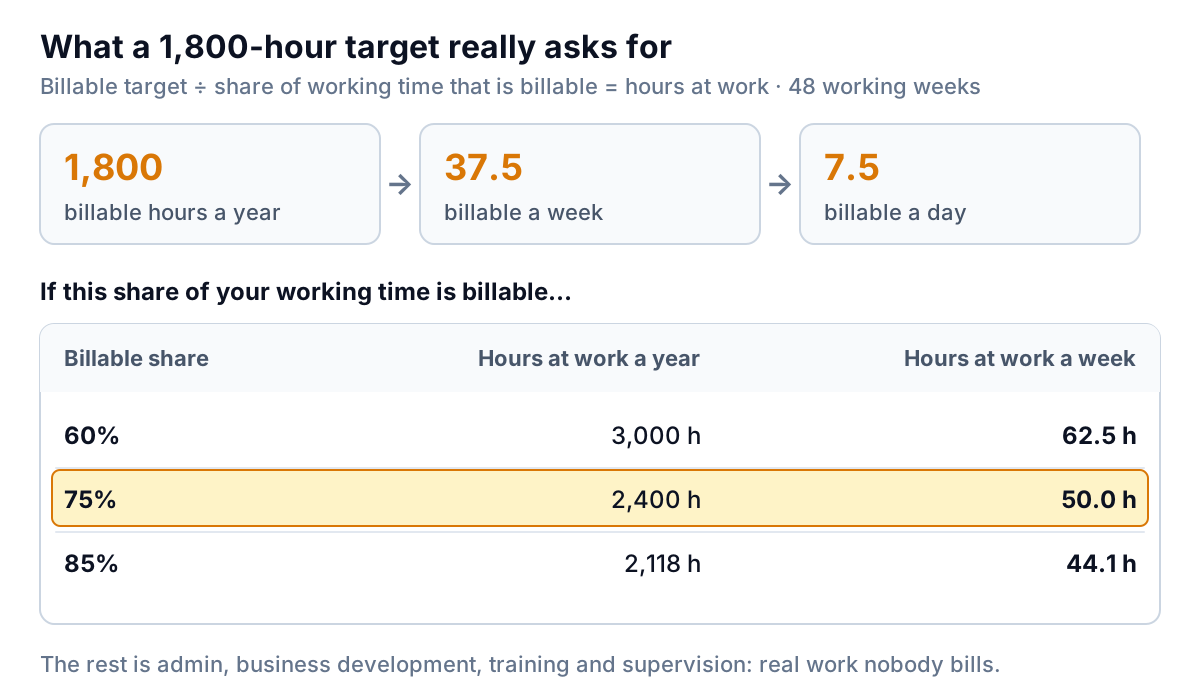
How billable hours work at a small law firm: what a target asks for, utilization vs realization vs collection, tracking time ethically, and fixing leaks.
Financial Statement Template: P&L, Balance Sheet and Cash Flow That Tie Out (Free .xlsx)
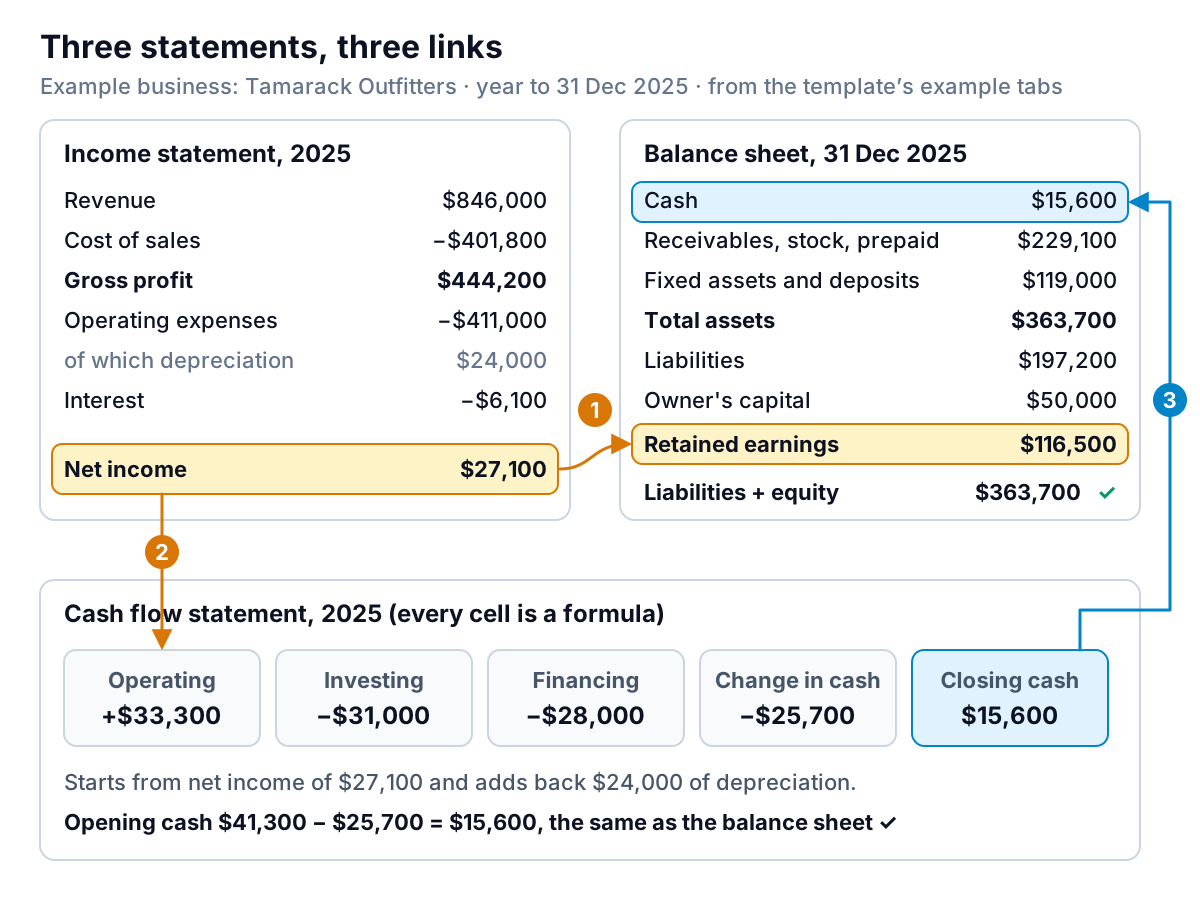
A free financial statement template: income statement, balance sheet and cash flow in one workbook, linked so they tie out, with check cells and an example.
Income Statement Example: Three Small Businesses, Read Line by Line
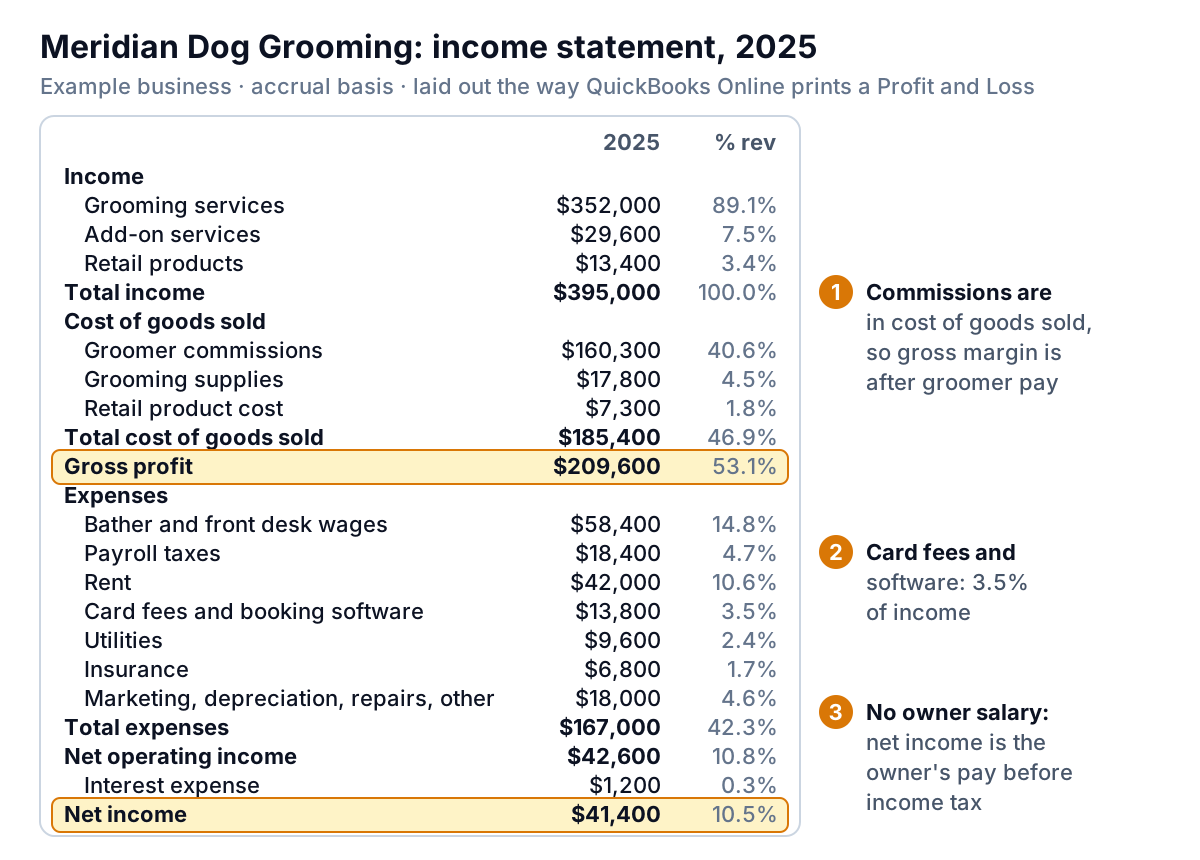
An income statement example for a dog grooming salon, read line by line, plus a single-step soap maker and a multi-step bike shop with tax, side by side.
Income Statement vs Profit and Loss: Same Report, and When the Difference Matters
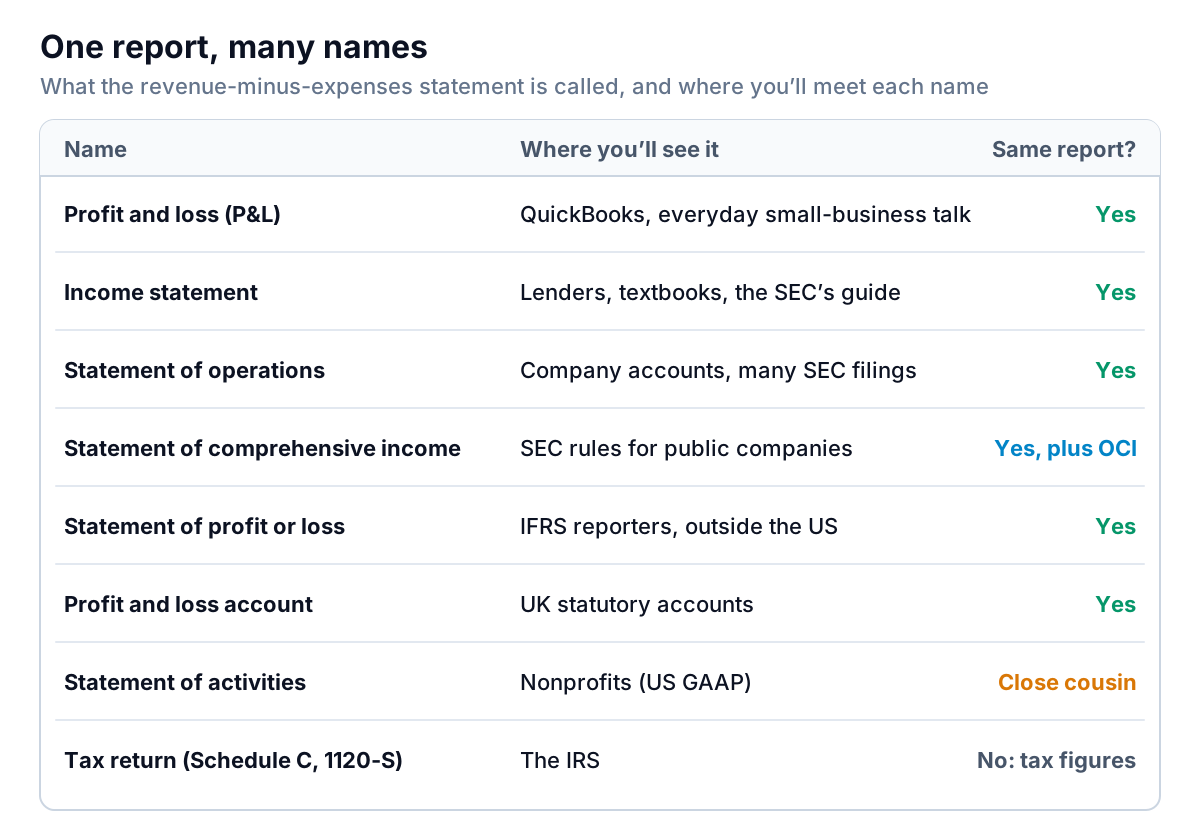
Income statement vs profit and loss: the same report under two names. The other names, the two that differ, and the details that change the bottom line.
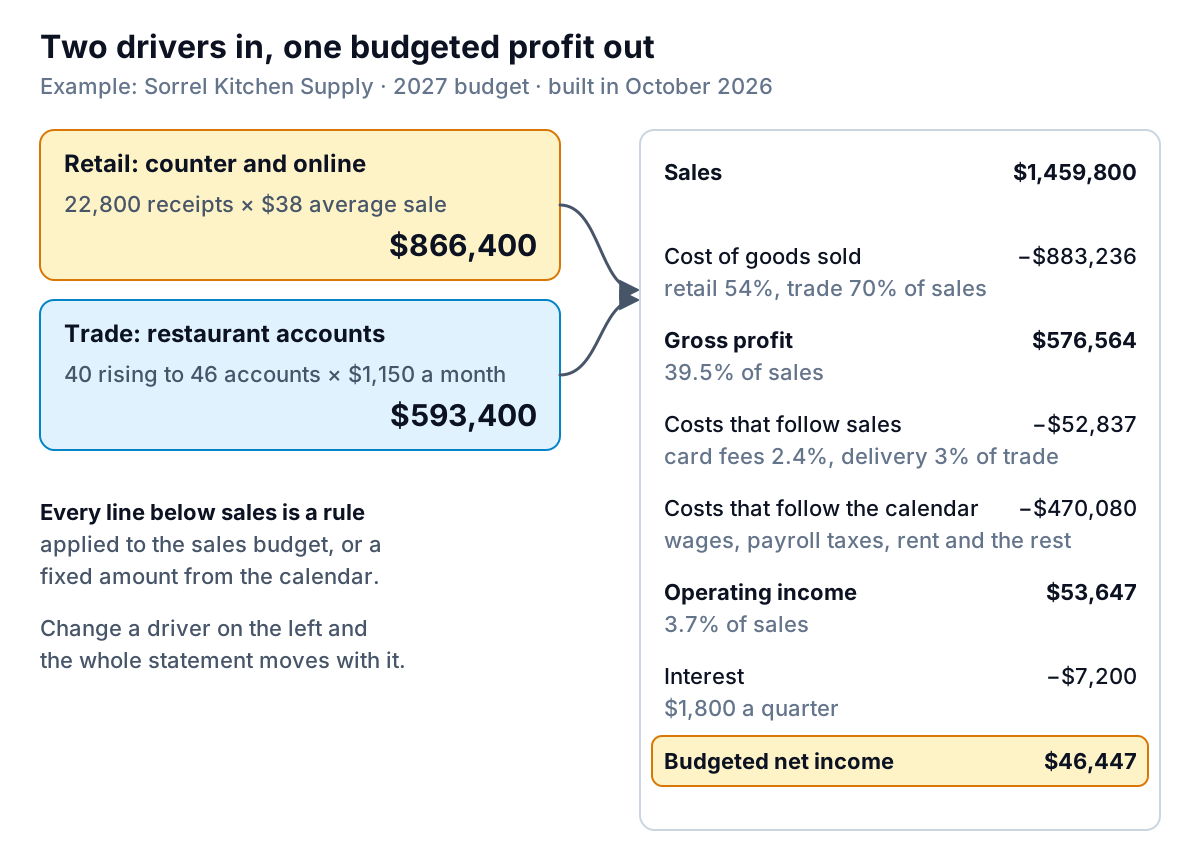
Budgeted Income Statement: Build Next Year's P&L From a Sales Budget
How to build a budgeted income statement from a sales budget, with a kitchen supply shop's 2027 plan by quarter, scenario tests and a hiring decision.
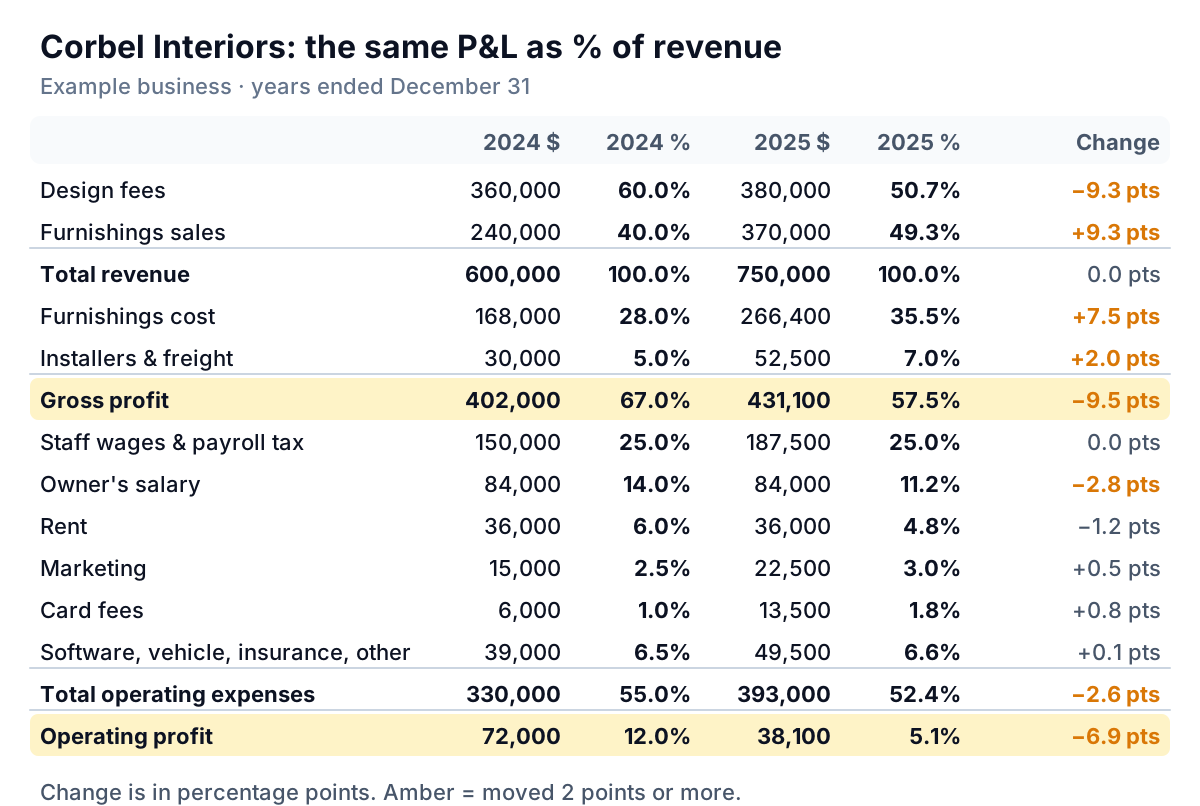
Common Size Income Statement: How to Build It and Read It, with a Worked Example
Build a common size income statement step by step from a design studio's books, spot mix shifts, compare with peers, and read the balance sheet version too.
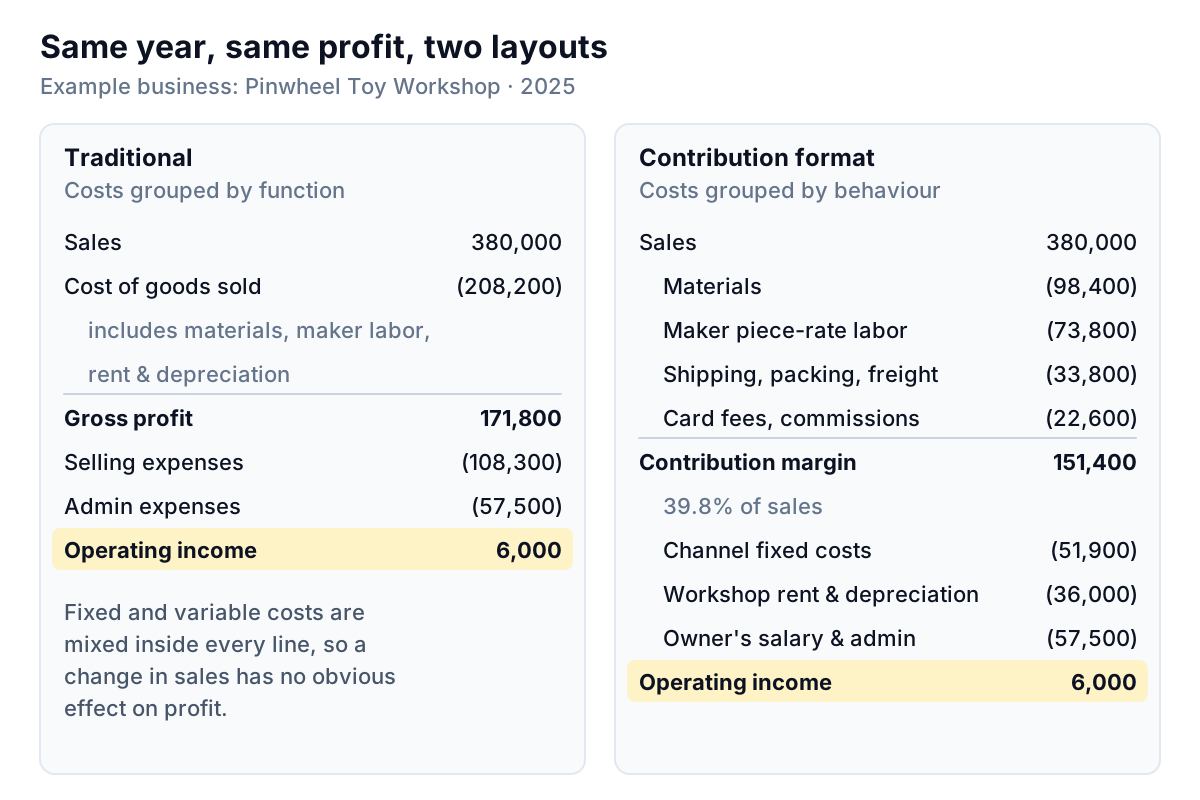
Contribution Margin Income Statement: Layout, Cost Sorting and the Decisions It Answers
How to build a contribution margin income statement: sort costs into variable and fixed, add segment margin by channel, and use it for pricing and orders.
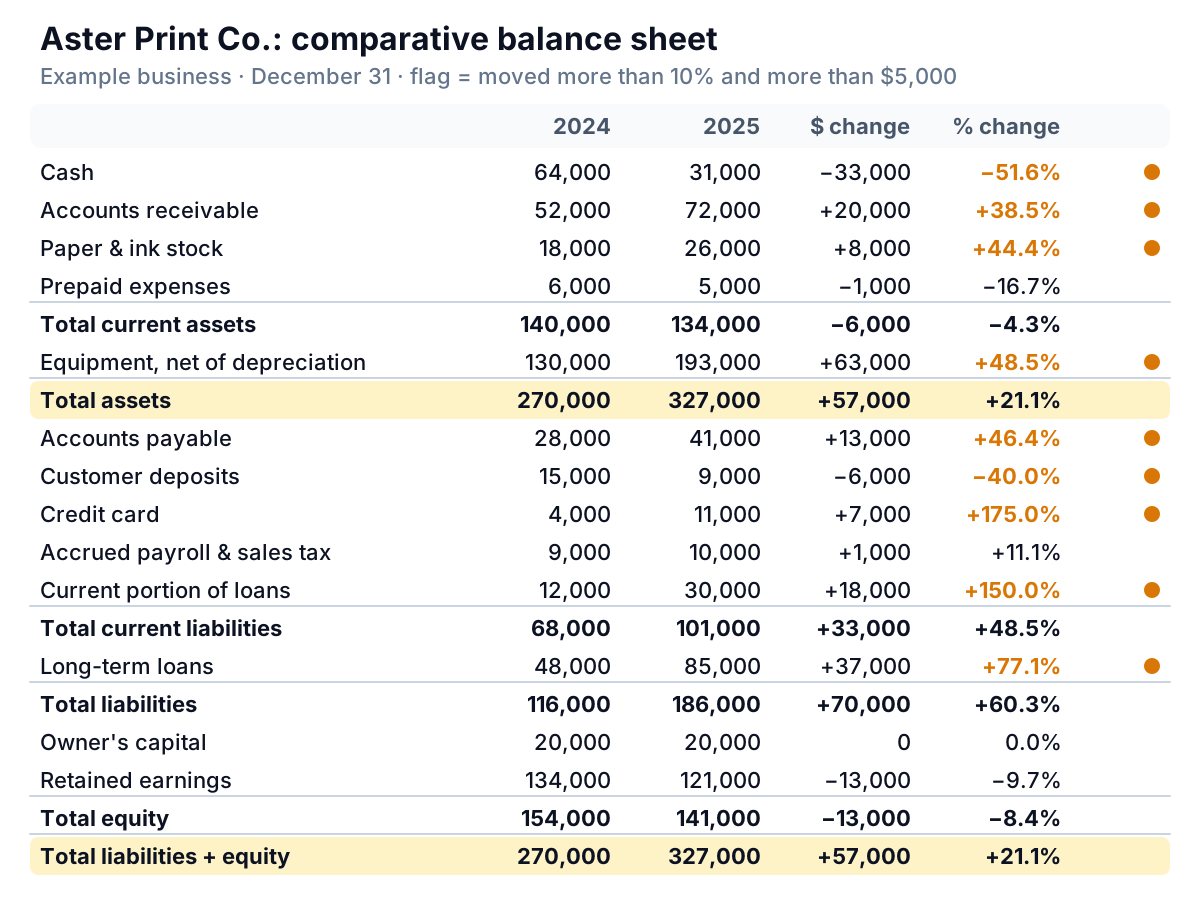
Comparative Balance Sheet: How to Build One and Read What Changed
Build a comparative balance sheet with dollar and percent change, flag the lines that need a reason, and turn the changes into sources and uses of cash.
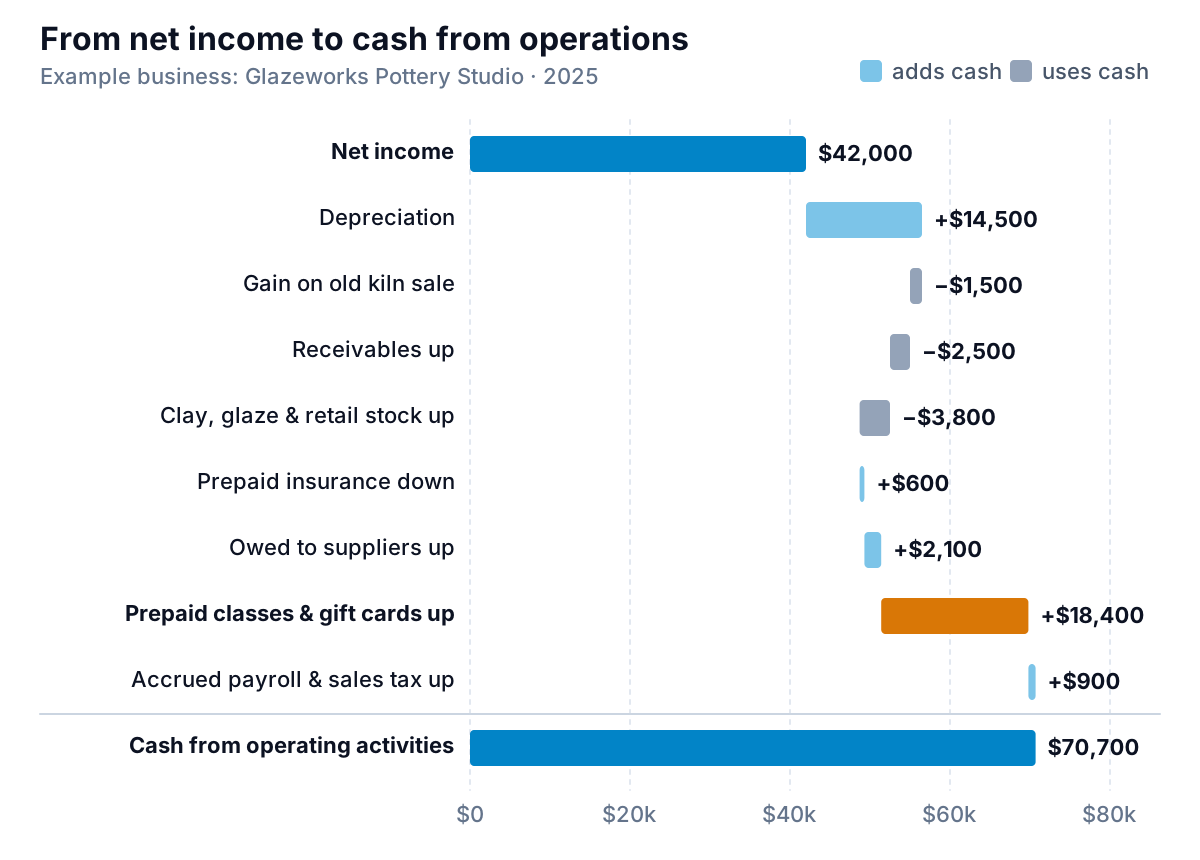
Cash Flow From Operating Activities: The Indirect Method, Line by Line
Work out cash flow from operating activities with the indirect method: add-backs, working capital sign rules, what goes elsewhere, and when it flatters you.
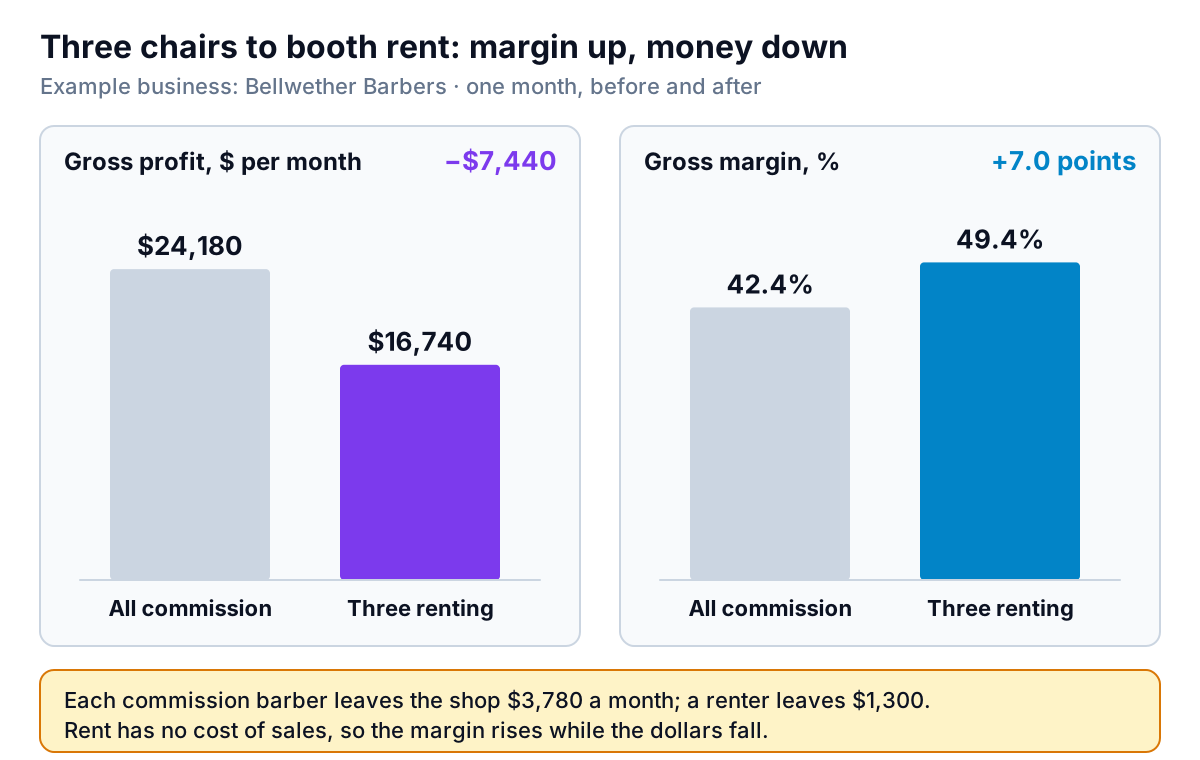
Gross Margin vs Gross Profit: When the Percentage and the Dollars Disagree
Gross margin vs gross profit in a worked barbershop example: when the percentage rises as dollars fall, when price rises hide, and which to use for each call.
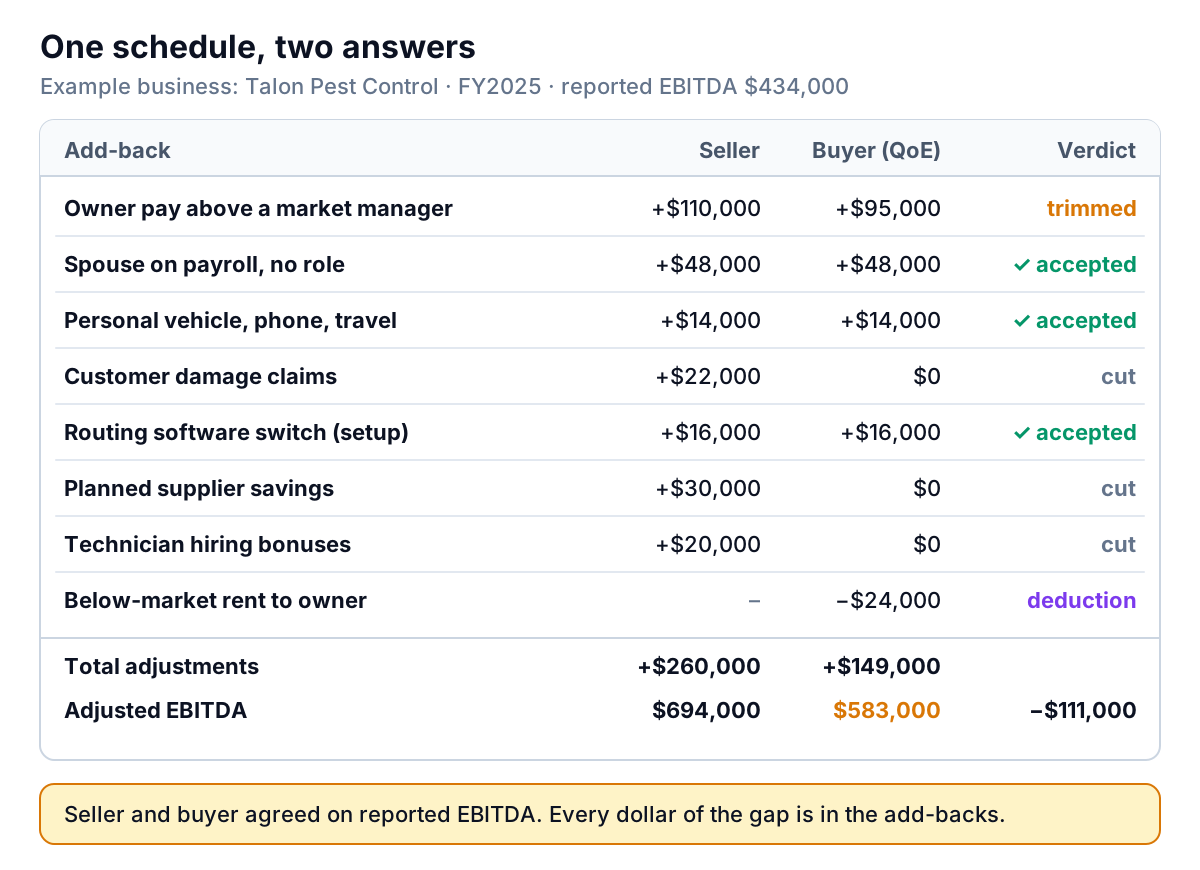
Adjusted EBITDA: The Add-Backs Buyers Accept and the Ones They Cut
Adjusted EBITDA line by line: which add-backs buyers and lenders accept, which they cut, what a quality of earnings review checks, and SEC non-GAAP limits.
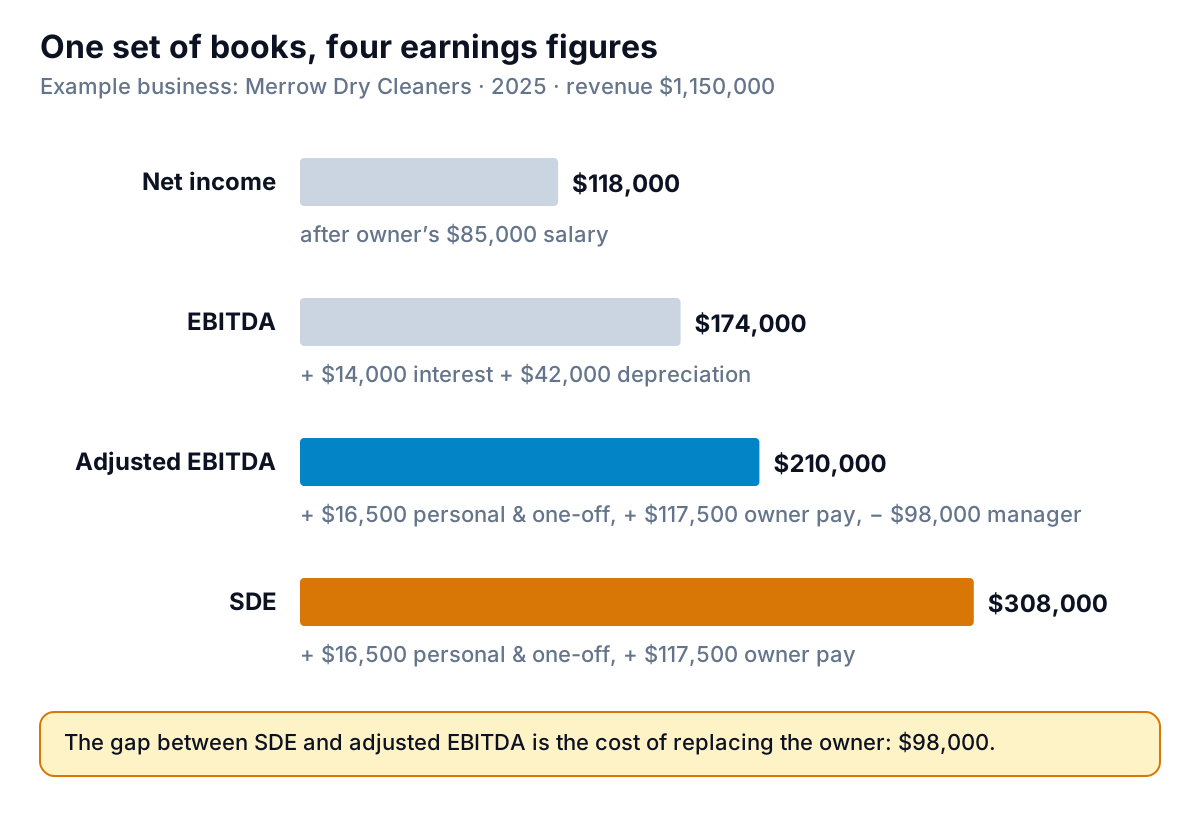
SDE vs EBITDA: Owner's Pay, Perks and Which Buyers Use Which
SDE vs EBITDA from one set of books: what counts as owner's pay and perks, which buyers use which number at which deal size, and mistakes that inflate SDE.
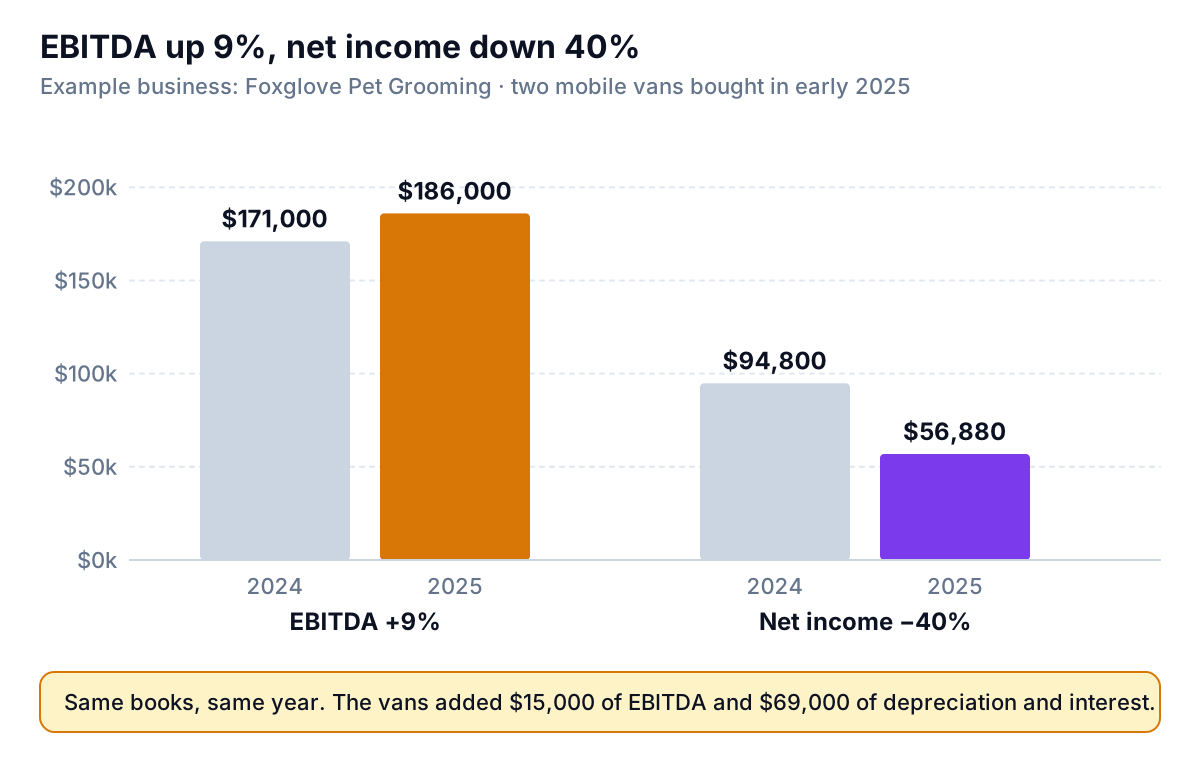
EBITDA vs Net Income (and Operating Income): Why They Move Apart
EBITDA vs net income with a worked walk between them, where operating income fits, and which one to use for loans, equipment and owner pay decisions.
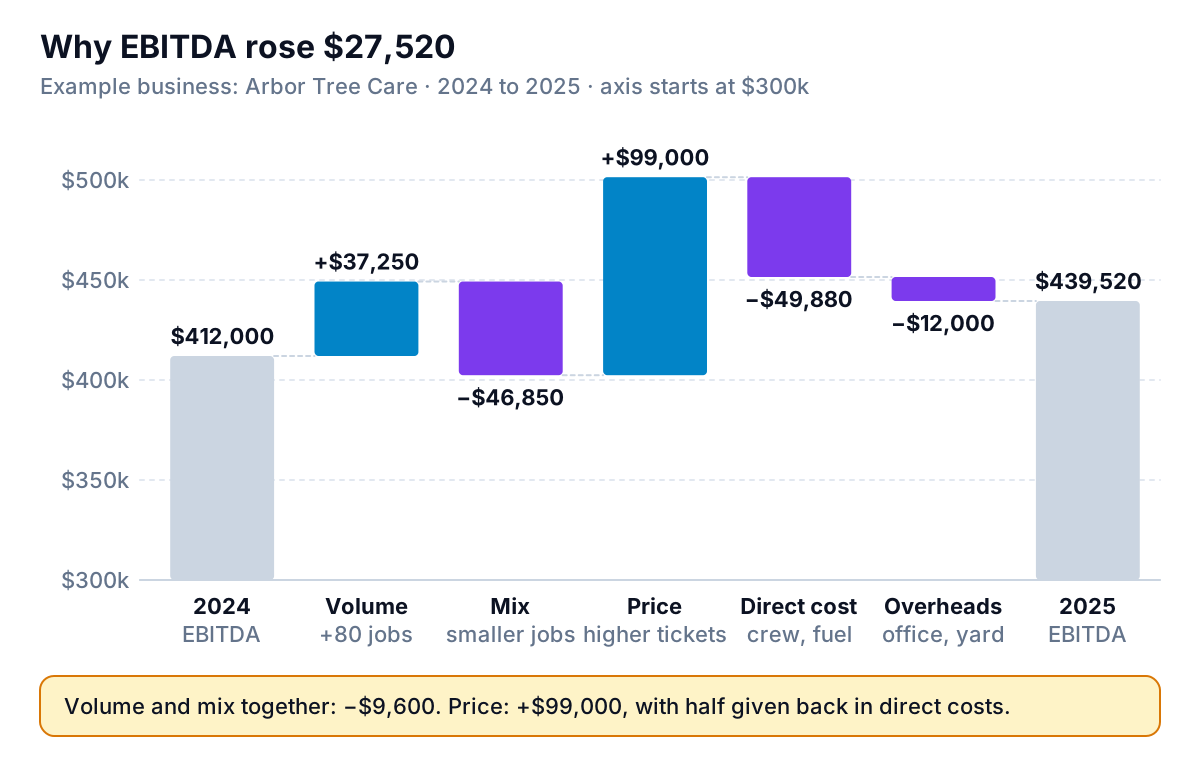
EBITDA Bridge: Split the Change Into Price, Volume, Mix and Costs
Build a year-on-year EBITDA bridge from jobs, prices and costs by service line, with a spreadsheet formula for each bar, the mix trap and how to chart it.
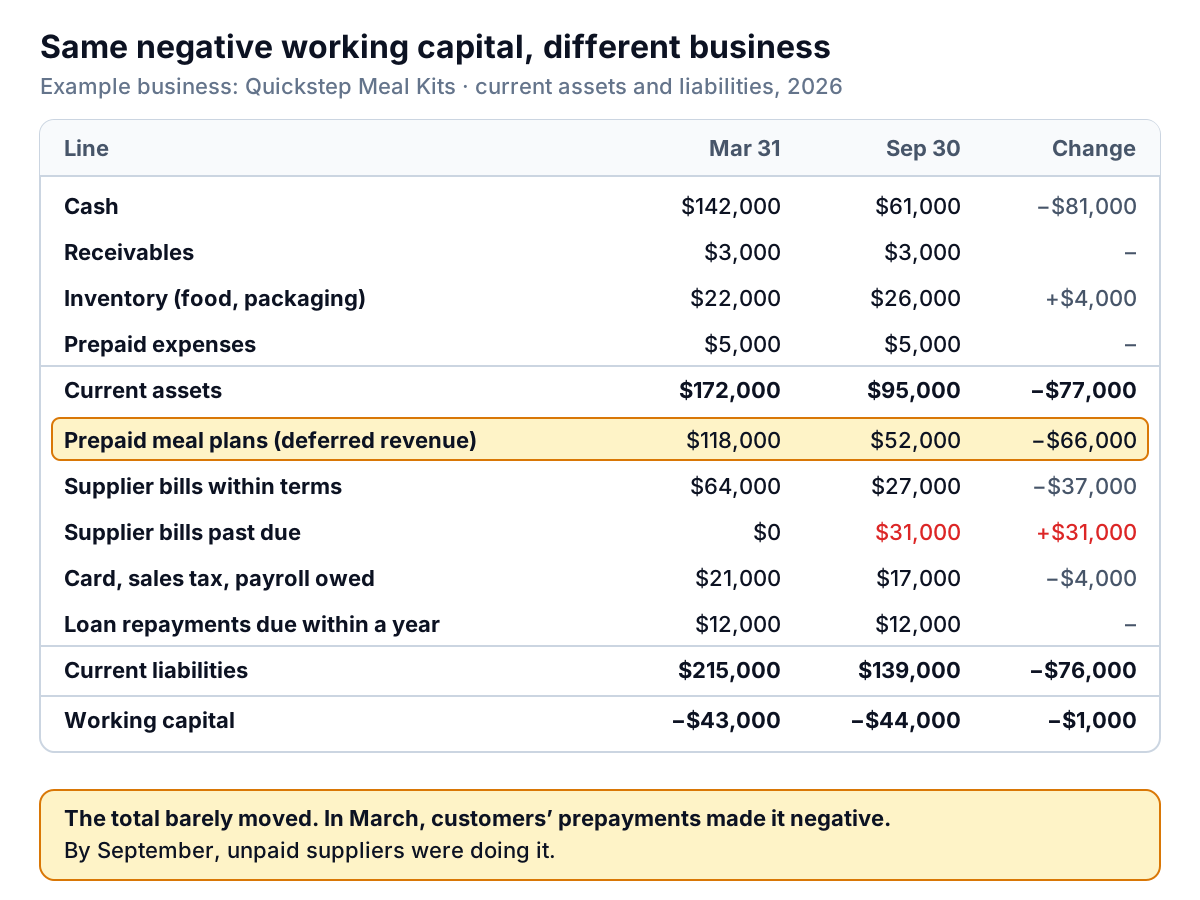
Negative Working Capital: When It's Healthy, When It's a Warning, and Four Tests to Tell
Negative working capital can mean customers fund your business or that bills are going unpaid. Four tests, a worked example and what to do when it turns.
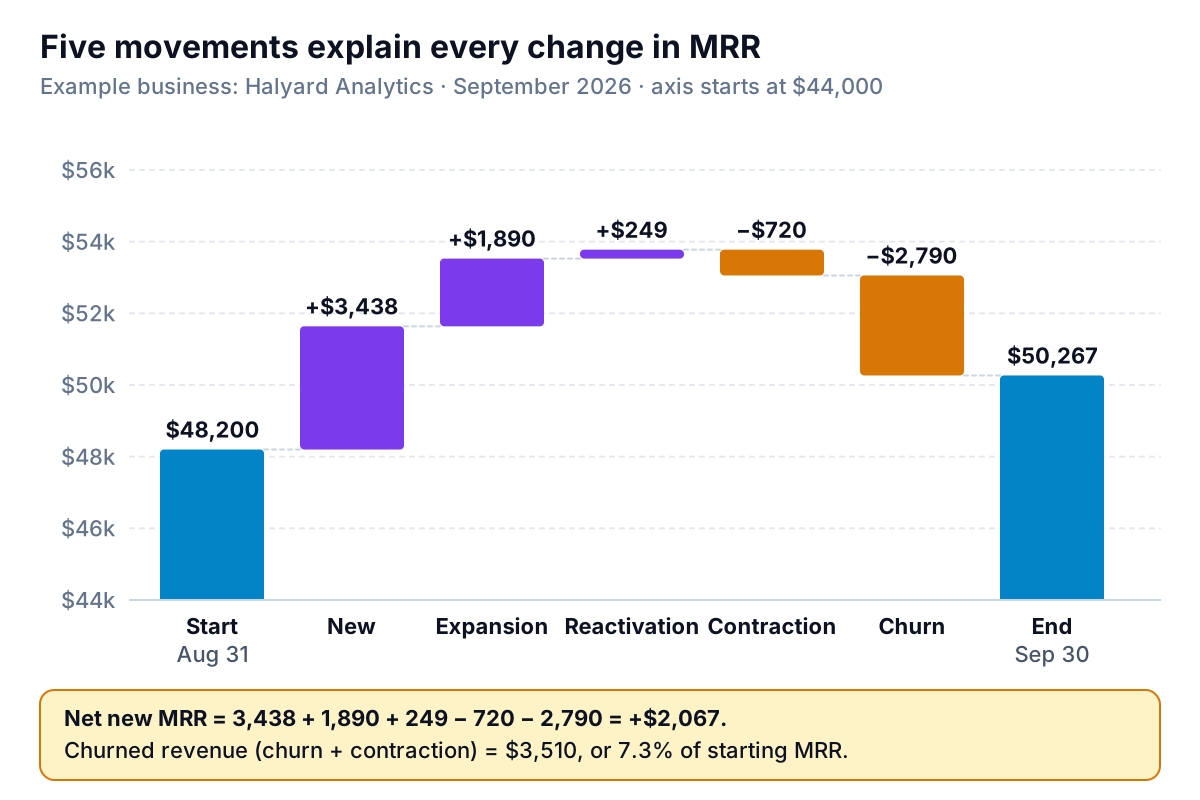
Monthly Recurring Revenue: The Formula, the Five Movements, and What to Leave Out
How to calculate monthly recurring revenue, split it into new, expansion, contraction and churn from a Stripe export, and what to leave out of MRR.
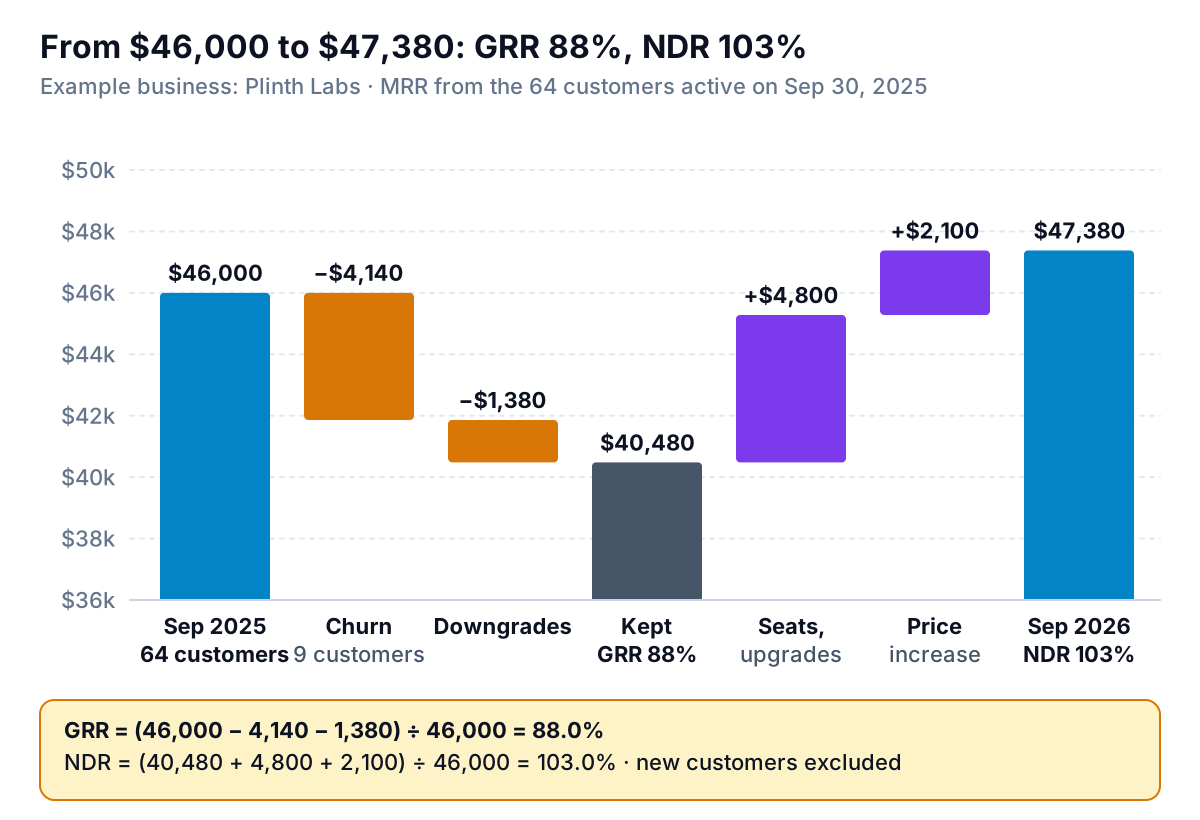
Net Dollar Retention: The Formula, NDR vs GRR, and What Good Looks Like
How to calculate net dollar retention and gross revenue retention on the right group of customers, the mistakes that inflate NDR, and sourced benchmarks.
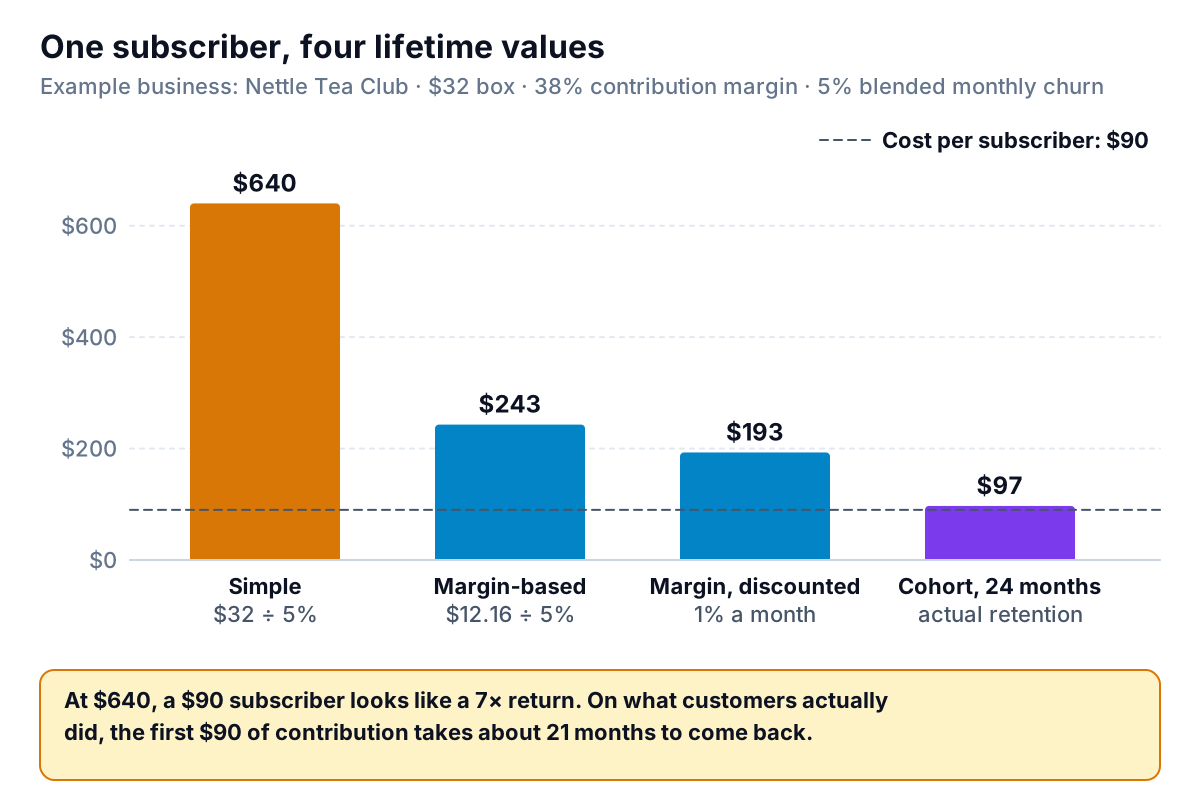
Customer Lifetime Value Formula: Simple, Margin-Based and Cohort LTV Compared
The customer lifetime value formula three ways (simple, margin-based and cohort) with a worked example of why the simple one overstates and when to use each.
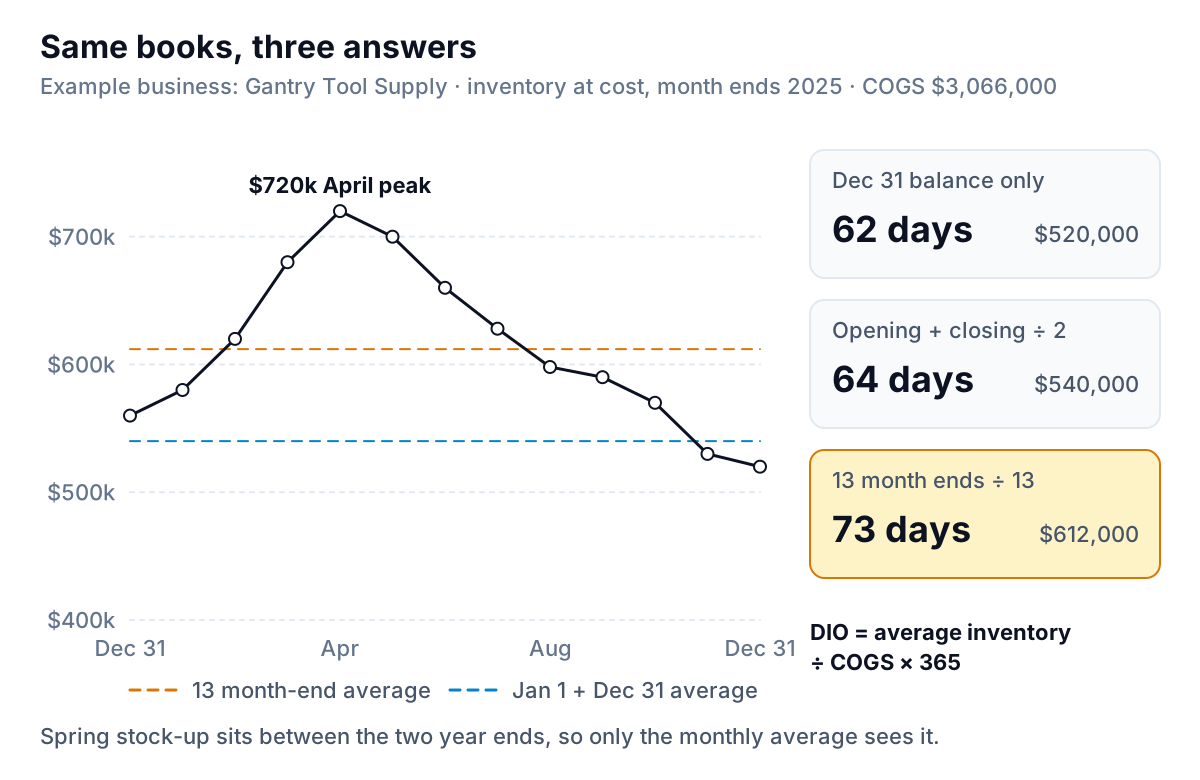
Days Inventory Outstanding: The Formula, the Averaging Trap and DIO by Category
How to calculate days inventory outstanding from your books, why the averaging method can shift it by 11 days, and how to read DIO by product category.
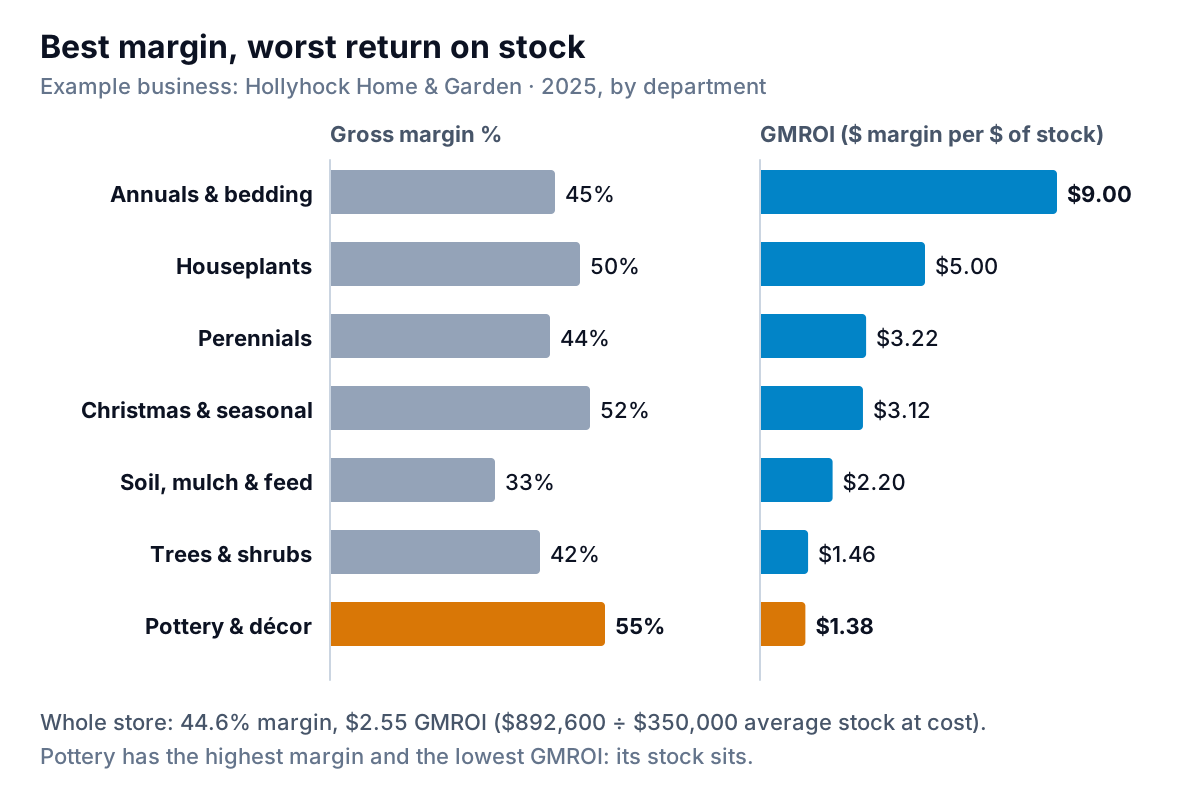
GMROI: Calculate It by Department and Fix the Lines That Don't Earn Their Stock
GMROI shows how much gross margin each dollar of stock earns. See the formula, a worked garden center example by department, and what to do with low lines.
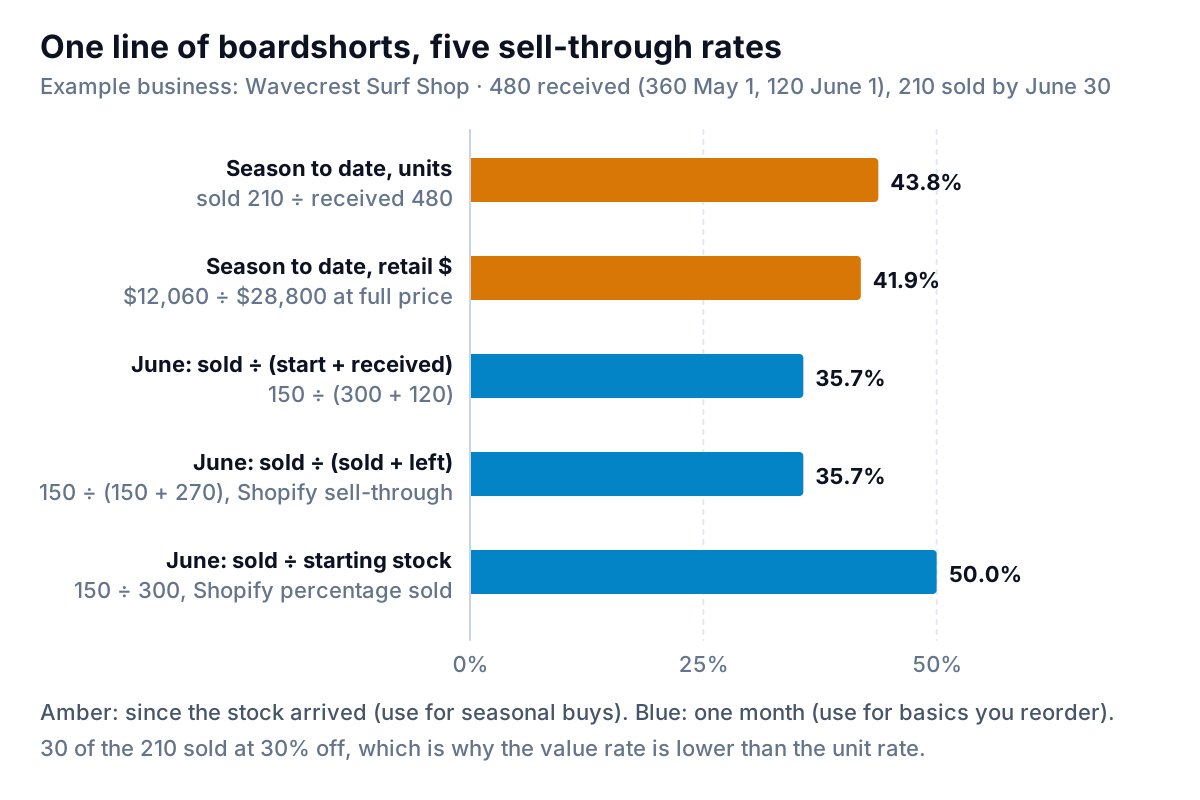
Sell Through Rate: Which Formula to Use and When It Says Mark Down
Sell through rate formulas compared (units vs value, since receipt vs period), how to set a weekly plan, and when the numbers say mark down or reorder.
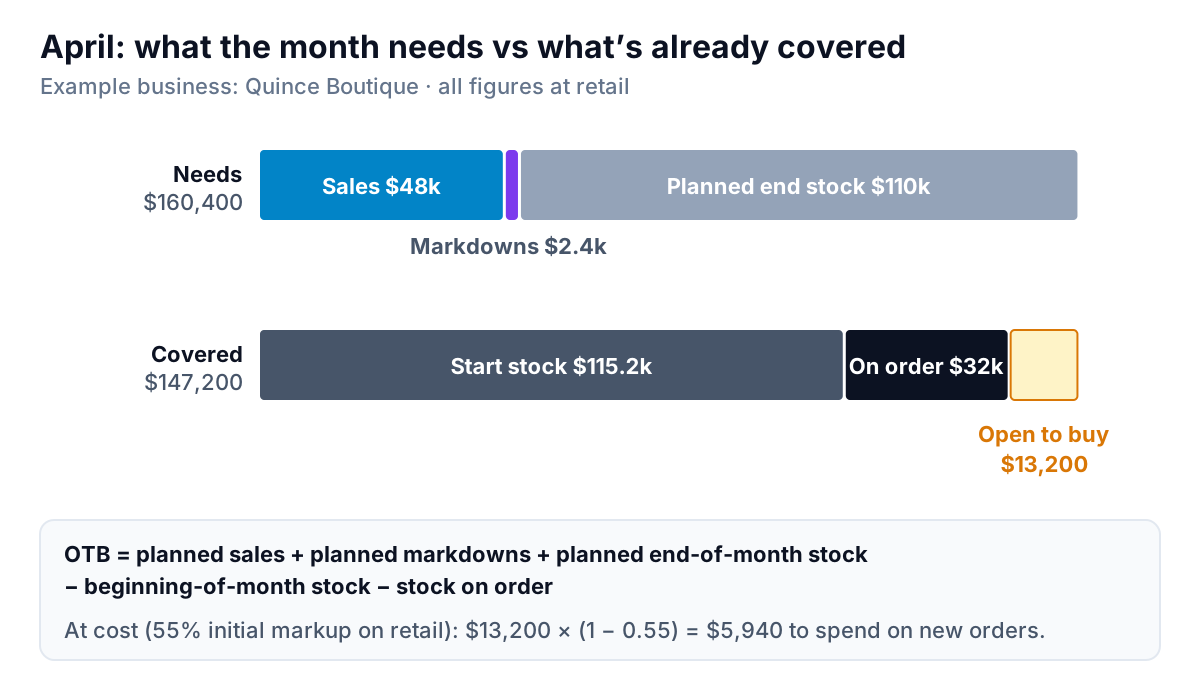
Open to Buy: Build a Monthly Buying Plan That Leaves Room to Reorder
Open to buy formula with a six-month boutique plan: stock-to-sales ratios, converting retail to cost correctly, holding back for reorders, monthly updates.
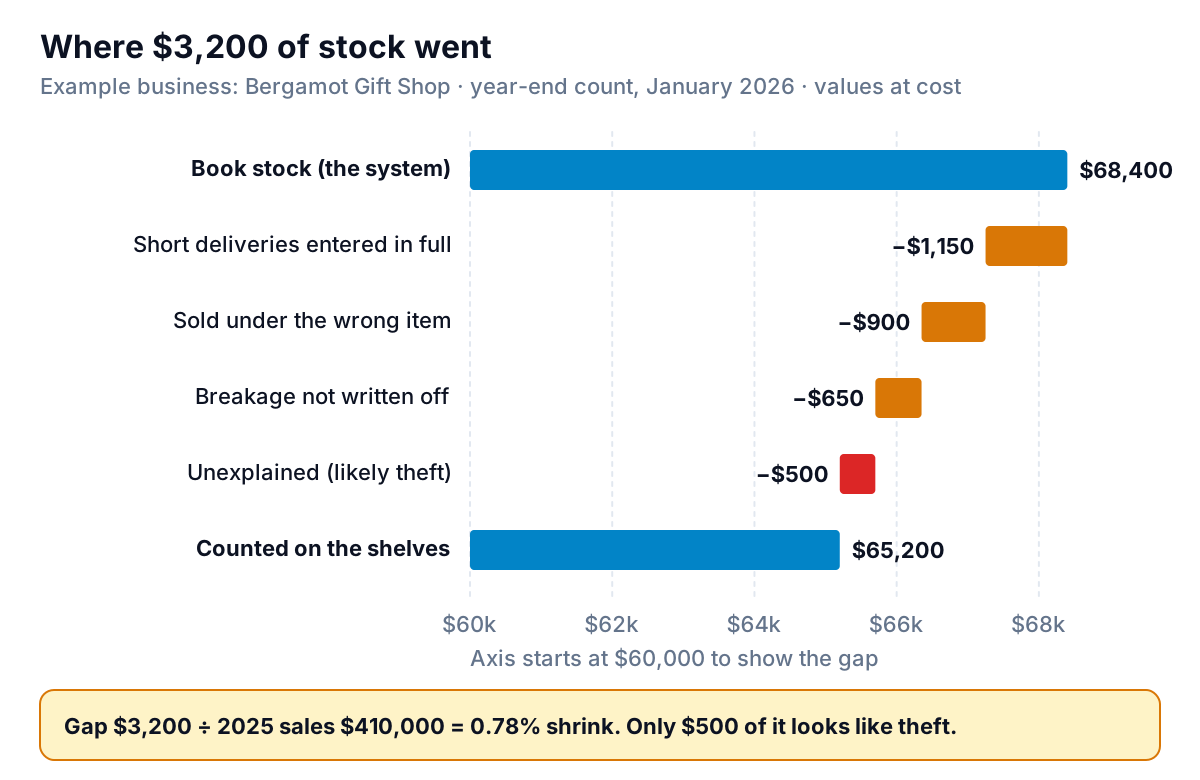
Retail Inventory Management for a Small Shop: Five Habits That Stop Stock Going Missing
Retail inventory management for a small shop: measure shrink, receive carefully, keep clean SKUs, cycle count by ABC, buy with rules and clear slow stock.
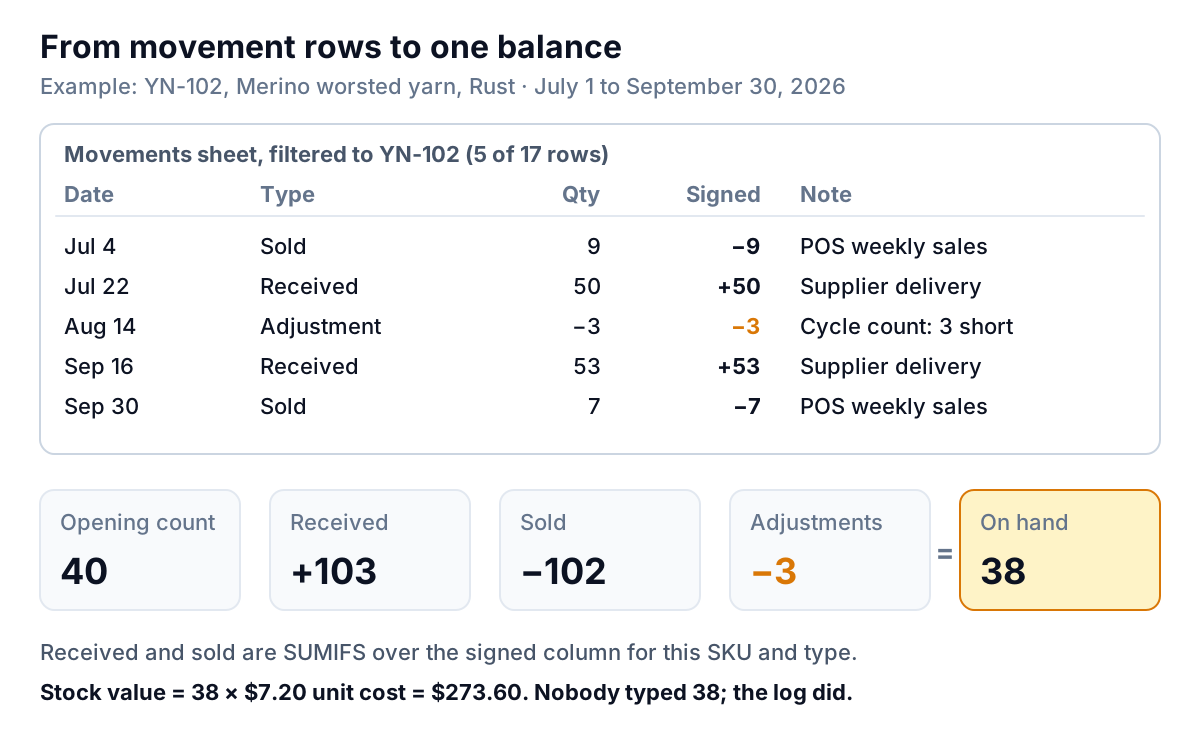
How to Keep Track of Inventory in Excel (Free Template)
How to keep track of inventory in Excel with a movement log: a free template with SUMIFS balances, stock value, reorder flags and slow-item checks.
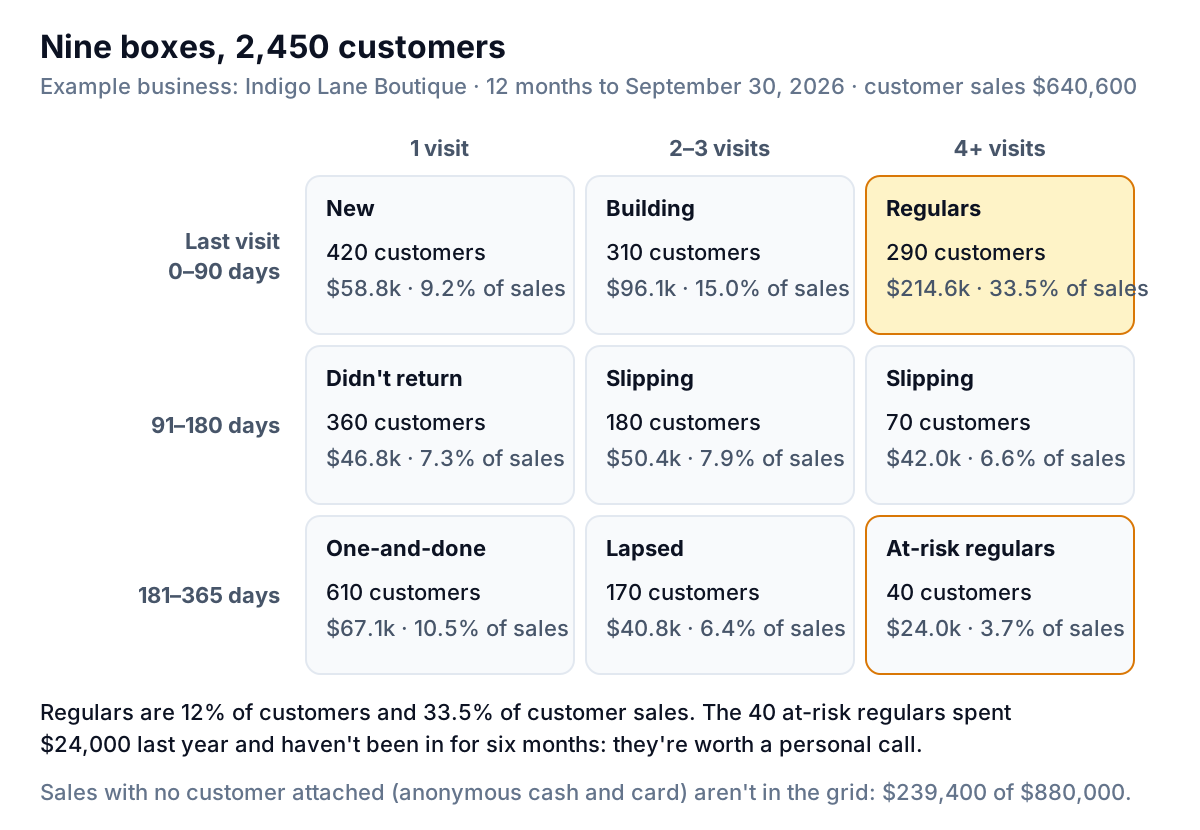
Retail Customer Segmentation: Groups From Your POS Data, and What to Do With Each
Retail customer segmentation from a POS export: a nine-box recency grid, RFM scores in a spreadsheet, actions per segment and a holdout test for offers.
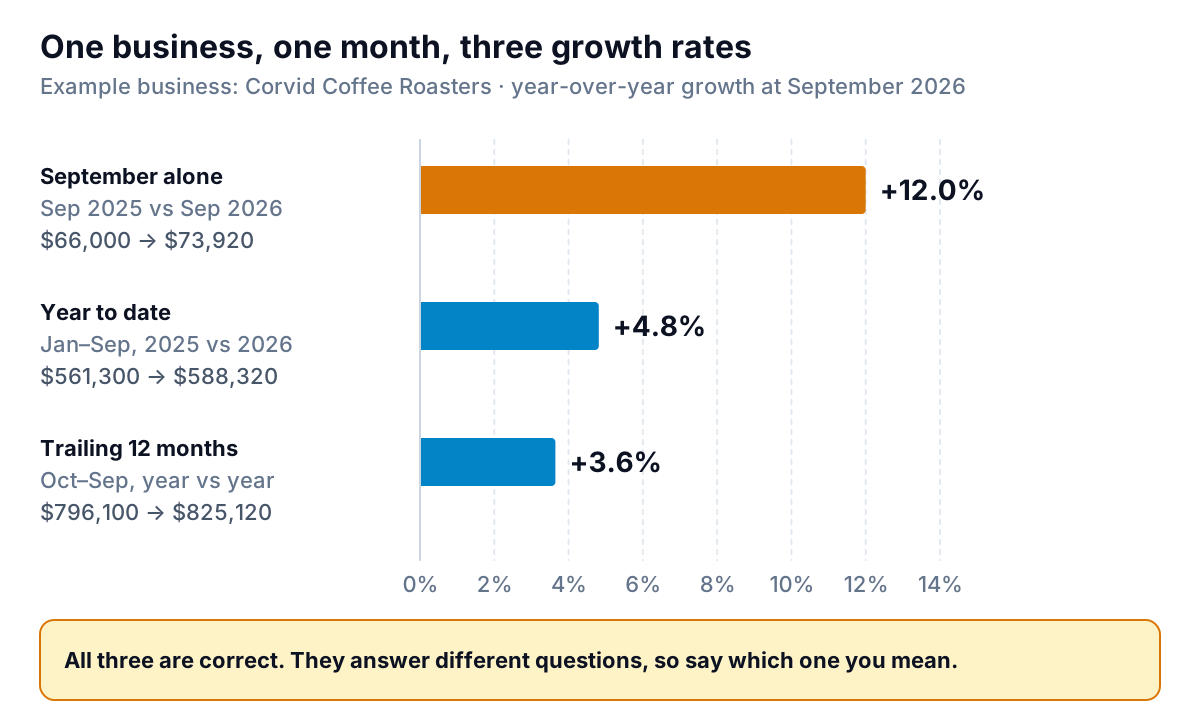
Year Over Year Growth: Formula, Excel Setup and the Calendar Traps
Year over year growth explained with a worked example: the formula, monthly vs YTD vs TTM, Excel formulas, calendar effects, and price vs volume growth.
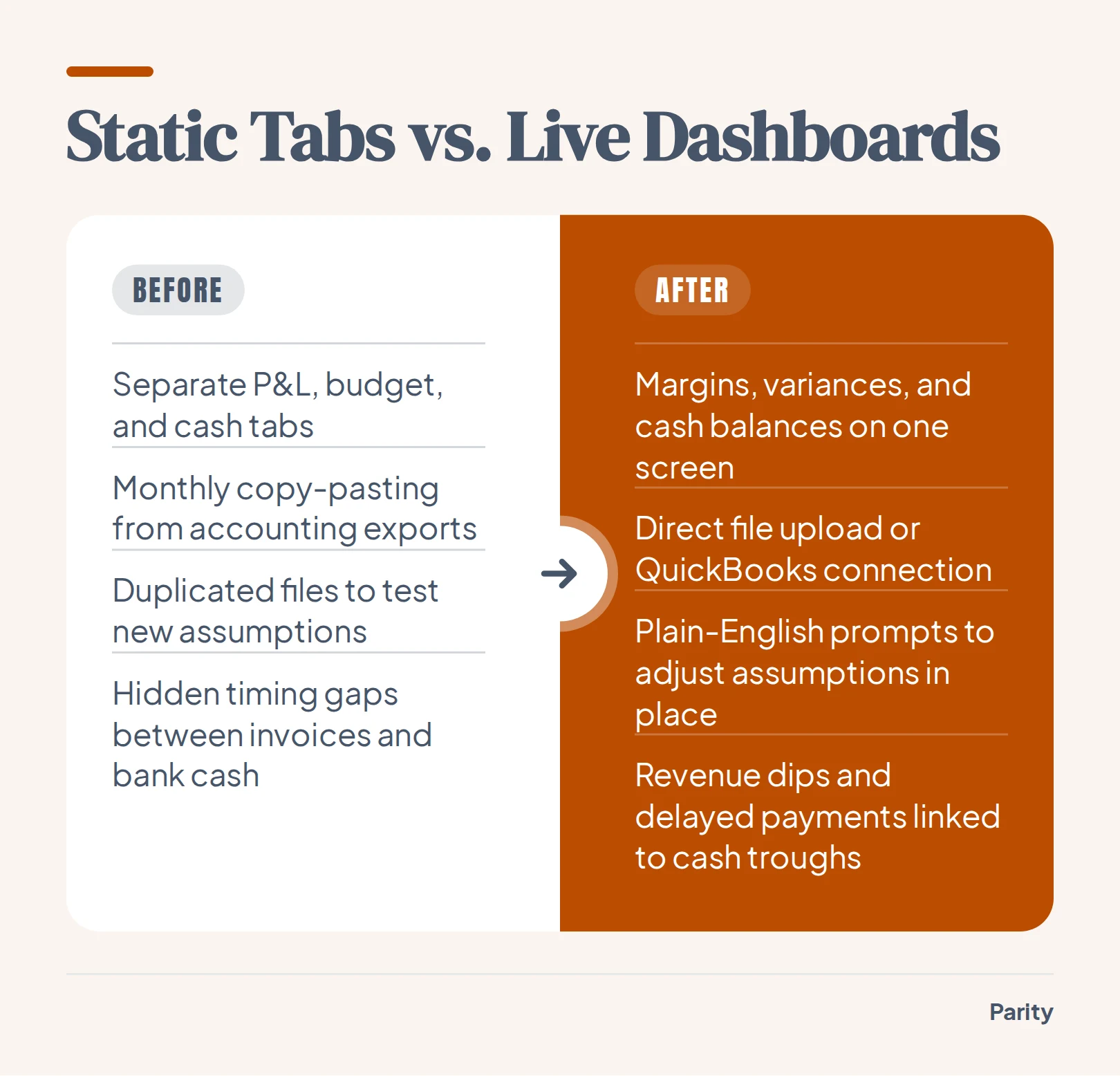
FP&A & Budget Dashboards: P&L to Seasonal Cash Flow
Move from static P&L, budget, and cash flow spreadsheets to interactive FP&A dashboards with dynamic assumption testing, overhead tracking, and verified data.