Ask the founder of Quillon Software, an example company we'll use throughout this guide, what the burn rate is, and she'll read it off the September P&L: a $38,000 loss. Then look at the bank. On 1 April the account held $918,000. On 30 September it held $612,000. That's $306,000 gone in six months, or $51,000 a month, a third more than she thought.
Neither number is a typo. The P&L measures profit; burn rate measures cash. This guide shows how to calculate gross and net burn the way investors and lenders do, turn it into runway you can plan around, and decide what to cut first when the runway is too short.
Gross burn vs net burn
Burn rate is how fast a business is spending its cash, usually measured per month. It comes in two versions, and you need both.
- Gross burn is all the cash going out in a month: payroll, contractors, hosting, rent, software, marketing, everything. It ignores revenue.
- Net burn is cash out minus cash in. It's how much the bank balance actually falls each month.
Gross burn = total cash out in the month
Net burn = cash out − cash in
Andreessen Horowitz's widely used list of startup metrics calls net burn "the true measure" of how much cash a company is burning each month, and notes that investors focus on it to judge how long the money will last. Gross burn matters too: it's what you'd spend if revenue disappeared, and it's the number you can control directly.
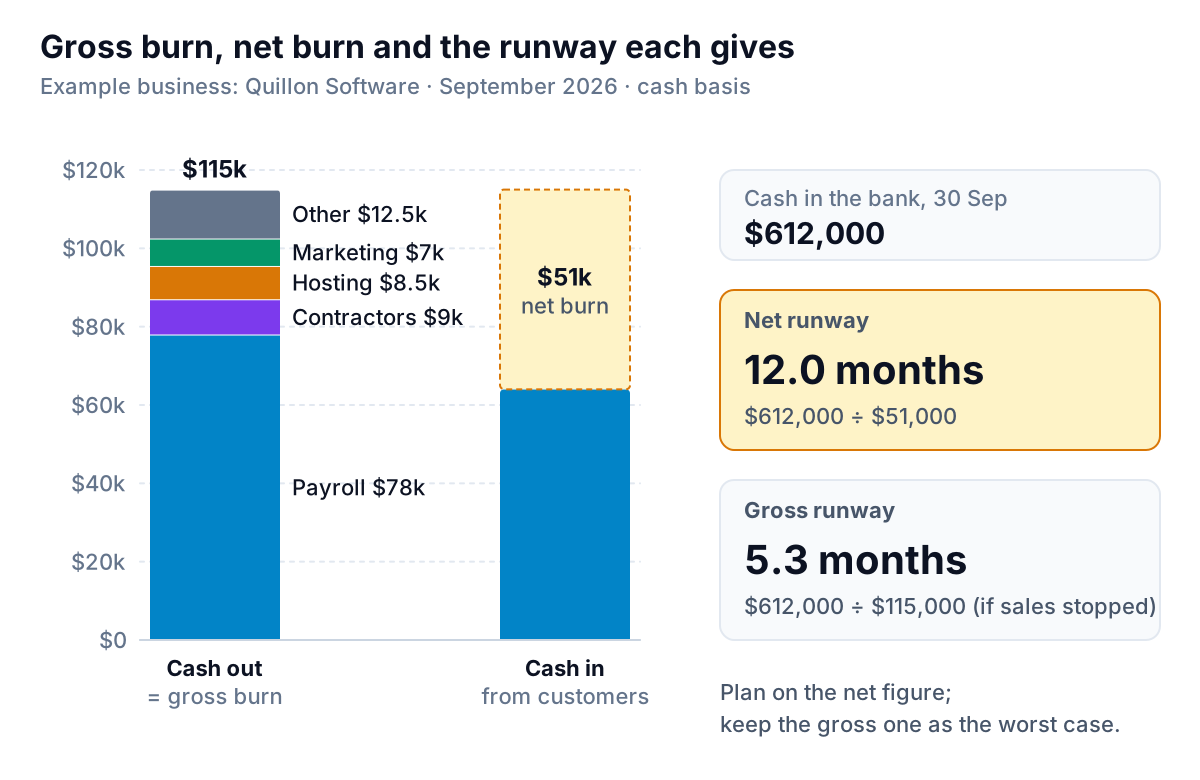
Quillon's September: $115,000 out, of which $78,000 is payroll including taxes and benefits. $64,000 came in from customers. Gross burn is $115,000; net burn is $115,000 − $64,000 = $51,000.
Measure burn from the bank, not the P&L
The quickest reliable way to find your net burn is the one a16z suggests: take the change in your cash balance over a period and divide by the number of months. Quillon's ($918,000 − $612,000) ÷ 6 = $51,000. It can't be wrong, because it's what actually happened.
The P&L loss is a different number for three common reasons:
- Customers prepaid. Quillon sells some annual plans paid upfront. The cash arrived in January and February, but the revenue is spread across twelve months on the P&L. In September the P&L shows $77,000 of revenue while only $64,000 of cash came in. That $13,000 gap is exactly the difference between the $38,000 loss and the $51,000 burn.
- You bought equipment. Laptops and other assets appear on the P&L as depreciation over several years, but the cash leaves on the day you pay.
- Bills and invoices are timed differently. Paying suppliers late flatters burn this month and hurts next month. Customers paying late does the reverse.
| Example: Quillon, September 2026 | P&L (profit) | Bank (cash) |
|---|---|---|
| Revenue / cash received from customers | $77,000 | $64,000 |
| Expenses / cash paid out | $115,000 | $115,000 |
| Loss / net burn | $38,000 | $51,000 |
Use the bank for burn, and use a three- or six-month average rather than one month. A single month swings with quarterly bills, annual software renewals, payroll months with three pay dates and one-off customer payments.
From burn rate to runway
Runway is how many months your cash lasts at the current burn rate.
Runway (months) = cash in the bank ÷ monthly net burn
Quillon: $612,000 ÷ $51,000 = 12.0 months. Its gross runway, the worst case if every customer stopped paying tomorrow, is $612,000 ÷ $115,000 = 5.3 months.
That 12 months assumes nothing changes, which never happens. Paul Graham's essay "Default Alive or Default Dead?" puts the better question: if expenses stay where they are and revenue keeps growing at its recent rate, does the company reach profitability before the money runs out? A runway figure alone can't answer that. A projection can.
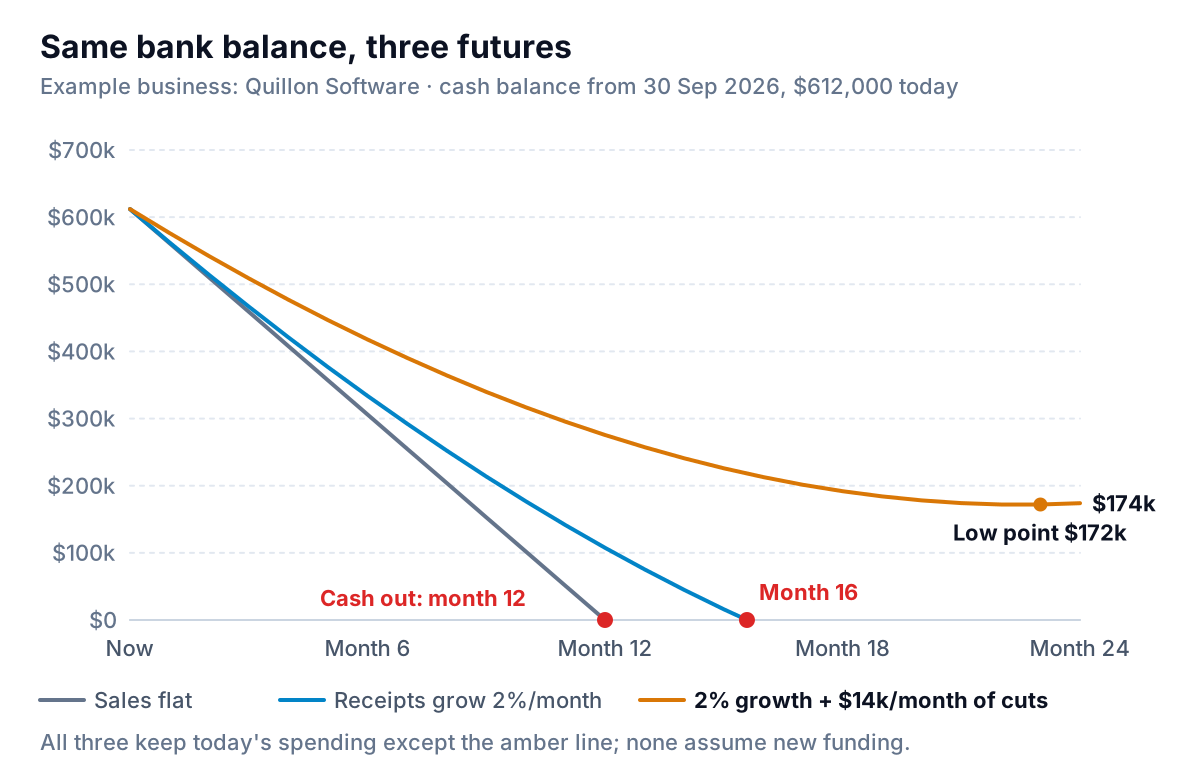
Quillon's customer receipts have grown about 2% a month. At that rate, with spending unchanged, the cash runs out in month 16, not month 12. Better, but still default dead: the gap between cash in and cash out closes too slowly. Cut gross burn by $14,000 a month and the picture changes. Net burn falls to $37,000, receipts keep climbing, and cash bottoms out around $172,000 in month 23 before starting to rise.
This matters because running out of cash is how most startups end. CB Insights' analysis of 431 venture-backed companies that shut down since 2023 found 70% ran out of capital, though it's usually the last link in a chain that starts with weak demand or poor unit economics. Raising money or cutting costs takes months, so decide in advance at what runway you act. Quillon's rule is to start either one with at least nine months of runway left. Pick your own number, write it down, and check it monthly.
If you'd like to build the projection properly, our cash flow forecast guide covers the monthly version, and the 13-week cash flow is the week-by-week tool for when runway is already short.
What to cut first
When runway is too short, cut in order of harm: start with spending that nobody would miss, and protect anything that brings in revenue or keeps customers. Most companies do it the other way round, because people are the biggest cost and the most visible.
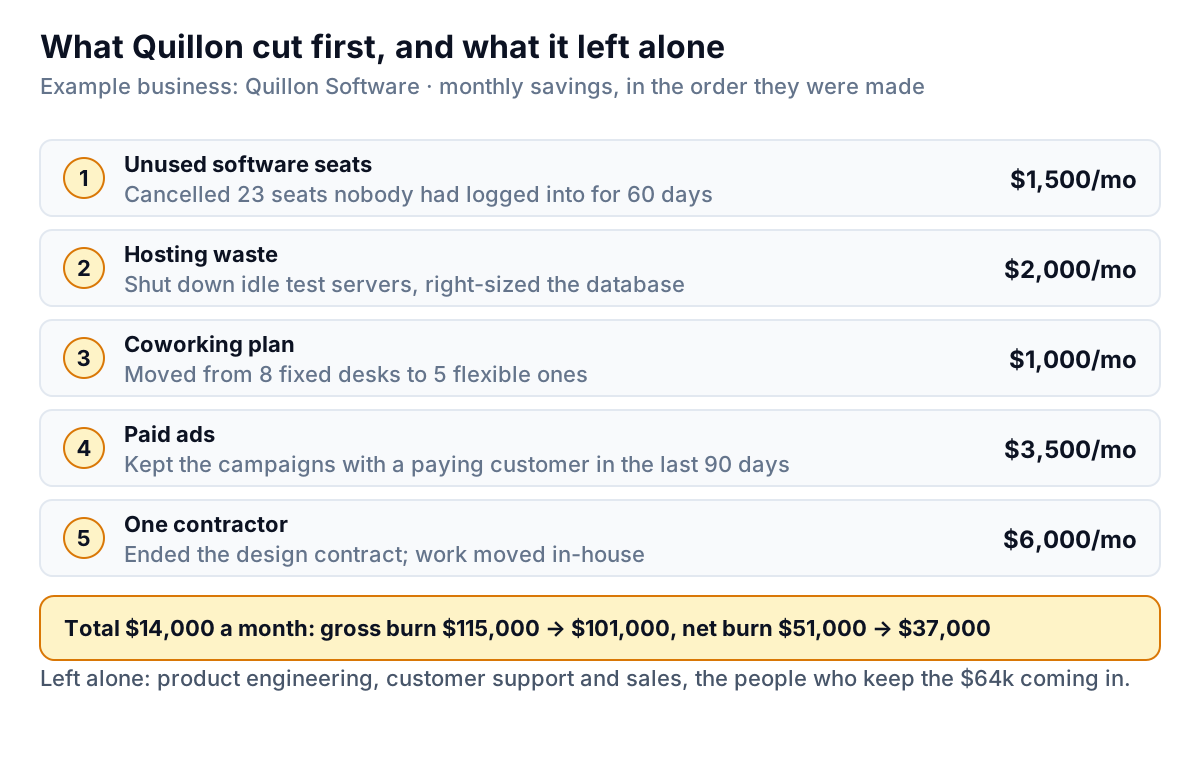
A working order:
- Things nobody uses. Export every recurring charge from your card and bank statements for the last three months. Cancel unused seats, duplicate tools and forgotten subscriptions. It's rarely huge, but it's painless and fast.
- Waste in variable costs. Cloud hosting, payment fees and usage-based tools often carry idle capacity. An afternoon with the billing dashboards usually finds something.
- Space and perks. Smaller plans, fewer fixed desks, a cheaper office.
- Marketing you can't tie to revenue. Keep the channels that produced paying customers in the last 90 days; pause the rest. Don't cut marketing that demonstrably brings in customers, because that lowers cash in.
- Contractors and open roles. End contracts for work that can wait, and freeze hiring for roles that don't directly drive revenue or retention.
- Salaries and headcount, last. If the first five aren't enough, this is where the real money is, and it needs care, legal advice and honesty with your team.
Then work the other side of net burn. Cash in can move faster than costs:
- Offer annual prepayment for a discount. Every customer who switches brings eleven months of cash forward.
- Chase overdue invoices. An accounts receivable aging report shows who owes what and how late.
- Raise prices for new customers. If your product is underpriced, this is the cut that costs nothing.
Burn rate when you're not a startup
Burn rate sounds like venture capital vocabulary, but the arithmetic applies to any business that is spending more cash than it takes in for a while. That covers more small businesses than you'd think:
- A seasonal business in its quiet months. A landscaper in winter or a ski shop in summer burns cash for a predictable stretch. Net burn tells you whether the cash from the busy season will carry you to the next one.
- A business that just expanded. A second location, a new team or a big equipment purchase can turn a profitable business cash-negative for six months. Runway tells you how much of the loan or savings that's going to use up.
- A business with one slow-paying customer. If a large client stops paying for three months, you're burning cash even though the P&L looks fine.
The method is the same in every case. Measure net burn from the bank over a few months, divide your cash by it, and project forward with realistic assumptions about when revenue picks up. The only difference is the trigger: instead of "start fundraising", it might be "draw on the credit line", "delay the second hire" or "call the customer's finance team".
A seasonal business should also compare each month with the same month last year, not with the month before. Burning $20,000 in January is alarming if last January you broke even, and normal if you burned $22,000.
Burn rate mistakes
- Quoting the P&L loss as burn. As Quillon found, it can be a third off. Use the bank.
- Using your best month. One big customer payment makes runway look like years. Average three to six months.
- Forgetting the money already committed. A signed annual contract, a hire starting next month or an upcoming tax payment will raise burn. Add them to the projection now.
- Counting money you haven't received. A term sheet, a grant you've applied for or a large deal "about to close" is not cash. Model it as a separate scenario.
- Dividing by gross burn and panicking, or by net burn and relaxing. Gross runway is the floor; net runway is the plan; the projection is the truth.
Tracking burn every month
You need three numbers each month: cash at the start, cash at the end, and total cash in and cash out between them. Your bank statements have all of it. In QuickBooks Online or Xero, a statement of cash flows or a bank account register for the month gives the same totals; categorise outflows so you can see which lines grew. If your revenue runs through Stripe, its Payout reconciliation report matches each bank deposit to the charges behind it, and payouts usually land a few days after the charges. Our guide to Stripe reports explains which one to use.
Then put three lines on one page: gross burn, net burn and runway, for the last twelve months, with the runway trigger you chose drawn across it.
Parity can build that page for you. Connect QuickBooks Online or Stripe, or upload a bank or accounting export as CSV or Excel, and it builds a dashboard with your headline numbers and their trends, charts, what explains them, and a table of what needs attention, such as the spending lines that grew fastest. Every number is checked against queries on the full dataset before you see it. Ask it by chat to show gross and net burn by month and runway at today's balance, then update it with next month's export. If your board or investors expect a monthly update, ask it to write that report from the same data.
Bring in your bank or accounting export and get a checked dashboard of gross burn, net burn and runway. Build a report from your data free
Burn rate is a simple number with one rule: measure it from cash. Do that, average a few months, set the runway at which you act, and you'll make the hard decisions while you still have time to make them well.