Ridgeway Mechanical is profitable, has a full winter schedule, and is owed $38,000 by its biggest property-management client. On Friday, November 13, it is also on track to be $3,800 overdrawn after payroll. Its monthly cash forecast didn't show that, because November as a whole looks fine. The problem lives inside one week. That is the gap a 13 week cash flow closes: it shows cash week by week, invoice by invoice, for the next quarter.
Ridgeway is an example business, an HVAC contractor we made up for this guide, but its numbers behave like a real one's. Below we build its 13-week model step by step, read it, fix it with two phone calls, and set up the Friday routine that keeps it useful. First, though, a fair question: do you need one at all?
When owners need a 13 week cash flow
Most small businesses don't need a weekly forecast all the time. A monthly forecast covers seasonality, hiring and big purchases, and our guide to building a cash flow forecast shows how. Switch to a 13-week cash flow when any of these is true:
- Your monthly forecast gets within a few weeks' costs of your minimum cash. A month that closes at $20,000 can still go negative mid-month.
- One or two customers decide whether you make payroll. If a single payment date matters, you need to see it by week.
- Payroll runs weekly or every other week and is your biggest outflow. Contractors, restaurants and staffing businesses live here.
- A lender, investor or buyer asks for one. Banks often ask for a 13-week forecast when a covenant is tight or a line of credit is under review.
- You're taking on a large job where you pay for equipment and labour weeks before the first progress payment.
- Things have gone wrong. In restructurings it's the standard document. Bankruptcy courts see them constantly; one court's cash collateral procedures refer to "the 13 week budget attached to the Motion" (US Bankruptcy Court, Central District of California). You don't want to learn the format there.
You're not unusual if cash timing is a strain. In the Federal Reserve's 2026 Report on Employer Firms, half of small employer firms (50%) named uneven cash flow as a financial challenge in the past year, and 54% named paying operating expenses such as payroll and rent.
Why thirteen weeks?
Thirteen weeks is one quarter (52 ÷ 4). That length is a compromise that works well:
- Short enough to be specific. You know which invoices are open, which bills are due and when payroll runs. You aren't guessing at categories; you're listing real items.
- Long enough to act. A gap in week 5 gives you a month to fix it: chase a payment, move a purchase, or arrange credit before you need it.
- It lines up with quarters. Quarterly tax payments, insurance instalments and lender reporting all fall inside or just past the window.
The model is direct: it lists cash receipts and cash payments by date. It doesn't start from profit and adjust, the way a statement of cash flows does. That makes it easier to build and much easier to check, because every line is a real payment you can point to.
Build the 13-week model in six steps
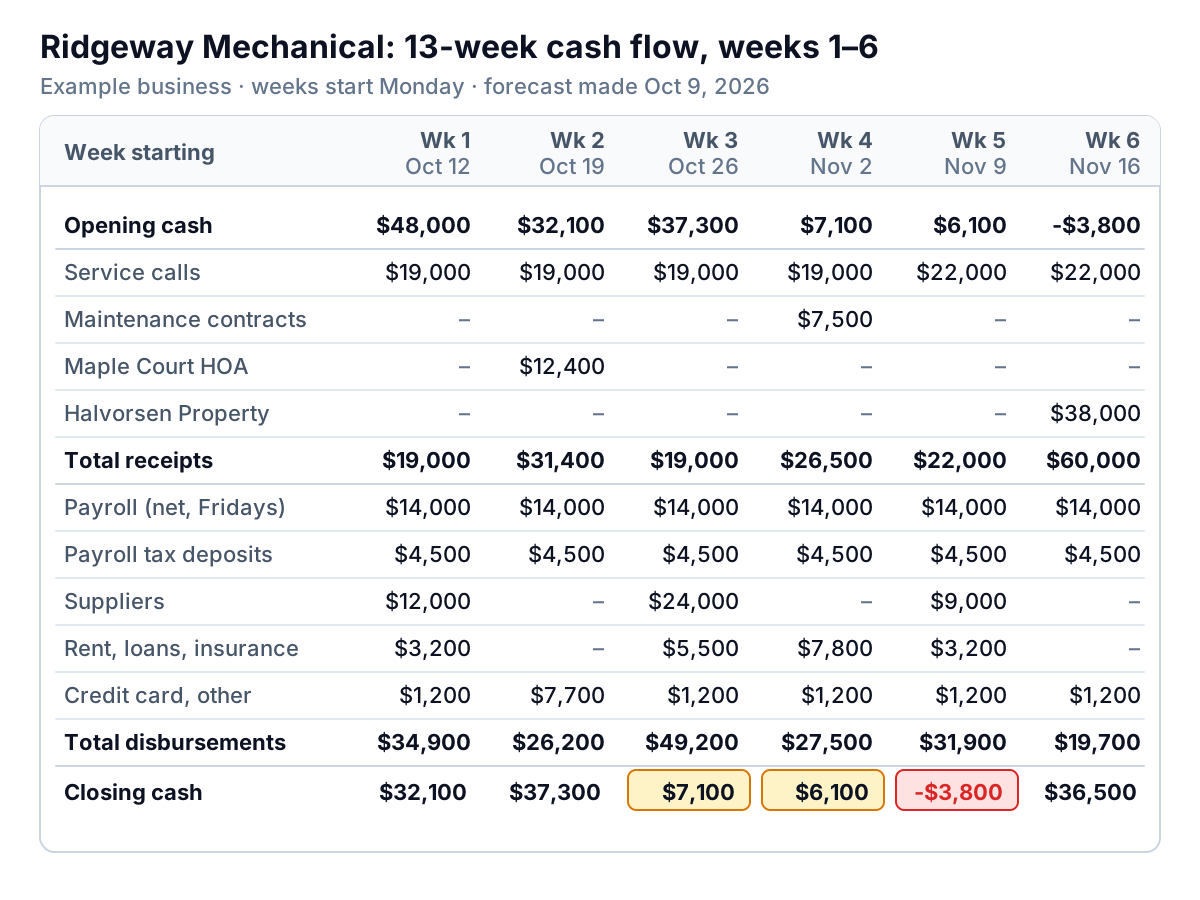
Use a spreadsheet with weeks across the top (Monday start) and line items down the side. Here are Ridgeway's first six weeks, made on Friday, October 9, 2026.
1. Opening cash
Start with the actual bank balance at the end of the week you're in: $48,000 for Ridgeway. Use the bank, not the books, and include only money you can spend (not a tax savings account you never touch).
2. Receipts, by customer and expected date
List each large open invoice on its own line, in the week you expect the money, not the week it's due. Your aging report tells you who's late; your history tells you how late each customer usually is. Halvorsen Property's $38,000 invoice is due October 15, but Halvorsen pays about a month late, so it goes in week 6. Maple Court HOA's $12,400 goes in week 2. Ridgeway's $46,000 progress bill to Bramble Construction lands in week 9, and only $41,400 of it, because Bramble holds back 10% retainage until the job is finished. Retainage beyond the window doesn't go in at all.
Smaller, steady receipts can be one line from history: Ridgeway's residential service calls bring in about $19,000 a week, rising to $22,000 in the heating season and dipping over the holidays. Maintenance contracts are billed monthly and arrive in the first week of each month, $7,500 each time. If you need a quick list of who's late and by how much, our walkthrough of the QuickBooks overdue invoices report gets you there.
3. Payroll and payroll taxes
Put net pay on the actual paydays (Fridays for Ridgeway: $14,000 a week). Then put payroll tax deposits on their own line on their own dates. Under the IRS rules in Publication 15, a semiweekly depositor with a Friday payday deposits by the following Wednesday, and a monthly depositor deposits by the 15th of the next month. Which schedule you're on depends on your tax liability in a lookback period, so check with your payroll provider. Ridgeway is semiweekly, so each week's $4,500 lands the week after its payroll.
4. Bills, by due date
List supplier bills from your payables on the date you'll pay them. Ridgeway owes $12,000 in week 1 and $24,000 in week 3 (the equipment for the Bramble job). Then add the fixed calendar: rent of $5,500 on the 1st of each month, truck loans of $3,200 on the 15th, the $7,800 insurance instalment in week 4, and the credit card statement of $6,500 around the 25th.
5. Totals and closing cash
Closing cash is opening cash plus total receipts minus total disbursements, and each week's closing becomes the next week's opening. Week 3: $37,300 + $19,000 − $49,200 = $7,100.
6. A minimum cash line
Decide the lowest balance you'll accept. For Ridgeway, one week of payroll, tax deposits and overheads is about $19,700, so $20,000 is the line. Any week below it needs a plan.
Read the trough, then make the calls
Run the model out to week 13 and look for the lowest point and how long you stay under the line.
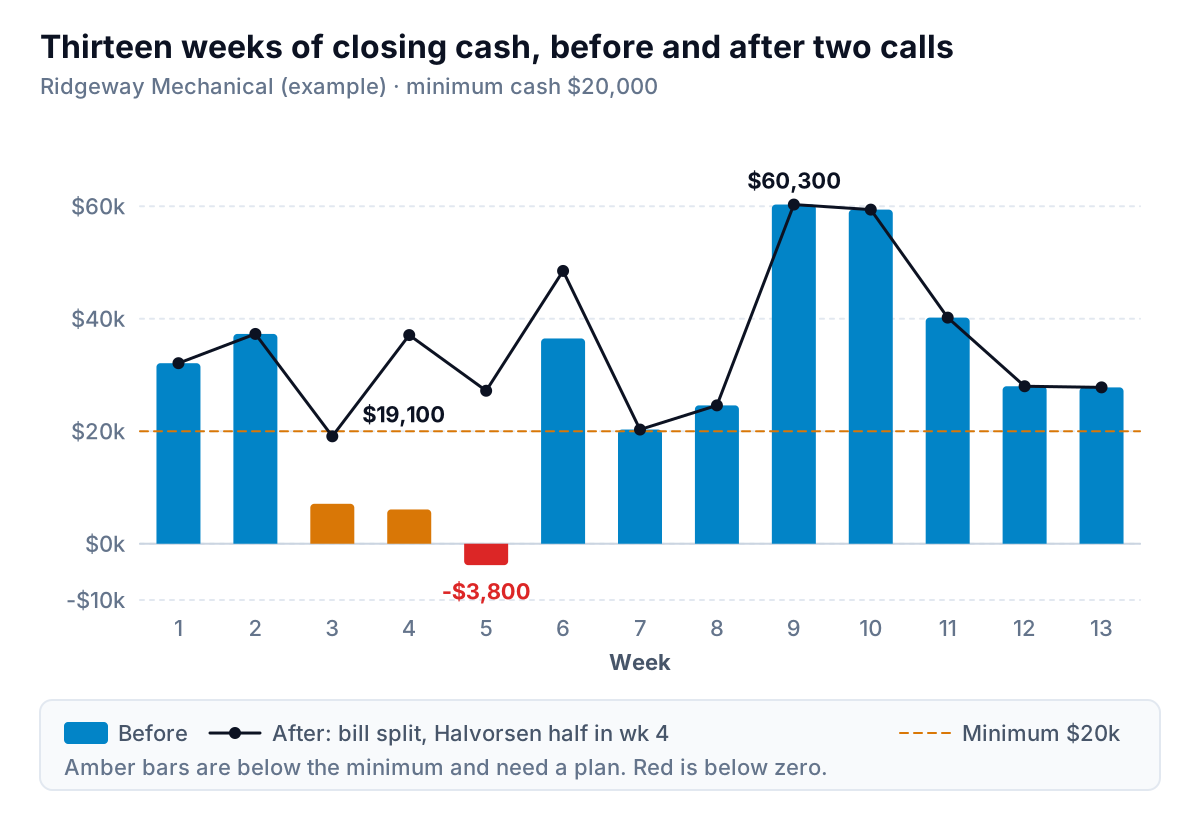
Ridgeway's picture is clear. Weeks 3 to 5 sit below the minimum and week 5 goes negative, all because the $24,000 equipment bill lands in week 3 and Halvorsen's $38,000 doesn't arrive until week 6. After that the business is fine: Bramble's progress payment lifts cash to $60,300 in week 9. Over the full 13 weeks, cash falls from $48,000 to $27,800, a net outflow of $20,200, which is worth noting for the next quarter even though nothing is urgent.
The fix is about timing, not cutting costs. Ridgeway makes two calls in week 1:
- The equipment supplier: pay $12,000 in week 3 and $12,000 in week 7 instead of $24,000 up front. Same total, four weeks later for half.
- Halvorsen Property: the invoice was due October 15. Ask for half by the first week of November, with the rest on the usual schedule. Being specific helps: "Can $19,000 go out by November 6, and the balance by the 20th?"
With both changes the lowest week is $19,100 (week 3), just under the line, and week 5 closes at $27,200 instead of −$3,800. If both calls fail, the model tells Ridgeway exactly how much short-term credit it needs to stay above the line and for how long: about $24,000, for weeks 3 to 5. That's a much easier conversation with a bank than "we might be short sometime in November."
The Friday routine: check week 1, then roll forward
A 13 week cash flow is only useful if it stays current. Once a week, ideally Friday afternoon after payroll, spend twenty minutes on three steps.
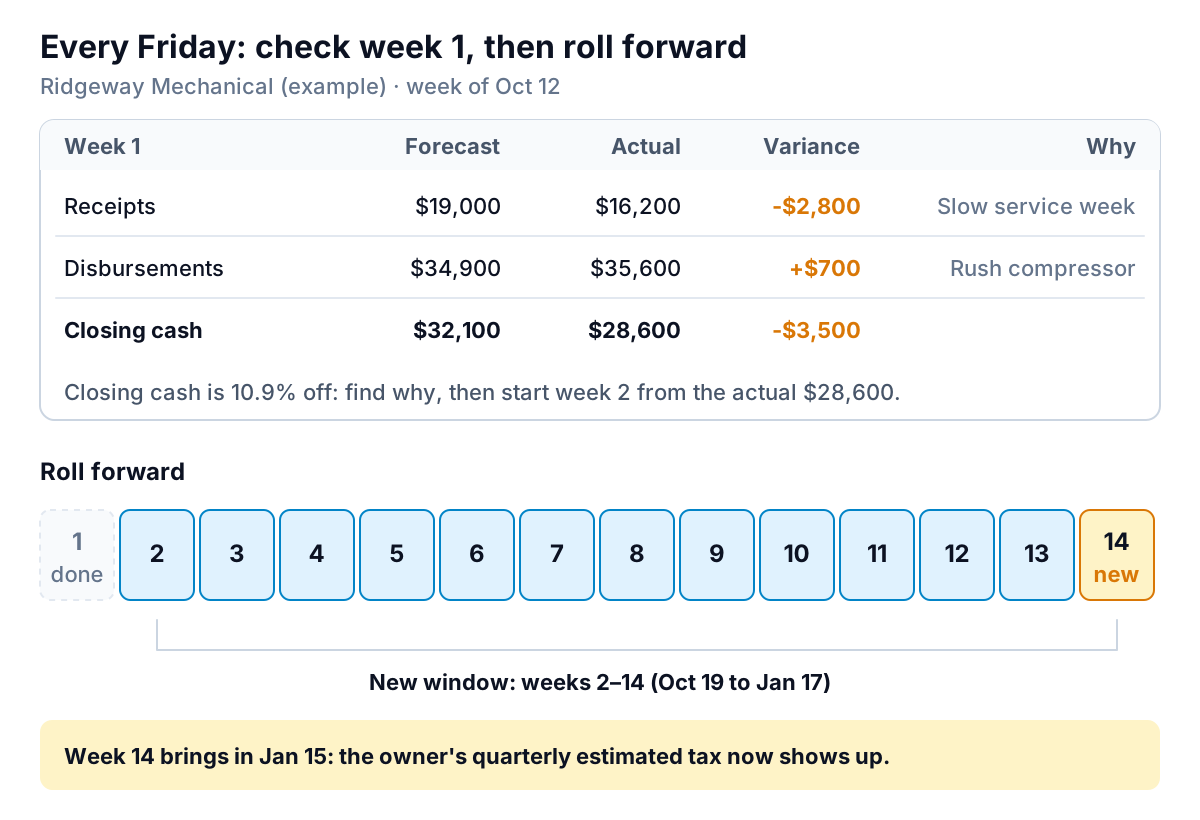
- Compare the week that ended. Ridgeway forecast $19,000 in and $34,900 out for week 1. It actually took $16,200 (a slow service week) and paid $35,600 (a rush compressor for a job). Closing cash was $28,600, not $32,100: 10.9% off. Anything over about 10% gets a one-line explanation, and you ask whether the cause will repeat. A slow week of service calls usually doesn't. A customer who has started paying later usually does.
- Update the rest. Start week 2 from the actual $28,600. Move any invoice whose expected date has changed, add new bills and invoices, and remove anything paid.
- Roll forward. Drop week 1 and add week 14. For Ridgeway, the new week runs January 11 to 17, and it brings in a payment that wasn't visible before: the owner's quarterly estimated tax, which the IRS lists as due January 15 for the final quarter. This is why the window rolls. A fixed quarter goes blind in its last few weeks.
Keep a small log of each week's closing-cash variance. After a couple of months you'll see whether your model runs optimistic (receipts arrive later than you expect) and by how much. Most owners find the receipts side is where the error lives, and fix it by moving expected dates later for slow payers.
Mistakes that make a 13-week forecast lie
- Using due dates for receipts. A customer who always pays 30 days late will do it again. Forecast their behaviour, not your terms.
- Forgetting payroll taxes or treating them as part of net pay. They leave on different days. Lumping them together hides a dip.
- Counting retainage or disputed invoices as cash. If it's held back or argued over, leave it out until there's a date.
- Not rebasing to the bank. If you never reset to the real balance, errors compound week after week.
- Building it once. A 13-week model made for a lender and never updated is accurate for about a fortnight.
- Too much detail on small items. List large invoices and bills one by one; group the small, steady ones from history. The goal is a forecast you'll actually update every Friday.
Getting the inputs without the copy-paste
The model itself is a spreadsheet. The work is the inputs: open invoices with realistic dates, upcoming bills, payroll, and how each big customer actually pays. That's the part Parity can help with. Connect QuickBooks Online, or upload an aging report, invoice list or bank export as a CSV or Excel file, and ask for what you need, for example "open invoices by customer with how late each one usually pays" or "bills due in the next 13 weeks". Parity builds a dashboard with the headline numbers and their trends, charts, what explains them, and a table of what needs attention, and every number is checked against queries on the full dataset before you see it. Export it to Excel to feed your model, share a read-only link with your bookkeeper or banker, and update it with next week's file. For the month-level view that sits above the 13 weeks, see the ten tiles a financial dashboard needs.
Upload your aging report or invoice list and Parity builds a checked receivables dashboard you can export straight into your 13-week model. Upload your aging report
Thirteen columns, real dates, a minimum line and twenty minutes every Friday. That's all a 13 week cash flow is, and it's usually enough to turn "can we make payroll on the 13th?" into a phone call you make a month early.