The owner of Cobalt Outdoor Gear, an example shop we'll use in this guide, told her new buyer the rule for tents: "We make 40% on them." The buyer took a $180 tent, added 40% and put it on the shelf at $252. The owner meant 40% of the selling price, which is $300. Over a season of 120 tents, that one misunderstanding cost the shop $5,760 of gross profit, and nobody noticed until the year-end numbers came in under plan.
That's the whole margin vs markup problem: two percentages describing the same dollars of profit, measured against different bases. This guide explains the difference in one picture, gives you a conversion table to pin up by the till, and walks through the five pricing mistakes the confusion causes, each with the dollars it costs.
Margin vs markup: one profit, two bases
Both start from the same profit per item: selling price minus cost. They divide it by different things.
- Markup = profit ÷ cost. How much you added on top of what you paid.
- Margin = profit ÷ selling price. How much of the price you keep. (Strictly, this is gross margin: it only takes off the cost of the item, not rent or wages.)
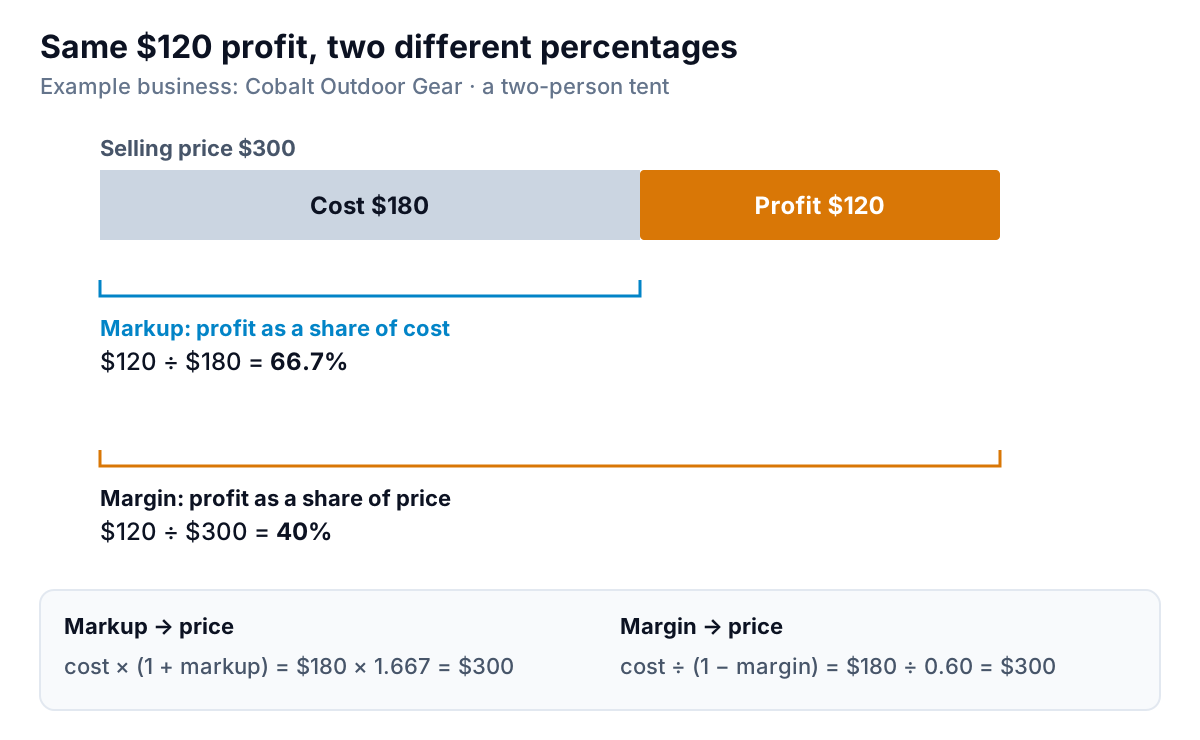
Because the cost is always smaller than the price (if you're making money), markup is always the bigger percentage for the same item. That's where the trouble starts. Say "40%" without saying which, and someone will hear the other one.
A few consequences fall straight out of the formulas:
- Markup has no ceiling. Buy at $10 and sell at $50, and your markup is 400%.
- Margin can never reach 100%. It would mean the item cost nothing. Anyone promising you a "150% margin" means markup.
- Doubling the cost is a 100% markup and a 50% margin. Retailers call this keystone pricing.
The conversion table and formulas
To convert between them:
Markup = margin ÷ (1 − margin)
Margin = markup ÷ (1 + markup)
So a 40% margin is 0.40 ÷ 0.60 = 66.7% markup. A 40% markup is 0.40 ÷ 1.40 = 28.6% margin. That 28.6% is what Cobalt's tents actually earned at $252.
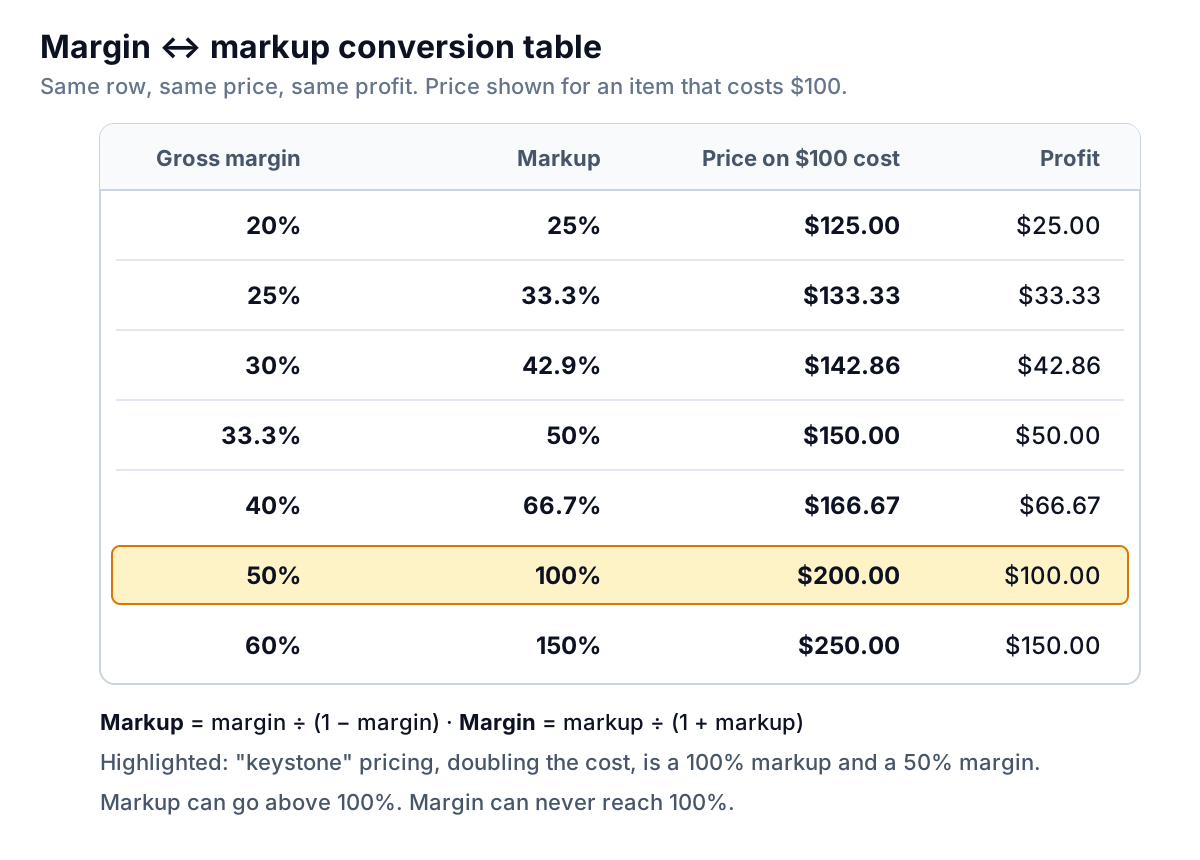
To set a price from a target, you don't need to convert at all:
- From a target margin: price = cost ÷ (1 − margin). A $180 tent at 40% margin: $180 ÷ 0.60 = $300.
- From a markup: price = cost × (1 + markup). A $180 tent at 40% markup: $180 × 1.40 = $252.
In a spreadsheet with cost in B2 and target margin in C2, the price is =B2/(1-C2). With a markup in C2, it's =B2*(1+C2). To check what margin an existing price gives, with price in D2: =(D2-B2)/D2. For markup: =(D2-B2)/B2.
Pricing a new delivery: a worked sheet
Here's how the rule works on a real delivery. A box arrives at Cobalt with four lines on the invoice. For each, the buyer works out the landed cost (invoice price plus that item's share of freight and duty), applies the owner's target margin as a multiplier, then rounds to a sensible shelf price and checks the margin after rounding.
| Item | Landed cost | Target margin | Multiplier | Calculated price | Shelf price | Margin at shelf price |
|---|---|---|---|---|---|---|
| Two-person tent | $180 ($172 + $8) | 40% | 1.667 | $300.00 | $299 | 39.8% |
| Headlamp | $22 ($20 + $2) | 45% | 1.818 | $40.00 | $40 | 45.0% |
| Rain jacket | $60 ($57 + $3) | 50% | 2.000 | $120.00 | $120 | 50.0% |
| Camp stove | $46 ($41 + $5) | 40% | 1.667 | $76.67 | $79 | 41.8% |
Two judgment calls are hiding in that sheet. First, rounding: the stove's calculated price of $76.67 could go down to $75 (a 38.7% margin) or up to $79 (41.8%). Round up unless a competitor's price for the identical item sets a ceiling. Second, the multiplier comes from the margin target, not the other way round, so if the owner changes the target for a category, the sheet updates every price in it. That's the practical answer to margin vs markup in a shop: think in margins, price with multipliers.
Five pricing mistakes the confusion causes
1. Pricing at a markup when you meant a margin
The opening example. The buyer applied a 40% markup when the owner wanted a 40% margin. The gap per tent was $300 − $252 = $48, and the shop's margin on tents was 28.6% instead of 40%. Across 120 tents, $5,760. The fix is the multiplier rule above, and checking actual margin by product each month so a mistake shows up in weeks, not at year end. Our guide on how to calculate gross margin per product shows the spreadsheet.
2. Underestimating what a discount costs
A discount comes off the price, but the cost doesn't move, so the profit shrinks much faster than the price does.
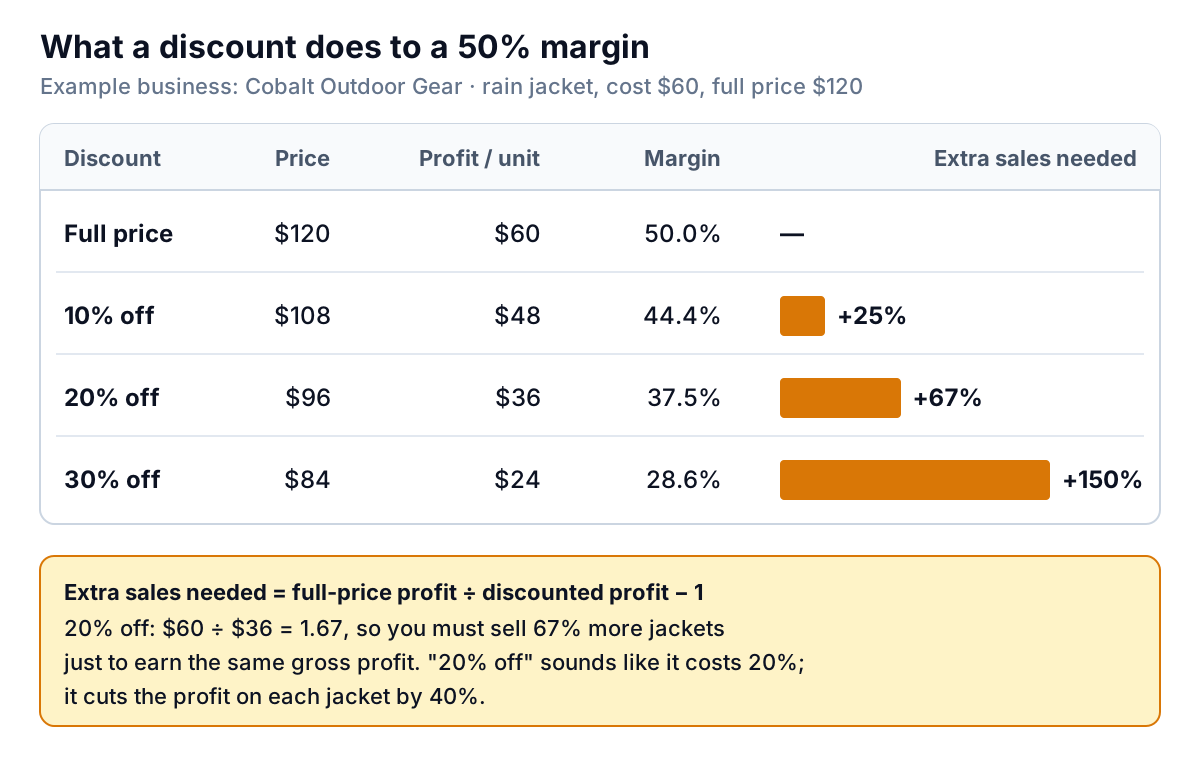
Cobalt's $120 rain jacket costs $60. At 20% off, it sells for $96 and earns $36 instead of $60. To make the same gross profit as at full price, the shop has to sell 67% more jackets. At 30% off, it has to sell two and a half times as many. Before any sale, run that number for your best-selling items and ask whether the promotion can realistically do it. Often the honest answer is that a sale clears old stock, which is a fine reason, but not a way to make more money on current lines.
3. Marking up the supplier price instead of the landed cost
Cobalt buys headlamps at $20 each, plus about $2 each in freight and import duty. Priced keystone at $40 from the $20 invoice price, they look like a 50% margin. On the true landed cost of $22, the margin is ($40 − $22) ÷ $40 = 45%. Always base markups on landed cost: invoice price plus inbound freight, duties and any per-unit fees to get the item onto your shelf.
4. Comparing your markup with someone else's margin
Industry figures are almost always gross margins. NYU Stern's Aswath Damodaran, for example, puts the average gross margin of US-listed specialty retailers at 35.30% in his January 2026 data. Those are large public companies, so treat it as a rough reference, not a target. But notice the unit: as a markup, 35.30% margin is about 54.6%. An owner who reads "35%" and thinks "we mark up 50%, so we're well ahead" is actually behind it, at a 33.3% margin.
The same trap works in reverse with suppliers and sales reps. If a rep says a product line "gives you 45%", ask whether that's margin on your selling price or markup on your cost before you compare it with another line.
5. Stacking markups and discounts as if they cancel
Add 25% to a $100 cost and you get $125. Take 25% off $125 and you get $93.75, below cost. Percentages taken from different bases don't cancel out. This shows up when a shop marks up for a "compare at" price and then runs a percentage-off sale. Work every promotion back to the final price and check its margin against the landed cost.
Which one to use, and when
Margin vs markup isn't a contest; both are useful. The trick is to use each for the job it's good at and to always say which one you mean.
| Job | Use | Why |
|---|---|---|
| Setting a shelf price from an invoice | Markup, as a multiplier | You start from cost; one multiplication gives the price |
| Targets, budgets and reports | Margin | It lines up with your profit and loss statement, where everything is a share of sales |
| Comparing products or with industry figures | Margin | Published figures are margins; product reports in most tools show margin |
| Planning a discount | Margin and profit per unit | Shows how much more you'd need to sell |
A workable house rule: targets are margins; the pricing sheet turns them into multipliers. The owner sets "tents 40%, headlamps 45%, apparel 50%", and the sheet shows 1.667, 1.818 and 2.0. Nobody ever needs to say "markup" out loud.
Check how your own tools label things. Shopify's profit reports, for example, calculate gross margin as (net sales − cost) ÷ net sales, which is margin, not markup, and they only include products that had a cost recorded when they sold. Our Shopify reports guide covers where to find them.
Beyond the item: what margin doesn't cover
Both margin and markup only look at the cost of the item. A tent at a 40% margin still has to pay its share of rent, wages and card fees, and if you ship it free, the postage. Two related numbers take you further:
- Contribution margin subtracts every cost that comes with a sale, including card fees and free shipping. It's the right number for "should we sell more of this, or stop?"
- Operating margin subtracts the costs of running the business too. It tells you whether your pricing leaves enough to cover the shop as a whole.
If your item margins look fine but the business isn't making money, those are the next two places to look.
Catching pricing errors in your data
The fastest way to catch a markup-for-margin mistake is a monthly table of realised margin by product or category, from what you actually sold at the price you actually got, sorted from lowest to highest. A line priced at the wrong percentage sits near the bottom, and so do lines that have been discounted too often.
Parity can build that for you. Connect Shopify, Square or QuickBooks Online, or upload a CSV or Excel export from your point of sale, and it builds a dashboard: headline numbers with their trends, charts, what explains them, and a table of what needs attention. Ask by chat for margin by category against your targets, and every number is checked against queries on the full dataset before you see it. Next month, update it with a newer file.
Turn your sales and cost data into a checked dashboard of realised margin by product and category. Build a report from your data free
And the one rule to take away: whenever someone gives you a percentage for profit, ask "of cost, or of price?" The answer can be worth thousands of dollars a season.