Brookfield Tile & Stone, an example business we'll follow through this guide, made $96,000 of profit in the first nine months of 2026. Monthly sales were up more than a third on last year. On September 30 the owner had $18,000 in the bank, $55,000 drawn on a line of credit, and an importer's invoice he couldn't pay in full. Nothing had gone wrong. The business had simply grown faster than its working capital.
This guide explains what working capital is, why a profitable business can run short of it, and how to work out how much yours needs. Then it shows four ways Brookfield can free $135,600 without selling a single extra tile, and how to apply the same sums to your own books.
What working capital is, and the formula
Working capital is the money tied up in running the business day to day: what you have or will soon collect, minus what you owe in the next twelve months. The formula uses two totals from your balance sheet:
Working capital = current assets − current liabilities
- Current assets are cash and anything you expect to turn into cash within a year: customer invoices not yet paid (receivables), stock (inventory) and prepaid expenses such as insurance.
- Current liabilities are what you must pay within a year: supplier bills (payables), credit card balances, sales tax and payroll you've collected or owe, the next twelve months of loan repayments and anything drawn on a line of credit.
Here is Brookfield at two dates:
| Line | Dec 31, 2025 | Sep 30, 2026 |
|---|---|---|
| Cash | $92,000 | $18,000 |
| Receivables | $150,000 | $246,000 |
| Inventory | $210,000 | $298,000 |
| Prepaid expenses | $8,000 | $8,000 |
| Current assets | $460,000 | $570,000 |
| Supplier bills | $95,000 | $88,000 |
| Credit card, sales tax, payroll owed | $35,000 | $49,000 |
| Loan repayments due within a year | $20,000 | $20,000 |
| Line of credit | $0 | $55,000 |
| Current liabilities | $150,000 | $212,000 |
| Working capital | $310,000 | $358,000 |
Read that bottom line again. Working capital went up by $48,000 while the bank balance fell from $92,000 to $18,000.
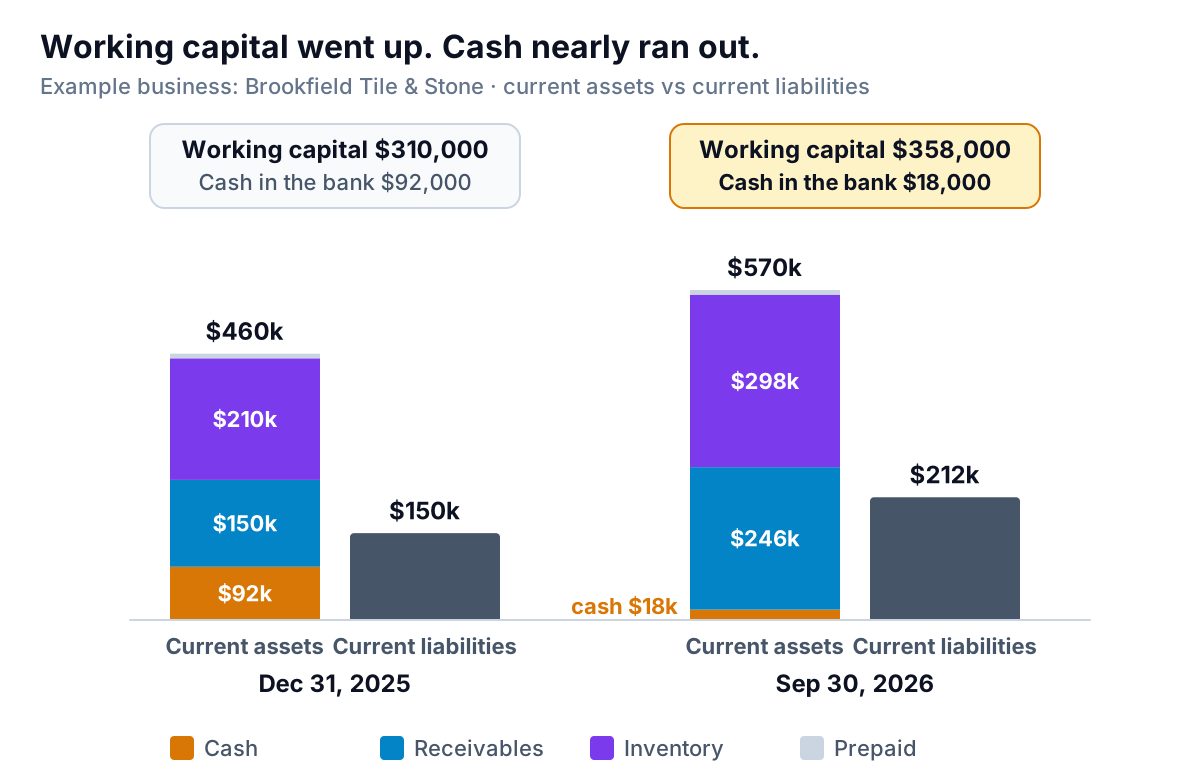
That's the first lesson. The total tells you whether the business could cover its short-term bills if everything it's owed and everything on the shelf turned into cash. It doesn't tell you whether that cash exists today. Brookfield's working capital is mostly stone in a warehouse and invoices contractors haven't paid. You can't pay an importer with either.
Why profitable businesses run short of working capital
Profit is counted when you make a sale. Cash arrives when the customer pays, and it left weeks or months earlier when you bought the stock. The gap between the two is the working capital cycle, and every extra dollar of sales has to be financed through it before it comes back.
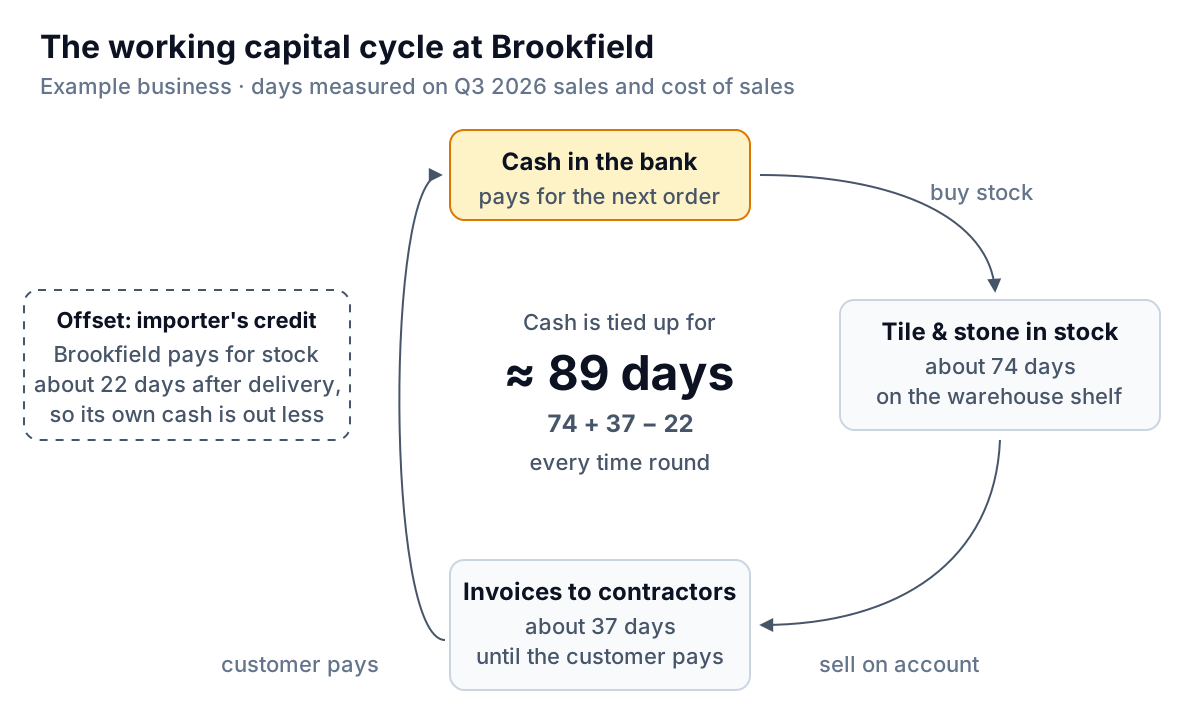
At Brookfield, tile sits on the shelf for about 74 days before it's sold. Contractors then take about 37 days to pay. The importer gives about 22 days before Brookfield pays its bill. So each dollar spent on stock is gone for roughly 74 + 37 − 22 = 89 days. That number has a name, the cash conversion cycle, and our cash conversion cycle guide shows how to calculate each part from your books.
Now put growth through that cycle. Brookfield's monthly sales rose from about $150,000 to about $205,000. With a 40% gross margin and those day counts, each extra $10,000 of monthly sales ties up roughly $22,400 in receivables and stock, net of what the importer finances. Growth of $55,000 a month therefore needed about $123,000 of extra working capital. The rest of the squeeze came from contractors paying more slowly: 37 days in September against about 31 last December.
The profit was real. It just never reached the bank. Here's roughly where nine months of it went:
- Profit of $96,000, plus $9,000 of depreciation (an expense that isn't a cash payment).
- Receivables grew by $96,000 and inventory by $88,000. That's $184,000 of cash now sitting with customers or on shelves.
- Supplier bills fell by $7,000, while card, tax and payroll balances grew by $14,000.
- The owner drew $30,000, repaid $15,000 of loan principal and bought a $12,000 forklift.
- The $55,000 drawn on the line of credit filled the hole. Net result: cash down $74,000.
Growing businesses, seasonal businesses and any business that sells on credit all hit this. It's why banks offer working capital loans that, in the words of the US bank regulator's Comptroller's Handbook on commercial loans, are "repaid at the end of the cycle by converting inventory and accounts receivable into cash."
How much working capital does your business need?
There is no universal right amount. A café paid at the till and buying food on 14-day terms can run with negative working capital for years, because customers pay before suppliers do. A wholesaler holding three months of stock and selling on 30-day terms needs a lot. The useful question is how much your cycle needs at your current sales, and whether you have it.
Work it out in three steps, using the last three months:
- Daily sales and daily cost of sales. Brookfield's July–September sales were $615,000 over 92 days, so about $6,685 a day. Cost of sales at 60% was about $4,011 a day.
- Operating working capital. Receivables + inventory − supplier bills: $246,000 + $298,000 − $88,000 = $456,000. This is the part of working capital that grows with sales. Cash, loans and the line of credit are how you fund it.
- Compare it with sales. $456,000 ÷ $6,685 = about 68 days of sales. If sales grow 10%, expect operating working capital to grow by roughly the same 10%, about $45,600, unless the day counts change.
If you plan to grow, add that amount to your cash flow forecast before you sign the lease or hire the extra crew. If you can't fund it from cash and profit, arrange the credit line while the business looks healthy, not after the bank balance has fallen. The US Small Business Administration's CAPLines program, for example, includes lines aimed at seasonal increases in receivables and inventory. Talk to your bank or accountant about what fits.
Getting the numbers from QuickBooks, Xero or a spreadsheet
Every input comes from the balance sheet and the profit and loss report.
- QuickBooks Online: go to Reports, then Standard reports, and select Balance Sheet. Current assets and current liabilities each have a total. The Balance Sheet Comparison report puts two dates side by side. Our QuickBooks balance sheet guide covers the lines to check first, such as Undeposited Funds.
- Xero: the Balance Sheet gives the totals. The Executive Summary report also shows "Current assets to liabilities", plus average debtor and creditor days, which are the receivables and payables halves of the cycle above.
- A spreadsheet: paste the balance sheet in, label each line current or not, and use
=SUMIF(C:C,"current asset",B:B)-SUMIF(C:C,"current liability",B:B). Keep the labels: they're what stops a long-term loan sneaking into the wrong total.
Two checks before you trust the result. First, make sure next year's loan repayments are in current liabilities, not lumped into the long-term loan. Second, read the inventory figure against a recent stock count. If your books still carry stone you discontinued two years ago, your working capital is overstated by that amount.
Four ways to free working capital without more profit
You can't spend the working capital total, but you can shrink the cycle that eats it. Each day you cut from collecting, holding stock or paying suppliers releases cash once, permanently, for as long as the new habit holds. Here's what each change is worth to Brookfield.
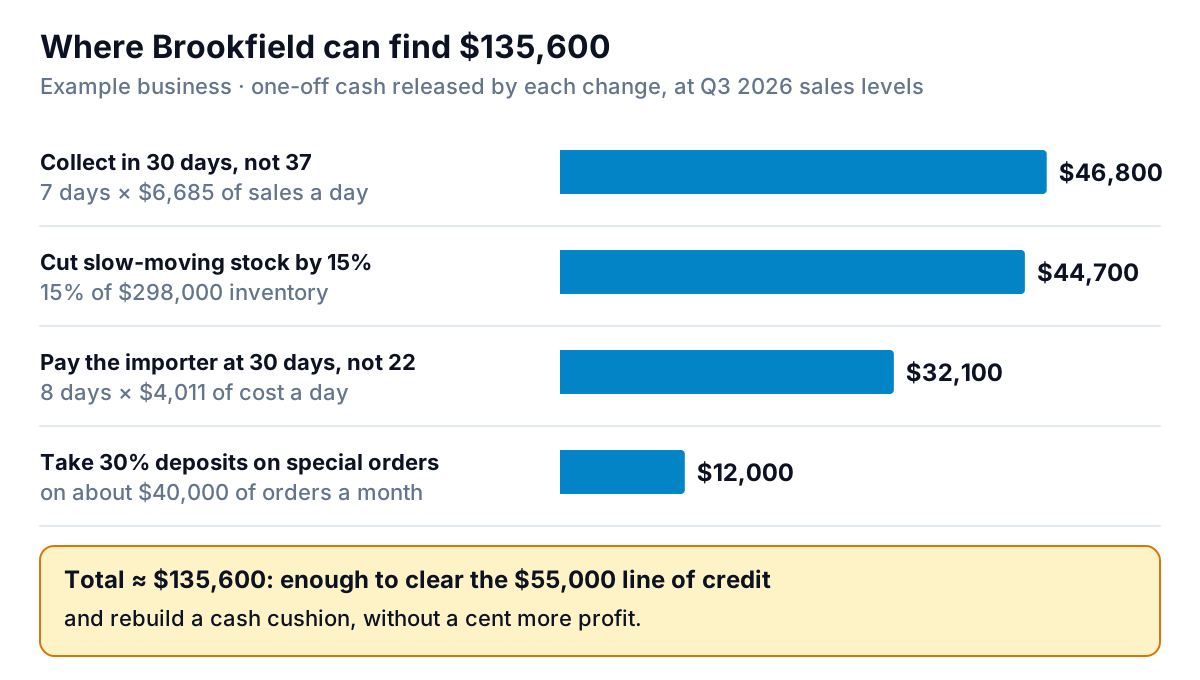
- Collect faster: about $46,800. Getting back to roughly last December's collection speed, 30 days instead of 37, frees 7 × $6,685. Start with an accounts receivable aging report: a few slow contractors usually account for most of the drift. Invoice on delivery, not at month end, and agree a credit limit for each trade account.
- Cut slow stock: $44,700. Rank products by months of stock on hand. Clear the bottom tier at a discount, stop reordering it, and order the fast lines more often in smaller quantities. Selling stone at cost still turns it back into cash.
- Use the terms you already have: about $32,100. Brookfield pays the importer in about 22 days on 30-day terms. Paying on the due date, not when the bill arrives, frees 8 × $4,011. Don't stretch past the due date: late payment costs goodwill and sometimes the terms themselves. And if a supplier offers an early payment discount, compare it with your borrowing cost first; the cash conversion cycle guide shows the sum.
- Get paid upfront where it's normal: $12,000. Special-order stone is cut or shipped for one customer, and Brookfield can't sell it to anyone else. A 30% deposit on about $40,000 of special orders a month, which take about a month to arrive, holds $12,000 of customers' cash at any time instead of Brookfield's own.
Together that's about $135,600: enough to clear the $55,000 line and rebuild a cushion. None of it needs a single extra sale.
Mistakes that make working capital look better than it is
- Reading the total instead of its parts. As Brookfield shows, working capital can rise while cash falls. Look at how much of it is cash. The quick ratio strips out inventory for exactly this reason, and the current ratio shows the same balance sheet as a multiple rather than a dollar figure, which makes years and businesses of different sizes easier to compare.
- Counting receivables you won't collect. An invoice that's been disputed since spring is not a current asset in any practical sense. Ask your accountant whether it should be written down.
- Checking once a year. A seasonal business can look comfortable at year end and be stretched every spring. Work it out at each month end.
- Funding the cycle with the credit card. When the card balance grows month after month while sales grow, the cycle is being financed at the most expensive rate you have.
- Treating negative working capital as always bad. If customers pay you before you pay suppliers, a negative figure can be healthy. If it's negative because bills are piling up unpaid, it isn't. The difference shows in your payables days.
Keeping an eye on it every month
Working capital moves slowly and then all at once, so the useful view is a trend: working capital, cash, receivables days, inventory days and payables days at each month end for the last twelve months, on one page. When receivables days climb two months in a row, you hear about it before the bank balance does.
Parity builds that page from your books. Connect QuickBooks Online, or upload a balance sheet and P&L export from Xero or any other tool as CSV or Excel, and it builds a dashboard with the headline numbers and their trends, charts, what explains them and a table of what needs attention, such as the customers whose balances are aging. Every number is checked against queries on the full dataset before you see it. You can refine it by chat ("show working capital and cash as two lines", "add inventory days by product group"), share a read-only link with your accountant, and update it with next month's file. Ask, and it writes the month-end report for your partner or lender from the same data.
Connect QuickBooks or upload your balance sheet and get a checked dashboard of cash, receivables, stock and payables over time. Build a report from your data free
Whatever you use, run the numbers before you grow, not after. Brookfield's best year nearly became its worst month because nobody asked how much cash an extra $55,000 of monthly sales would need. The answer was about $123,000, and it was sitting in the balance sheet all along.