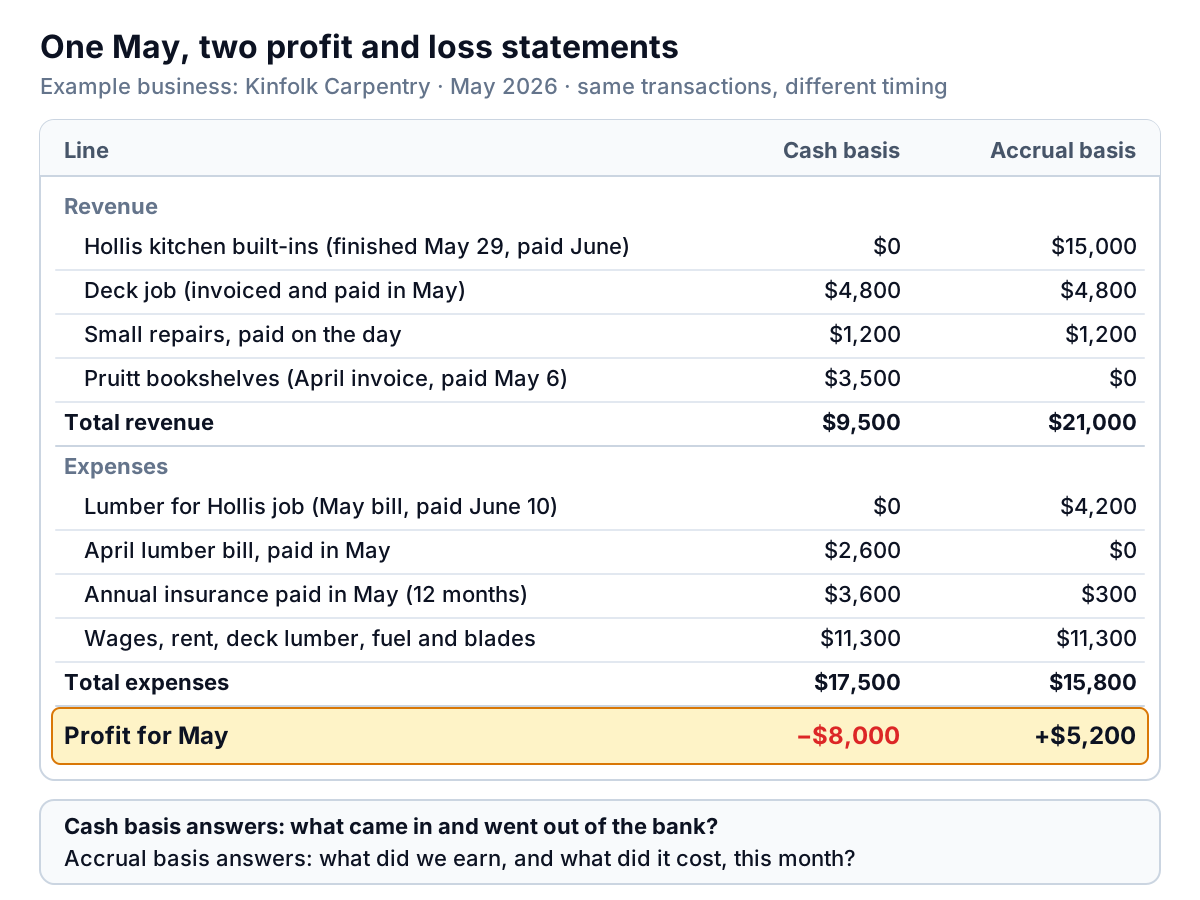
May was the busiest month Kinfolk Carpentry had ever had. The three-person shop, an example business we'll use throughout this guide, finished a $15,000 run of kitchen built-ins, built a deck and fitted a set of bookshelves. Then the owner opened her profit and loss report for May and saw a loss of $8,000.
Her bookkeeper's explanation came down to cash vs accrual accounting. She ran the same report again with one setting changed, and May showed a profit of $5,200. Nothing in the books had changed. The first report was on a cash basis, the second on an accrual basis. That gap of $13,200 is the whole question in one month: both reports are correct, and they answer different questions. This guide walks through Kinfolk's May line by line, then covers which method to use for what, what the IRS says (briefly, and with a pointer to your accountant), and how to see both views without keeping two sets of books.
Cash vs accrual accounting: the same May both ways
The IRS's Publication 538 puts the difference simply. Under the cash method you generally report income in the year you receive it and deduct expenses in the year you pay them. Under an accrual method you generally report income in the year you earn it and deduct expenses in the year you incur them, whenever the money actually moves.
Applied to one month, cash basis follows the bank: money in is revenue, money out is an expense. Accrual follows the work: revenue is what you earned by doing the job, and expenses are the costs of that month's work, paid or not. Here's Kinfolk's May.
Why the two Mays differ, line by line
Only five items differ between the columns. Each is a common pattern in a trades business.
1. A job finished but not yet paid: $15,000
The Hollis kitchen was built and fitted in May and invoiced on May 29. The customer paid the $9,000 balance on June 12, and the $6,000 deposit had come in back on April 20. On an accrual basis, Kinfolk earned all $15,000 in May, because that's when it did the work. On a cash basis, May shows nothing from this job: the deposit landed in April and the balance in June.
2. Last month's invoice paid this month: $3,500
The Pruitt bookshelves were finished and invoiced in April and paid on May 6. Cash basis puts the $3,500 in May. Accrual already counted it in April, and in May it's just a customer paying what they owed.
3. A supplier bill received but not paid: $4,200
The lumber for the Hollis kitchen arrived on May 5 with a bill on 30-day terms, and Kinfolk paid it on June 10. Accrual puts the $4,200 in May, next to the revenue it helped earn. Cash basis waits for June.
4. Last month's bill paid this month: $2,600
The reverse case. April's lumber for the Pruitt job was paid in May. Cash basis counts it in May; accrual counted it in April.
5. A prepayment: $3,600 of insurance
Kinfolk paid its annual liability insurance in May. Cash basis records all $3,600 as May's expense. In accrual books, a bookkeeper usually spreads it over the twelve months it covers, $300 a month. (The tax treatment of prepaid expenses has its own rules, including what Publication 538 calls the 12-month rule, so ask your accountant how it applies to your return.)
Everything else, the $11,300 of wages, rent, deck lumber, fuel and blades, was incurred and paid in May, so it's the same in both columns. Add it up: accrual says May earned $21,000 and cost $15,800. Cash says $9,500 came in and $17,500 went out.
Over a whole job, the two methods agree
It helps to follow one job across the months, because it shows the difference is timing, not money.
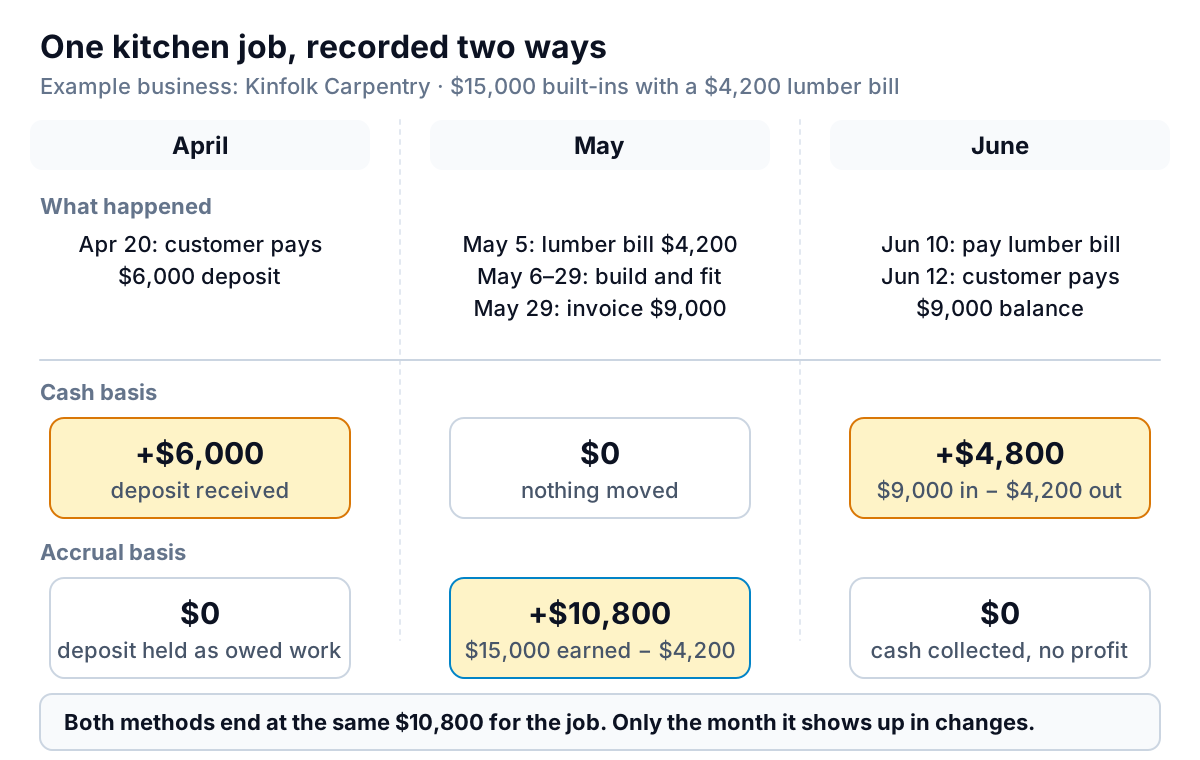
Before labor, the Hollis job made $10,800 under both methods. Cash basis shows $6,000 in April and $4,800 in June, and nothing in May, the month the crew spent building it. Accrual shows all $10,800 in May. Over a year, or over any stretch where the business is stable, the two methods converge. They split apart in exactly the months you most want to understand: when you're growing, when a big job lands, or when customers start paying slowly.
That's also why a cash-basis report can mislead in good times. If Kinfolk's work is growing month after month, cash basis will always lag behind, because each month's revenue is really last month's work. If customers start paying late, cash basis shows it straight away while accrual looks fine, which is why accrual books need a receivables report next to them. Our guide to the accounts receivable aging report covers that side.
Which should you use?
The cash vs accrual accounting choice is really two decisions, and it helps to keep them apart.
The method for your books and tax return. This is the method you've adopted with the IRS, and you're expected to stick with it. It's a decision to make with your accountant, based on your entity type, your size, whether you carry inventory, and whether you need accrual statements for anyone else.
The view you use to run the business. This can differ from report to report. Most accounting software stores enough detail (invoice dates, bill dates and payment dates) to show any report either way. Use whichever answers the question in front of you.
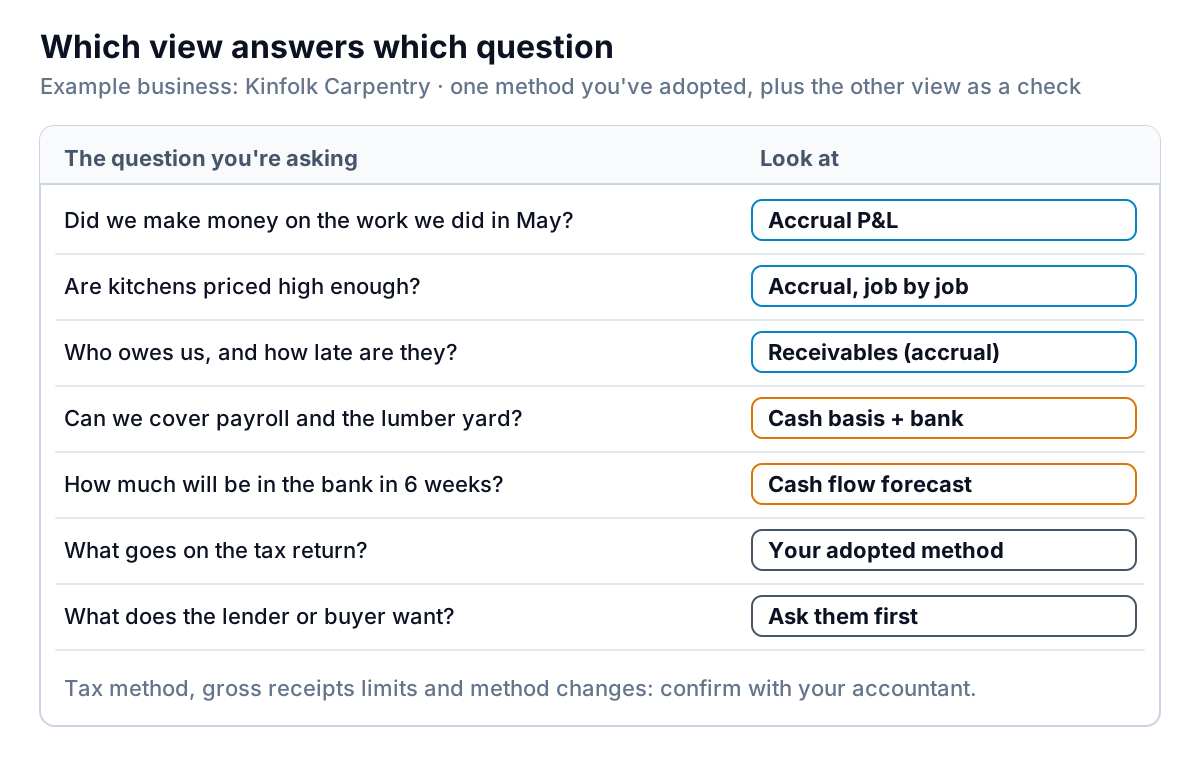
Some rules of thumb for a small business like Kinfolk:
- Judge profitability on accrual. If you want to know whether kitchens make more money than decks, or whether May was a good month, you need revenue and costs in the same month as the work.
- Judge cash on cash. To know whether you can pay the lumber yard, look at the bank balance, what's due in and what's due out. A cash flow forecast does this better than either profit and loss view, and for a tight stretch a 13-week cash flow breaks it down week by week.
- If you only look at one report, make it accrual plus receivables. Accrual shows whether the work pays. Receivables show whether the customers pay. Together they explain the bank balance.
- Very small, cash-in-hand businesses with no invoices, no supplier accounts and no deposits will see almost no difference between the two. If you're paid on the day and pay for everything at the counter, cash basis is fine for management too.
What the IRS says (briefly, and check with your accountant)
This is general information, not tax advice. Rules depend on your entity, your industry and your numbers, and thresholds change each year.
- Who can't use the cash method. Publication 538 lists three kinds of entity that generally can't: corporations other than S corporations, partnerships with such a corporation as a partner, and tax shelters. Corporations and partnerships that pass a gross receipts test are an exception.
- The gross receipts test. For tax years beginning in 2026, Revenue Procedure 2025-32 sets it at average annual gross receipts of $32 million or less over the three prior tax years. Publication 538 was last revised in 2022 and quotes an older figure, so check the current number.
- Inventory. Carrying inventory doesn't automatically rule out the cash method for a small business. The Schedule C instructions now describe simpler options for small business taxpayers, including treating inventory as non-incidental materials and supplies.
- Deposits. Tax rules for advance payments aren't the same as bookkeeping rules. Publication 538 says you generally report an advance payment as income in the year you receive it, and that accrual-method taxpayers can, if they qualify, elect to defer part of it to the next tax year, but no further.
- Consistency and changes. You must use the same method from year to year, and changing it generally requires IRS approval, usually by filing Form 3115. Changing the method on a report in your software doesn't change your tax method.
Seeing both views without two sets of books
You don't need two ledgers. You need dates on everything: when each invoice was issued and paid, and when each bill arrived and was paid.
In QuickBooks Online, any standard report can be switched. Intuit's help article on choosing cash or accrual gives the steps: go to Reports, then Standard reports, pick a report, select Cash or Accrual under Accounting method, and run it. The company-wide default lives under Settings, Account and settings, Advanced, in the Accounting section. Run the Profit and Loss both ways for the same month and you'll get Kinfolk's two columns for your own business. Our QuickBooks reports guide covers which other reports are worth running.
In a spreadsheet, keep one row per invoice and one row per bill, each with two dates: the date the work was done or the bill was incurred, and the date it was paid. Accrual totals by month use the first date; cash totals use the second. A pivot table on each date column gives you both views from the same list.
Whichever you use, three checks keep the accrual view honest:
- Enter bills when they arrive, not when you pay them. If supplier bills only go in on the day you pay, your "accrual" report is really a cash report for expenses.
- Record deposits as owed work, not revenue. A deposit for a job you haven't started belongs in a liability account (often called customer deposits or unearned revenue) until the work is done. Otherwise April looks better than it was and May worse.
- Invoice when the work is done. If you invoice two weeks late, accrual revenue lands in the wrong month too.
Common mistakes
Most cash vs accrual accounting mistakes come from reading one report as if it were the other.
- Reading a cash-basis loss as a bad month. Kinfolk's best month looked like its worst. Before you panic, check what's been invoiced and not yet collected.
- Reading an accrual profit as money in the bank. The $5,200 May profit was mostly sitting in a customer's account until June 12.
- Mixing methods in one comparison. Comparing this year's accrual report with last year's cash-basis report makes the change meaningless. Pick one basis for any comparison over time.
- Treating the report switch as a tax decision. It isn't one. Your tax method is set by what you've filed, and changing it is a formal process.
- Ignoring prepayments. A cash-basis month with an annual insurance or software bill will always look awful. Note it, or look at the accrual view.
If you'd rather not run reports both ways each month, Parity can turn your books into a dashboard. Connect QuickBooks Online, or upload a CSV or Excel export from another tool, and it builds headline numbers with their trends, charts, what explains them, and a table of what needs attention. Every number is checked against queries on the full dataset before you see it. You can refine it in chat, for example asking it to show revenue invoiced against cash collected by month, and share a read-only link with your bookkeeper.
Turn your books into a checked dashboard that shows revenue earned, cash collected and who still owes you. Build a report from your data free
For Kinfolk, the takeaway was simple. May was a good month for the business and a tight month for the bank account, and both statements were true. Knowing which report answers which question meant the owner didn't cut back on the work that was paying off just because the bank balance dipped.