The owner of Orchard Street Pilates, an example studio we'll use throughout this guide, needed one number for a lease application: September revenue. Her bank showed $44,663 in card payouts. Her point-of-sale report showed $45,983 collected and $45,638 in gross sales. Her bookkeeper's figure was $42,633. Four numbers, one month, one studio.
Only the last one is revenue in the accounting sense, and the gap between them is where most mistakes about how to calculate revenue happen. This guide builds September's revenue step by step: the formula, what to subtract, what was never revenue in the first place, and when a sale counts. Then it splits the total by stream, which is where it starts to tell you something useful about the business.
How to calculate revenue: the formula
At its simplest, revenue is price times quantity, added up across everything you sell:
Revenue = (price × units sold) for each product or service, summed
That gives you gross revenue (or gross sales): everything you sold at the prices you charged. From there you take away the reductions that mean the customer didn't really pay that price:
Net revenue = gross revenue − returns and refunds − discounts − allowances
An allowance is a price cut you give after the sale instead of a refund, for example crediting part of a session that ran short. The IRS treats these together: the Schedule C instructions ask for gross receipts on line 1 and returns and allowances on line 2, and define a sales allowance as a reduction in the selling price given instead of a refund.
Two things are deliberately missing from that formula. Costs aren't in it, because revenue is the top line before any expense; take away costs and you're calculating profit. And money that only passes through your hands, such as sales tax you collect for the state, isn't in it either. More on both below.
Step by step: September at Orchard Street Pilates
The studio has six revenue streams. Here's how to calculate revenue for each one at September's prices:
| Stream | Units × price | Gross |
|---|---|---|
| Monthly memberships | 112 × $189 | $21,168 |
| 10-class packs sold | 45 × $240 | $10,800 |
| Drop-in classes | 160 × $28 | $4,480 |
| Private sessions | 64 × $85 | $5,440 |
| Retail (grip socks, bottles, mats) | various | $1,950 |
| Weekend workshop | 12 × $150 | $1,800 |
| Gross sales | $45,638 |
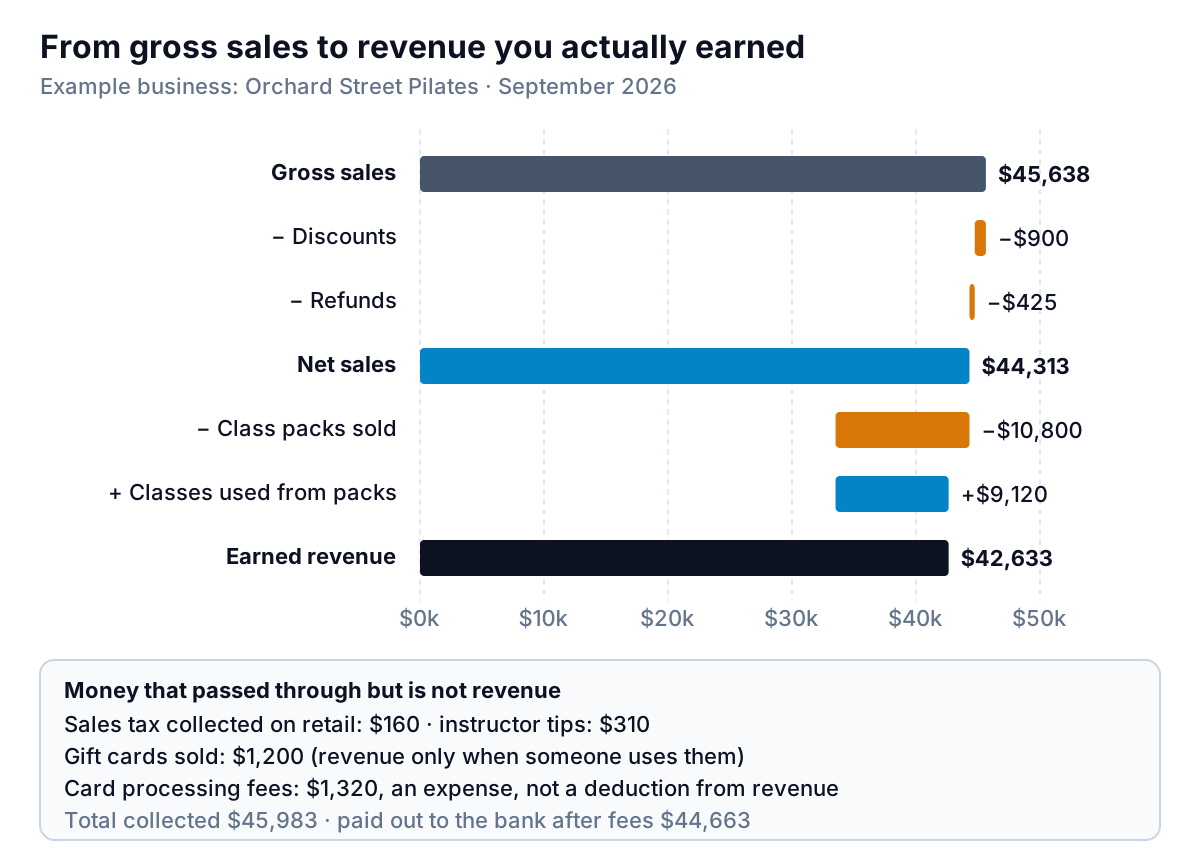
Then the reductions. Eighteen new members took the $50-off first-month offer, a $900 discount. Five private sessions were cancelled and refunded, $425. So:
Net sales = $45,638 − $900 − $425 = $44,313
For a business that delivers everything on the day it's paid for, net sales would be the end of the calculation. A studio isn't that business, because of the class packs.
When a sale counts as revenue
On the cash basis, many small businesses count revenue when the money arrives. On the accrual basis, which is what financial statements prepared under US accounting standards use, revenue counts when you deliver what the customer paid for. The standard that governs this is ASC 606, Revenue from Contracts with Customers, published by the Financial Accounting Standards Board. Its core principle is that you recognize revenue as you transfer the promised goods or services, in the amount you expect to be entitled to. It sets out five steps: identify the contract, identify what you've promised, set the price, allocate the price to each promise, and recognize revenue as each promise is met.
For a pilates studio, that mostly matters for one thing. When a client buys a $240 ten-class pack, the studio hasn't earned $240. It owes the client ten classes. Each class taken earns $24.
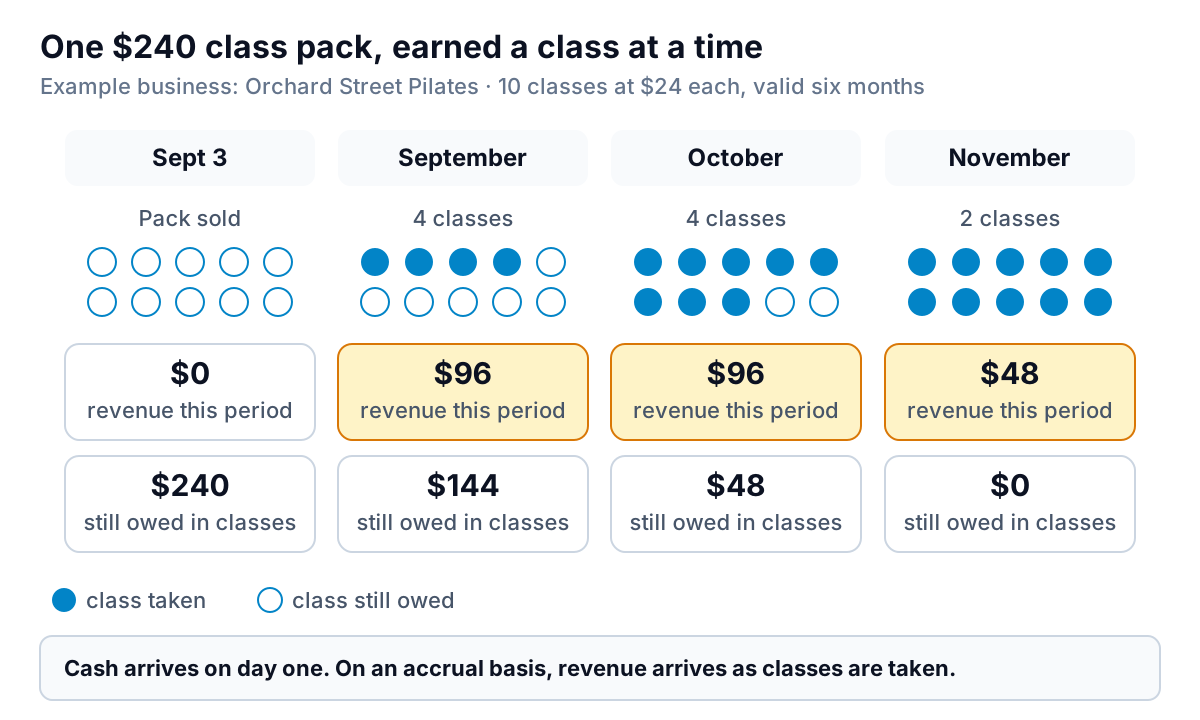
Across the whole studio, clients used 380 pack classes in September, including classes from packs bought in earlier months. At $24 each, that's $9,120 of earned revenue. So the accrual calculation swaps pack sales for pack usage:
Earned revenue = $44,313 − $10,800 packs sold + $9,120 pack classes used = $42,633
The $1,680 difference isn't lost. It's added to a liability usually called deferred or unearned revenue: classes the studio owes and will earn when they're taken. Memberships are simpler, because a September membership buys September, so it's earned in the month it's billed.
What isn't revenue at all
Some money goes through your till or card reader without ever being revenue. In Orchard Street's September:
- Sales tax on retail, $160. In most cases you collect it for the state and pass it on. On the tax side, the Schedule C instructions treat it differently depending on whether the tax is imposed on you as the seller or on the buyer, so ask your accountant which applies where you are. For your own management reports, keep it out of revenue.
- Tips, $310. Paid to the studio through the card reader and passed on to instructors. They belong to the instructors, not the studio's revenue.
- Gift cards sold, $1,200. Like class packs, a gift card is a promise to deliver later. It becomes revenue when someone redeems it for a class or a pair of grip socks. Publication 538 notes that certain gift card sales count as advance payments for tax purposes.
- Card processing fees, $1,320. Not a deduction from revenue but an expense. If you record the payouts that land in your bank as your sales, the fees disappear from your books and your revenue looks $1,320 lower than it was.
- Loans, owner money and refunds from suppliers. None of these is a sale, so none of them is revenue, even though each one shows up as a deposit.
That's how the four numbers fit together. Total collected ($45,983) is net sales plus tax, tips and gift cards. Bank payouts ($44,663) are that total minus card fees. Gross sales ($45,638) are before discounts and refunds. Earned revenue ($42,633) is net sales with pack sales swapped for pack usage.
Revenue by stream
One total tells you how big September was. Splitting it by stream tells you where it came from and what to work on.
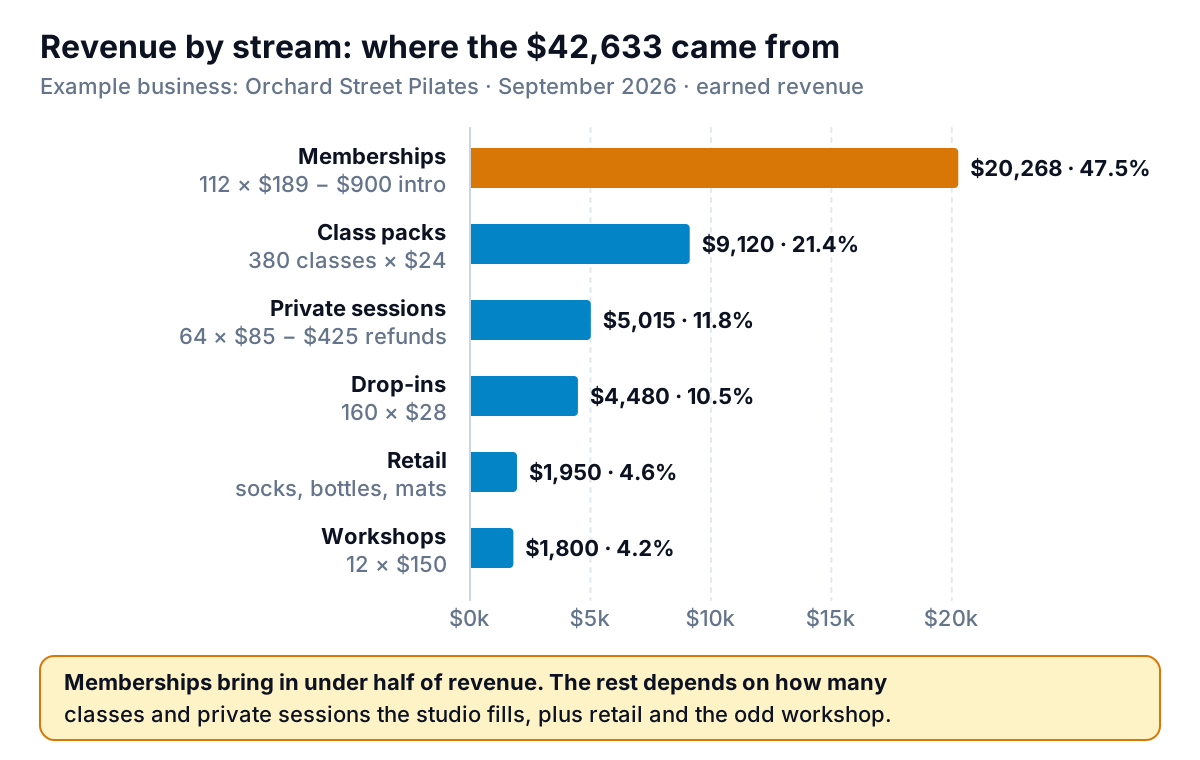
Three things stand out for this studio:
- Memberships are under half of revenue. The other 52% depends on classes and sessions being filled each month. A slow month for drop-ins and packs will show up quickly.
- Packs are a cash-timing question. Pack sales ($10,800) ran ahead of pack usage ($9,120). That's healthy while the studio is growing, but the money in the bank includes classes it still owes. If pack sales fall while usage holds up, cash will drop before revenue does.
- Privates earn the most per hour of instructor time. At $85 a session, against roughly $24 to $28 per client for a group class, it's worth knowing how full the private-session calendar is. The refunds there ($425) are also worth a look: five cancellations in a month is a scheduling problem, not just a revenue line.
Keep the stream split the same from month to month, and resist the urge to add a new category for every promotion. Six streams you can compare over a year beat fifteen that change every quarter. Our sales report guide covers how to lay out a monthly revenue view that people actually read.
Getting the inputs from your systems
Knowing how to calculate revenue is half the job; the other half is clean inputs. Most of what you need is already in the tools you use to take payments.
- Square. In Square Dashboard, Reports, then Sales summary, shows gross sales, returns, discounts and comps, and net sales, which Square defines as gross sales minus returns minus discounts and comps. Taxes, tips and fees are listed separately, which makes the "not revenue" items easy to strip out.
- Stripe or a booking platform. Export payments with the product or plan on each line, so you can group by stream. Our Stripe reports guide covers which exports carry which fields.
- QuickBooks Online or Xero. The profit and loss report shows revenue by income account. If every stream has its own income account and the payouts are recorded gross with fees as an expense, the top of your P&L is your revenue by stream.
- A spreadsheet. One row per sale with date, stream, units, price, discount and refund. A pivot table by stream and month gives you gross and net. For accrual, add a second table of pack usage from your booking system's attendance export.
Mistakes that make revenue wrong
- Using bank deposits as revenue. Deposits are net of fees and include tax, tips, gift cards and sometimes transfers. They're a cash figure, and a useful one, but not revenue.
- Counting prepaid packages when sold. On a cash basis that's expected. On an accrual basis it overstates revenue in busy sales months and understates it later.
- Netting fees against sales. It hides a real cost and understates revenue. Record sales gross and fees as an expense.
- Forgetting refunds of earlier sales. A refund in October for a September sale reduces October's net revenue unless you adjust September. Pick one rule and apply it every month.
- Mixing a stream's definition over time. If workshops moved into "other" halfway through the year, a stream chart will show a drop that never happened.
Once revenue is calculated the same way every month, it belongs on a dashboard next to the numbers that explain it. Parity connects Square, Stripe, QuickBooks Online and Google Sheets, or takes a CSV or Excel export from your booking system, and builds a dashboard with headline numbers and their trends, charts, what explains them, and a table of what needs attention. Every figure is checked against queries on the full dataset before you see it. You can ask in chat to split revenue by stream, or to show pack sales against pack usage, and update it with next month's export. If a lender asks, it can write the monthly report from the same data. Our KPI dashboard guide covers what else to put next to revenue.
Bring in your sales export and get a checked dashboard that splits revenue by stream and shows what moved it. Build a report from your data free
For the lease application, the owner sent $42,633, with a note explaining the class-pack balance. It's the smallest of the four numbers, and it's the one that will still be right when someone checks it against her books.