"It'll be with you by Thursday." Thursday comes and goes. Friday morning, you check the bank, then the accounting system, then the bank again. Nothing. Now you're wondering whether to say something, how to say it without sounding like you're calling them a liar, and whether you'll be having the same conversation again in two weeks.
If a client promised to pay but didn't, you're in a better position than it feels. A promise, even a broken one, tells you the client is engaged, knows the invoice exists and has named a date. That's far more than silence gives you. This post covers how to get a promise worth holding someone to, exactly what to send the morning after it breaks, and what to do differently when it breaks twice.
What a broken promise usually means
Most broken payment promises aren't lies. The person who made the promise often doesn't control the payment. Your contact says "Thursday" because that's when they hope the finance team will process it, and then the approver is off sick, or the payment run moves, or the invoice is sitting in someone else's queue with a missing PO number.
Sometimes, though, a promise is a way to end an uncomfortable conversation. How the promise was phrased, and what happens when you follow up, tells you which one you're dealing with.
| What they said | What's often going on | Your best next move |
|---|---|---|
| "It's been approved, it's in Friday's run." | A real process with a real date | Wait until Monday, then check |
| "I'll get it sorted this week." | Good intent, no control over the payment | Ask who approves it and when |
| "Should be soon." | Doesn't know, or doesn't want to say | Ask for a date before you hang up |
| "We're waiting on our own client to pay us." | A cash problem | Offer a payment plan early |
| Promises, then goes quiet | Avoidance, or an unspoken problem with your work | Phone call; ask directly if anything's wrong |
That last row deserves attention. Sometimes a client who keeps promising and not paying is unhappy with the work and hasn't said so. If you sense that, ask. A problem you hear about can be fixed. If it turns out they do dispute part of the invoice, stop chasing and switch to the approach in when a client disputes an invoice.
Get a date, not a "soon"
You can't follow up on "soon." The single most useful thing you can do when a client offers a vague promise is turn it into a specific date, politely and on the spot.
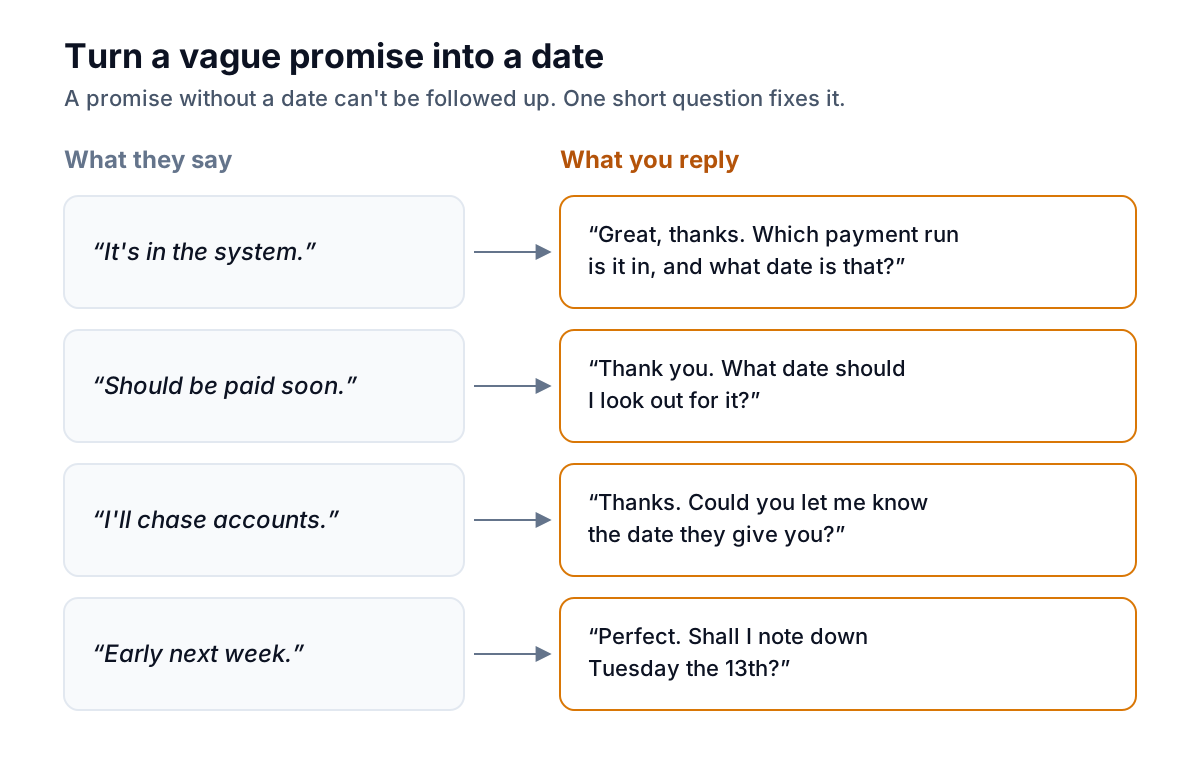
Notice the tone. None of these replies push back or express doubt. They thank the client and ask a practical question, the way you'd confirm a meeting time. Most people will give you a date if you ask for one directly. If they won't, that tells you something too.
Once you have the date, confirm it in writing. This takes thirty seconds and makes the follow-up much easier, because you're referring back to their words, not your memory.
Then leave them alone until the date has passed. Chasing in the window they've asked for tells the client you didn't believe them, and it gives them an easy grievance. If you'd normally send weekly reminders, pause them. If your accounting software sends automatic reminders, check whether one is about to go out mid-promise and skip it. Our post on how long to wait before following up covers the normal reminder rhythm you'll return to afterwards.
The morning after: what to do when a client promised to pay but didn't
Follow up the day after the promised date. Not two days. Not "after the weekend." The morning after shows you were paying attention, and it catches the payment while the promise is still fresh in their mind.
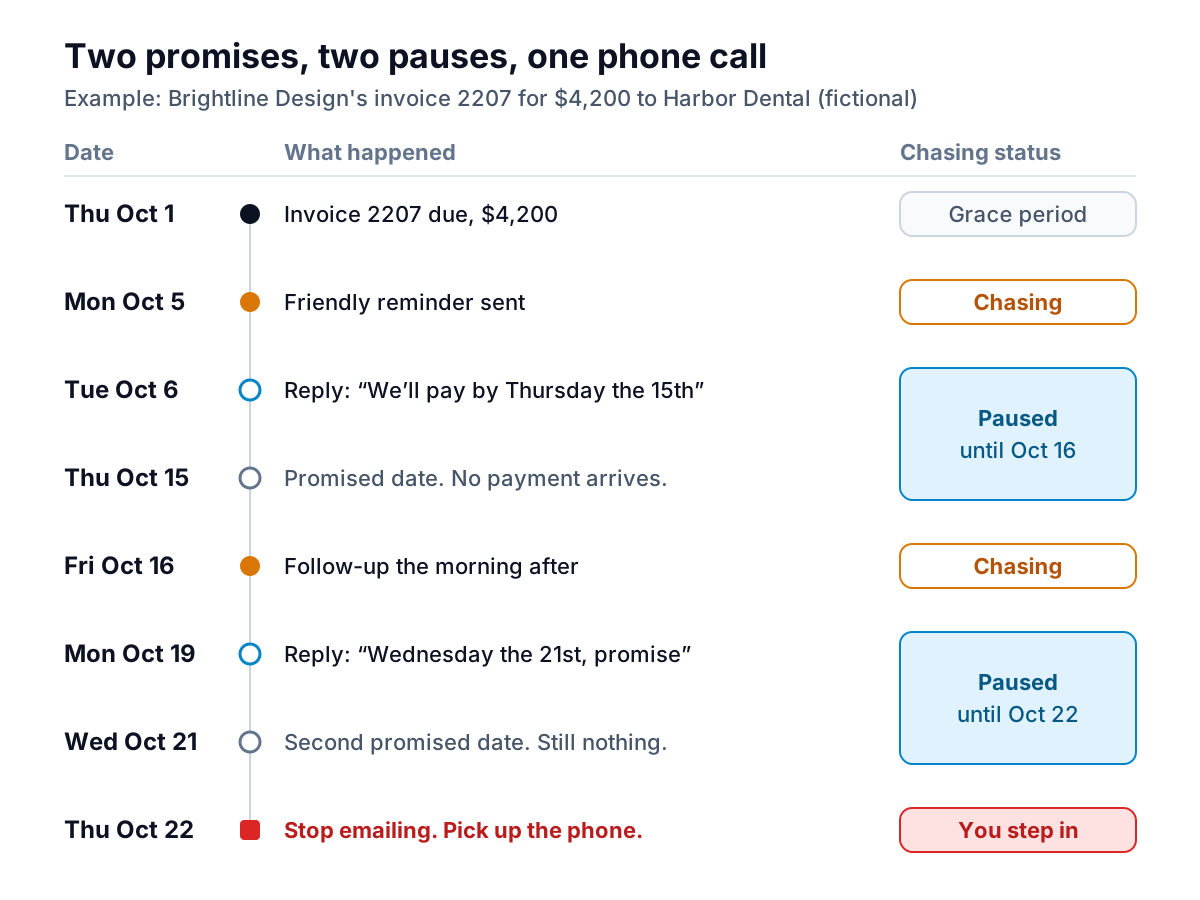
Example: Brightline Design (fictional) is owed $4,200 by Harbor Dental on invoice 2207. Jo, the practice manager, promised payment by Thursday, October 15. On Friday the 16th, Priya does three things in order.
- Checks first. She looks at the bank feed and the accounting system. Payments often land a day late, or get applied to the wrong invoice. Nothing undermines you faster than chasing money that already arrived.
- Sends a short, neutral note. No "as promised," no "you said." She assumes it slipped and asks what happened.
- Asks for two things: a new date, and what got in the way. The second question matters. "Our system needs a W-9 from you" is a five-minute fix that a reminder would never have uncovered.
The second broken promise changes the conversation
One broken promise is a slip. Two is a pattern. When the second date passes, stop emailing and call. In the example above, that's Thursday, October 22: Jo promised Wednesday the 21st, and nothing came.
The goal of the call isn't to scold. It's to find out what's really going on, because the email thread clearly isn't telling you. Have these questions ready:
- "Who signs off payments on your side? Could I speak to them, or could you copy me in?"
- "Is there anything about the invoice or the work that's holding it up?"
- "Is cash tight at the moment? If so, I'd rather agree a plan than keep missing each other."
- "What can you pay this week?"
That last question is the one people skip, and it's often the most productive. A client who can't pay $4,200 by Friday can usually pay something. Money in hand beats a third promise.
If they can't pay in full: a payment plan, in writing
A payment plan turns one big broken promise into several small kept ones. Keep it short (two or three instalments), make the first one soon, and write it down. Example: Harbor Dental agrees to pay the $4,200 in three instalments of $1,400.
The three instalments add up to the full $4,200, and the last one lands about seven weeks after the original due date. That's a better result than a fourth promise that slips into December.
When to stop believing and start protecting yourself
When a client promised to pay but didn't, and then did it again, each broken promise should move you one step further. The steps aren't threats. Tell the client which step comes next, then do what you said. That's what makes your word worth more than theirs.
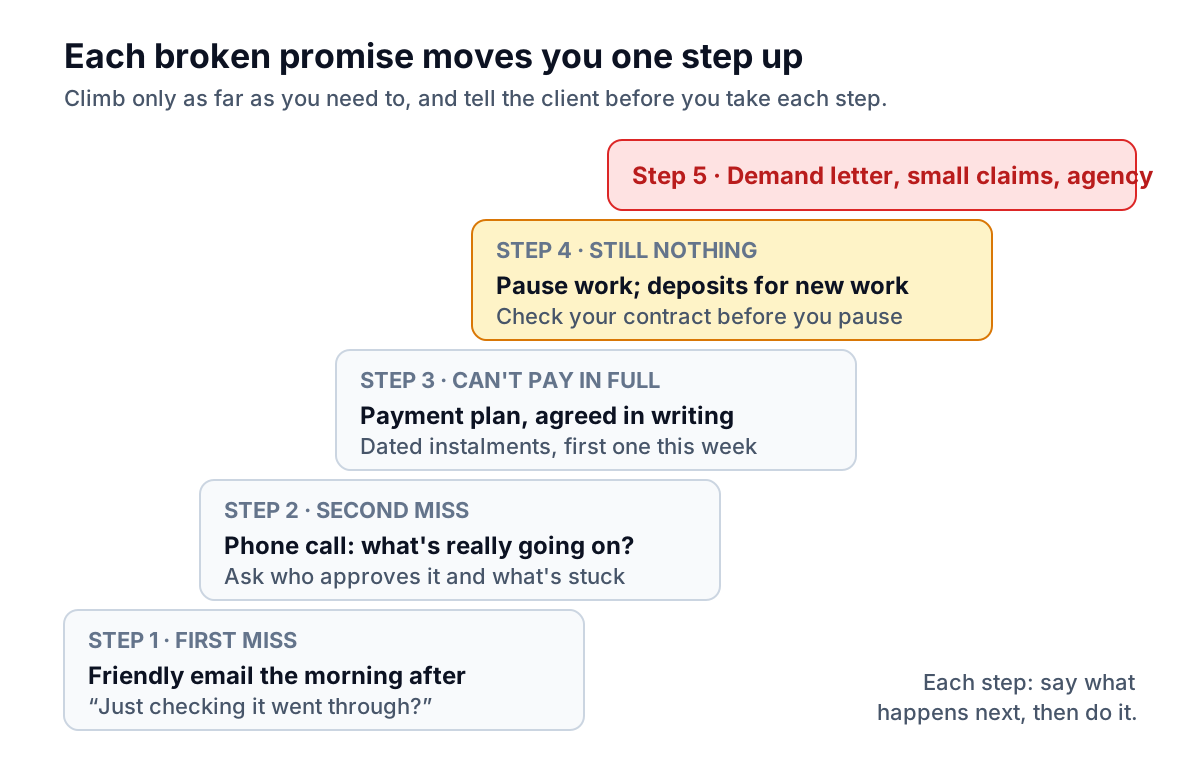
Pause the work
If you're still delivering for a client who has broken two promises, you're extending them more credit every week. Pausing work is often the most effective lever a service business has. Check your contract first: what it says about payment terms, suspension and notice will shape what you can do. A clear, calm message works: "I'll pick the next phase back up as soon as invoice 2207 is settled." For future work with this client, ask for a deposit or payment upfront.
Formal options
If the client has stopped responding entirely, you're out of friendly territory. The usual options, roughly in order of cost, are:
- A demand letter. A formal written request for payment by a specific date, stating what you'll do next. Many small claims courts expect you to have asked for payment before you file.
- Small claims court. Limits vary a lot by state. Nolo keeps a state-by-state list. Some states set different limits for businesses: in California, a business can file for $6,250 or less, half the limit for individuals. Check your state's rules and filing fees before you decide.
- A collections agency. Usually paid as a share of what they recover, and it usually ends the relationship. We compare the options in invoice chaser vs collections agency vs doing it yourself.
Two legal points worth knowing, and worth checking with a lawyer for your situation. First, the federal Fair Debt Collection Practices Act is about consumer debt: the FTC says plainly that business debts are not covered by the FDCPA. But if your clients are individuals (homeowners, say, rather than companies), some state laws reach further. California's Rosenthal Act, for example, covers original creditors collecting their own debts, which can include you. Second, if you're in the UK and your client is a business, the Late Payment of Commercial Debts Act lets you claim statutory interest at 8% plus the Bank of England base rate, plus a fixed recovery cost of £40, £70 or £100 depending on the size of the debt. Most owners keep that in reserve rather than leading with it.
Keep a promise log
Half the stress of a client who promised to pay but didn't is not knowing exactly what was promised. The reason promises slip through the cracks on your side is that they live in email threads. A client says "the 15th" in a reply on a Tuesday, you mean to note it, and three weeks later you're not sure whether they said the 15th or the 25th. A simple log fixes that. For each promise, record:
- the invoice number and amount
- the date they gave, and who gave it
- your follow-up date (the day after)
- whether it was kept
Over a few months, that log tells you which clients' promises are reliable. A client who has kept five out of five gets the benefit of the doubt. A client who has kept one out of four gets a payment plan or a deposit requirement, not a fifth promise.
This is one of the jobs we're building Parity's invoice chaser to handle. When a client replies to a reminder, Parity sorts the reply into paid, promise with a date, dispute, question, bounce or out-of-office. A promise with a date pauses chasing on that invoice until the day after the date, and the customer shows as "promised" on your dashboard. If the money hasn't arrived by then, a friendly follow-up is drafted in your voice, with the amount and invoice number checked against your QuickBooks, Xero or FreshBooks data. It waits in your approval queue. Nothing goes out unless you approve it, and the phone call is still yours to make.
Parity tracks every promised date and has a follow-up ready for your approval when one is missed. Get early access to Parity's invoice chaser
Whatever you use, the pattern is the same: get a date, confirm it in writing, stay quiet until it passes, follow up the next morning, and move up one step each time a promise breaks. Done consistently, that pattern changes how clients treat your invoices.