Three days. If you want the one-number answer to how long to wait before following up on an unpaid invoice, that's it. Give the payment three days past the due date to land, then send a short, friendly note. Not on the due date itself, when the money may already be moving. And not three weeks later, when your client has stopped thinking about your work and started thinking about next quarter.
The rest of this post explains why three days works, what to do after that first nudge, and the cases where you should move faster or slower. You'll get a day-by-day calendar, five checks to run before you press send, and the wording for the first follow-up.
Why three days, and not thirty
Late payment is normal, and most of it is slow rather than hostile. Xero's Small Business Insights for the United States put the average wait to get paid at 29.3 days in the June 2026 quarter, with invoices paid 8.5 days late on average. Intuit's 2026 QuickBooks Small Business Late Payments Report found that 59% of small businesses had invoices more than 30 days overdue, and the average business was owed $17.7K.
So an invoice that's a day or two late usually just means a payment run hasn't happened yet, or a transfer is in flight, or the due date fell on a weekend. That's what the three-day grace period absorbs. Chase before it and you'll sometimes ask about money that's already on its way, which is awkward for both sides.
Wait much longer than that and the costs pile up quietly:
- Your invoice drops down their list. The client's attention is on the next project. A reminder at day 3 lands while your work is still fresh. One at day 30 has to re-explain what the invoice was for.
- You look like you don't mind. Clients who handle money tightly pay the people who ask first. Silence reads as "this one can wait."
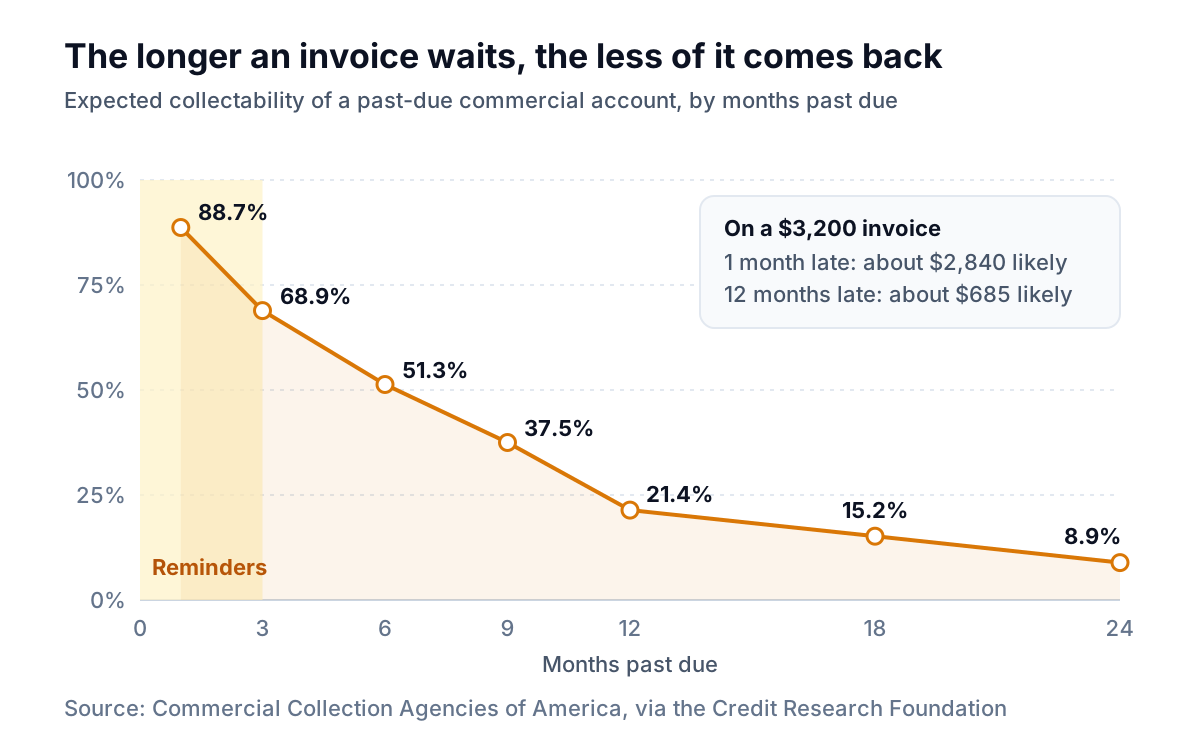
- Old debt is harder to collect. The chart below uses figures published by the Commercial Collection Agencies of America and reproduced by the Credit Research Foundation. They describe accounts that ended up with collectors, so treat them as a picture of how debt decays rather than a forecast for your client. The shape is the point: about 89% collectable at one month past due, about 69% at three months, about 21% at a year.
None of this means you should be pushy on day 3. It means you should be present on day 3. A friendly, specific email at the right time is the most polite thing you can send, because it saves both of you a harder conversation later.
How long to wait before following up on an unpaid invoice, by situation
Three days past due is the default. A few situations shift it. Use this table as a starting point and adjust to what you know about the client.
| Situation | First follow-up | Why |
|---|---|---|
| Net 15 or net 30, small business client | 3 days after the due date | Covers a weekly payment run and a transfer in flight |
| "Due on receipt" | 7 days after you sent it | There's no real due date, so give them a week to process it |
| Larger company with an accounts payable team | A check-in before the due date, then 3 days after | Invoices stall in approval. Ask early whether it's been approved and when their next payment run is |
| Monthly retainer | 3 days after the due date | Next month's work is about to start, so sort it out before the balance doubles |
| Final invoice on a finished project | 3 days after, no slack | There's no next deliverable to keep the client engaged, so these slip the most |
| Client who has paid late before | 1 day after the due date | You already know the pattern; the grace period isn't doing anything for you |
| Brand-new client, first invoice | Heads-up 3 days before, then 3 days after | You don't know how their payment process works yet, and they may not either |
If your invoice doesn't state a due date, fix that first. A due date is the thing every follow-up refers back to. In the UK it also matters legally: if no payment date was agreed, GOV.UK says a business-to-business payment becomes late 30 days after the customer gets the invoice or after you deliver the work, whichever is later. In the US, payment terms come from your contract and your state's law, so check your state's rules if you're unsure what applies.
The full calendar, from heads-up to phone call
Knowing how long to wait before following up on an unpaid invoice only covers the first email. Here's the whole sequence for one invoice, with each step a week apart.
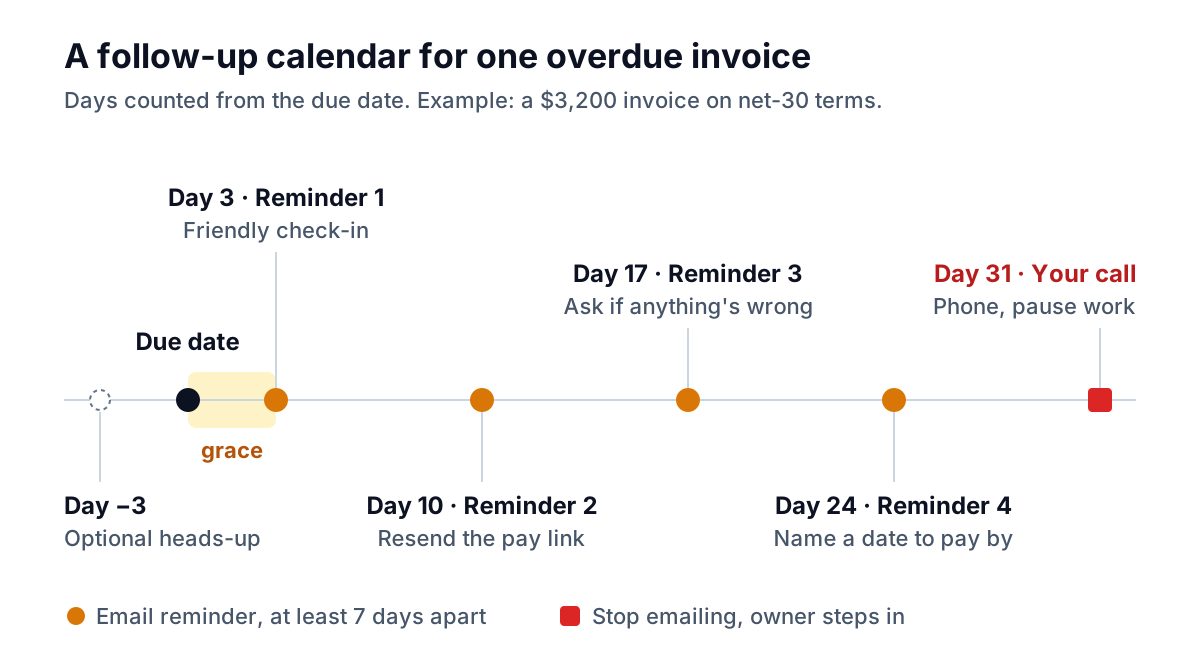
Here's how that plays out on dates. Example: Northwind Studio, a fictional design shop, sends invoice 1042 for $3,200, due Monday, October 5.
- Friday, Oct 2 (day −3), optional. A one-line heads-up: "Invoice 1042 for $3,200 is due Monday. Here's the link in case it's handy." Worth it for new clients and big invoices. Skip it for long-standing clients who always pay.
- Thursday, Oct 8 (day 3). The first reminder. Short, warm, and specific.
- Thursday, Oct 15 (day 10). Second reminder. Resend the pay link and offer to send the invoice again as a PDF, in case the first one got lost.
- Thursday, Oct 22 (day 17). Third reminder. Ask, plainly, whether anything is holding it up. This is where you find out about the wrong PO number or the approver on holiday.
- Thursday, Oct 29 (day 24). Fourth reminder. Still friendly, but ask for a date: "Could you let me know when this will be paid?" A date gives you something to hold them to.
- Thursday, Nov 5 (day 31). Stop emailing. Call your contact, or the person who signs off payments. Decide whether to pause work. (Our full guide to chasing unpaid invoices covers what comes after the phone call.)
If a date lands on a weekend or a public holiday, send on the next working day. Tuesday to Thursday mornings are a sensible default, since Monday inboxes are full and Friday afternoon emails get left for later.
Why a week between reminders
Many businesses pay suppliers in a weekly or fortnightly run. A week gives your contact time to forward the invoice, the approver time to sign it off, and the run time to happen. Remind more often and you're asking about a process that hasn't had a chance to move, and your emails start to read as pressure. Remind less often and the invoice ages a month between nudges.
Why stop at four emails
If four friendly, specific emails over three weeks haven't got a reply or a payment, a fifth won't either. The problem isn't that they forgot. It's that something else is going on, and you'll only find out by talking to a person.
What the first follow-up should say
Keep it short enough to read on a phone. Include the invoice number, the amount, the original due date and a way to pay. Assume good faith.
For later steps in the sequence, our invoice reminder email templates cover the wording for before, on and after the due date.
Five checks before you hit send
The calendar tells you when a reminder is allowed. These checks tell you whether it's the right thing to send today. Run them every time, because the worst reminders go to clients who have already replied.
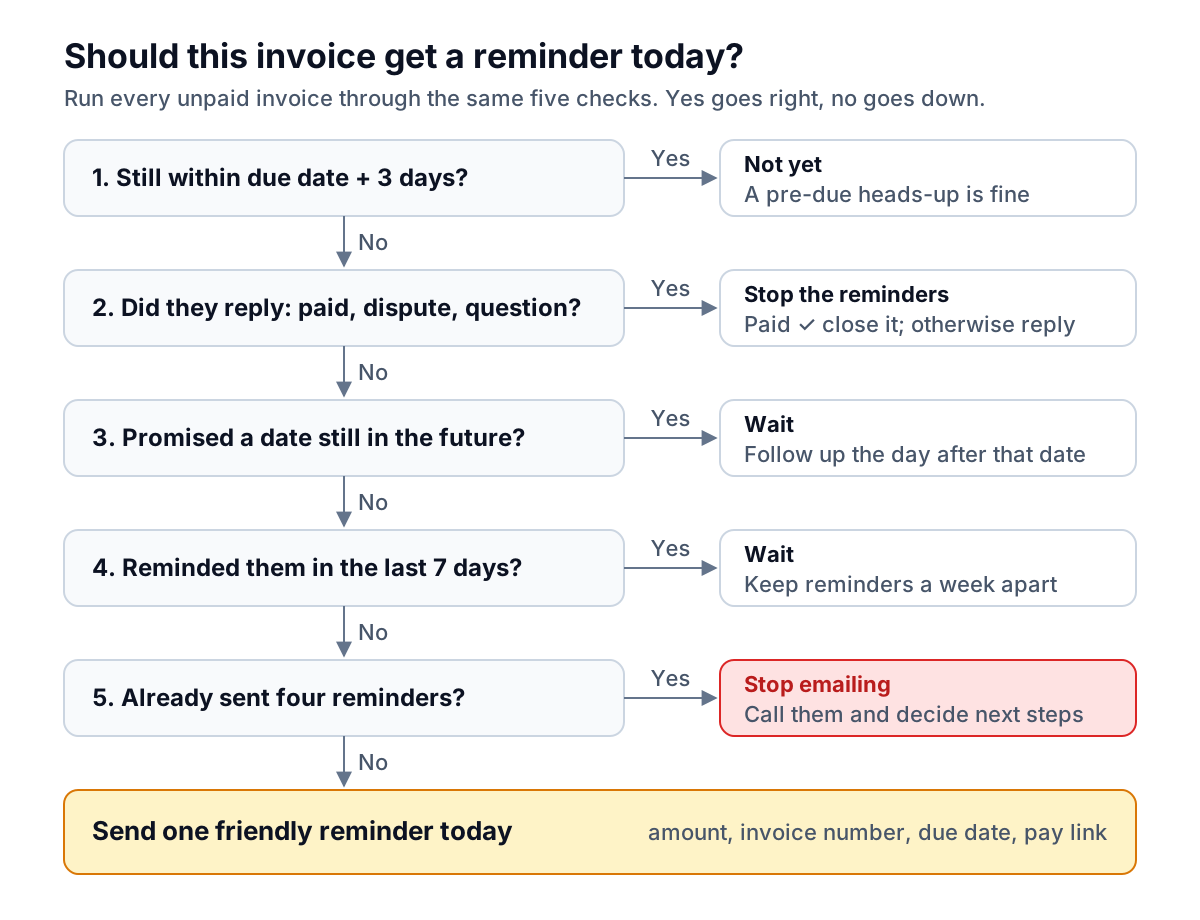
- Is it still inside the grace period? Then wait. A heads-up before the due date is fine; a "you're late" email isn't.
- Have they replied? Check your inbox and your accounting system first. If they've paid, close it. If they've raised a problem with the invoice, a reminder is the wrong reply: see what to do when a client disputes an invoice. If they've asked a question, answer it.
- Did they promise a date? If it's still in the future, leave them alone until the day after it. Then follow up that morning. (More on this in what to do when a client promises to pay and doesn't.)
- Have you reminded them in the last seven days? Then wait. This also catches double-chasing: if QuickBooks, Xero or FreshBooks is already sending automatic reminders for you, your own email makes two. Pick one source of reminders per client.
- Is this the fifth email? Then don't send it. Pick up the phone.
When to move faster, and when to ease off
Use the calendar as the default and let a few signals move it.
Move faster when
- The invoice is big for you. If one invoice is a third of your month's revenue, send the pre-due heads-up and follow up on day 1, not day 3.
- You're still doing the work. Every week you keep delivering for a client who hasn't paid adds to what's at risk. Raise it before you start the next phase.
- You see warning signs. Your contact leaves, emails start bouncing, the client mentions a tough quarter. Get your invoice paid while there's still money to pay it with.
- They've been late before. The grace period exists for honest delays. A client who is always two weeks late doesn't need three more days.
Ease off when
- They told you when the payment run is. If AP said "we pay on the 15th and you're in it," follow up on the 16th, not before.
- It's a holiday week. Late December and the week of a major public holiday are slow everywhere. Send the reminder, but expect to wait longer for an answer before the next one.
- The client has years of on-time payments. Give them the full grace period, and keep the first note especially light. Still send it by day 7: good clients forget too.
Mistakes that make the wait longer
- Waiting for "a good moment." There isn't one. A client in the middle of a busy month is still busy next month. The calendar removes the guesswork.
- Chasing in a monthly batch. If you sit down once a month to "do invoices," one client gets a reminder at day 2 and another at day 29. Check weekly, so every invoice gets its follow-up on time.
- Leaving out the details. "Just checking in on the invoice" makes the client go find it. Put the number, amount, due date and pay link in every email.
- Getting the details wrong. Quoting the wrong amount or an invoice they've already paid hands them a reason to delay and costs you credibility. Check the figures against your accounting system before every send.
- Starting firm. If your first reminder threatens late fees, you have nowhere to go next and you've told a probably-honest client that you assume the worst.
- Going quiet after one email. A single reminder followed by six weeks of silence is the most common pattern of all. The second and third nudges are where most of the work happens.
Keeping the calendar without keeping a calendar
None of this is hard for one invoice. It gets hard with fifteen open invoices across three systems, a few promised dates, one dispute and a client on holiday. That's when day 3 turns into day 23.
That gap is what we're building Parity's invoice chaser to close. It connects to QuickBooks Online, Xero or FreshBooks (or takes PDF invoices and CSV exports from anything else) and applies the timing rules from this post. By default, an invoice becomes eligible for a reminder three days after its due date, and you can change that grace period. Reminders stay at least seven days apart. A promised date pauses chasing until the day after it. A dispute stops suggestions and comes to you. After four reminders, it stops and flags the invoice for you to handle personally.
The part that matters most: nothing is sent without your approval. Each morning you get a digest of drafted reminders, written in your own voice, with the amount, due date and invoice number checked against your accounting data. You approve, edit, skip or snooze each one. If your provider's own automatic reminders are switched on, Parity tells you, so a client is never chased twice.
Parity spots which invoices are due a follow-up today and drafts each one for your sign-off. Get early access to Parity's invoice chaser
So, how long to wait before following up on an unpaid invoice? Whether you use a tool or a sticky note, the rule is the same: three days after the due date, a friendly note; then every seven days; then a phone call after the fourth email. Being on time with your follow-up is how you get paid on time.