$1,500. That's what a collections agency charging 25% keeps when it recovers a $6,000 invoice for you. At 40%, the kind of rate agencies may charge on older or smaller debts, it's $2,400. Sometimes that's a fair price for money you'd never have seen otherwise. Often it's a fee you paid because nobody followed up on the invoice in its first month.
Collections agency vs DIY invoice chasing can sound like a choice between being effective and being nice. It's really a question of timing. This post compares the three ways to get an overdue invoice paid: doing it yourself, using an invoice chaser (software that handles the reminders), and handing it to a collections agency. Each option has a stage where it's the right call, and the expensive mistakes come from using one at the wrong stage.
Three ways to get an overdue invoice paid
Here's what each option actually involves.
Doing it yourself means you track what's overdue, write the reminders, send them on schedule, make the calls and keep notes. It costs nothing but time, and it keeps the relationship entirely in your hands. The weak point is consistency: reminders slip when you're busy, which is exactly when cash matters most.
An invoice chaser is software that does the tracking and reminder work for you. That ranges from the automatic reminders built into QuickBooks Online, Xero and FreshBooks to dedicated tools that sit on top of them. The messages still come from your business, so the relationship stays yours. The work you're paying to remove is the noticing, drafting and remembering.
A collections agency is a third party that contacts your client to recover the debt. Most commercial agencies work on contingency, taking a percentage of what they collect and nothing if they collect nothing. They bring outside pressure and experience with debtors who have gone quiet. Once the agency calls, though, your client knows you've stopped treating them as a client.
| Do it yourself | Invoice chaser | Collections agency | |
|---|---|---|---|
| Who contacts the client | You | Your business (the software sends, or drafts for you) | The agency |
| Typical cost | Your time | A subscription, often flat monthly | A percentage of what's recovered |
| Your time per invoice | Highest | Low | Low once handed over |
| Effect on the relationship | Kept | Kept, if the tone is right | Usually ends it |
| Best stage | Any, if you're disciplined | From the due date to about 30 days late | 90+ days, client unresponsive, no dispute |
Collections agency vs DIY invoice chasing: the real costs
Agency fees are easy to quote and easy to underestimate. Commercial agencies commonly charge somewhere between 15% and 45% of what they recover, and The Kaplan Group, a commercial agency, puts the range at 18% to 50%. Where your invoice lands depends mostly on its size and age. Southwest Recovery Services, another agency, says balances of $3,000 to $10,000 typically run between 25% and 35%, with smaller and older debts costing more. If the claim goes to court, filing fees, service costs and local counsel may be billed on top of the contingency, so ask what sits outside the percentage before you sign.
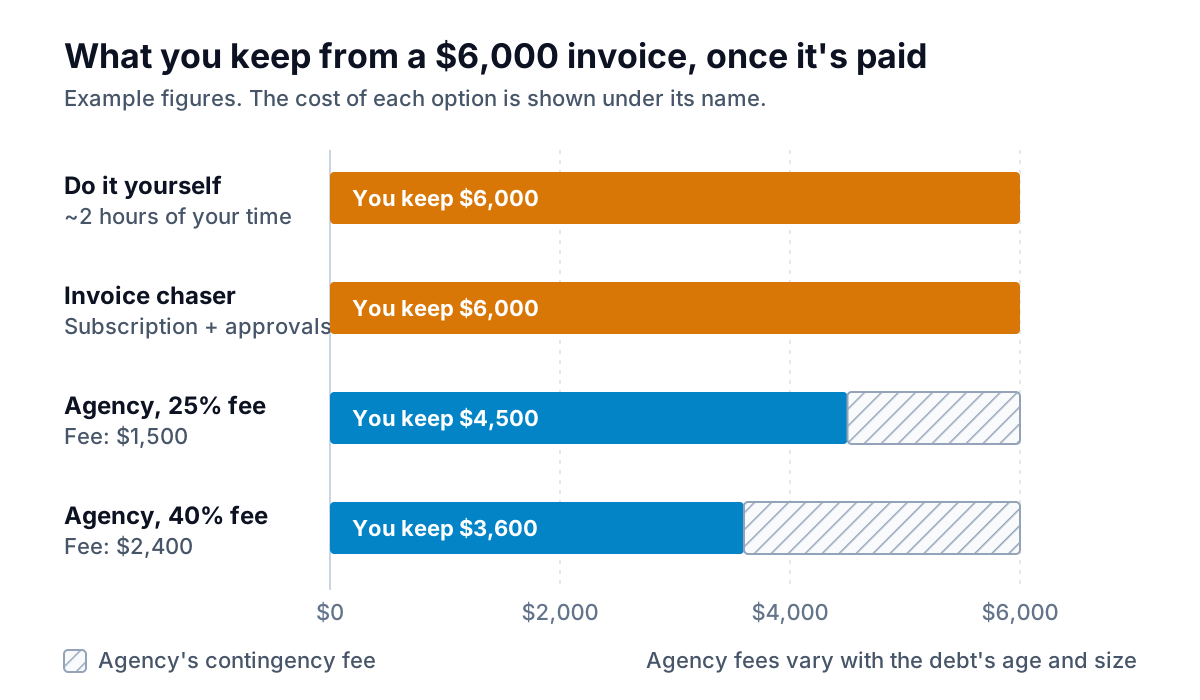
Do the same sum for doing it yourself. Example: a consultant chasing a $6,000 invoice sends four reminders at about 15 minutes each (finding the invoice, checking the amount, writing the email), makes one 30-minute phone call and spends another 30 minutes over the month checking whether it's been paid. That's about two hours. If you bill $100 an hour, the effort is worth about $200, roughly a seventh of the agency's fee at 25%. The catch is that those two hours have to happen on time, every week, for every overdue invoice.
An invoice chaser sits between the two. The cost is a subscription spread across all your invoices rather than a cut of one, plus a few minutes of your attention for each reminder if the tool asks for approval. Built-in reminders in your accounting software are included in what you already pay. Dedicated tools charge more and do more. For a fair look at the dedicated options, see our comparison of AI tools for chasing unpaid invoices.
Timing decides more than price
The biggest difference in the collections agency vs DIY invoice chasing decision isn't what each option costs. It's when they work. A friendly reminder in week one and an agency letter in month six are tools for different problems.
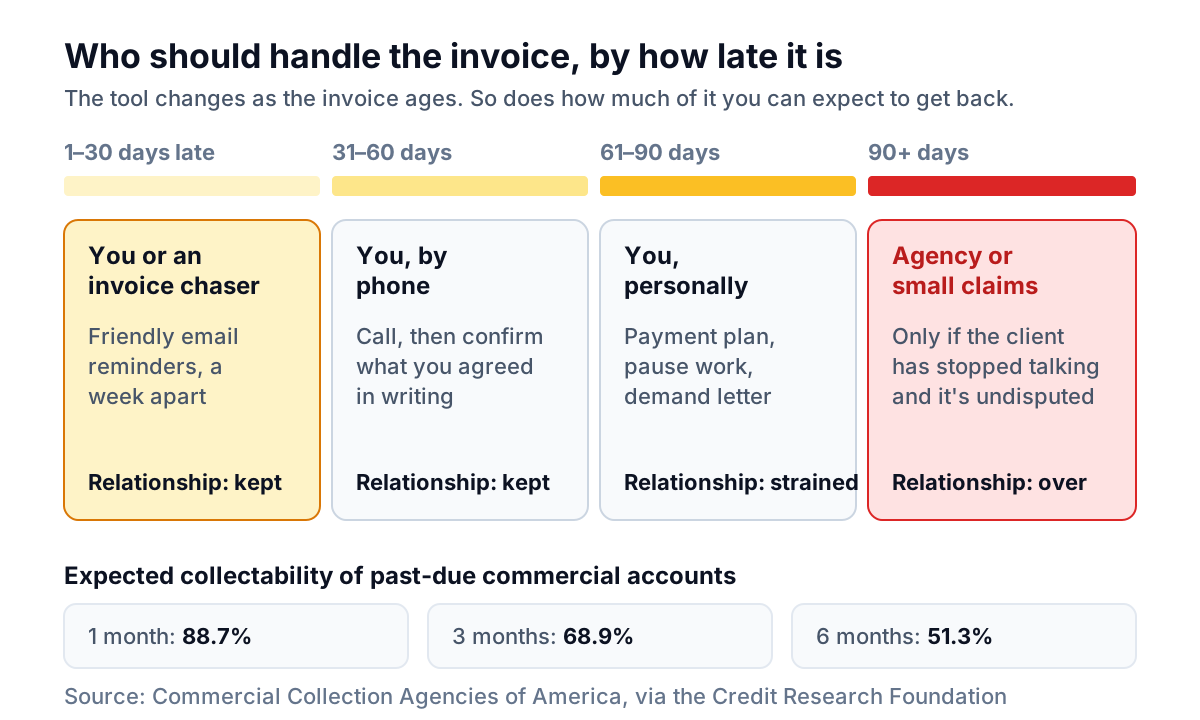
The collectability figures at the bottom come from the Commercial Collection Agencies of America, as published by the Credit Research Foundation: about 89% of a commercial account is collectable a month after it's due, about 69% at three months, about 51% at six months and about 21% at a year. Those are averages for accounts that ended up with collectors, not a forecast for your client. But the shape matters for this decision in two ways:
- Early effort is cheap and effective. In the first month, most late invoices are late for boring reasons: a missed payment run, an approver on holiday, an invoice in the wrong inbox. Friendly, consistent reminders fix those. Our guide on how long to wait before following up lays out a schedule.
- Agencies inherit the hard cases. By the time an invoice reaches an agency, it's older and less likely to be recovered, which is partly why agency rates are what they are. Every invoice you collect yourself in month one is one you never pay a contingency fee on.
The scale matters too. Intuit's 2026 QuickBooks Small Business Late Payments Report found 59% of US small businesses had invoices more than 30 days overdue. Most of those don't need an agency. They need someone to follow up on time.
What an agency does that you can't
Being fair to agencies: there are situations where they're the right answer, and doing it yourself would be worse.
- The client has gone silent. If calls go to voicemail and emails go unanswered for weeks, a third party's letter changes the dynamic. It tells the client this is no longer a conversation they can avoid.
- You've run out of steps. You've reminded, called, offered a plan and paused work. An agency has more experience at this stage than you do.
- Legal action might follow. Many commercial agencies work with attorneys and can take a claim to court if it comes to that. If the amount is above your state's small claims limit, that matters.
- Your time is worth more elsewhere. Spending ten hours chasing a $2,000 debt from a client you'll never work with again may simply be a bad trade.
Two situations where an agency is usually the wrong move: when the invoice is genuinely disputed (the dispute still has to be settled, and an agency can't do that for you), and when the client is still replying and making promises, even unreliable ones. In both cases you'd be paying a large fee for a conversation you could still have yourself.
A note on the rules
The rules differ depending on who owes you. The federal Fair Debt Collection Practices Act covers consumer debts; the FTC states that business debts are not covered. If your clients are individuals rather than companies, both an agency and, in some states, you as the original creditor may be covered by stricter rules. California's Rosenthal Act, for example, applies to original creditors collecting their own debts. Check your state's rules, and get advice if you're unsure which apply. In the UK, business-to-business creditors can claim statutory interest at 8% plus the Bank of England base rate under the late payment legislation, which some owners raise before involving a third party.
If you do hire an agency, ask these questions first
Agencies vary a lot. Before you place an invoice, get answers in writing to:
- What's the contingency rate for this invoice, given its size and age? Is it fixed, or does it change if the claim goes to an attorney?
- What costs sit outside the percentage? Court filing fees, service of process and attorney costs are often separate.
- Is there any upfront or minimum fee? Many commercial agencies charge nothing unless they collect, but confirm it.
- What happens if the client pays me directly after I've placed the account? Many agreements still owe a fee. Read that clause.
- Can I withdraw the account, and on what terms?
- How will you contact my client, how often, and will you report progress to me?
- Are you licensed or bonded where that's required, and are you a member of a trade body? The Commercial Law League of America, for example, runs a certification program for commercial agencies.
Have your paperwork ready: the contract or proposal, the invoice, proof of delivery and your record of reminders and replies. A clean trail of polite, dated follow-ups helps an agency (or a court) far more than an angry email does.
Where an invoice chaser fits, and where it doesn't
Put the three options together and a simple sequence appears. Settle disputes first. Keep everything else in-house while the client is still talking. Hand it on only when they've stopped and the invoice is old.
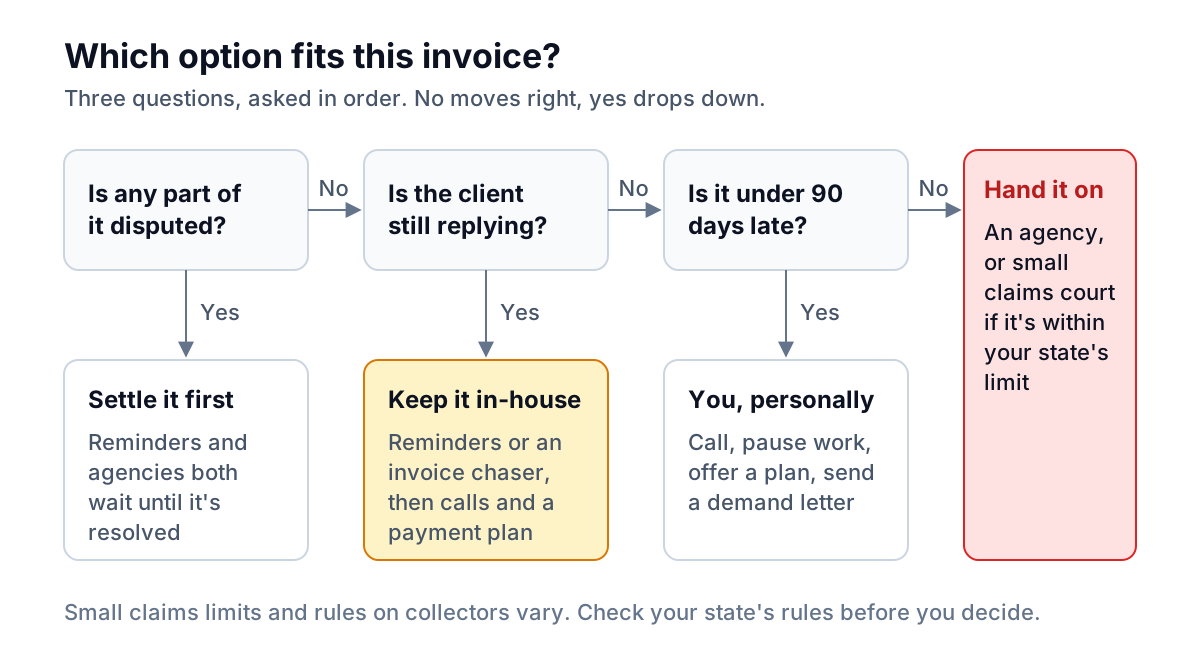
An invoice chaser is built for the left side of that chart: the early, friendly, consistent follow-up that stops most invoices from ever needing a phone call, let alone an agency. That's the job we're building Parity's invoice chaser to do, and it's worth being clear about what it isn't.
Parity connects to QuickBooks Online, Xero or FreshBooks, or takes PDF invoices and CSV exports from other systems, and shows every open invoice by age. When an invoice is past due (by default, three days), unpaid, undisputed and not marked exempt, it drafts one friendly reminder in your voice, with the amount, due date and invoice number checked against your data and your provider's pay link included. You approve, edit, skip or snooze it. Nothing is sent without your approval, and it goes out under your business name with you as the reply-to. Reminders stay at least seven days apart, and after four, Parity stops and flags the invoice for you.
What it doesn't do: it isn't a collections agency, it doesn't send firm or escalating demands, it doesn't take payments, and it doesn't contact anyone you haven't approved. When an invoice reaches the point where a phone call, a demand letter or an agency is the right move, Parity hands that decision back to you.
Parity drafts friendly, accurate reminders for every overdue invoice and waits for your approval before anything goes out. Get early access to Parity's invoice chaser
So, collections agency vs DIY invoice chasing? Both, in their place. Chase early and consistently, yourself or with a tool, and save the agency for the few invoices that really need it. For the full early-stage playbook, start with how to chase unpaid invoices without losing the client.