A seller hands you a spreadsheet with twelve rows, one per apartment, and a total at the bottom: $14,345 a month. Multiply by twelve and the building "makes" $172,140 a year. That's the number the asking price is built on. But the same rent roll, read properly, says the building collected $12,745 in October, a run rate closer to $153,000. It also says eight of eleven occupied units could be empty within six months. Nothing on the sheet was hidden. It just wasn't added up.
This guide is about reading a rent roll the way a careful buyer, lender or owner does. It walks one example building through the five numbers worth calculating, the checks that tell you whether the rent roll is true, and a short monthly routine for owners who already have one.
What a rent roll shows, column by column
There's no single required format, but most rent rolls carry the same core columns. New York City's Department of Finance publishes its rent roll column definitions for property owners filing income and expense statements, and they're a useful checklist. For a residential building they include the unit, occupancy status, lease start and end, monthly rent and any free rent. Commercial rent rolls add square footage, rent escalation dates and each tenant's share of taxes and common area costs.
Here's a residential example. Maple Court is a made-up 12-unit building with four one-bedroom and eight two-bedroom apartments. Tenant names are left out here; a real rent roll would have them.
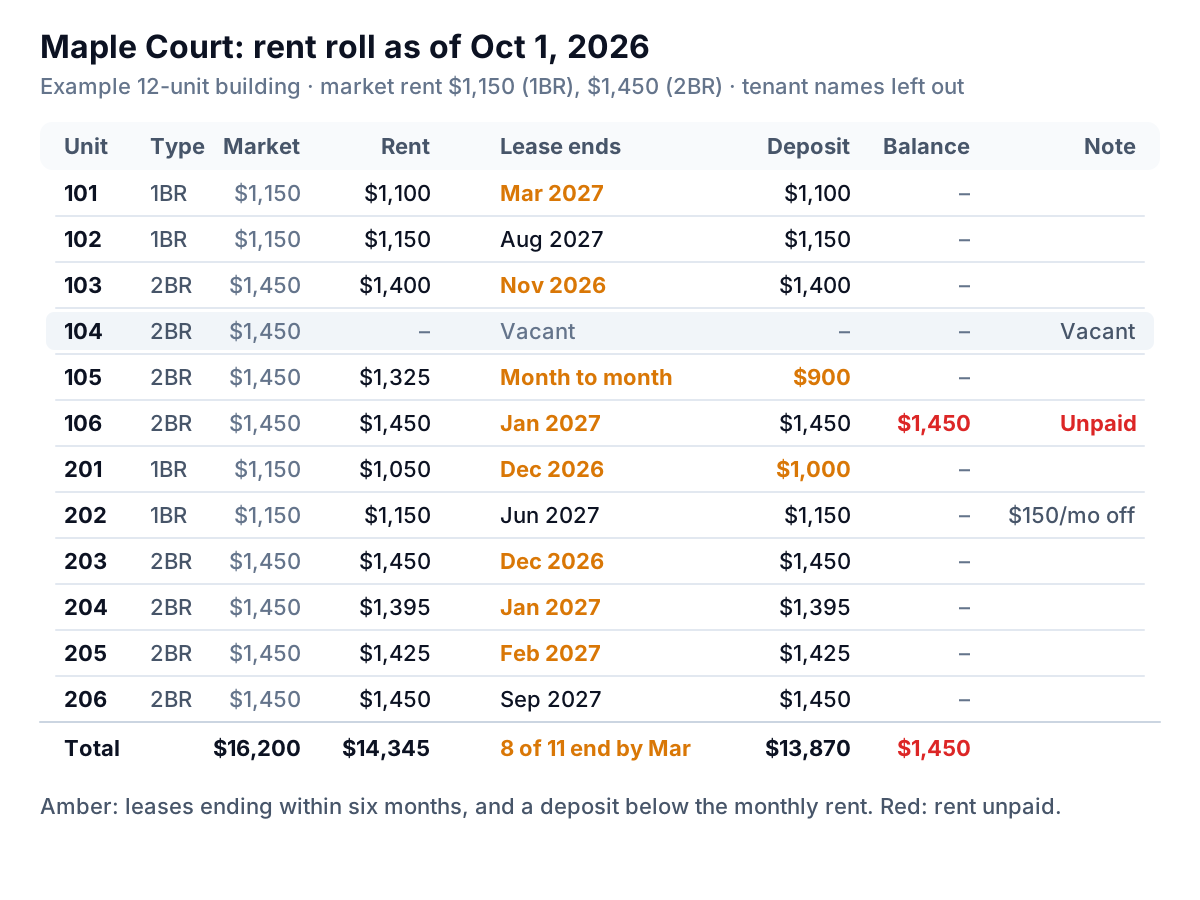
What each column is for:
- Market rent is what the unit would rent for today. It's an estimate, usually the owner's or the property manager's. Ask how it was set.
- Rent (sometimes "contract rent" or "lease rent") is what the tenant agreed to pay.
- Lease ends tells you when each income stream can stop, or be reset to market.
- Deposit is money you hold but don't own. It's a liability.
- Balance is what the tenant owes right now. A good rent roll shows this; many don't, and you should ask for it.
- Concessions (free months or discounts) are often in a notes column or missing entirely. Unit 202's $150-a-month discount is easy to miss.
On a commercial rent roll, look for three more columns. The next escalation date tells you when rent steps up under the lease. Each tenant's share of property tax and common area costs tells you how much of the building's running costs is passed through. And free rent periods, common on new commercial leases, can mean a tenant who is "occupied" isn't paying yet. NYC's column definitions include all three.
Five numbers to pull from any rent roll
The total at the bottom of the rent column is the least useful number on the page. These five tell you much more.
1. Gross potential rent, and how far below it you are
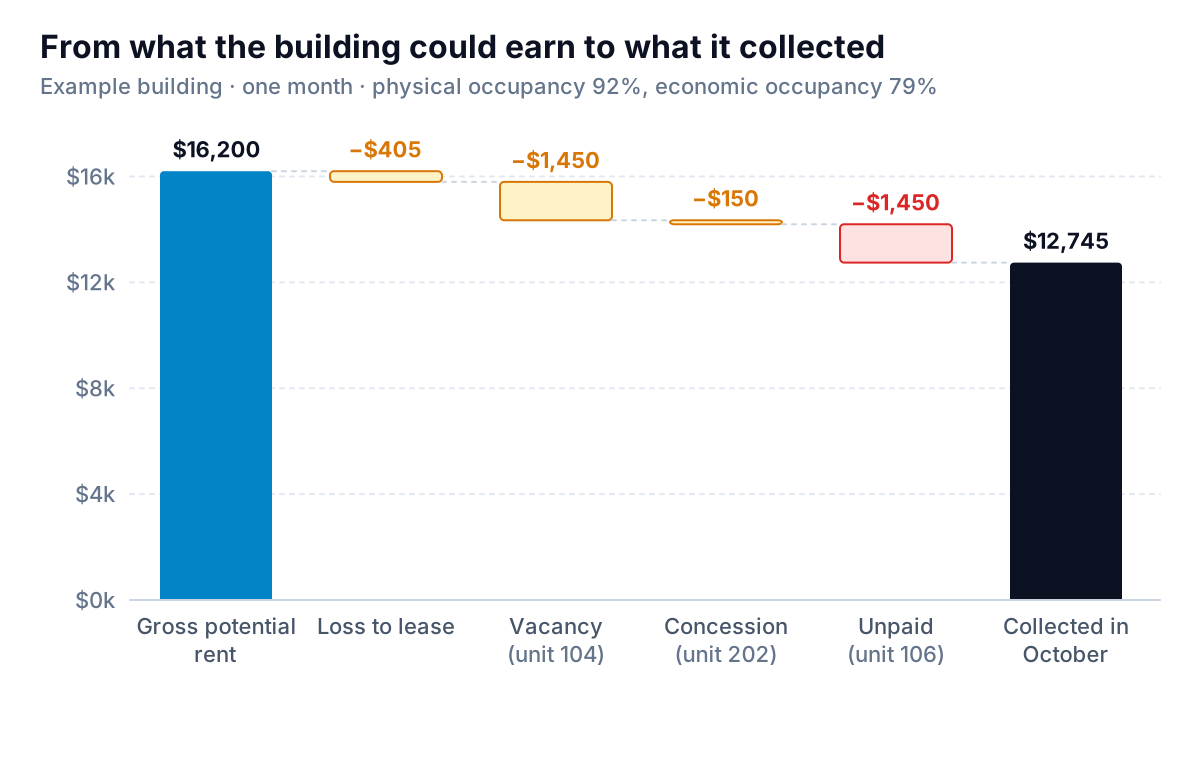
Gross potential rent (GPR) is what the building would bring in if every unit were let at market rent and everyone paid. For Maple Court: 4 × $1,150 + 8 × $1,450 = $16,200 a month. Everything else is measured against it.
2. Loss to lease
Loss to lease is the gap between market rent and contract rent on occupied units. Maple Court's is $405 a month: unit 101 at $50 below market, 105 at $125, 201 at $100, 103 at $50, 204 at $55 and 205 at $25. Small loss to lease can be upside for a buyer, since rents can rise as leases renew. Large loss to lease spread across many units can also mean the "market rent" column is optimistic. Check it against current listings nearby before you count on it.
3. Physical vs economic occupancy
Physical occupancy counts units with someone living in them: 11 of 12, or 92%. Economic occupancy counts money: rent collected ÷ gross potential rent = $12,745 ÷ $16,200 = 79%. Most of the 13-point gap is unit 106's unpaid rent; loss to lease and the concession make up most of the rest.
A seller will quote the first number. Underwrite with the second. If economic occupancy is well below physical, find out why before you go further.
4. How many leases end soon
This is the number most often skipped. List occupied units by the month their lease ends:
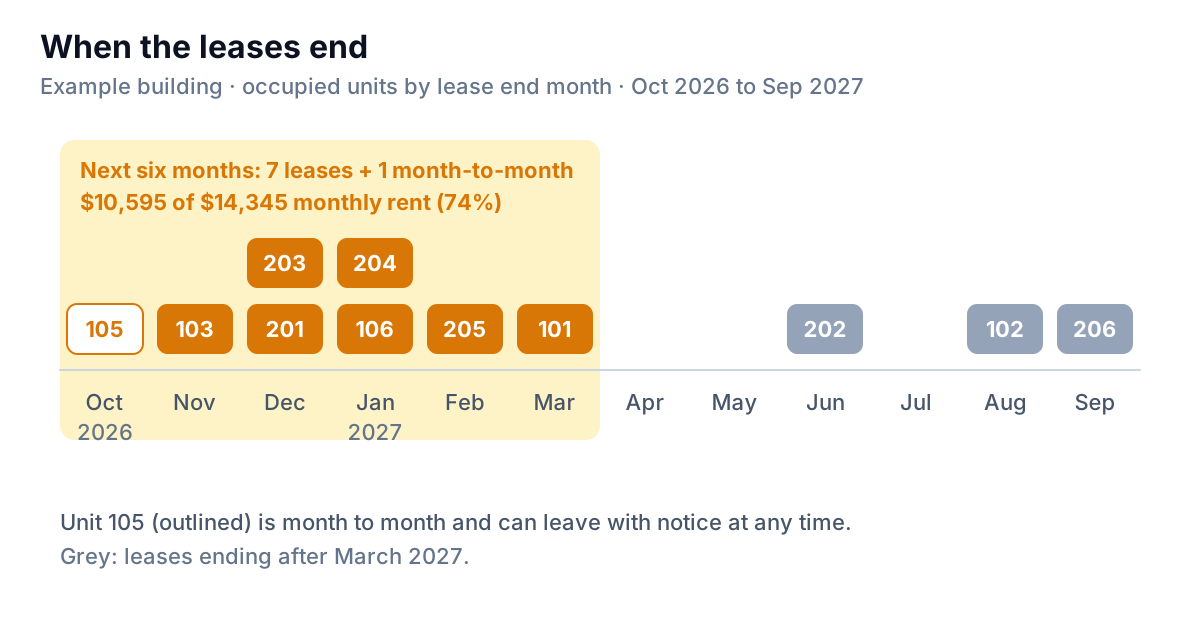
At Maple Court, seven leases end in the next six months and unit 105 is month to month. That's $10,595 of the $14,345 monthly rent, or 74%, that could walk out the door by spring. Some of those tenants will renew. But if you're buying, you're buying a building that will need to re-let a lot of units in winter, and your first-year income depends on how well that goes.
Clustered expirations are common when a building was bought or filled up quickly. A rule of thumb for small residential buildings: if more than about half the rent rolls over in one six-month window, plan for vacancy and turnover costs in that window, and consider staggering lease terms (some 12 months, some 15 or 18) as they renew.
5. Deposits held and balances owed
Maple Court holds $13,870 in deposits. Two are below a month's rent (unit 105 at $900 on $1,325 rent, unit 201 at $1,000 on $1,050), which gives less cover if those tenants leave owing money. Unit 106 owes $1,450, a full month. Ask how long it's been owed and whether there's a payment plan. Balances work like any receivable: the older they get, the less likely they are to be paid. Our guide to the accounts receivable aging report explains how to read balances by age, and the same thinking applies to tenant ledgers.
How to check a rent roll is true
A rent roll is a document the seller (or their manager) prepared. Before you rely on it, check it against things they didn't prepare.
- Bank deposits. Ask for 3 to 12 months of bank statements for the property's operating account. Monthly deposits should roughly match rent collected. If the rent roll says $14,345 and deposits average $12,500, the gap needs an explanation.
- The trailing 12-month income statement (T12). Rental income on the T12 should be close to the rent roll's numbers over time, after vacancy and concessions. A rent roll that shows much more than the T12 usually means recent rent increases, recent lease-ups, or an optimistic rent roll.
- The leases themselves. Spot-check at least a few, and every lease for the largest or newest tenancies. Compare rent, end date, deposit and any concessions or side agreements.
- Tenant estoppel certificates. Common in commercial deals and some larger residential ones: each tenant confirms in writing their rent, deposit, lease dates and any disputes. Your attorney will know whether they're customary for your deal.
- A walk-through. Units listed as occupied should look occupied. Units listed as rent-ready should be.
Also ask for the rent roll in a spreadsheet (Excel or CSV) rather than a PDF. You'll want to sort it and recalculate the totals yourself, and a spreadsheet makes errors easier to spot.
Common rent roll mistakes, by sellers and owners
- Annualising the best month. $14,345 × 12 assumes no vacancy, no concessions and full collection all year. Use the T12 or collected rent instead.
- Market rent nobody can support. If market rent is above recent leases in the same building, ask for comparable listings.
- Concessions left off. A month free on a 12-month lease is about 8% off the rent. If concessions aren't on the rent roll, ask directly.
- Non-paying "occupied" units. A tenant who hasn't paid in two months is occupied but not earning. Some buyers treat long-unpaid units as vacant when they underwrite.
- Stale dates. Lenders and buyers usually want a recent rent roll. A rent roll that's two months old can miss move-outs, so ask for one dated within the last few weeks.
For owners: a 10-minute monthly rent roll review
If you already own a building, the rent roll is also your best monthly report. Run it on the first business day of the month and write down five numbers: gross potential rent, rent collected, economic occupancy, leases ending in the next 90 days, and total balances owed. Compare with last month.
Then act on two lists. Every lease ending in the next 90 days gets a renewal offer or a plan to re-let. Every balance over 30 days gets a call, and if you're tracking cash closely, our guide to a cash flow forecast shows how to plan around the gaps.
If your property management software exports the rent roll and tenant ledger as CSV or Excel, Parity can turn the export into a dashboard: occupancy and collections with their trends, charts, what explains the changes, and a table of what needs attention, such as unpaid balances and leases ending soon. Every number is checked against queries on the full dataset before you see it. Next month, update it with the newer export and every figure is recalculated and checked again. When you ask, it writes an owner's monthly report from the same data, which you can share with a partner or lender as a read-only link or a PDF. Parity doesn't read PDFs, so export the rent roll as a spreadsheet rather than a printout.
Upload your rent roll export and see occupancy, collections and lease expirations on one checked screen. Upload your rent roll
Whether you're buying or holding, the habit is the same: work out what the building could earn, what it actually collected, and when the income can change. A rent roll answers all three if you add it up yourself.