Here is an executive summary example you have probably read a version of. It opens a monthly report, the kind a coffee roaster might send its business partner: "This report covers Copperline Coffee's performance for September 2026. The team kept focusing on growth in wholesale and retail. Results were mixed, with some areas improving and others facing headwinds." Three sentences in, the reader knows nothing they didn't know before opening it.
Now the same report, rewritten: "September revenue was $84,200, up 6% on August, but gross margin fell from 41% to 37% because green coffee cost 18% more per pound. We recommend a $1.50 wholesale price rise from November 1, and need your yes by October 20." Same business, same month, same data. The second version is an executive summary. The first is a throat-clear.
This post is a collection of executive summary examples like that one, each shown before and after a rewrite, for the documents a small business actually writes: a monthly report, a bad-news update, a client proposal, a loan request and an analysis. Copperline and the other businesses here are fictional examples, but the numbers in each one add up, so you can see exactly how the rewrite works.
Why the first paragraph carries the whole document
Most of what you write won't be read in full. Nielsen Norman Group's eye-tracking research found that on an average web page, people read about 20% of the words. Their later work on the F-shaped reading pattern shows readers give the first lines the most attention and skim the rest. A partner reading your monthly report on a phone between meetings behaves the same way.
Two old pieces of advice say the same thing from different directions. The US government's plain-language guidance tells writers to put the main message first, instead of opening with background. The military calls it BLUF, bottom line up front, and a Harvard Business Review piece on military email describes it as a short opening that states the purpose and the action required.
So the executive summary isn't a preview of the document. It is the document, for most readers. Everything after it is the evidence for the people who want to check.
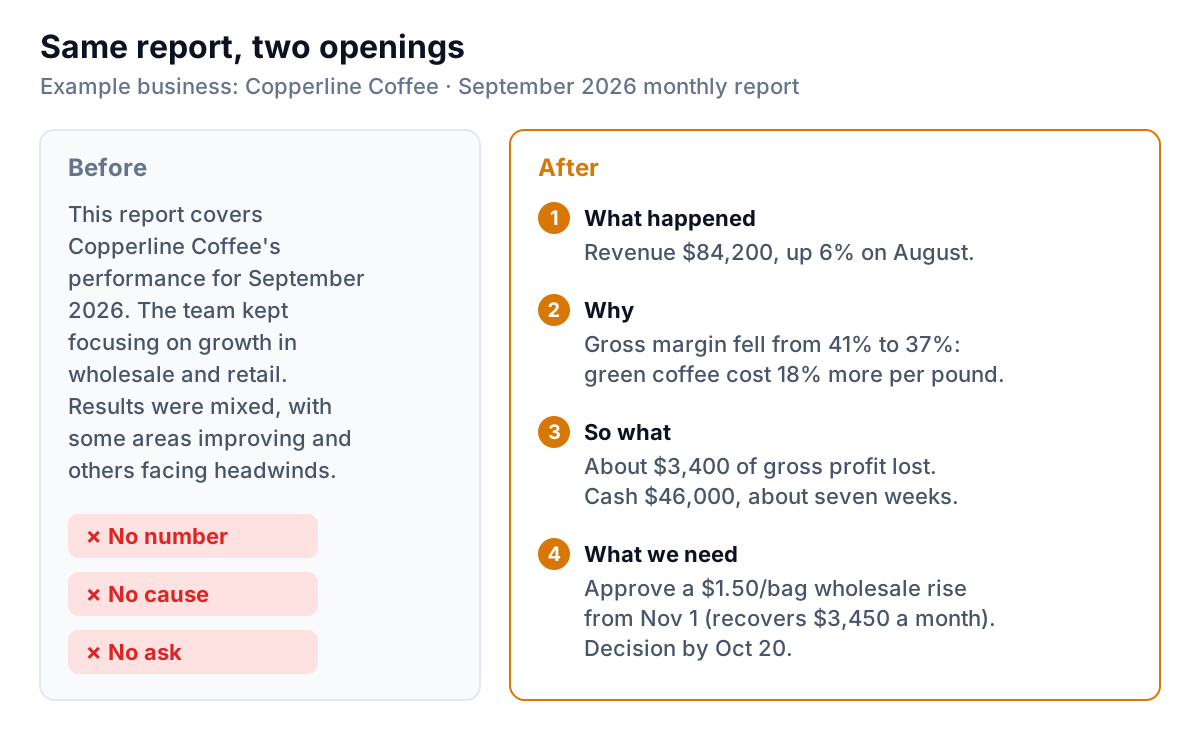
Executive summary example 1: the monthly report to a partner
The Copperline rewrite above follows a pattern that works for almost any regular report. Each sentence answers one question:
- What happened? The headline number, with a comparison. "$84,200, up 6% on August" means something. "$84,200" on its own doesn't.
- Why? The single biggest cause, with its own number. "Green coffee cost 18% more per pound."
- So what? The effect in money or time. The four-point margin drop on $84,200 of sales is about $3,400 of gross profit. Cash of $46,000 covers about seven weeks of costs.
- What do you need? A decision, a date, or "nothing, for information".
Here is the full after version, as it would sit at the top of the report:
After: September revenue was $84,200, up 6% on August. Gross margin fell from 41% to 37% because green coffee cost 18% more per pound, which cost us about $3,400 in gross profit. Cash is $46,000, about seven weeks of costs. We recommend raising wholesale prices by $1.50 a bag from November 1. At September's volume of 2,300 bags, that recovers $3,450 a month. We need your decision by October 20 to give wholesale customers notice.
Notice what's missing: no "this report covers", no list of sections, no "the team worked hard". The partner can stop reading after this paragraph and still make the right call. If you write one of these every month, our guide to the monthly KPI report covers the page that sits behind it.
Example 2: when the news is bad
Bad news is where executive summaries get the vaguest, because the writer is nervous. Here is an example from a fictional fitness studio, Harbor Pilates, writing its quarterly update to two investors.
Before: Q3 was a challenging quarter for the studio. While we saw strong interest from new clients, a number of factors affected retention, and membership growth was slower than we had hoped. We have identified several opportunities and are confident in our plan for Q4.
After: We ended Q3 with 312 active members, 38 short of our 350 target. New sign-ups beat plan (96 against 90), but 84 members cancelled against the 40 we planned for. Of those 84, 52 left within six weeks of the July price rise. We are offering those 52 a three-month return rate and moving the price rise for existing members to January. No decision is needed from you; we will report the result in the October update.
The numbers reconcile: 300 members at the start of the quarter, plus 96 joiners, minus 84 leavers, is 312. The plan was 300 + 90 − 40 = 350. A reader can check that in ten seconds, and that is what builds trust when the news is bad. "Challenging", "a number of factors" and "confident" tell the reader you are hiding something, even when you aren't.
Examples 3 and 4: asking for a yes
Proposals and loan requests are the two documents where the summary does the selling. Both usually open with the writer's story. Both work better opening with the reader's problem and the number they have to approve.
A proposal to a client
Proposals usually open with the seller's history. The client doesn't care yet. This one is from a fictional bookkeeping firm pitching a clean-up job.
Before: Thank you for the opportunity to submit this proposal. Ledgerwise has served small businesses in the region for 12 years, and our team of certified professionals takes pride in accurate, timely work. This proposal outlines our understanding of your needs, our approach, and our fees.
After: Your books are seven months behind, with 214 bank transactions not yet categorised, so your lender's December review can't use them as they stand. We propose a fixed-fee clean-up for $4,800, finished within four weeks, followed by monthly bookkeeping at $650. If you sign by October 24, September will be closed and reconciled by mid-November, with time to spare before the review.
The after version starts with the client's problem in their own terms (the lender's review), then the price, the timing and the deadline. The 12 years of experience can go on page three, where it supports the claim instead of delaying it.
A loan request or business plan
A lender reads a lot of these. They want the amount, the use, and how you'll repay, in that order. This example is a fictional food truck, Rolling Fold, asking for money to put a second truck on the road.
Before: Rolling Fold was founded in 2021 with a passion for bringing fresh, handmade crêpes to the community. Since then we have built a loyal following and become a fixture at local events. We are now excited to take the next step in our growth journey.
After: We are asking for a $60,000, five-year equipment loan to buy and fit out a second truck. Our first truck made $412,000 in revenue over the last 12 months at a 14% operating margin, about $57,700. At 9% interest, the loan costs about $1,245 a month. If the second truck earns only half of what the first one does in its first year, about $2,400 a month, that covers the payment almost twice.
Every figure in the after version can be checked against the attached accounts. The coverage claim is conservative on purpose: it assumes the new truck does half as well as the old one. Lenders discount optimism, so give them the cautious case up front.
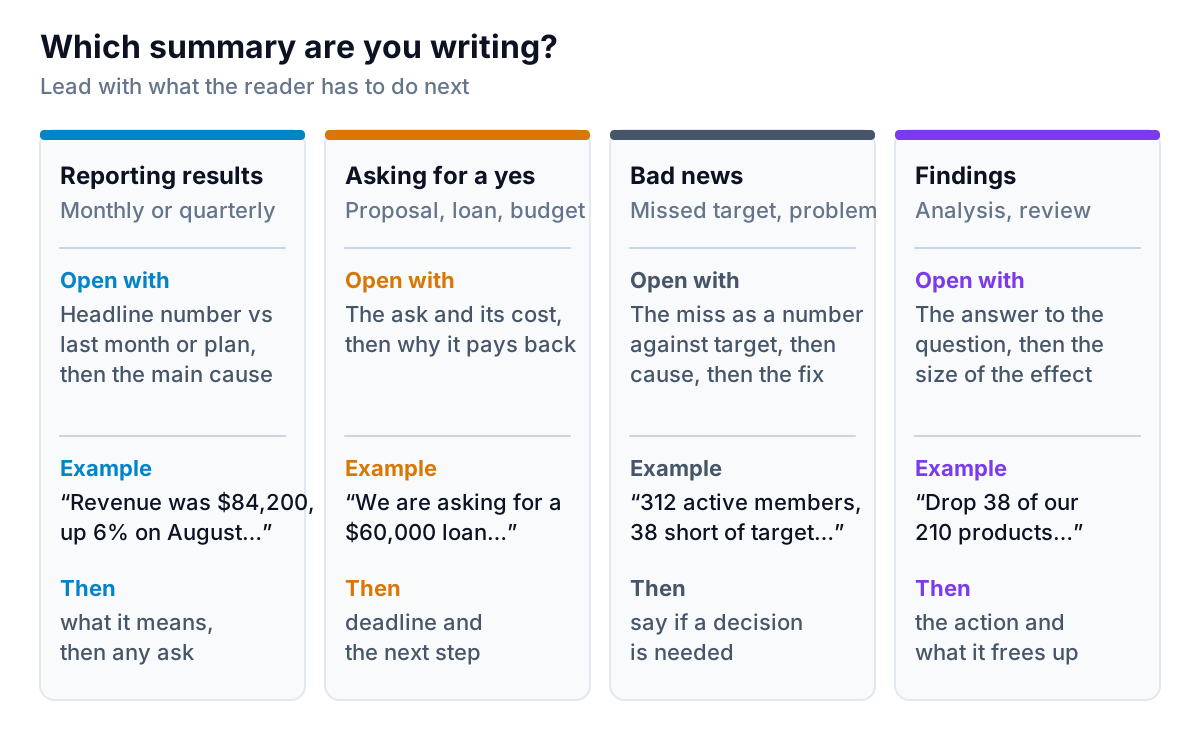
Example 5: the findings of an analysis
When you've analysed something (a product range, a pricing test, a customer list), the summary should answer the question you were asked, not describe how you worked. Here a fictional gift shop owner asked which products to drop.
Before: We analysed 12 months of sales data from the point-of-sale system, covering 210 products across six categories. The data was cleaned and grouped by product and category, and several metrics were calculated, including revenue, units and stock value.
After: Drop 38 of our 210 products. Together they made 2% of last year's sales but tie up 19% of the money we hold in stock, about $11,400. Most are in two categories, candles and greeting cards. Even selling them at 30% below what we paid would free about $8,000 in cash before the holiday buying window.
The method still matters, and it belongs in a short section further down for anyone who wants to check it. But a reader who only reads the first paragraph should know what to do.
How to rewrite your own executive summary in six edits
You don't need to start from scratch. Take the draft you have and run these edits in order.
- Delete every sentence that describes the document. "This report covers…", "The sections below…", "This proposal outlines…". The reader can see the document.
- Find the one number that matters most and move it into the first sentence, with a comparison: last month, last year, the target or the plan.
- Replace adjectives with figures. "Strong growth" becomes "up 6%". "Challenging" becomes "38 short of target". If you can't put a number on it, ask whether it belongs in the summary at all.
- Name one cause, not five. Pick the largest. The rest go in the body.
- End with the ask and a date, or say plainly that no decision is needed.
- Check that the numbers add up. If members at the start plus joiners minus leavers doesn't equal members at the end, someone will notice, and they'll stop trusting the rest.
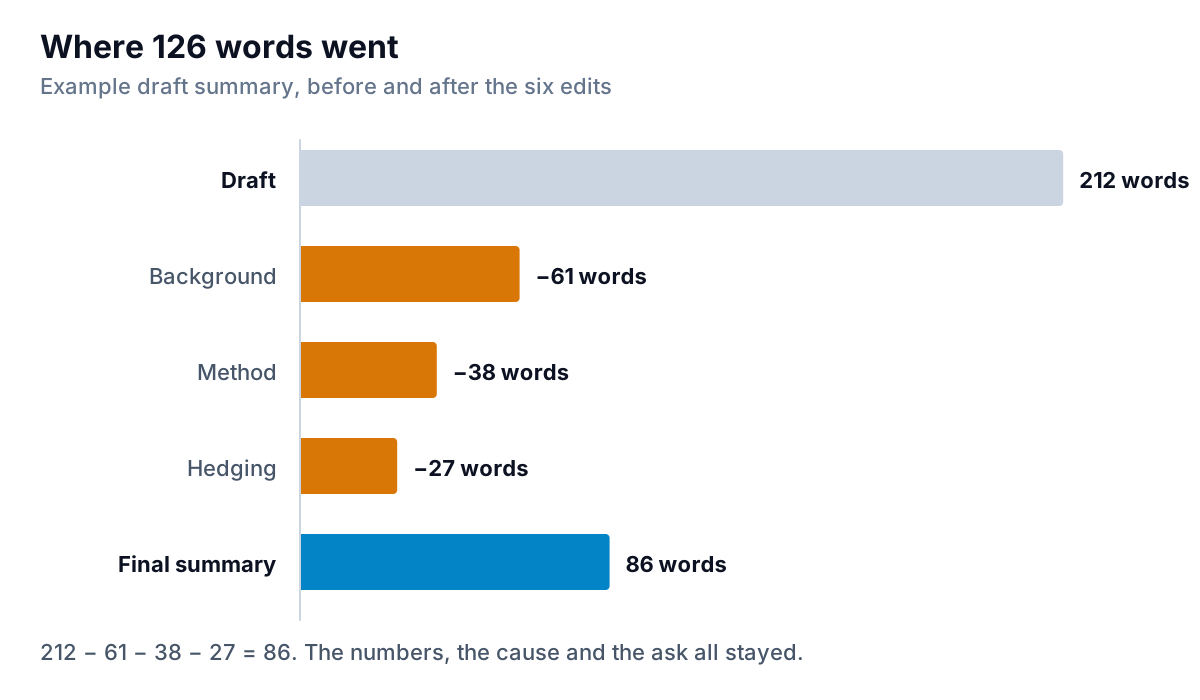
Length follows from those edits. A monthly update rarely needs more than one paragraph. A proposal or business plan might need half a page, with a short bulleted list of the three or four supporting points. If your summary runs past a page, it's a second report, not a summary.
Common mistakes
- Writing it first. You don't know your conclusion until you've done the work. Write the summary last, then put it at the top.
- Summarising every section equally. An executive summary isn't a table of contents in sentences. Weight it to what matters.
- Numbers without comparisons. $84,200 is meaningless until it's next to $79,400.
- Hiding the ask in the last section. If you need a signature by Friday, that goes in the first paragraph.
- Different numbers in the summary and the body. Rounded once, quoted precisely somewhere else, and the reader starts checking everything.
Getting the numbers right before you write
Every executive summary example above depends on the same thing: the numbers have to be right, and you have to know which one matters. That's usually where the time goes. Pulling revenue, margin and cash from three tools, working out the change on last month, and checking it all adds up takes longer than writing the paragraph.
Parity does that part. Connect QuickBooks Online, Stripe, Shopify, HubSpot, Square or Google Sheets, or upload a CSV or Excel export from any other tool, and it builds a dashboard with your headline numbers and their trends, charts, what explains them, and what needs attention. Ask it to write a report from that data, such as the monthly report for a partner or investor, and you get one with an executive summary, charts and a takeaway for each. Every number and chart is checked against queries on the full dataset before you see it. You refine the wording by chat, then share a read-only link or export it to PDF. The judgement about what to recommend stays yours. If you're starting from a spreadsheet, this guide to building reports from Excel walks through the upload, and choosing the KPIs comes first if you're not sure which number to lead with.
Upload a spreadsheet or connect your accounts, ask for the monthly report, and edit the summary by chat. Build a report from your data free
Whichever way you produce the numbers, test your summary the same way: hand it to someone, let them read only the first paragraph, and ask what they'd do. If their answer matches yours, it's done.