Most late payments aren't a surprise. Three weeks before an invoice became a problem, it was sitting in plain view on a Monday, to anyone who looked. The trouble is that "look at receivables" is too vague to become a habit. Six specific questions, asked in the same order every week, are not.
These are the accounts receivable questions for small business owners that we'd put on a sticky note above the desk. They take about twenty minutes, need nothing more than your accounting system and your inbox, and each one ends in an action rather than a feeling. We'll answer them for an example business, Larkspur Design Co., a made-up studio owed $40,500 this Monday.
Set up the accounts receivable questions for small business once
Have three things open: an accounts receivable aging report by invoice (the detail version, aged by due date), last Monday's answers, and your inbox. Block twenty minutes before you open email for anything else. Keep the answers on one page, in the same order each week, so you can compare at a glance.
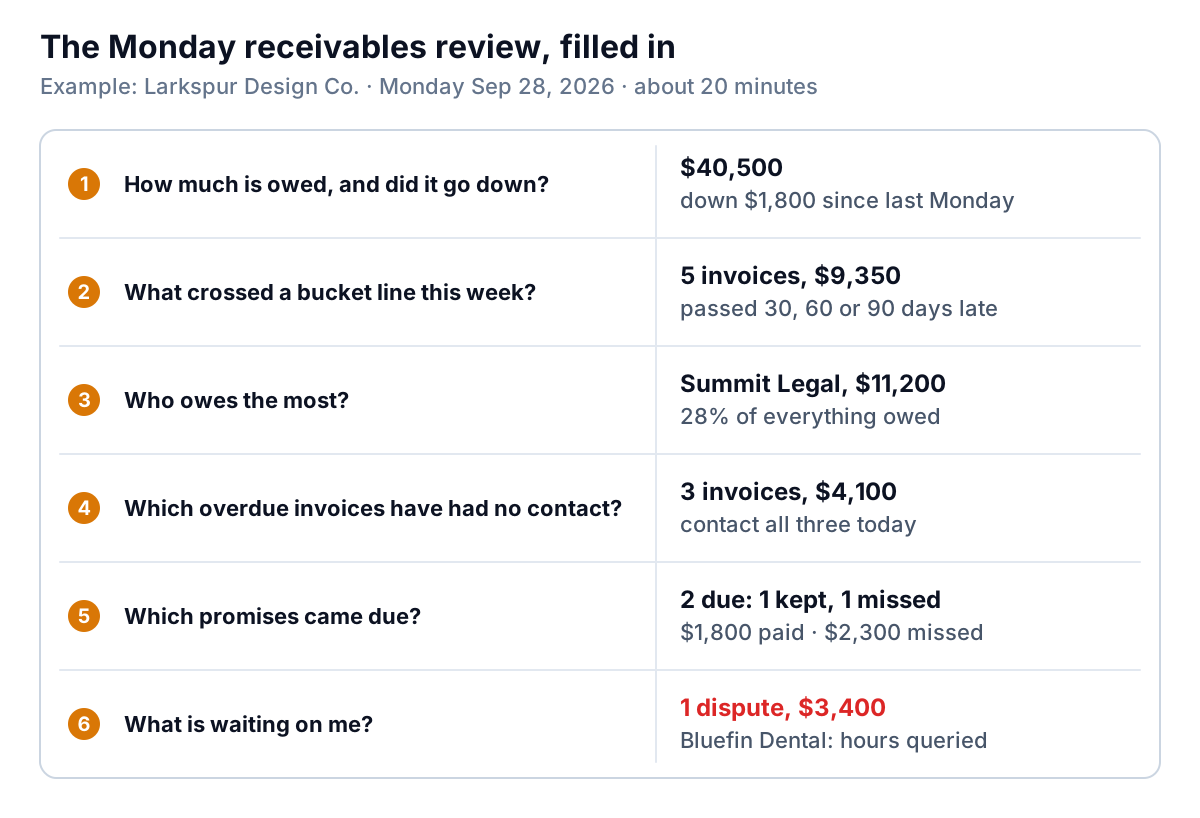
Why weekly and not monthly? Because ageing moves in 30-day steps, and a monthly look can miss an invoice crossing a line entirely. It also matters because late payment is widespread right now: the 2026 QuickBooks Small Business Late Payments Report found 59% of US small businesses had invoices more than 30 days overdue, and 39% of owners said a single late payment had made it hard to cover payroll or bills in the past year.
Questions 1 and 2: How much, and how fast is it ageing?
1. How much is owed, and did it go down?
Write down the total outstanding, then explain the change from last week. The total only moves for two reasons: you sent new invoices, or customers paid (credits and write-offs aside).
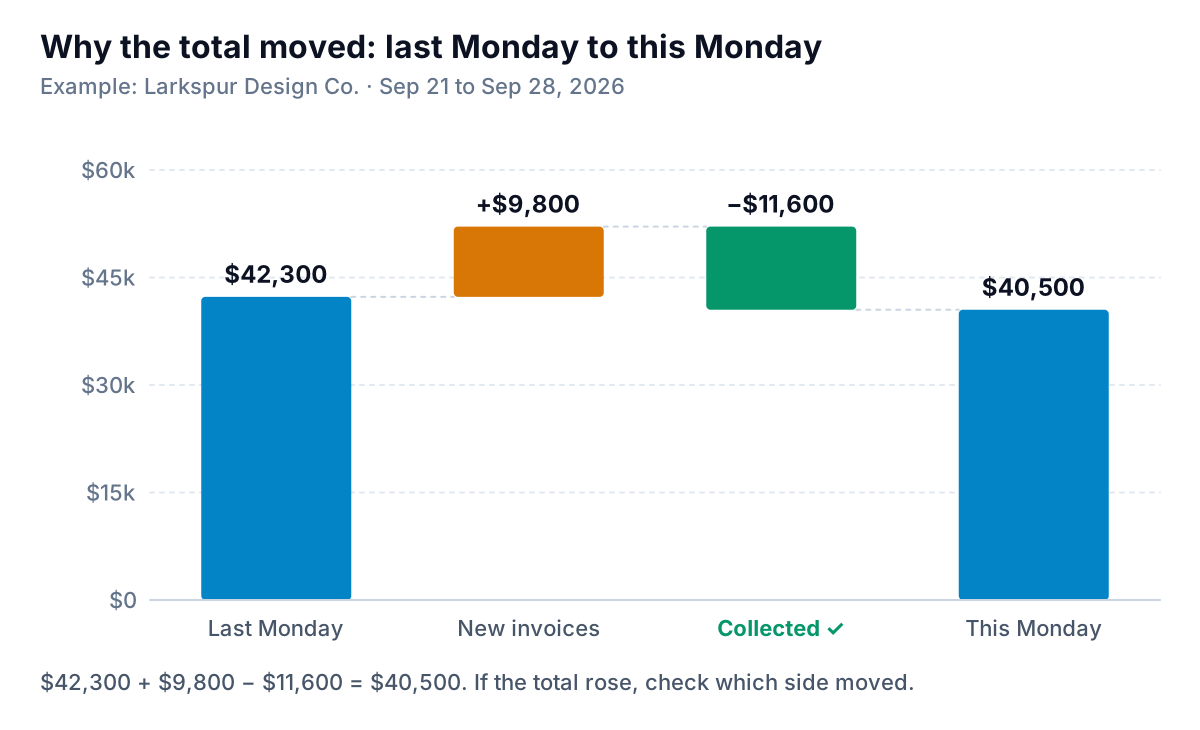
For Larkspur: $42,300 + $9,800 − $11,600 = $40,500. Down $1,800, which is good. But a falling total can hide a problem (you simply invoiced less this week), and a rising total can be healthy (a big project just billed). The bridge tells you which. If the arithmetic doesn't work, a payment or invoice is missing from your books, and that's worth fixing before anything else.
Action: If collections were below new invoicing for three weeks running, your receivables are growing faster than your cash. Look at question 2 for where.
2. What crossed a line this week?
This is the question most owners never ask, and it's the most useful. Don't look at everything that's overdue. Look at what became 31, 61 or 91 days late since last Monday.
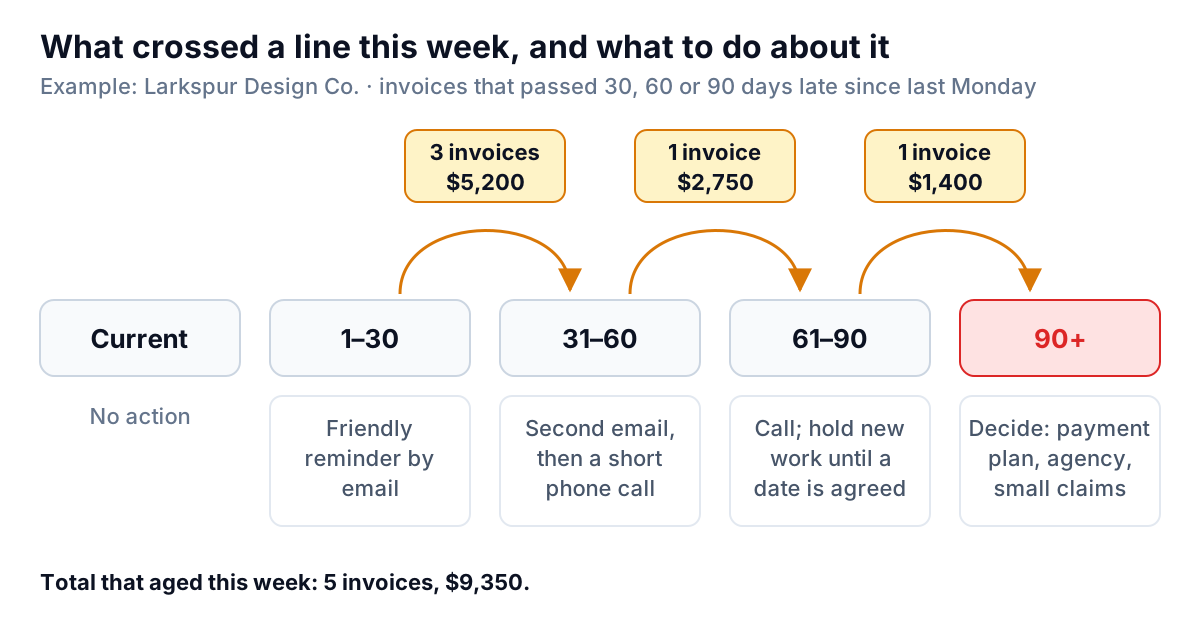
Each crossing is a cue to step up, politely. Passing 30 days late is the point for a second email and a short phone call. Passing 60 days is the point to hold new work until a payment date is agreed. Passing 90 is the point to decide, not drift: a payment plan, a collections agency, small claims court, or a write-off. Odds fall with time; a benchmark from the Commercial Collection Agencies of America, reproduced by the Credit Research Foundation, puts collectability of a delinquent business account at about 69% at three months and 51% at six.
If you're thinking about adding interest or a late fee at the 60-day mark, check the rules first. In the UK, businesses can generally claim statutory interest of 8% plus the Bank of England base rate on late business-to-business invoices, unless the contract sets a different rate. In the US it depends on your contract and your state, so check your state's rules (or ask your accountant) before adding a fee to an invoice.
Question 3: Who owes the most, and is that a risk?
Sort customers by balance. Write down the top name and their share of the total. For Larkspur, Summit Legal owes $11,200, which is 28% of $40,500.
A big balance isn't bad on its own. Summit might be your best client, on time every month. The risk is concentration: if one customer holds more than about a quarter of your receivables and pays late once, your month changes. Use this rule of thumb:
- Under 20%: nothing to do.
- 20–35%: make sure their invoices go out on time and to the right person, and know who approves payment there.
- Over 35%: consider shorter terms, a deposit, or splitting large projects into milestone invoices.
Also check the trend. A top customer whose balance grows each week while their payments stay flat is telling you something before they say it.
Questions 4 and 5: Who hasn't heard from you, and who broke a promise?
4. Which overdue invoices have had no contact?
Filter for invoices past due with no reminder sent and no reply logged. For Larkspur, that's three invoices worth $4,100. These are the cheapest dollars you'll collect all week, because most late invoices in the first month are forgotten, not refused. Send one friendly reminder for each today. If you need wording, these reminder templates cover before, on and after the due date.
Count this one honestly. "I mentioned it on a call" isn't contact unless you wrote it down. If it isn't logged, the next person (or next-week you) can't see it.
5. Which promises came due?
List every promise with a date that fell in the last week. Did the money arrive? Larkspur had two: one customer paid $1,800 as promised; another promised $2,300 by Friday and didn't pay. Kept promises need nothing. A missed one needs a reply the next working day, before the promise is forgotten on both sides:
Notice what it doesn't do: accuse, threaten, or repeat the whole history. It states the facts and asks for a date. If a second promise is missed, phone. Our guide to broken payment promises goes further.
Question 6: What is waiting on you?
The last question turns the mirror around. Some money is late because of something on your side. Look for:
- Disputes and questions you haven't answered. Larkspur has one: Bluefin Dental queried the hours on a $3,400 invoice. Stop all reminders on that invoice and reply with the timesheet this week. A dispute left unanswered turns into a customer who feels ignored. Here's how to handle a disputed invoice.
- Work done but not invoiced. The fastest way to get paid late is to bill late.
- Invoices sent to the wrong person, or missing a purchase order number the customer needs.
- Payments you haven't matched to invoices, which make paid customers look overdue.
Anything here comes before any reminder. Chasing a customer who is waiting on you is the quickest way to damage a good relationship.
Four mistakes that waste the twenty minutes
- Reading every invoice. With 50 open invoices you'll run out of time by the C's. The six questions are filters: they point you at the five or ten invoices that changed, and let you ignore the rest.
- Sending reminders before answering question 6. Read the answers in order, but act on question 6 first. If Bluefin Dental's dispute is sitting in your inbox, a reminder to Bluefin makes things worse. Check for disputes, unmatched payments and missing purchase order numbers before anything goes out.
- Turning the review into the chasing session. The review decides what to do; it doesn't have to do it all. Write the actions down, then send the emails and make the calls in a separate block the same day.
- Skipping quiet weeks. The week nothing seems to be happening is exactly when an invoice slips from 28 to 35 days late without anyone noticing. A two-minute review that confirms "nothing changed" still counts.
Asked this way, accounts receivable questions for small business owners stop being a vague worry and become a short to-do list. That's the whole point.
Make it stick (and the one monthly extra)
A review only works if it survives a busy week. A few habits help:
- Same day, same time, same order. Monday at 8:30, before email.
- Write the six answers down, even if they're "none". A blank week is information.
- End with actions, not notes. Each answer should produce a sent email, a call on the calendar, or "nothing needed".
- Keep last week's page next to this week's. Trends matter more than snapshots.
Once a month, add a seventh question: how long does it take us to get paid? A simple version of days sales outstanding (DSO) is what you're owed divided by what you invoiced over the last 90 days, times 90. If Larkspur invoiced $81,000 over the last 90 days, its DSO is $40,500 ÷ $81,000 × 90 = 45 days. If your terms are net 30, that gap of 15 days is the number to shrink.
These six accounts receivable questions for small business owners don't need special software. They do need the data in one place and twenty quiet minutes, which is where most owners get stuck.
That's part of why we're building Parity. It connects to QuickBooks Online, Xero or FreshBooks (or takes PDF invoices and CSV exports), and it puts a Monday summary at the top of your dashboard to start the week. Its chat panel answers questions like "who owes me the most?", "what is past 60 days?" or "which overdue invoices have had no reminder yet?" from your data, with the figures cited. Promises with a date pause reminders until the day after, disputes go straight to you, and for overdue invoices it drafts friendly reminders in your voice. You approve each one; nothing is sent without your approval.
Parity launches in late November 2026, and you can join early access today. Get early access to Parity's invoice chaser