The night before a board meeting, most directors open the pack with one question: what am I being asked to decide? In a lot of small organizations, the answer is on page 23, after the minutes, the director's update, three committee reports and twelve pages of financial statements. By then the reader is skimming, and the meeting spends an hour on things that were never in question while the real decision gets the last ten minutes.
A good board report fixes that with order and editing, not more effort. This guide shows how to write one for a small company or nonprofit: what goes in the pack and in what order, how to write the cover memo, what the finance pages need to show, and a calendar that gives directors time to read. One example runs through it, a made-up community kitchen with an annual budget of about $800,000 and a board of nine volunteers.
What a board report has to do
A board doesn't run the organization. It oversees the people who do, makes a small number of big decisions, and answers for both. The board report is how it does that between meetings, so it has three jobs:
- Get decisions made. Every item that needs a vote should be clear, with the options, the cost and a recommendation.
- Show how the organization is doing against its plan and budget, honestly, including what's going badly.
- Create a record. The pack and the minutes together show what the board knew and what it decided.
The second job isn't optional for any director. The Charity Commission for England and Wales says in its guidance The essential trustee (CC3) that all trustees, not just the treasurer, are responsible for the charity's finances and should be able to understand and comment on financial information. For UK company directors, section 172 of the Companies Act 2006 sets out a duty to promote the company's success, with regard to things like the long-term consequences of decisions and the interests of employees. US rules come mostly from state law and depend on where you're incorporated. The details differ by country, state and type of organization, so ask a lawyer what applies to yours. The practical point is the same everywhere: if directors can't read the report, they can't do their job.
The board report structure, in reading order
Put things in the order a busy director needs them: decisions, then the state of things, then detail.
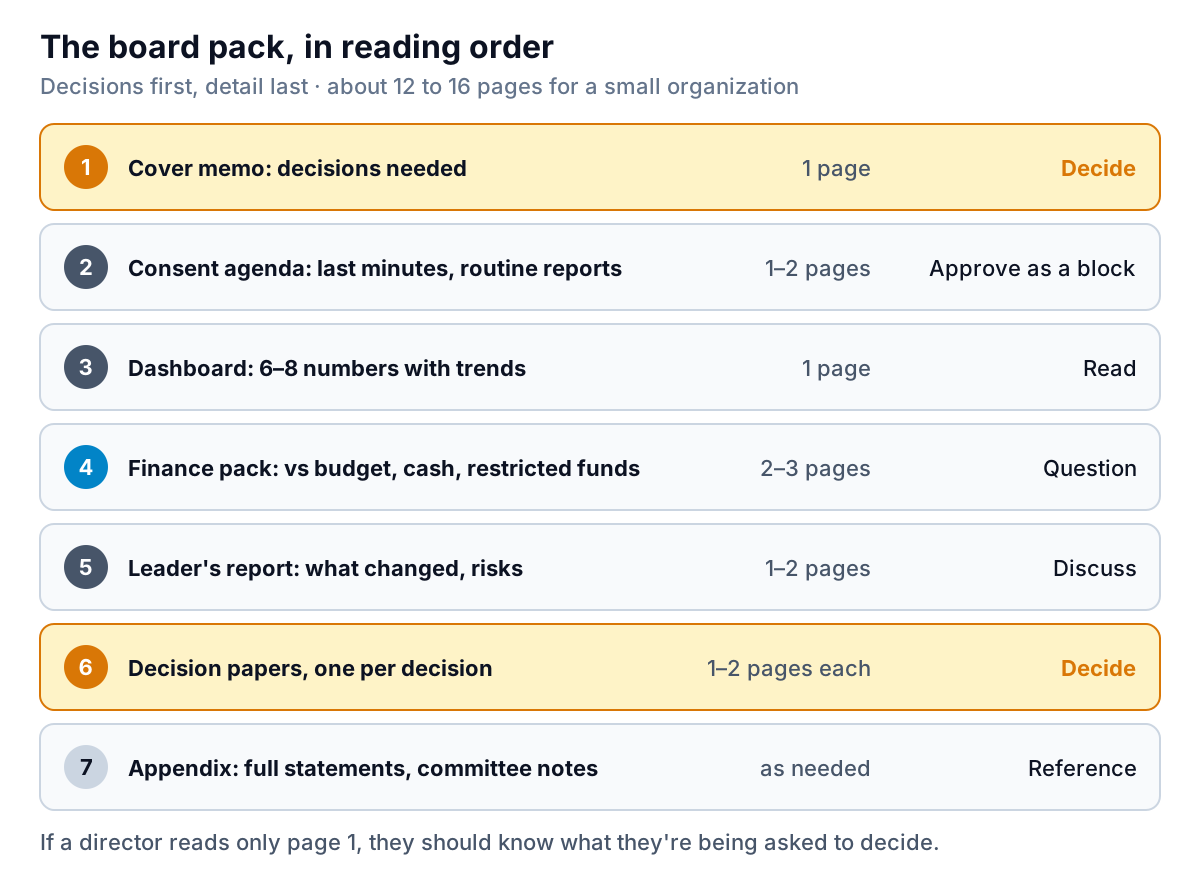
- Cover memo (1 page): what the board is asked to decide, discuss and note. More on this below.
- Consent agenda (1–2 pages): routine items voted on together without discussion, usually the last meeting's minutes and reports that need no action. Any director can ask to move an item off it for discussion before the vote. Check that your bylaws or rules of procedure allow it.
- Dashboard (1 page): six to eight numbers that tell the board whether the organization is on track, each with its trend over the last four quarters. For the kitchen: meals served, people served, volunteer hours, income and spending against budget, cash available and months of reserves.
- Finance pack (2–3 pages): the numbers behind the dashboard. Covered in detail below.
- Leader's report (1–2 pages): from the CEO or executive director. What changed since last time, what's at risk, and what they need from the board.
- Decision papers (1–2 pages each): one per item in the cover memo.
- Appendix: full financial statements, committee notes, policies up for renewal.
Twelve to sixteen pages is plenty for a small organization. If yours runs to 40, the extra pages are usually committee reports nobody discusses and activity lists. Move them to the appendix or cut them.
The cover memo: decisions first
The cover memo is the most important page in the board report and the one most often missing. It lists, in a few lines each, what the board will be asked to decide, what it will discuss, and what it only needs to note. Here's Riverbend Community Kitchen's for its October meeting (a fictional example):
For decision
1. Approve an application to the state food security grant: $60,000 over two years for a second weekday meal service. The funder asks for a board resolution. Recommended. Paper 6a.
2. Approve a plan to rebuild reserves to three months of costs by December 2028, starting with a $40,000 target for the year-end appeal. Available cash covers 1.7 months against our 3-month policy. Recommended. Paper 6b.
For discussion
3. Demand: we served 152,000 meals in nine months, 17,000 more than budgeted. Do we keep meeting demand and fund it, or cap services? No decision needed today; options in the leader's report.
For noting (consent agenda): July minutes; finance committee notes; renewal of the volunteer safeguarding policy, unchanged.
Each decision says what's asked, how much it costs, what management recommends, and where the paper is. A director who reads only this page knows what the meeting is for.
Write the decision papers in the same order. Each one needs the question, the background in a paragraph, the options (including doing nothing), the cost and risk of each, a recommendation, and the exact wording of the resolution you want passed. Our executive summary examples include one for a paper that asks for a yes, which is the same skill.
The finance pack: what to show and how
Most board finance pages are the accounting system's standard reports, printed. They're accurate and almost unreadable for a volunteer board. A better finance pack has one summary page up front, and the full statements in the appendix.
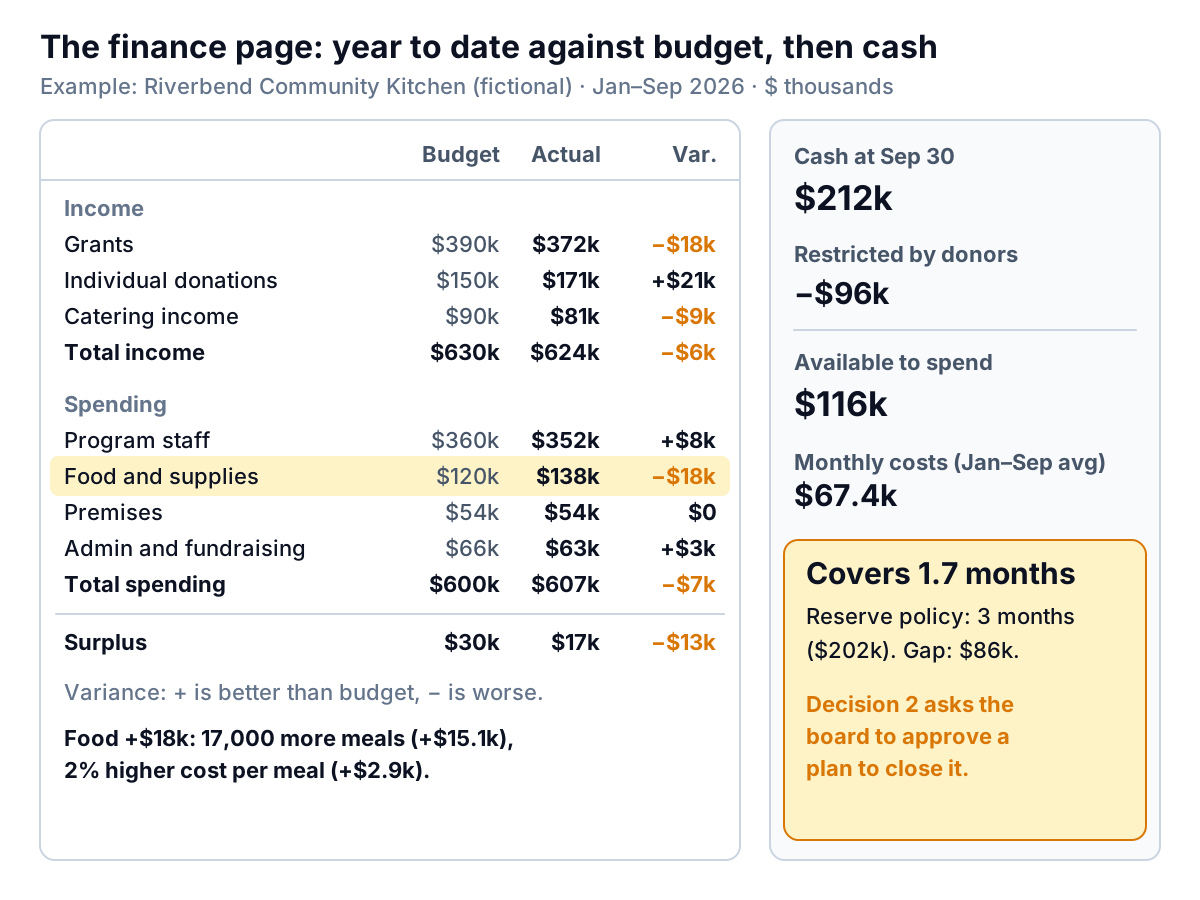
What the summary page should show:
- Year to date against budget, by a handful of lines, with variances signed the same way throughout (here, + means better than budget). Kitchen income is $6,000 under budget and spending $7,000 over, so the surplus is $17,000 against $30,000.
- An explanation for each big variance, split into its causes where you can. Food is $18,000 over budget, which sounds like a cost problem. It isn't, mostly: the kitchen served 17,000 more meals than planned, which accounts for about $15,100 at the budgeted cost per meal, and the cost per meal rose only 2%, about $2,900. That turns a scolding into a strategy question, which is why it's item 3 on the cover memo. Our budget vs actual guide shows how to decide which variances deserve a line.
- Cash, and what's actually available. Cash in the bank is $212,000, but $96,000 of it is grant money restricted by donors to specific purposes. What's left, $116,000, covers 1.7 months of average monthly spending ($607,000 ÷ 9 = about $67,400).
- Measures against board policy. If the board has set a reserve target, a minimum cash level or a borrowing limit, show each one against its actual figure.
For nonprofits in the US, the restricted line matters because of how the statements are presented. Under the FASB standard for not-for-profit financial statements (ASU 2016-14), net assets are shown in two classes, with donor restrictions and without donor restrictions, and organizations disclose how much of their financial assets is available to meet cash needs. A board that only sees total cash can believe it has a cushion it can't spend. Ask your accountant how to present your own figures.
For a small company, the summary page is the same idea with different lines. Show the P&L against budget, cash and how many months of costs it covers at current spending, amounts owed by customers by age, and the sales pipeline if you have one. Investors on a startup board usually care most about cash runway and the few numbers that show the business model working. Our financial dashboard guide covers which numbers those tend to be.
The leader's report: change, risk and asks
The CEO's or executive director's report is where board reports most often turn into a diary: every event, meeting and grant application of the quarter. Directors don't need that. They need to know what's different from what they expected, so ask the leader to answer four questions, in this order:
- What changed since the last meeting? Things the board would want to know about, good and bad. At the kitchen: demand up 12.6% on budget; a new catering contract lost; a long-serving cook retiring in January.
- How are we doing on the plan? Each goal for the year with a status and one line on why.
- What are the top three risks? Each with how likely it is, what it would cost, and what's being done. Rising demand without rising income is risk one here.
- What do I need from the board? Introductions, expertise, a decision next time, help with the appeal.
Two pages is enough. If something needs a vote, it goes in a decision paper, not buried in the leader's report.
Timing, minutes and the paper trail
Most board report problems are timing problems. A pack that arrives the night before gets skimmed; one that arrives a week ahead gets read, and questions come in before the meeting instead of during it. Work backwards from the meeting date:
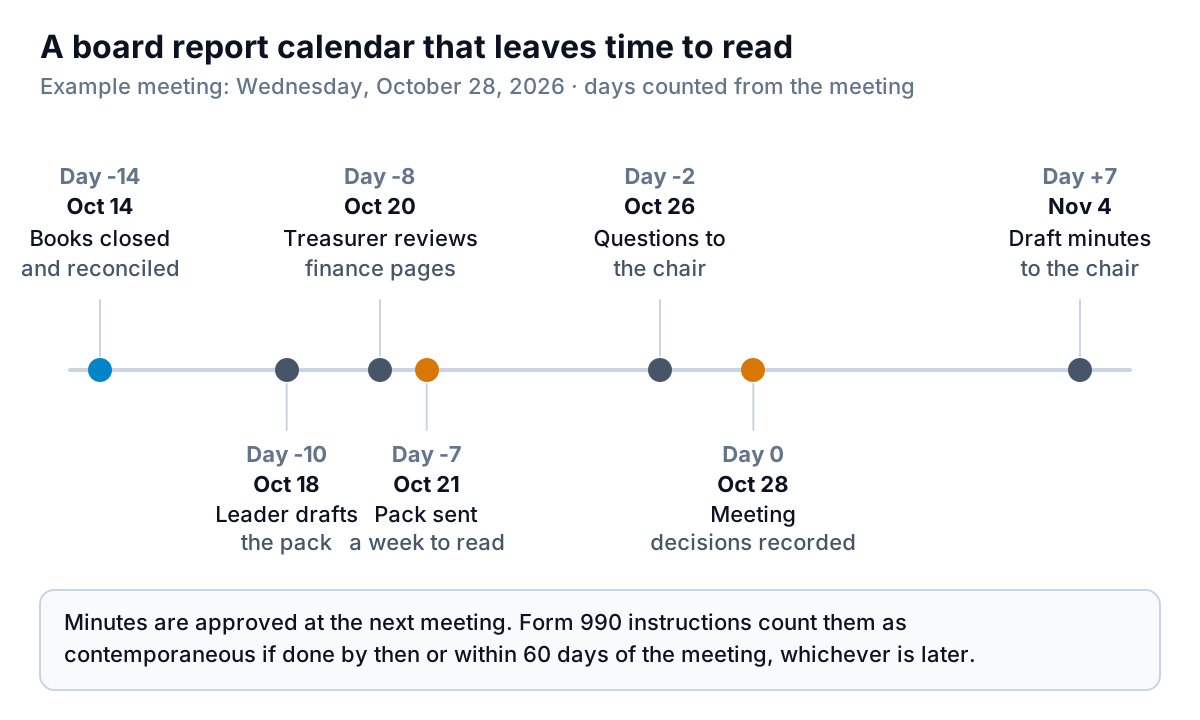
Then keep the paper trail. Minutes should record who attended, what was decided, and the main points of discussion for big decisions, including any director who declared a conflict of interest and left the room. In the US, Form 990, the annual information return many tax-exempt organizations file, asks about this directly. Its Part VI asks whether the organization contemporaneously documented the meetings of its governing body, and the Form 990 instructions define contemporaneous as by the later of the next meeting or 60 days after the meeting. The same part asks whether the organization has a written conflict of interest policy, and whether a copy of the Form 990 was given to the board before filing. The IRS notes that federal tax law doesn't require board review of the Form 990 before filing, but the organization still has to answer the question. Many boards put the draft 990 in the board pack each year. These are tax questions with consequences, so check your own obligations with your accountant or lawyer.
Keep each meeting's pack and approved minutes together in one folder, named by date. When a funder, auditor or new director asks what the board knew and when, that folder is the answer.
Building the board report each quarter
The finance pages take the most time, and they're the easiest to make routine. Close and reconcile the books first, then build the same summary page from the same lines every quarter, so directors learn where to look. Write the explanations after the numbers are final, not before. A template helps; our quarterly report template is a starting point for the quarterly numbers.
Parity can do the number-gathering part. Connect QuickBooks Online, or upload a CSV or Excel export from your accounting or donor software, and it builds a dashboard: the headline numbers with their trends, charts, what explains them, and a table of what needs attention. Ask it to write the quarterly finance report for the board, and it writes a report from the same data. Every number is checked against queries on the full dataset before you see it. You refine it by chat ("split food costs into meals served and cost per meal"), export it to PDF for the pack, and save it as a template so next quarter you update it with a newer file. It doesn't read PDFs, so export your statements as spreadsheets.
Connect your accounting data and get a checked report with variances explained, ready to export for the board pack. Build a report from your data free
Before you send the next pack, try one check. Hand the cover memo to someone who isn't on the board and ask them what the meeting will decide. If they can tell you in one breath, the board report is ready to send.